
No Compromises. Full Results.
Speak with a logistics expert - we’ll handle
your transport from A to Z.

Nationwide

Experience

Experts
Why Choose HET for Transporting Shipping Containers in Canada?
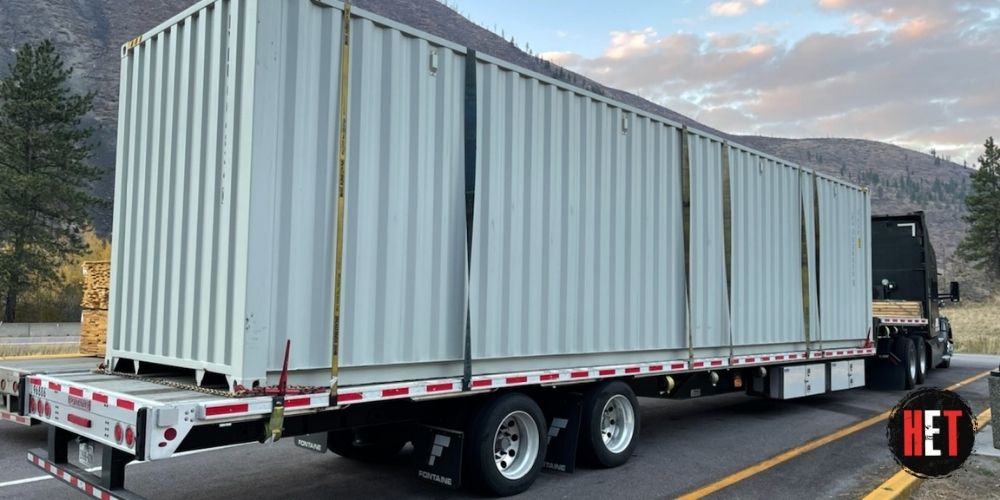
HET specializes in shipping containers to or from Canada, having delivered 961 this year with an on-time delivery rate of 98.5%
Heavy Equipment Transport is a trusted company that ensures safe and timely delivery of goods. We handle over 1,500 container shipments each year and have already exceeded that number. Our focus is on getting shipments to our clients on time, and we’re proud to say that our services can help clients save about 18% on costs.
We are a licensed transport company with the necessary insurance, providing peace of mind for our clients. With certifications that emphasize our commitment to quality and safety, we’ve been recognized as one of the fastest-growing companies for the past seven years.With more than 16 years of experience, our team consists of over 140 logistics professionals based in Florida, Kentucky and Canada, dedicated to providing excellent service.
- Experience: HET has over 13 years of experience transporting containers between the U.S. and Canada.
- The Care Factor: Our mission is to provide better transport by prioritizing our clients' needs. We focus on ensuring a quality shipping experience and the safe delivery of your freight.
- Transparency: We are licensed, bonded, and insured to ship containers to and from Canada. Your transport agent provides everything you need, including insurance information and MC numbers.
- Permits, Customs and More: We manage your container move to Canada by handling permits, customs paperwork, and offering loading assistance.
Confirm Container Transport Details
Confirm with confidence.
Get pricing that fits your route and load.
Reliable and Well-Insured Container Transport Services in Canada.
For reliable container transport in Canada, consider Heavy Equipment Transport (HET). We offer comprehensive insurance, condition reports, GPS tracking and transport for various container types, including standard, high-cube and reefer containers.
HET operates across Canada with a team of dedicated shipping container experts. We focus on heavy loads and permits and have collaborated with major logistics firms, such as TFI International, for large-scale operations.
The Best Price to Ship Your Container From the U.S. to Canada
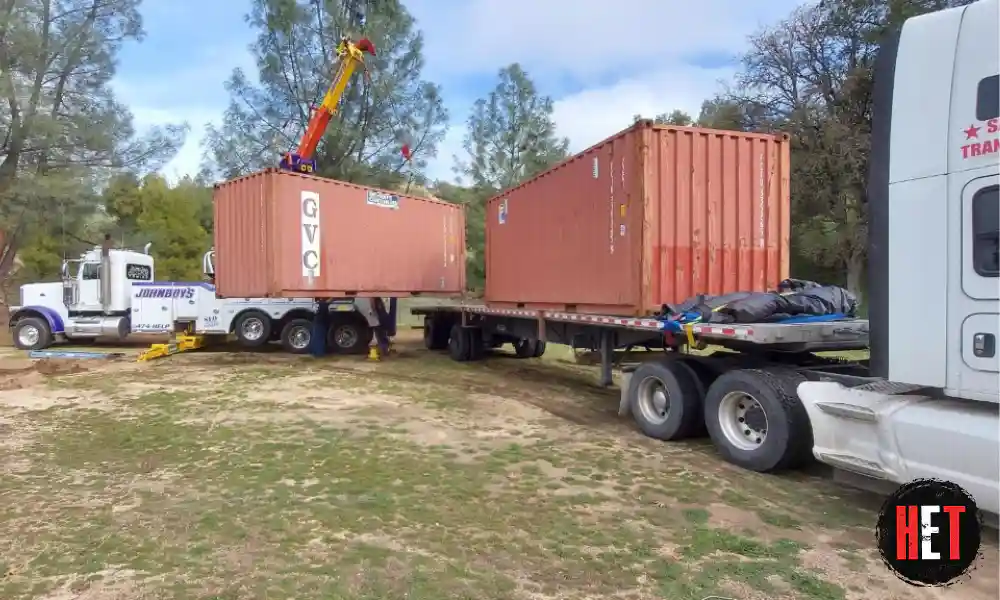
Shipping a container from the U.S. to Canada varies based on location and method. Heavy Equipment Transport offers affordable rates and prioritizes safety and quality. A transport agent will gather the details and provide a precise, all-inclusive quote with no hidden fees.
Heavy Equipment Transport also ships your containers from Canada to the United States. HET offers intermodal, drayage, and standard container shipping to and from Canada. With 13+ years of industry experience, we execute each container move with top-quality transport services.
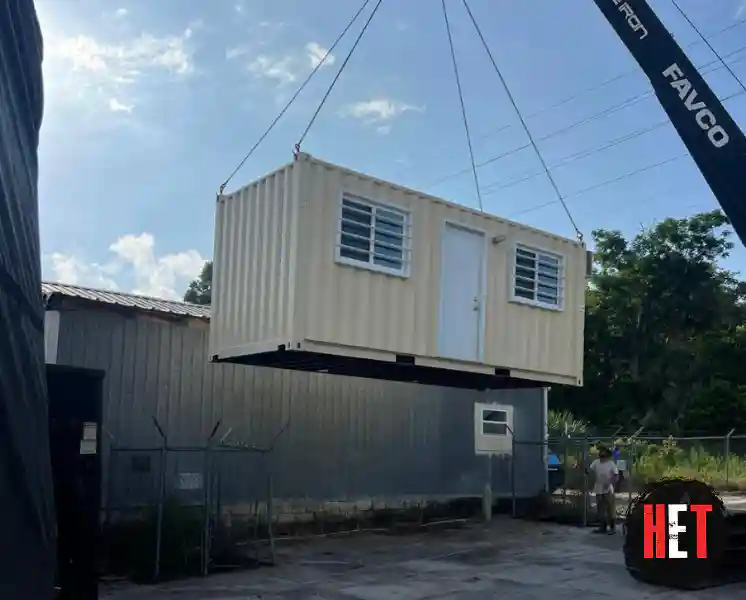
We also offer cranes and professional teams to help load and unload your containers for an additional fee.
Transport your loaded or unloaded container in Canada today!
The Most Important Ports for Shipping Containers in Canada
Canada's key shipping ports are vital for connecting to national and global markets. The Port of Vancouver is the largest on the West Coast, while the Port of Montreal is the busiest on the East Coast, handling significant container traffic.
Other significant ports include Prince Rupert, Halifax and Saint John, all of which are essential for the movement of goods. Vancouver leads in cargo handling, while Montreal is a major player in Eastern Canada’s shipping activities.
Most Important West Coast Ports for Shipping Containers in Canada
The main West Coast ports in Canada for container shipping are the Port of Vancouver and the Port of Prince Rupert. They handle most container traffic on the Pacific coast and serve as vital gateways to Asia-Pacific markets and North America via rail networks.
-
Port of Vancouver: This port is Canada's largest and busiest by cargo volume, handling 42% of all cargo tonnage for Canadian port authorities in 2022. It serves as a vital hub for international trade, connecting Canada with over 170 countries.
- Terminals: The port has four main facilities: Centerm, Deltaport, Vanterm, and DP World Fraser Surrey terminal.
- Capacity & Development: The current capacity of the Port's terminals exceeds 5 million TEUs annually. The ongoing Roberts Bank Terminal 2 project will add 2.4 million TEUs to meet future demand.
-
Port of Prince Rupert: Prince Rupert is the nearest major North American port to Asia., provides a crucial time advantage for trans-Pacific shipping. Its emphasis on efficient intermodal operations and direct on-dock rail access ensures quick transit to inland destinations like Chicago and Memphis.
- Terminal: The principal facility is the highly automated Fairview Container Terminal, which is managed by DP World.
- Capacity & Development: The current capacity is 1.6 million TEUs annually, with plans to expand to 1.8 million TEUs. The CANXPORT project, previously known as the Ridley Island Export Logistics Project, is also being developed to enhance export product handling capacity.
Major shipping container ports located on the East Coast of Canada
The East Coast of Canada has key shipping ports crucial for trade. Halifax, Nova Scotia, connects Canada to Europe and is a major international shipping hub. Saint John, New Brunswick, specializes in bulk goods, and St. John's, Newfoundland and Labrador, is also significant in the region.
The Port of Montreal in Quebec connects to major waterways, including the Great Lakes through the St. Lawrence Seaway. These ports are essential for moving goods in and out of Canada.
Key East Coast Container Ports
- Port of Halifax, Nova Scotia: A key entry point in North America that can accommodate large ships and offers quick train connections to the Midwest United States and Toronto.
- Port of Saint John, New Brunswick: Canada's biggest port on the East Coast looks after a wide variety of goods, like shipping containers, bulk materials, and liquids. It also has excellent connections for trucks and trains, making it easy to transport these items.
- Port of St. John's, Newfoundland & Labrador: The primary shipping center for the province provides weekly services to Montreal and Halifax using specially designed ships that can handle icy conditions.
- Port of Montreal, Quebec: A large international port located on the St. Lawrence River, serving as an important entry point to the Great Lakes and managing a lot of shipping containers.
These ports are located in key areas to support trade across the Atlantic Ocean, competing with ports on the East Coast of the United States. They are also upgrading their facilities to accommodate bigger ships.
Other Important Ports in Canada
- Port of Quebec: An additional significant harbor along the St. Lawrence River that enhances trade opportunities for Eastern Canada.
- Port of Toronto: An important inland port within the Great Lakes system, specializing in the handling of both containerized and bulk cargo.

Main ports for shipping containers between Canada and the USA
The main shipping ports between Canada and the U.S. are on both coasts, with the Port of Vancouver on the West Coast and the Port of Montreal on the East Coast. These Canadian ports collaborate with U.S. ports like Los Angeles/Long Beach, New York/New Jersey, Savannah, and Houston, supported by extensive rail networks for better transportation and logistics.
Key Canadian Ports
- Port of Vancouver (BC): Canada's largest port is a key facilitator of transpacific container traffic, particularly from Asia and serves as a vital gateway to the United States.
- Port of Montreal (QC): Eastern Canada’s premier container port serves as a vital gateway for goods entering the continent through the Atlantic Ocean.
- Port of Prince Rupert (BC): As a significant Pacific gateway, particularly for trade with Asia, this location boasts exceptional rail connections to inland regions.
- Port of Halifax (NS): The port serves as a significant hub on the East Coast for the handling of containerized cargo, roll-on/roll-off (RORO) vehicles, and bulk commodities.
- Port of Saint John (NB): Another important port located on Canada's East Coast is linked by Canadian National Railway (CN).
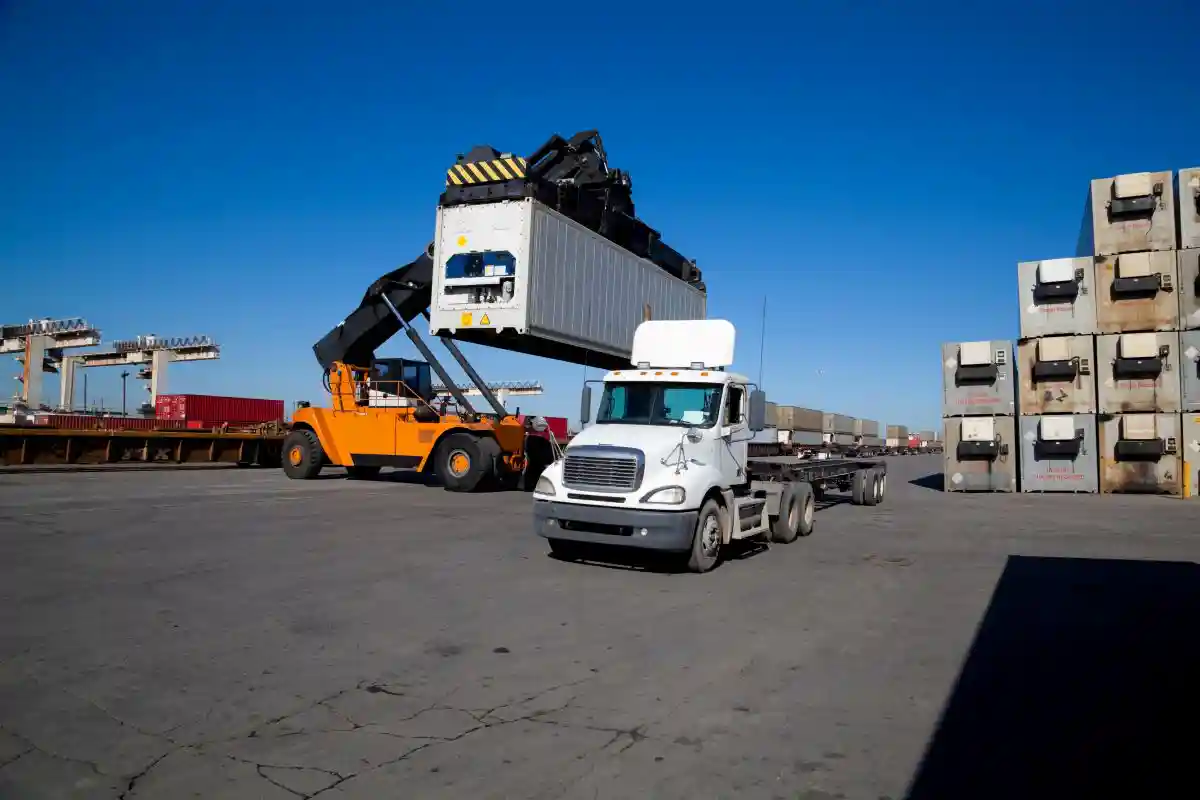
Important U.S. Ports for Receiving and Sending Goods to Canada
- Los Angeles/Long Beach (CA): The largest container complex in North America facilitates the connection between Pacific trade and both the United States and Canada.
- New York/New Jersey (NY/NJ): A primary channel for commerce connecting the East Coast and Canada.
- Port of Seattle (WA) & Tacoma (WA): Significant ports in the Pacific Northwest that provide connectivity to Canadian markets.
- Savannah (GA) & Houston (TX): Important Gulf and Southeast ports facilitate trade with North America.
Ensuring connectivity for shipping containers between Canada and the USA
- Rail Networks: Major railway companies, such as Canadian National (CN) and Canadian Pacific Kansas City (CPKC), play a crucial role in linking coastal ports to inland markets in both the United States and Canada.
- Land Borders: While maritime ports manage ocean freight operations, various land border crossings also play a crucial role in facilitating substantial container movement between the two nations.
Intermodal transportation in Canada
Intermodal transportation in Canada uses a combination of trucks, trains and ships to move goods efficiently. Rail is used for long-distance freight, while trucks handle short-distance deliveries. This approach reduces costs and lowers emissions. Major companies, such as CN and CPKC, connect ports to inland terminals, utilizing standardized containers and options like temperature-controlled shipping to optimize supply chains.
Intermodal Shipping from Canada to USA example
An example of Canadian-US intermodal shipping is transporting electronics from a Toronto factory to a Los Angeles retailer. Containers are trucked to a CN or CPKC rail yard in Toronto, then transported by train across North America, often via Chicago. A drayage truck manages the final mile to the store, combining trucking for short distances with long-haul rail for efficiency and cost-effectiveness.
Intermodal Transport from Toronto to Los Angeles Example
- Origin: A manufacturing located in Toronto, Canada.
- Truck: A local delivery truck picks up a large shipping container filled with electronics from a factory. It then takes the container to a nearby train yard, where it will be transferred to a train service, like Canadian National or CPKC, for further transportation.
- Rail: The container is placed on a train that transports it several hundred miles into the United States, often via Chicago, and arrives at a terminal near Los Angeles.
- Truck: A local truck picks up the container from the Los Angeles rail yard and takes it to its final destination, which is the distribution center of the retailer.
Canada Intermodal Transport Key Features and Benefits
- Single Container: The goods remain within the same container, thereby eliminating the need for time-consuming transloading.
- Mode Combination: Utilizes truck transportation for short distances (drayage) while employing efficient, long-haul rail systems for the majority of the cross-border journey.
- Cost Savings: Rail transport is frequently more cost-effective for long-distance logistics in comparison to trucking, rendering it particularly advantageous for large shipments, such as electronics.
- Customs: When moving goods across borders, it's important to have the right paperwork. This includes a commercial invoice and a bill of lading. These documents help make sure everything is in order and are usually managed by logistics companies.
Regulations and Permits for Transporting Overweight Loads and Containers in Canada
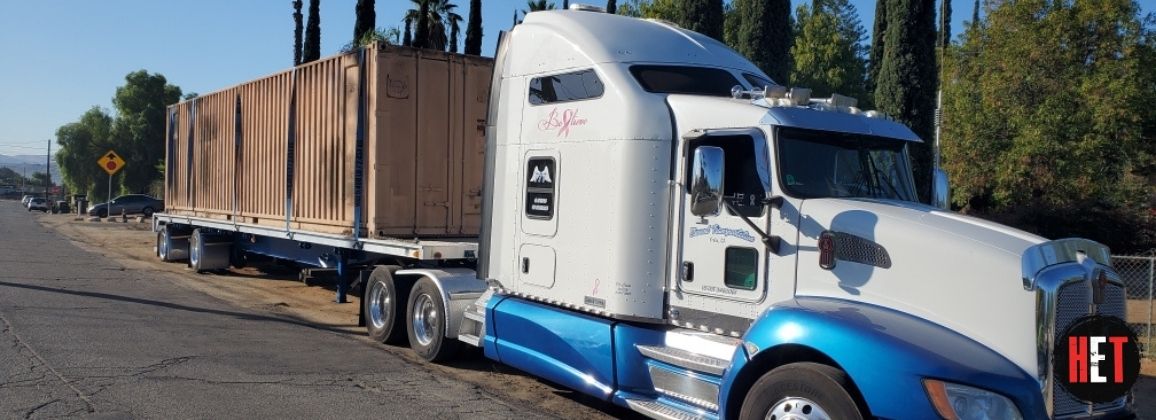
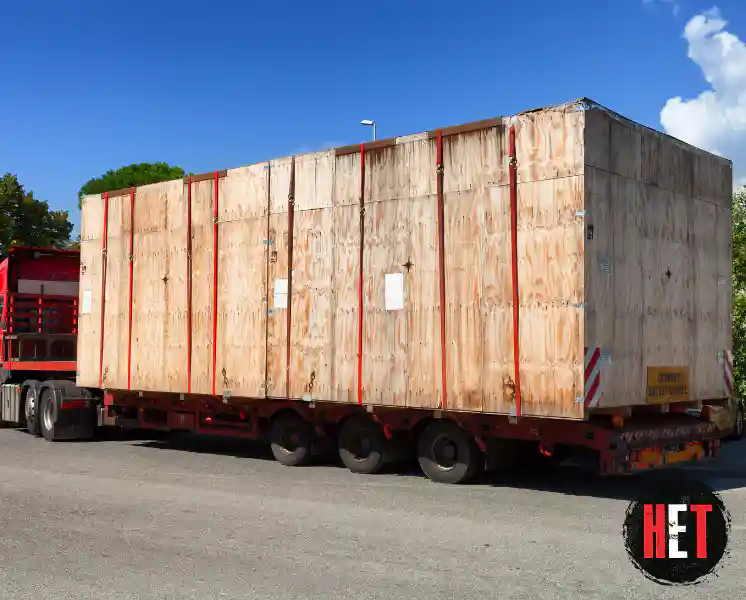
In Canada, oversized or overweight loads need permits from provincial transportation ministries if they exceed 2.6m in width, 4.15m in height, 23m in length, or 50,000kg. The process required applications, route planning, insurance and possibly escort vehicles, with processing times varying by province.
Types of Permits
- Single Trip Permit: For trips that only happen once and go in one direction, the processing is usually done quickly.
- Annual Permit: If you frequently transport heavy loads in Ontario, you can obtain an annual permit that allows you to carry loads up to 63,500 kg without needing permission each time.
- Enhanced Annual Permit: New rules allow for greater weight and length limits for regular freight carriers.
- Project Permit: For certain projects that take several months to complete.
- Superload Permit: For very large and heavy shipments, over 120,000 kilograms and 5 meters wide, careful planning is necessary.
Transport your loaded or unloaded container in Canada today!
Canada Shipping Container Transport FAQs by Category
Shipping container FAQs in Canada include types (20ft, 40ft, High Cube, Reefer, Flat Rack), sizes (standard and High Cubes), costs (vary by size, condition, distance), transport options (drayage, intermodal, cross-border) and regulations (weight limits, customs, prohibited items). Common terms include "sea can," and conversions to offices or homes are possible with zoning checks.
Container Sizes and Specifications
What are the most common container sizes in Canada?
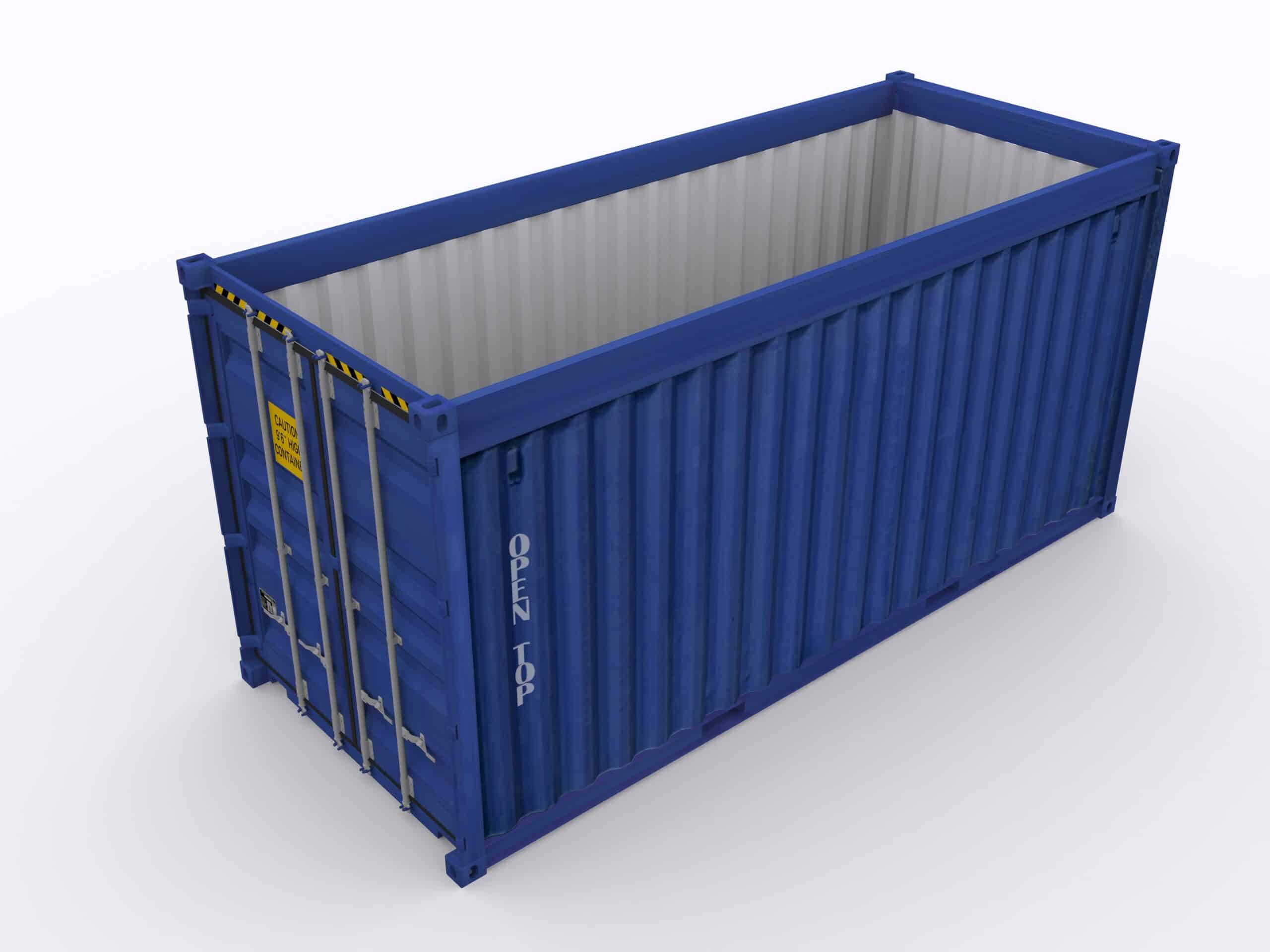
Shipping containers in Canada come in 20-foot and 40-foot sizes, with standard heights of 8.5 feet or taller High Cube containers at 9.5 feet. Smaller 10-foot containers and larger 45-foot ones are also available. Dry van containers are used for safe transportation, while specialized options include refrigerated containers (reefers) for food and flat racks for oversized items.
What is a "High Cube" container in Canada?
In Canada, a "High Cube" (HC or HQ) container is a standard shipping container that's 9'6" tall, one foot higher than the 8'6" standard. It offers extra vertical space for bulky cargo while maintaining the same length (20' or 40') and width.
What is the most weight a container can safely carry in Canada?
In Canada, a 20ft shipping container typically carries up to 55,000 lbs (25,000 kg), while a 40ft container holds between 58,000-60,000 lbs (26,300-27,200 kg). Specialized containers can take up to 65,000 lbs (29,500 kg). The maximum gross weight for standard containers is around 67,200 lbs (30,480 kg).
Transport and Logistics
How are containers transported over short distances in Canada?
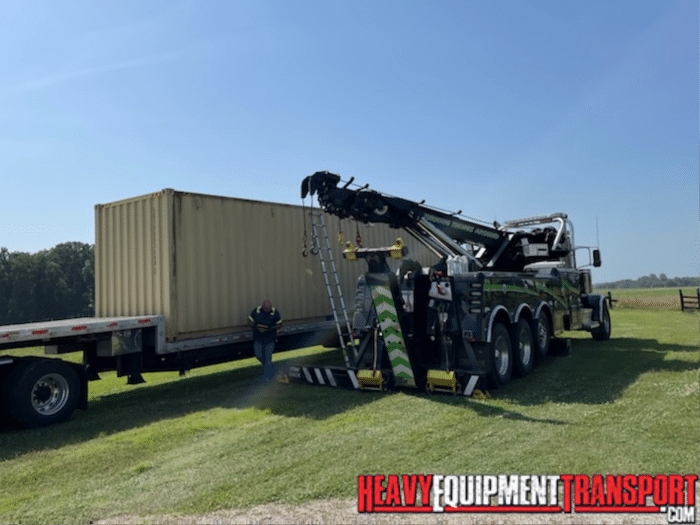
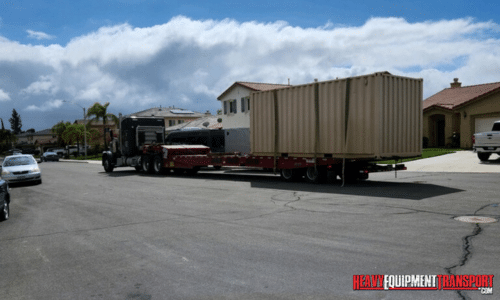
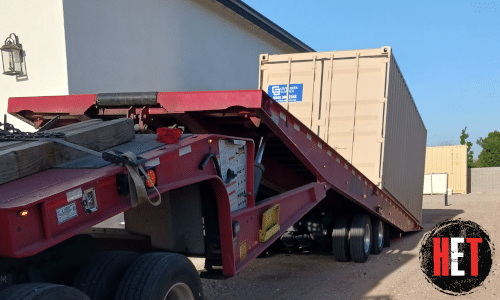
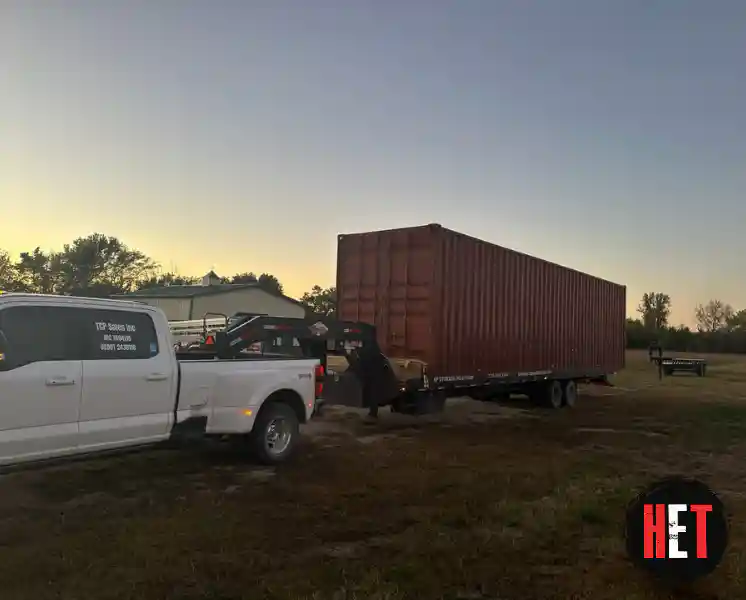
In Canada, containers are moved short distances (drayage) by specialized trucks with tilt-bed trailers or standard chassis from ports or rail yards to local destinations. This enables smooth intermodal transfers with long-haul rail or ocean freight, making unloading in urban areas easier.
Can containers be delivered directly to the ground in Canada?
Shipping containers can be delivered in Canada using tilt-bed trailers or side-lifter trucks. A firm, level surface and clear space are essential. Tilt-bed trailers are common, while side-lifters are used for tight spots.
What is intermodal transport in Canada?
Intermodal transport in Canada uses trucks, trains and ships for container shipments, improving efficiency and sustainability over long distances. Trucks manage local pickup and delivery, while trains carry the main loads, essential for supply chains.
Costs and Pricing
What is the average cost of local delivery for shipping containers in Canada?
Shipping container delivery in Canada costs between $200 and $650 CAD for a single drop-off. A 20-foot container ranges from $230 to $400, while a 40-foot container costs between $300 and $600. Prices can vary based on location, distance, site access and whether the container is loaded or empty. Complex deliveries, especially in city centers, can exceed $1,500.
What is the cost of long-distance container transportation in Canada?
Long-distance container transport costs in Canada range from $1,000 to over $7,500 CAD, depending on the distance, container size (20ft vs. 40ft), mode (truck vs. rail), season and service type.
Cross-country moves generally cost between $1,900 and $7,500, with routes from Toronto to Vancouver between $1,000 and $5,000.
Are there any hidden fees when shipping a container in Canada?
When shipping a container in Canada, hidden fees can include demurrage, storage charges, customs duties, port handling fees, fuel surcharges, and brokerage fees. These can significantly raise the base shipping cost, especially during delays or port congestion.
Regulations and Restrictions
Do I need permits to ship a container in Canada?
To ship a container in Canada, you'll need permits and documentation depending on whether the transport is domestic or international, as well as the cargo type. Essential documents include Commercial Invoices, Bills of Lading, and necessary approvals for regulated goods.
What items are prohibited from being shipped in containers to or from Canada?
When shipping to or from Canada, be aware of prohibited items like firearms, explosives, narcotics, certain chemicals, live animals, plants, some food items, and tobacco or vape products. Counterfeit materials and hate propaganda are also banned. Keep in mind that specific regulations may vary by carrier and country, so it's essential to check with the Canada Border Services Agency (CBSA) for the most accurate information.
What is the process for handling shipping containers when they arrive in Canada?
When a shipping container arrives in Canada, it undergoes risk assessment, documentation checks, and possible inspection by the Canada Border Services Agency (CBSA) before customs clearance. This involves pre-arrival filing and compliance with regulations, often requiring a customs broker and handling terminal/storage fees.
Buying and Ownership
What does "Cargo Worthy" (CW) mean in the context of Canada?
In Canada, as with international shipping, "Cargo Worthy" (CW) describes a used shipping container that has been inspected and certified to be structurally sound, wind-resistant, watertight and safe for transporting goods over land and sea.
How much does it cost to buy a container in Canada?
In Canada, shipping container prices range from $1,000 to over $6,500 CAD. Used 20-foot containers cost between $1,100 and $3,200, while new 40-foot containers range from $5,200 to $6,000. Prices depend on size, condition, features, location and market demand.
Port-to-Port Container Shipping to Canada
Ports
Shipping Container Transport Dimensions and Specifications
Canada container transport costs vary based on distance, port terminal, container status (loaded or empty), permits, routing, and delivery requirements. Submit your details above to receive accurate pricing and availability for your move.
Container Transport Services in All Canada Provinces and Territories
Popular Container Services
See All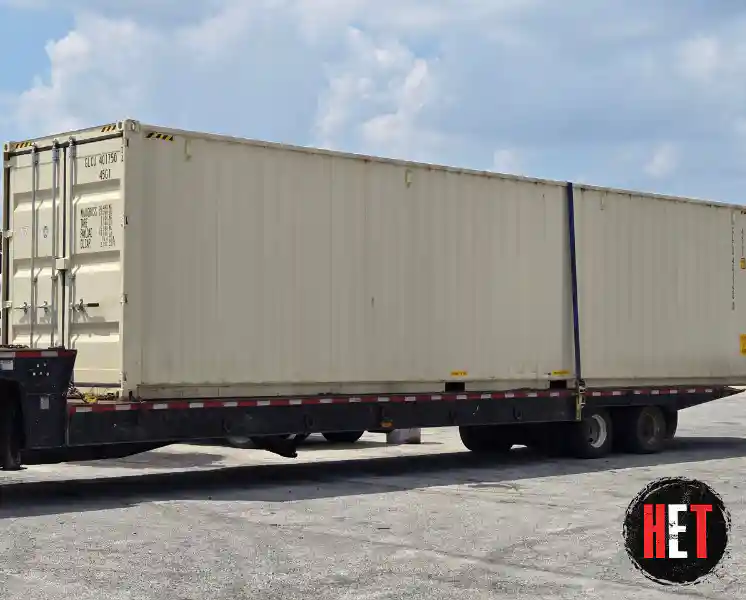
Need A Specific Transport?
Where Is Your Heavy Equipment Headed