
No Compromises. Full Results.
Speak with a logistics expert - we’ll handle
your transport from A to Z.

Nationwide

Experience

Experts
Why choose HET for transporting shipping containers in Wisconsin?
HET, a Wisconsin transportation company, has delivered 551 shipping containers this year with a record 98.3% on-time delivery rate.
Heavy Equipment Transport is ISO 9001 certified, delivering over 1,500 container shipments annually, exceeding our goal this year. Our on-time delivery helps clients save around 18%. We are licensed by FMCSA (MC-693977), with $250,000 coverage and GSA-certified.
As a FEMA Partner Approved company, we’ve been recognized as a potential Inc. 5000 fastest-growing company for seven years. With over 16 years in business, our team of 140 logistics experts operates in Florida, Kentucky, Ohio and Wisconsin.
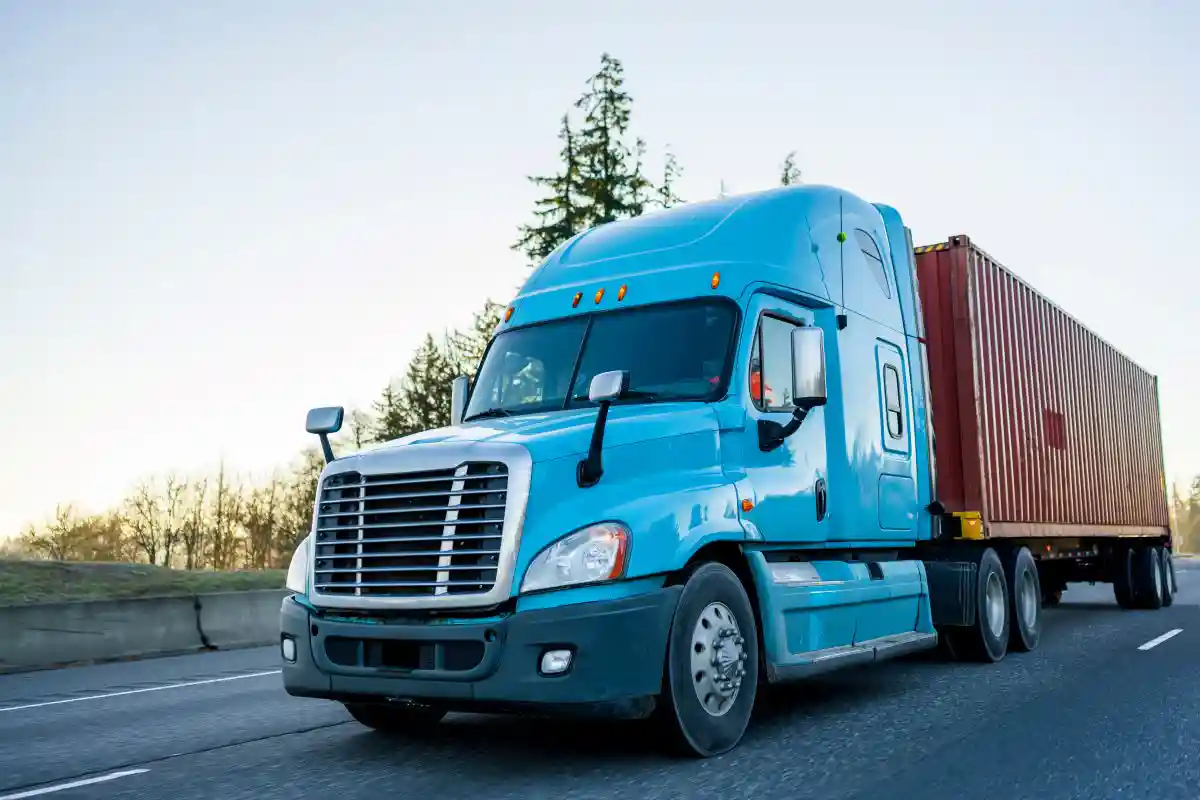
Confirm Container Transport Details
Confirm with confidence.
Get pricing that fits your route and load.
Professional Container Transport Services in Wisconsin
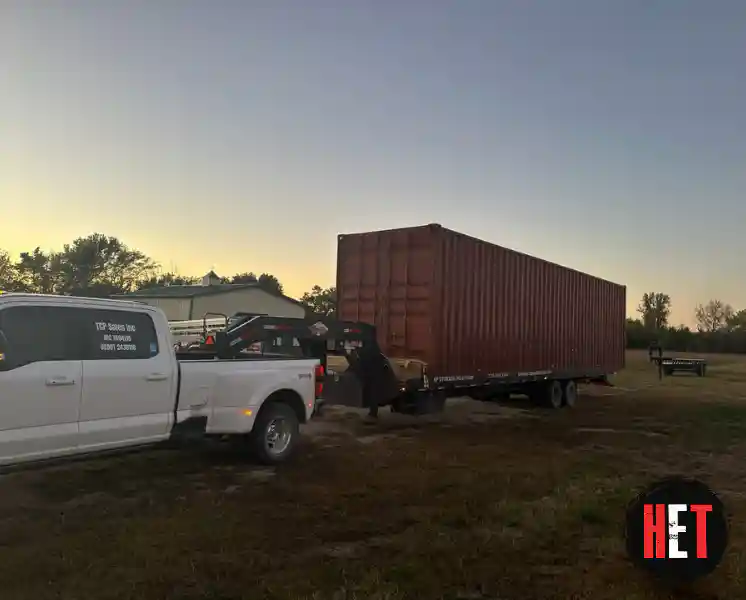
Heavy Equipment Transport makes moving containers easier and more efficient throughout Wisconsin. We are a trusted and licensed moving company that skillfully handles containers of all sizes. With our reliable tools and equipment, like flatbed trailers and cranes, we ensure safe transport. Plus, we provide personalized support to keep you informed and up to date every step of the way during delivery.
Reliable and well-insured container transport services in Wisconsin.
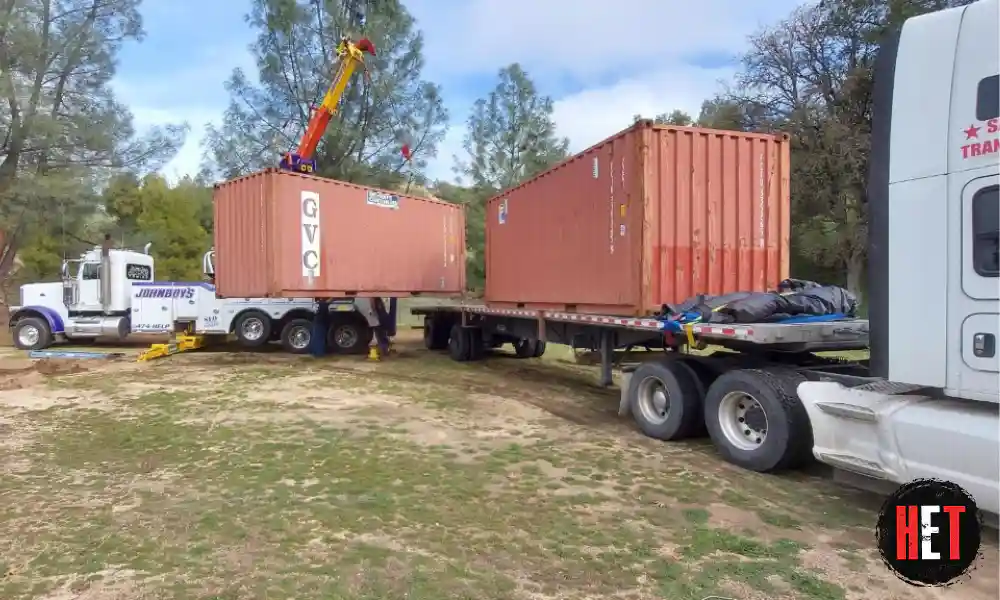
Heavy Equipment Transport ensures your shipping container is delivered in the same condition as picked up. Our skilled team and experienced drivers know the best routes in Wisconsin.
When you book with us, your container is fully insured, making you the holder of the insurance. This allows you to claim full compensation if the condition is not as expected. We transport all sizes of shipping containers.
Transport your loaded or unloaded container in Wisconsin today!
The Most Important Ports For Shipping Containers Transportation In Wisconsin
Wisconsin's main shipping ports are in Milwaukee, Green Bay, and Duluth-Superior. They are crucial for trade through the Great Lakes-Saint Lawrence Seaway, handling various shipments to connect the region to global markets.
Key shipping ports for container transportation in Wisconsin include
- Port Milwaukee: Southeastern Wisconsin is a key region that connects local communities to markets around the world. It plays an integral role in transporting goods by water, making it easier to move products to different destinations.
- Port of Green Bay: Located at the far west of Lake Michigan, this port is crucial for transporting over 2 million tons of cargo annually, including coal, limestone, and forest products, making it a key trade hub.
- Duluth-Superior Port: This port, which is partly located in Minnesota, is one of the largest and busiest in the Great Lakes region. It plays an important role in transporting a lot of iron ore, coal, and grain.
- Other Important Ports: The ports of Kenosha, Sheboygan, and Marinette are important places in Michigan for transporting goods. These ports play a key role in moving cargo efficiently.
These ports take advantage of the Great Lakes-Saint Lawrence Seaway, which allows Wisconsin to be linked directly to global shipping routes. This means that goods can be easily transported to and from Wisconsin to other parts of the world.
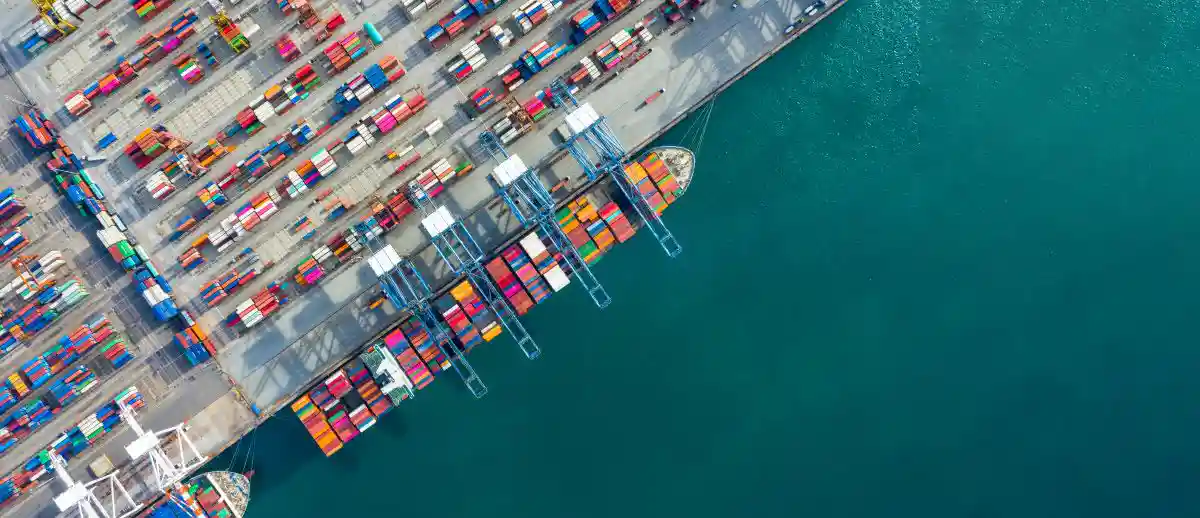
Intermodal Transportation in Wisconsin
Intermodal transportation in Wisconsin improves the movement of goods and people by connecting trains, roads, and waterways. Key projects include the Milwaukee Intermodal Station and the Muskego Yard bypass, supported by the Wisconsin Department of Transportation, aimed at enhancing travel and reducing congestion.
Intermodal transportation example in Wisconsin
In Wisconsin, intermodal transportation uses trucks for short-haul and rail for long-haul deliveries, transporting goods like grain, liquids, and consumer products. Key facilities involved in this process include the CN terminal in Chippewa Falls, Schneider's rail services for bulk liquids and the Milwaukee Intermodal Station, which provides passenger services.
- Agricultural Exports (Chippewa Falls & Arcadia): The Scoular Company loads grain into containers at its Chippewa Falls and Arcadia terminals, which are then trucked to CN rail lines for shipment to Vancouver and Prince Rupert.
- Bulk Liquid Rail Transport: Schneider Logistics is now combining trucks and trains for liquid transportation, using new containers specifically designed for this purpose. This approach enhances efficiency and may lower costs.
- Milwaukee Intermodal Station: This transportation center connects various travel options, including Amtrak trains, Greyhound buses, Lamers, Jefferson Lines, and Coach USA, facilitating easy transfers between regional bus services and train travel.
- Freight Rail Infrastructure: Large transportation companies such as BNSF, CN, and CPKC operate in the state to help transport shipping containers that are packed with various products.
Benefits and Context of intermodal transport in Wisconsin
- Cost Savings: Shifting freight transportation from highways to intermodal rail can result in cost savings of 10% to 50%.
- Efficiency: Intermodal transportation means using different ways to move goods over long distances, mainly by combining trains and trucks. Trucks handle the first and last parts of the journey. They pick up items from their starting point, take them to the train terminal, and then deliver them from the train terminal to their final destination.
- Future Growth: Efforts are currently underway to look into new options for terminals that could make rail and truck services in Wisconsin more financially viable and easier to operate.
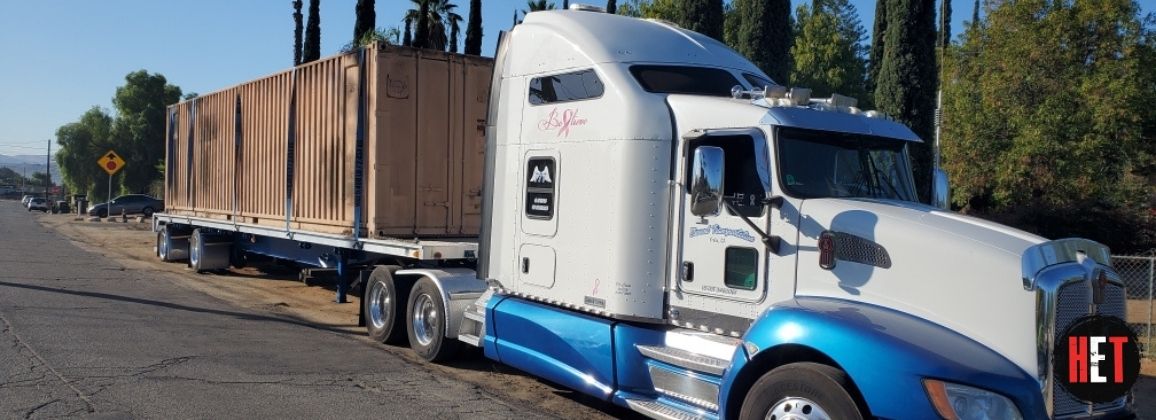
Regulations and Permits for Transporting Overweight Loads and Containers in Wisconsin
Wisconsin requires permits from the Department of Transportation (DOT) for loads that exceed the following limits: 80,000 lbs gross vehicle weight (GVW), 53 feet in length, 13.5 feet in height, or 8.5 feet in width. Important regulations include the need for red or orange flags at the corners of the load, "OVERSIZE LOAD" signs, specific travel restrictions, and mandatory insurance for obtaining permits.
Wisconsin's Permit Application Processes
- DOT Permits: You can apply for permits in Wisconsin in a few ways. You can use the online system set up by the Wisconsin Department of Transportation, send your application by mail, or hire a commercial service to help with the process.
- Local/County Permits: If you want to travel on county highways, like those in Outagamie or Barron County, you’ll need to get special permits. This usually means you should fill out some forms and send them in at least three business days before your trip. You'll also need to share specific details about your route and provide proof of insurance.
- Specialized Permits: You can get special permits for carrying extra weight when it comes to certain agricultural items, like fruits, vegetables, grains and livestock.
Regulations for Oversize and Overweight Loads in Wisconsin
- Safety Equipment: Loads must have 18-inch solid red or orange flags at each front and rear corner, and at the widest point if extending over 4 inches beyond the vehicle width.
- Signage: Two yellow "OVERSIZE LOAD" signs with black lettering are required: one on the front and one on the rear.
- Lighting: In the context of nocturnal operations, the implementation of specific lighting measures is essential to guarantee adequate visibility.
- Restrictions: Travel restrictions are enforced during designated peak hours and holidays.
- Seasonal Changes: Seasonal weight restrictions may be in effect, with potential exemptions occasionally available.
General Legal Limits (Without Permit) in Wisconsin
- Weight: The maximum permissible gross vehicle weight (GVW) is 80,000 pounds.
- Height: The maximum permissible height is 13.5 feet.
- Width: The widest allowable dimension is 8.5 feet, which is equivalent to 102 inches.
- Length: The maximum allowable length is 53 feet.
Ready To Get Started?

Shipping Container Transport Rates in Wisconsin
The cost of transporting a shipping container in West Virginia depends on the distance travelled, route, season, size, and weight, among other factors. Our container shipping services are affordable without any hidden fees.
In addition, we have expedited services for clients who want their containers shipped urgently. Our shipping quotes are free and accurate.
Get your Wisconsin container transport rate today
Our Recent Transports
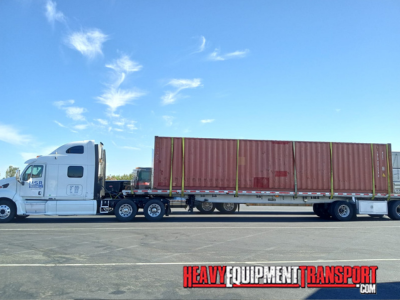
SHIPPING A 40FT CONTAINER ON A FLATBED TRAILER
Transport DetailsLost Hills, CA
Waukesha, WI
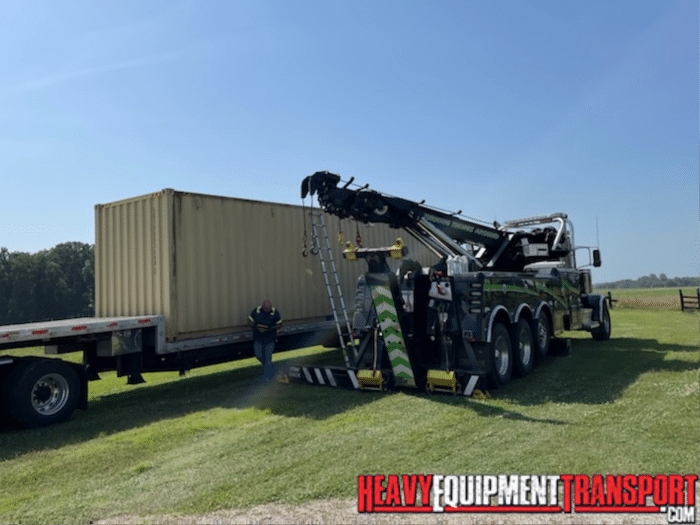
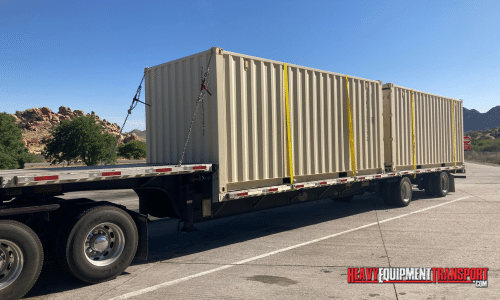
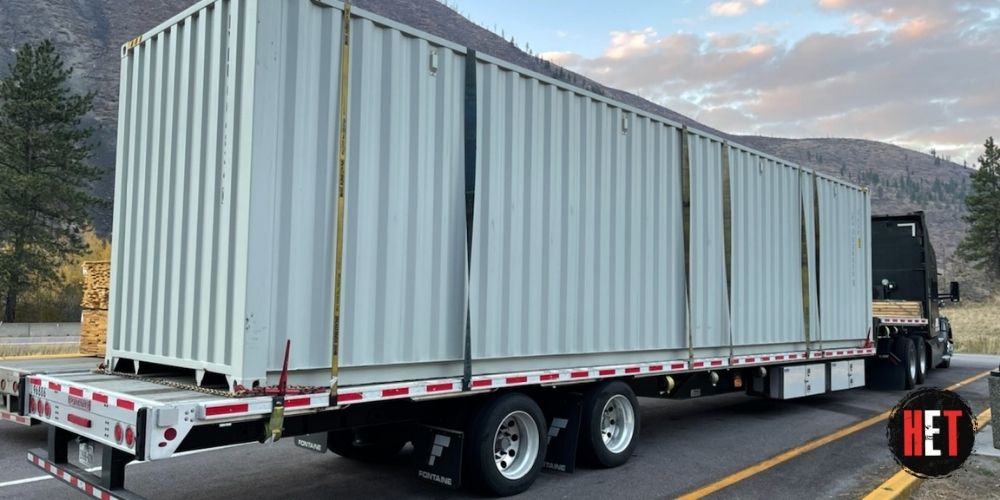
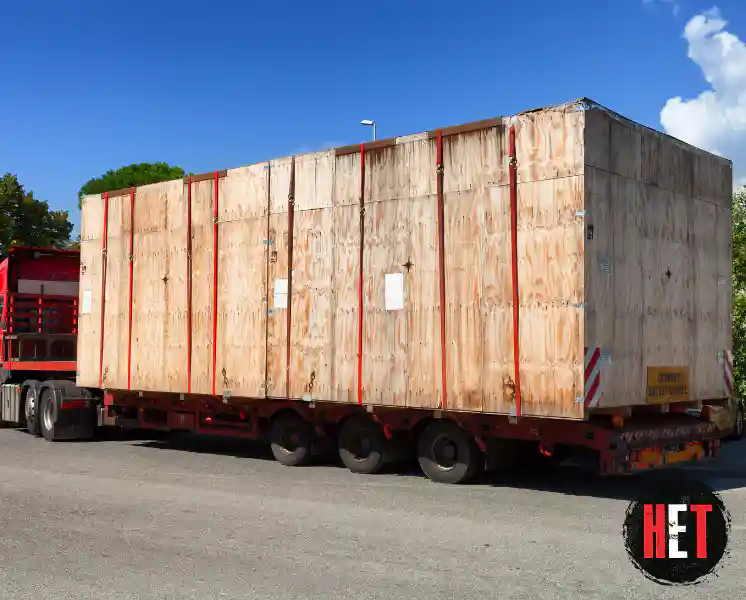
This 40ft container with household goods was transported from Lost Hills, CA, to Waukesha, WI, with the help of Corey McGarry. The 40L 8W 8.5H and 25,000lbs container was loaded on a flatbed trailer and delivered safely. We transport shipping containers of all dimensions and weights. Call us for a free quote.
Wisconsin Shipping Container Transport FAQs by Category
Logistics and Transportation
How are containers moved in Wisconsin?
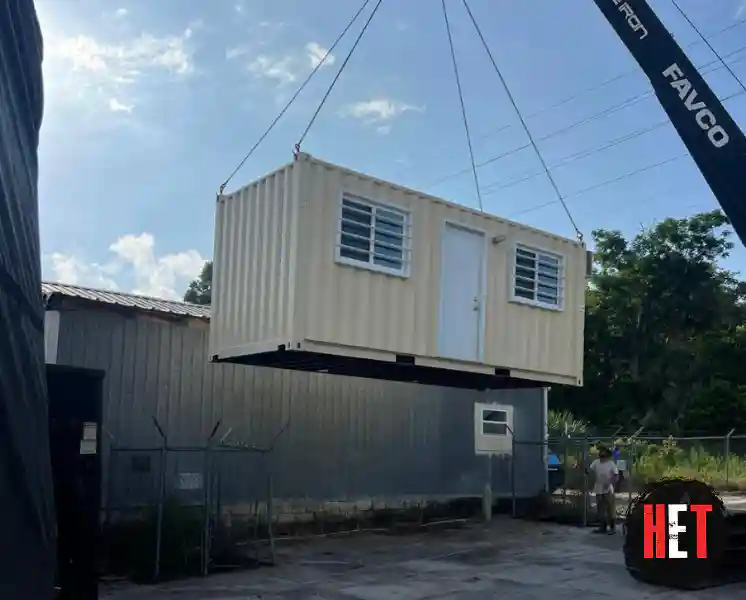
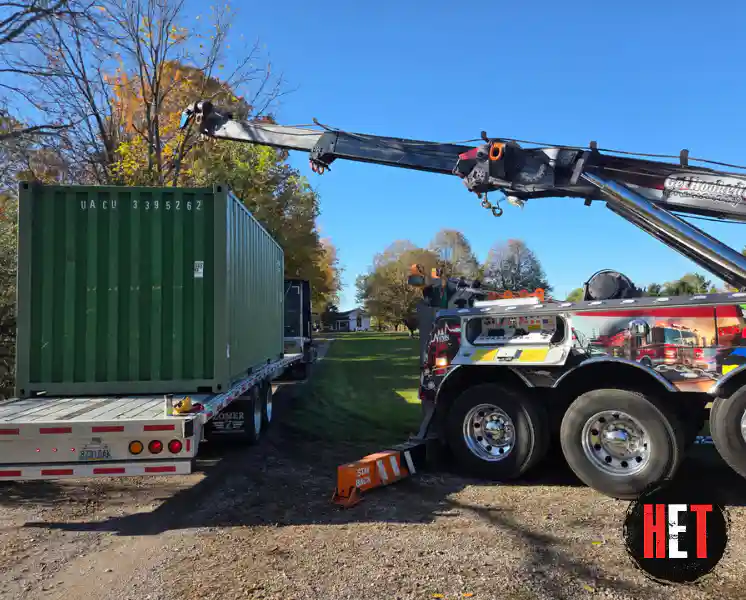
In Wisconsin, containers are mainly transported by heavy-duty trucks for local delivery, while rail is used for long-distance logistics to cities like Milwaukee, Madison and Green Bay. Specialized methods include crane lifting, "mule" delivery for tight spaces and roll-back tow trucks.
What are the weight capacities permitted in Wisconsin?
In Wisconsin, trucks can legally weigh up to 80,000 pounds when fully loaded. For the individual wheels on a single axle, the weight limit is 20,000 pounds, and for two axles working together (called tandem axles), the limit is 34,000 pounds on main highways. During winter when roads are frozen, these limits can go up to 98,000 pounds in some cases, and special permits can also allow for heavier loads. However, smaller roads have stricter weight limits to help protect their surfaces.
What are the most popular container dimensions in Wisconsin?
In Wisconsin, the most common shipping containers are 20 feet by 8 feet or 40 feet by 8 feet. These sizes follow worldwide standards, allowing for easy transportation and storage globally.
What is intermodal transport in Wisconsin?
Intermodal transport in Wisconsin combines truck, rail, and water modes to move freight in a single container, improving efficiency and reducing costs over long distances. Key hubs, such as Milwaukee's Intermodal Station, connect to Chicago and Minneapolis.
What are the estimated costs for shipping containers in Wisconsin?
In Wisconsin, 20-foot shipping containers range from $1,000 to $5,900, while 40-foot containers cost between $2,000 and $10,500. Prices vary based on condition and features, with options from companies like Boxhub and WisContainer, especially in Green Bay.
Regulations and Zoning
Are shipping containers allowed in residential zones in Wisconsin?
In Wisconsin residential zones, shipping containers are typically prohibited as permanent structures but may be allowed for temporary storage (about 45–90 days) during construction or remodeling. Permanent use requires zoning approval and adherence to regulations on aesthetics and placement.
Do I need permits to place a container in Wisconsin?
In Wisconsin, permits are usually required for placing shipping containers, as they're classified as structures governed by local zoning and building codes. Rules vary by municipality, with some areas restricting their use in residential zones.
Do I need permits for transporting overweight equipment in Wisconsin?
In Wisconsin, moving heavy or large equipment requires a special permit if your vehicle weighs over 80,000 pounds, exceeds 8 feet 6 inches in width, is taller than 13 feet 6 inches, or if your trailer is longer than 53 feet. Obtain the application from the Wisconsin Department of Transportation (WisDOT), and note that permits are valid for only 14 days.
Container Types and Condition
What are the primary common types of containers in Wisconsin?
In Wisconsin, there are mainly two kinds of containers. The first type is used for throwing away trash and recycling. These are the bins that people at home and businesses use to collect their waste and recyclable materials. The second type is used for shipping and storing items, which is common in various industries for holding and moving goods.
What does "cargo-worthy" mean in Wisconsin?
"Cargo-worthy" describes a shipping container that is safe and dependable for moving goods around the world. To be considered cargo-worthy, the container needs to be in good shape and have a special tag that shows it meets safety standards.
In Wisconsin, what is a container "Grade B"?
In Wisconsin, a "Grade B" container is a good-condition shipping container for transporting goods. While solid and watertight, it may have dents and surface rust. Grade B containers are often used for secure storage and are inspected for safety and reliability.
Site Preparation and Delivery
What is required to deliver and place a container in Wisconsin?
When you bring a shipping container to Wisconsin, you need to get local permits, which you can usually obtain in one day. Make sure you have at least 14 feet of height and a flat area, like gravel or concrete, for the installation. You will need 60 to 120 feet of space for the delivery vehicle, and transportation costs will be between $450 and $1,000.
How are shipping containers unloaded in Wisconsin?
In Wisconsin, shipping containers can be unloaded easily using tilt-bed trailers, cranes, and loading docks with forklifts or pallet jacks. Some companies also use side-loaders and tilting trailers for these tasks. Services are available in places like Madison.
Restrictions
What items are prohibited from being shipped in a shipping container to or from Wisconsin?
When shipping containers to or from Wisconsin, there are some items that you cannot include. These items are potentially dangerous or could cause problems during transport. They contain hazardous materials like flammable liquids, explosives, certain chemicals, and batteries. You also cannot send perishable goods, live plants or animals, illegal substances, or personal documents and jewelry. These rules are in place to keep everything safe, as shipping containers can be affected by extreme temperatures and pressure changes during their journey.
Choose Your Region In Wisconsin And Get A Container Shipping Quote!
Regions
Don’t see your city or town listed?
No problem! Call now and speak with a live logistics agent.
We’ll get your container delivered to where you need it.
Shipping Container Transport Dimensions and Specifications
Wisconsin container transport costs vary based on distance, port terminal, container status (loaded or empty), permits, routing, and delivery requirements. Submit your details above to receive accurate pricing and availability for your move.
Popular Container Services
See All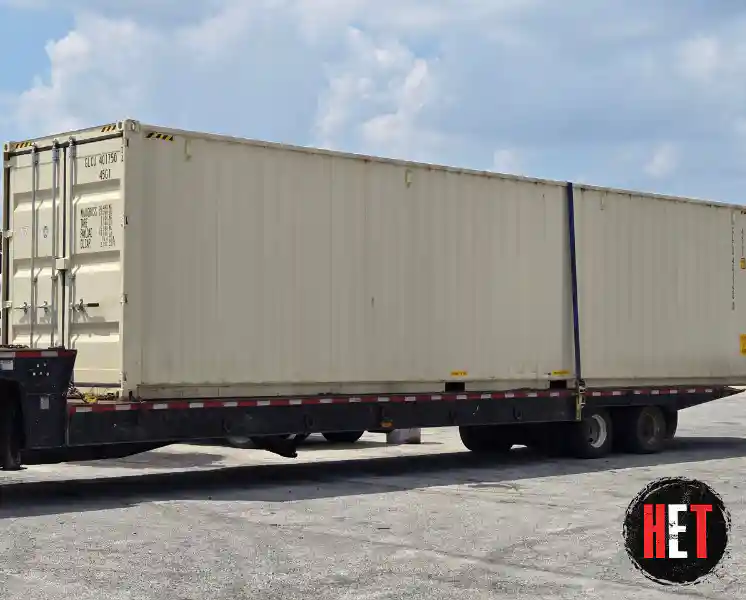
Need A Specific Transport?
Where Is Your Heavy Equipment Headed