
No Compromises. Full Results.
Speak with a logistics expert - we’ll handle
your transport from A to Z.

Nationwide

Experience

Experts
We have an on-time delivery rate of 98.7% moving containers in Kansas
Heavy Equipment Transport, ISO 9001 certified, delivers over 1,500 container shipments annually and has already exceeded this number this year.
We prioritize on-time delivery, typically saving clients around 16%.
Licensed by the FMCSA (MC-693977) with $250,000 coverage, we are GSA-certified and a FEMA Partner Approved company.
Recognized as a potential Inc. 5000 fastest-growing company for seven years, we have over 16 years of experience and a team of 140 logistics experts operating from Florida, Kentucky, Ohio and Kansas.
Confirm Container Transport Details
Confirm with confidence.
Get pricing that fits your route and load.
Professional and Reliable Container Moving Services in Kansas
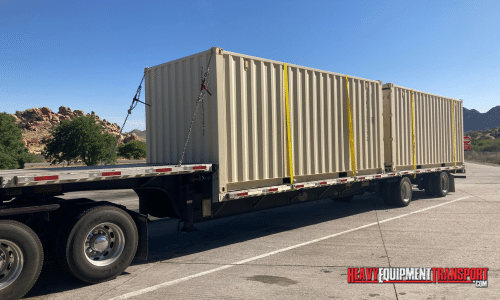
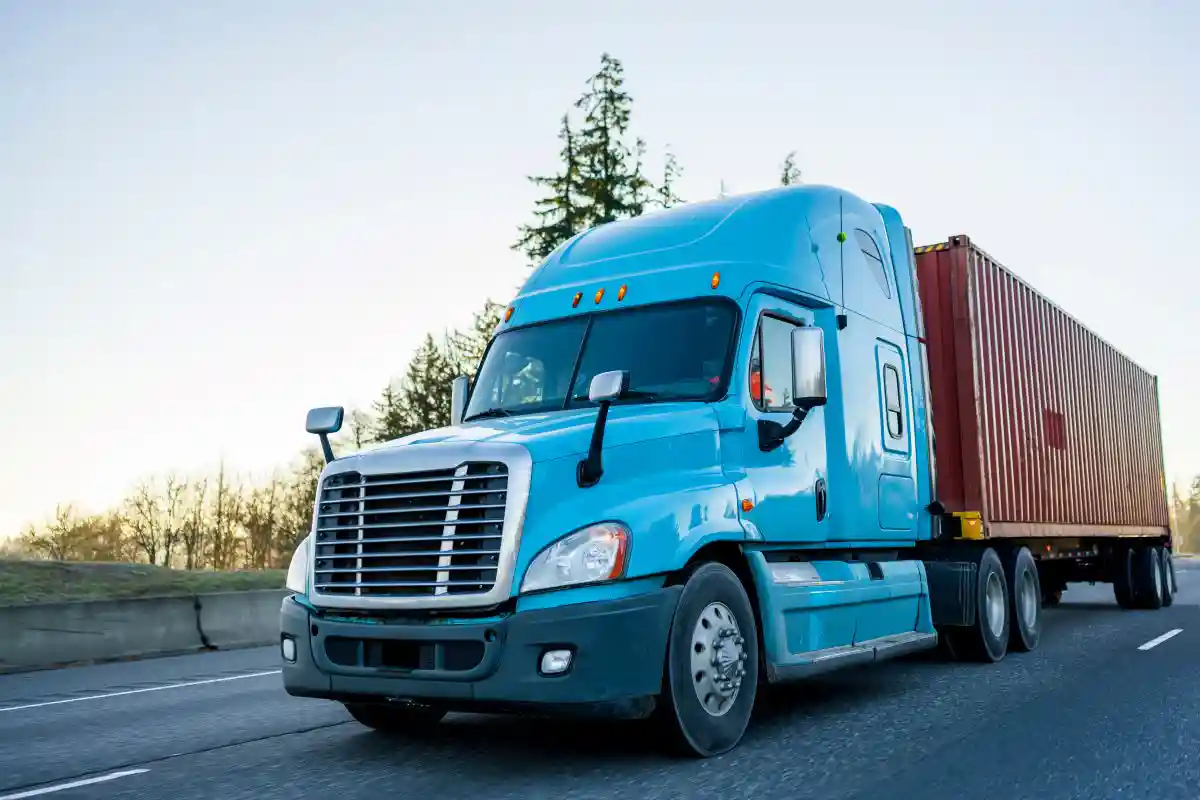
Heavy Equipment Transport is a licensed and bonded container mover in Kansas, with over a decade of experience. We efficiently transport both empty and full shipping containers of various sizes, including 20ft and 40ft standard containers. Our specialists ensure all necessary paperwork is in order and recommend the best trailers based on container size and weight.
Efficient and Fully Insured Container Moving Services in Kansas
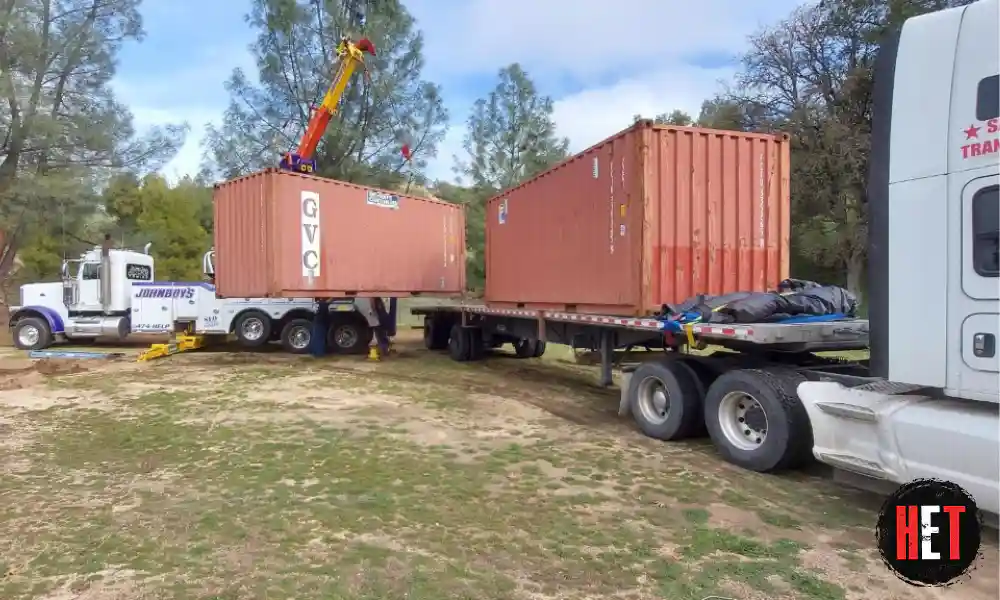
We provide full insurance for every shipping container transported in Kansas. Owners can contact the insurance company directly for compensation.
Our experienced drivers know the safest and fastest routes, ensuring secure and timely services. We offer loading and unloading assistance, as well as riggers, for an additional fee.
Transport your loaded or unloaded container in Kansas today!
Main Ports in Kansas
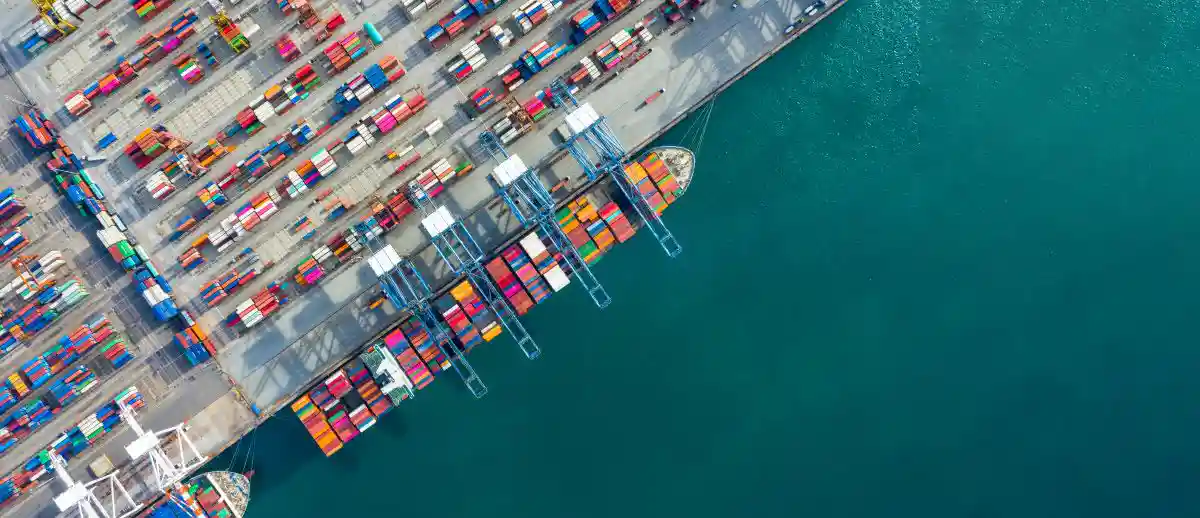
Kansas's main port is the Port of Kansas City on the Missouri River, serving as a key inland hub for barge, rail, and truck transport. It includes facilities like Terminal Woodswether and the emerging Missouri River Terminal, crucial for bulk goods such as grain, steel, and fertilizer.
The port connects to national waterways, benefiting regional logistics. Smaller terminals are located near Atchison and Leavenworth, while the Port of Catoosa in Oklahoma serves businesses in southern Kansas.
Important Port Facilities in Kansas City
- Port of Kansas City (Port KC): A central multimodal facility at the confluence of the Missouri and Kansas Rivers, handling grain, steel, salt and more, with intermodal transfers via barge, rail and truck.
- Terminal Woodswether: Port KC's main public terminal is currently undergoing extensive renovations aimed at enhancing its capacity.
- Missouri River Terminal (MRT): A significant new initiative for Kansas City aims to establish a large inland port akin to Germany's Port Duisburg, thereby enhancing logistics options.
- CenterPoint-KCS Intermodal Freight Gateway: A dedicated intermodal facility centered on enhancing global supply chains, with a particular emphasis on routes through Mexico.
Other Kansas River Terminals
- Northeast Kansas: Smaller commercial terminals are located near Atchison, Leavenworth, Lansing and White Cloud, utilizing the Missouri River.
Strategic Importance
- Strategic Importance: Kansas is landlocked but utilizes the Missouri River for barge access to the Gulf of Mexico, East Coast, and Great Lakes.
- Kansas City stands out as a key distribution hub, taking full advantage of its robust connections to Class I railroads, such as Union Pacific, as well as major interstate highways like I-70, I-35, I-29, and I-49.
Permits and Regulations in Kansas for Moving Overweight or Oversized Machinery and Shipping Containers
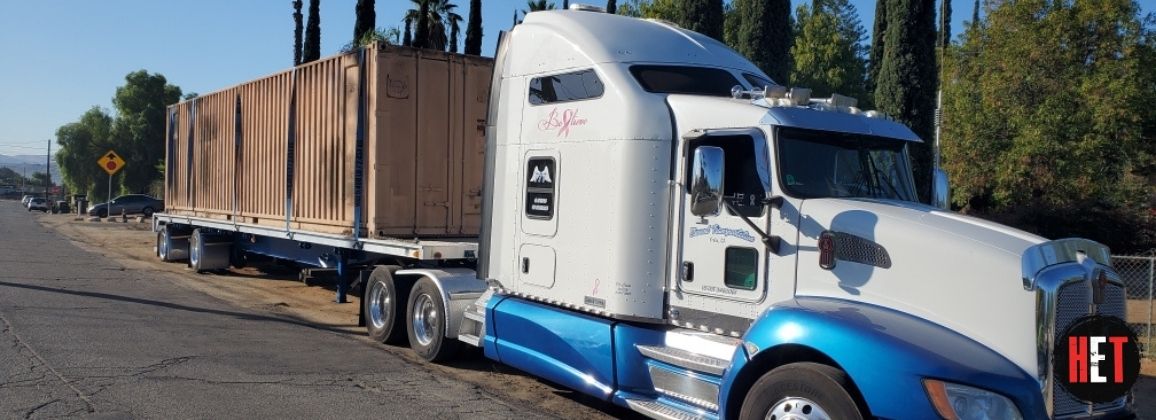
Transporting oversized or overweight machinery and shipping containers in Kansas requires permits from the Kansas Department of Transportation (KDOT). Permits include single-trip, annual, or "superload," each with specific rules for dimensions (max 102" wide, 168" high, 80k lbs on interstates), escort vehicles, signage, and $500k liability insurance. Applications must be made through KDOT, often for designated routes, adhering to strict regulations, especially for loads over 150,000 lbs.
Key Permit Types for Overweight/Oversized equipment transport and Shipping Container in Kansas
- Standard Permits: For both single trips and multiple trips occurring within seven days, permits are required for loads that exceed legal weight limits, such as those exceeding 80,000 pounds on interstate highways.
- Annual Permits: The continuous transport of oversize and overweight loads, such as agricultural equipment, is authorized for 1 year. This authorization is specifically assigned to a designated vehicle and is applicable only during daylight hours.
- Superload Permits: For loads exceeding 150,000 pounds, a comprehensive bridge analysis is required, along with payment for any potential damage incurred. Additionally, certified escorts are mandatory for transport operations.
- Large Structure Permits: For oversized loads that exceed standard limits, valid for 30 days, it is necessary to notify the appropriate utility or railroad authorities.
For oversized loads that exceed standard limits, valid for 30 days, it is necessary to notify the appropriate utility or railroad authorities.
Shipping General Requirements for Overweight and Oversized Equipment and Containers
- Insurance: For Overweight/Oversized Equipment and Containers transport requires a minimum coverage of $500,000 for general and auto liability.
- Dimensions: Legal transportation limits for overweight/oversized equipment and containers are typically 102" wide, 168" high, and 80,000 lbs on interstates (85,500 lbs without a permit elsewhere).
- Signs: Black letters on yellow, 10" high, on front/rear bumpers.
- Lights: Headlights, transport limits for overweight/oversized equipment in Kansas (low beams in traffic), amber clearance lights, and visible taillights/brake lights.
- Escorts (Pilot Cars): When transporting oversize or overweight loads, specific measures must be taken: use designated lights, stop traffic at intersections, and remain within 300 feet of the load.
How to Get a Permit in Kansas
- Apply through KDOT: The Kansas Department of Transportation oversees permit management through its online portal or by direct consultation.
- County/Local Permits: Some local jurisdictions (like Douglas County) require separate road/utility permits for certain movements or placements.
Transporting Shipping Containers in Kansas: Permit Requirements
- Transport: Transporting a container typically necessitates the acquisition of an oversize or overweight permit if the container exceeds designated size or weight limitations.
- Placement: To set up anything on land, you must obtain permission from local authorities to ensure compliance with local rules. This includes having experts verify that the structure meets safety and building standards, which can vary by location. For instance, Topeka has specific guidelines for temporary setups.
Ready To Get Started?

Shipping Container Transport Rates in Kansas
Heavy Equipment Transport offers affordable container moving services in Kansas. Our Kansas container transport costs aren’t standard, this is because they’re influenced by factors such as moving distance, route, weight and size, loading and unloading assistance among other factors.
The more the miles covered, the more you will pay. We offer free and accurate container transport quotes to all our clients. Our container moving rates are all-inclusive without any hidden fees.
Get your Kansas container transport rate today
Our Recent Transports
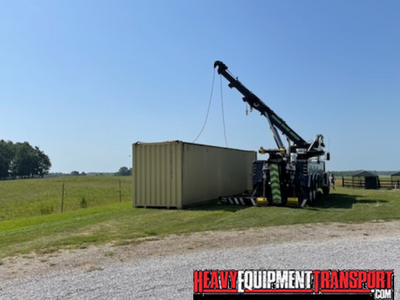
SHIPPING A 40FT HIGH CUBE SHIPPING CONTAINER WITH GOODS
Transport DetailsClinton, MO
Kansas City, KS
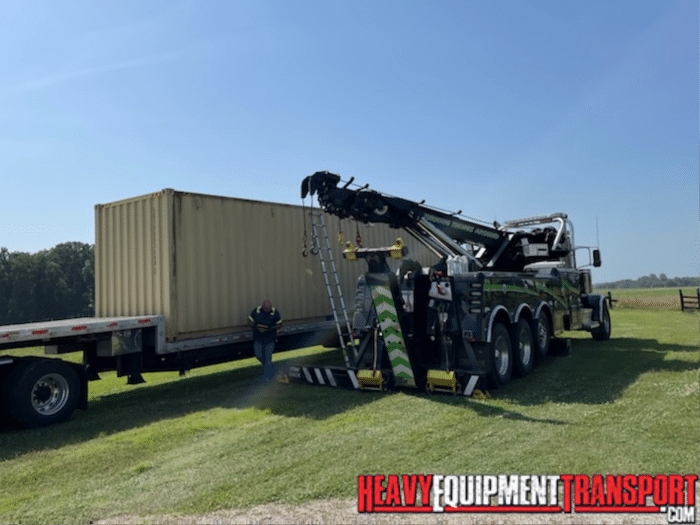
Janelle Foltz, successfully helped transport this 40ft high cube container with goods from Clinton, MO to Kansas City, KS. Janelle contacted a driver and crane operator near the pick-up location where the 40 L 8 W 9.6 H and 40,000lbs high cube container was safely loaded on a trailer and dispatched. To transport a high cube shipping container with goods, call us today!
Kansas Shipping Container Transport FAQs by Category
Shipping containers in Kansas are popular for storage, workshops, tiny homes, and offices, with sizes like 20ft & 40ft standard/high cube being common. Key FAQs involve zoning/permits (check local codes, may need engineer approval), delivery (level ground, 10-12ft clearance needed), grades (WWT, CW, HC for quality), and uses (storage, conversion). Costs vary by new/used, grade, size, and location, with delivery requiring site prep for maneuverability.
General & Specifications
What sizes are available?
In Kansas, standard shipping container sizes include 20ft, 40ft, and 40ft High Cube options, with specialized 45ft High Cubes. You can choose from new, used, or refurbished units to meet various storage, transportation and construction needs.
Are the shipping containers strong, durable and secure?
Shipping containers are strong and secure, made from durable Corten steel that resists corrosion and harsh weather. They can last over 25 years and can be modified for various uses. For high-value storage, it's essential to add security features and ensure proper anchoring.
Do shipping containers have titles?
Shipping containers are considered cargo instead of vehicles, so they don't have titles like cars do. Each container has its own identification number and a special plate called a CSC Plate, which is needed for international shipping.
What sizes are available for containers?
Standard shipping containers typically range from 10ft to 40ft in length and are usually 8ft wide, with standard heights of 8'6" and "High Cube" options at 9'6" for added vertical space, suitable for various storage and transport needs.
Containers Condition & Grading
What do the condition grades (WWT, CW, New/1-Trip) mean?
- Wind and Water Tight (WWT): These are used containers that may exhibit signs of age, rust, or repairs, but they are guaranteed to keep the contents dry and secure from the elements.
- Cargo Worthy (CW): These containers are in satisfactory condition for a marine survey and for certification for international transport by ship or train.
- New/1-Trip: These containers have been loaded only once from the manufacturer and are in excellent condition, exhibiting minimal wear.
What are the shipping container grades A, B, and C?
Shipping container grades A, B, and C indicate decreasing cosmetic condition and age, but all are fundamentally wind and watertight (WWT), meaning they effectively keep elements out.
- Grade A: This type of container is in excellent condition (like new or used once), with few dents or rust. It is suitable for shipping or display.
- Grade B: While it shows more wear, it is still suitable for general storage.
- Grade C: This budget item has notable cosmetic issues, rust, or repairs, but remains WWT and suitable for economical, rugged storage where aesthetics are not a concern.
Delivery & Logistics
How much space is needed for delivery a container in Kansas?
When planning a container delivery in Kansas, the area should be about 60 to 100 feet long, 12 to 14 feet wide and have a height clearance of 14 to 20 feet. Requirements may vary for 20 or 40-foot containers. The space must also be level and clear of overhead obstacles for safe delivery.
What are the methods for delivering containers in Kansas?
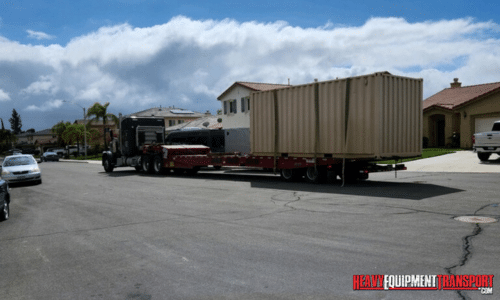
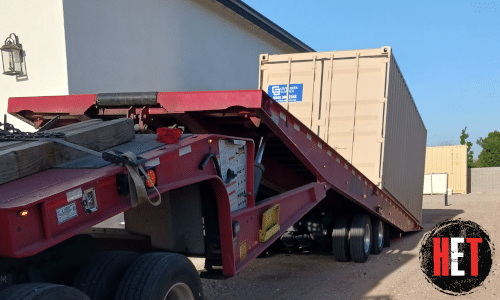
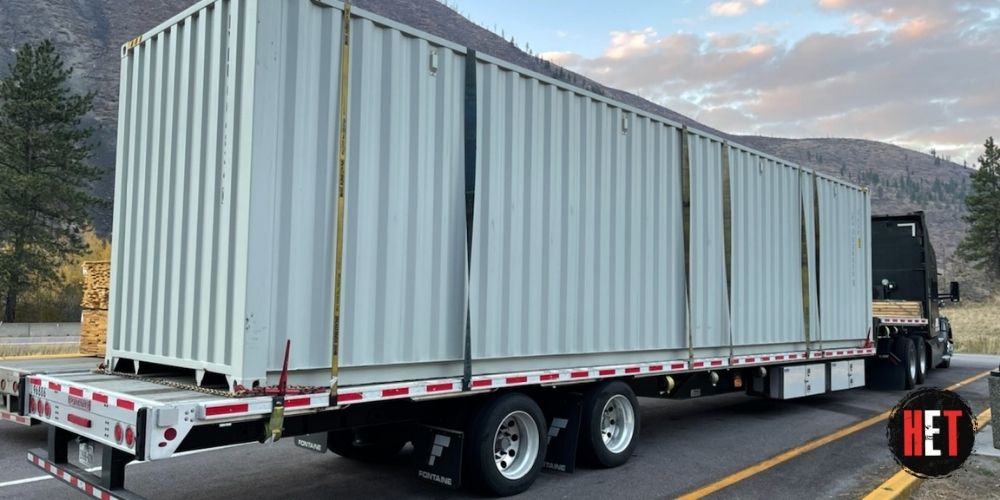
In Kansas, container delivery could be done on flatbed and tiltbed trucks, along with sidelifters and forklifts. The method varies based on container size, site access and unloading needs, using semi-trailers for large containers and remote-controlled systems for precise placement in areas like Topeka, Wichita and Joplin.
Where can containers be delivered safely in Kansas?
Delivering containers in Kansas requires finding licensed, insured movers and ensuring the delivery site meets local zoning and permits. It should have clear access, stable ground, and respect utility lines, focusing on proper placement for security and accessibility.
Regulations & Permits
Do I need permission for a special license to put a shipping container on my property in Kansas?
In Kansas, you usually need a building permit and or a zoning variance/special use permit from your local city or county, even for temporary storage. Rules vary, so contact your local planning or building department (like Johnson County or Wamego) for specific requirements, as these can range from simple storage to complex home conversions, often needing an engineer's approval for safety.
What are the typical local requirements in the state of Kansas?
- Permits: Obtaining a container permit in Kansas requires approval from a qualified engineer to ensure structural safety and compliance with local codes.
- Zoning: Placing a container permanently on a property in Kansas may be restricted to commercial or industrial zones.
- Temporary Use: Many cities allow temporary use for a limited time (e.g., Kansas City allows 30 days in six months in residential areas).
- Aesthetics: Some areas in Kansas require that containers be screened from view with landscaping or fencing and painted in earth tones to blend in better.
Where can I verify the rules for container transport in Kansas?
To verify Kansas container transport rules, consult the Kansas Corporation Commission (KCC) for carrier safety and economic regulations, and the Kansas Department of Transportation (KDOT) for vehicle info. Also, check local ordinances and Kansas Statutes (K.S.A.) for specific regulations on items like alcohol and hazardous materials, utilizing resources from the Kansas Secretary of State and the Kansas Highway Patrol for safety enforcement.
Cost & Quotes
How much does shipping a container in Kansas cost?
Shipping a container to or from Kansas averages $2.65 to $3.00 per mile for standard freight. Prices may vary, so contact HET for an accurate quote.
How can I get an accurate quote?
For an accurate shipping container quote to or from Kansas, contact Heavy Equipment Transport with your specific needs and request a detailed breakdown. Clarify the terms and any additional costs upfront to avoid misunderstandings.
Are there any hidden fees when I request a container transportation quote from HET?
HET (Heavy Equipment Transport) offers transparent pricing, but container shipping may include additional charges such as Demurrage/Detention fees, Port Fees, and Fuel Surcharges, especially for international moves. If you're moving to Kansas, check if your HET quote covers these additional fees. Hidden costs can arise due to handling, distance, or peak seasons, so it's essential to confirm all potential charges upfront.
Container Types & Specifications
What container sizes are commonly available in Kansas?
In Kansas, the most widely used shipping containers are 20 feet and 40 feet long. There's also a popular 40-foot High Cube container, which is taller inside and provides extra space for larger items. If you need something different, there are smaller options like 10- and 16-foot containers, as well as larger ones like 45- and 53-foot containers, which may be available depending on specific requirements. All of these containers are 8 feet wide.
What is the weight of an empty shipping container?
The weight of an empty shipping container varies based on its size. For example, a standard 20-foot container typically weighs between 4,500 and 5,000 pounds (approximately 2,050 to 2,300 kg). In contrast, a larger 40-foot container generally weighs around 8,200 to 8,800 pounds (or about 3,720 to 4,000 kg). Understanding the empty weight of these containers is crucial for calculating their total weight when loaded with goods. You can usually find this information on a sticker on the container doors.
What are the ISO specifications in Kansas?
Kansas utilizes several ISO standards, including ISO 18013-5 for mobile driver's licenses and ISO 19115 for geospatial data. The state also supports ISO 9001 (Quality), ISO 14001 (Environmental Management), and ISO 45001 (Health and Safety) for businesses. Assistance is often provided by CIRAS at Kansas State University and private consultants.
Choose Your Region In Kansas And Get A Container Shipping Quote!
Regions
Don’t see your city or town listed?
No problem! Call now and speak with a live logistics agent.
We’ll get your container delivered to where you need it.
Shipping Container Transport Dimensions and Specifications
Kansas container transport costs vary based on distance, port terminal, container status (loaded or empty), permits, routing, and delivery requirements. Submit your details above to receive accurate pricing and availability for your move.
Popular Container Services
See All
Need A Specific Transport?
Where Is Your Heavy Equipment Headed