
No Compromises. Full Results.
Speak with a logistics expert - we’ll handle
your transport from A to Z.

Nationwide

Experience

Experts
Why choose HET for transporting containers in Virginia?
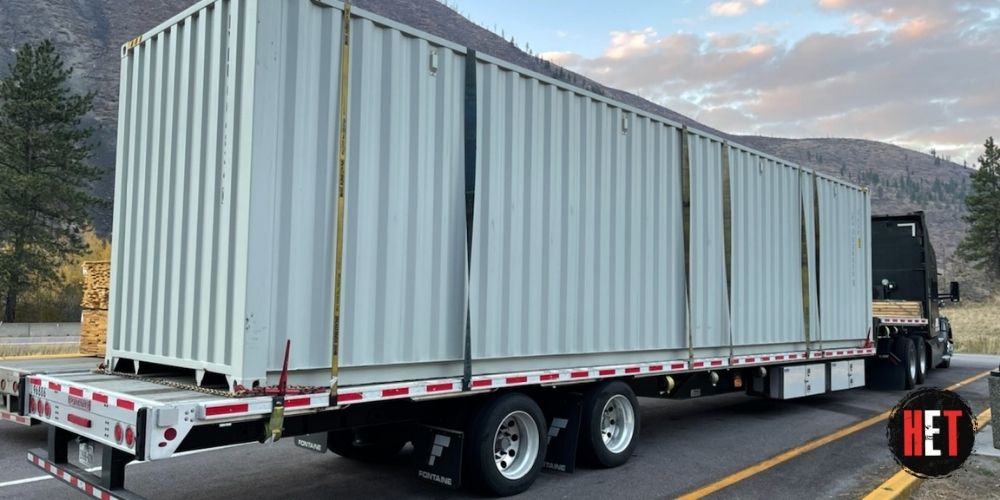
HET, a Virginia transportation company, has delivered 874 shipping containers this year with a 97.7% on-time delivery rate.
Heavy Equipment Transport is a trusted shipping container company that manages over 1,500 container shipments annually, helping clients save around 18% on costs. We are fully licensed and insured to ensure smooth operations.
As a recognized partner to government agencies, we have been nominated to the Inc. 5000 list of fastest-growing companies for seven consecutive years. With 16 years of experience and a team of 140 logistics professionals, we operate in Florida, Kentucky, Ohio, and Virginia.
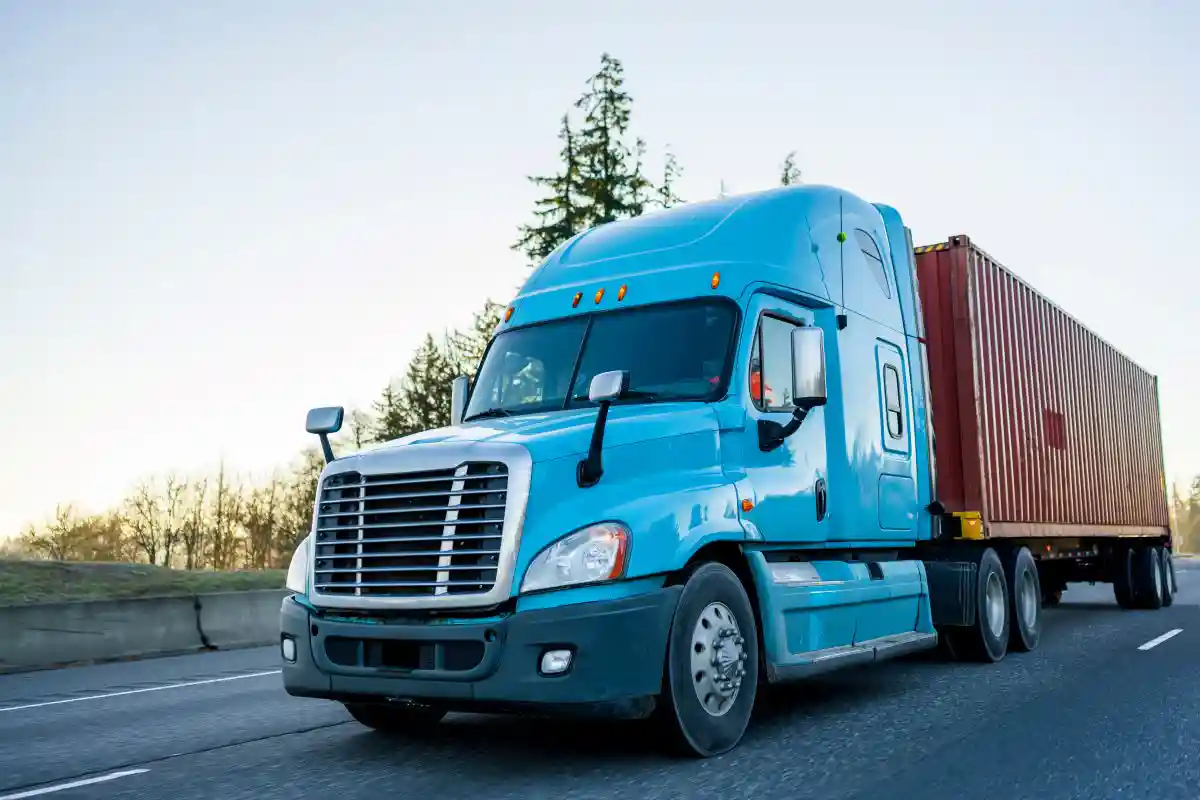
Confirm Container Transport Details
Confirm with confidence.
Get pricing that fits your route and load.
Professional Container Transport Services in Virginia that is GSA certified
Heavy Equipment Transport has been moving shipping containers in Virginia for over ten 13 years, offering safe and reliable services. Our modern trailers allow us to efficiently assist multiple customers at once.
Each of our shipments is handled by a dedicated representative who handles all necessary paperwork, ensures on-time delivery, and selects the appropriate trailer based on the container's weight and size. You can contact your assigned representative anytime for updates. We offer convenient container moving services from door to door or from terminal to terminal within Virginia.
Reliable and Well-Insured Container Transport Services in Virginia.
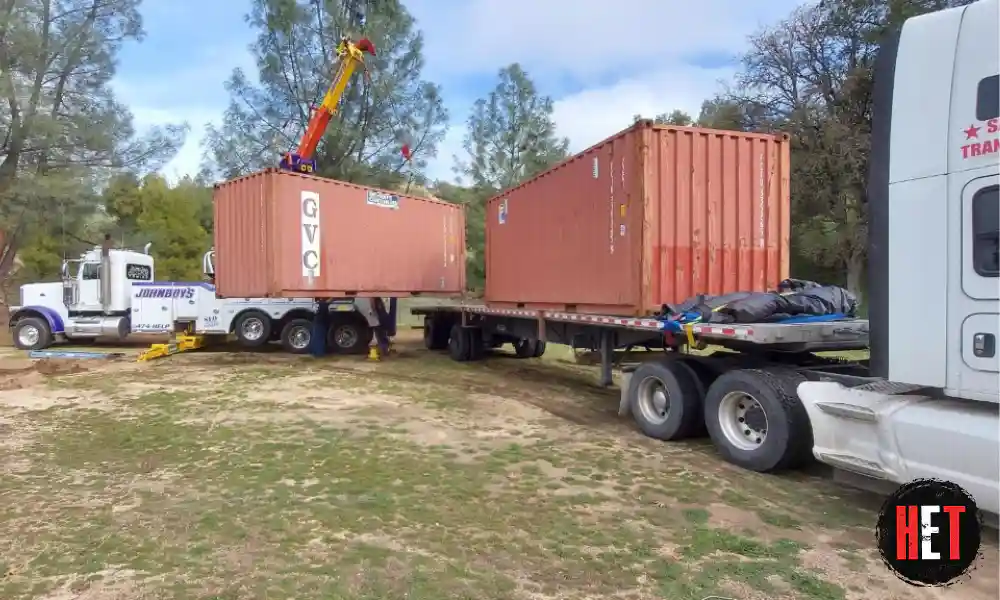
We send shipping containers that can be empty, partly filled, or completely full, making sure they arrive safely at their destination. Each container is fully insured, so if there’s any damage during transport, you can get compensation.
You can count on Heavy Equipment Transport for dependable service, as our drivers are familiar with the best routes to ensure timely deliveries. We also provide a Bill of Lading (BOL) form, which serves as a reference when the delivery is made.
Transport your loaded or unloaded container in Virginia today!
The Most Important Ports For Shipping Containers Transportation In Virginia
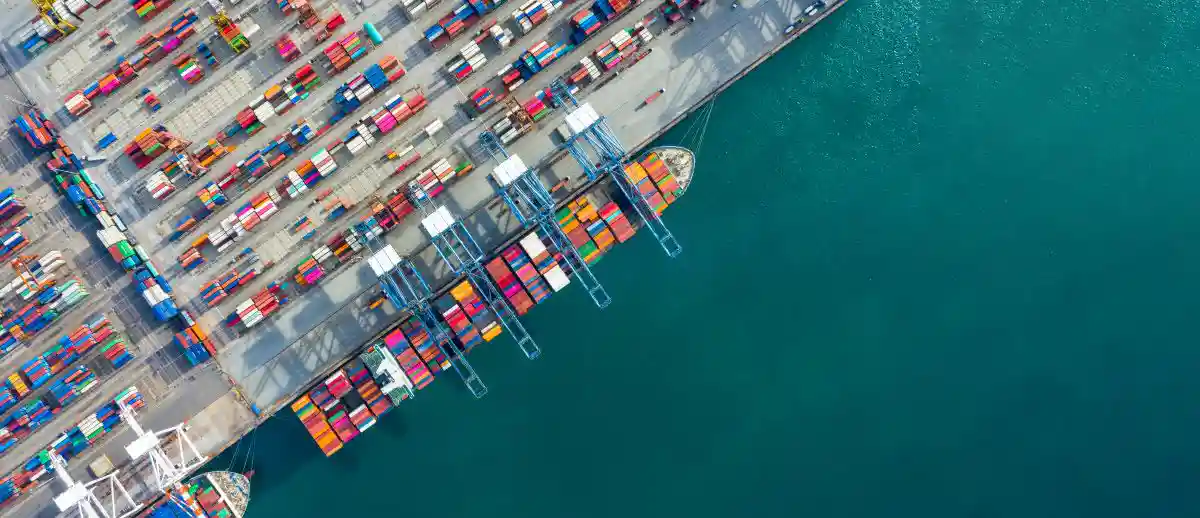
The Port of Virginia is one of the top six container ports in the United States. It includes important terminals like Norfolk International Terminals, Virginia International Gateway and Portsmouth Marine Terminal, all located in the Hampton Roads area.
This port is vital for international trade, featuring deep channels for large ships and connections to inland areas for efficient product distribution.
Key Container Terminals in Virginia
- Virginia International Gateway (VIG) (Portsmouth): Seen as one of the most advanced and efficient ports for handling shipping containers on the East Coast.
- Norfolk International Terminals (NIT): The principal and largest terminal, which manages a substantial portion of the port's container traffic.
- Portsmouth Marine Terminal (PMT): This terminal primarily handles container and breakbulk cargo.
- Newport News Marine Terminal (NNMT): The organization manages breakbulk, bulk and select specialized container cargo.
Inland and Supplementary Ports in Virginia
- Virginia Inland Port (VIP) (Front Royal): The system establishes a connection with the primary terminals through rail infrastructure, thereby facilitating the efficient transportation of cargo to the Shenandoah Valley and adjacent regions.
- Richmond Marine Terminal (RMT): A port located along the James River that supports the transportation of goods using barges and shipping containers.
These shipping terminals in Virginia have deep water channels measuring 50 feet, and they can be deepened to 55 feet if needed. They support almost 30 international shipping companies and offer direct connections to important rail networks, including CSX and Norfolk Southern.
Regulations and Permits for Transporting Oversized/Overweight Loads and containers in Virginia
In Virginia, transporting heavy or large loads requires special permits for loads exceeding 13 feet 6 inches in height, 8 feet 6 inches in width, or 80,000 pounds in weight. Apply online at least 5 business days prior to transport.There are specific rules for transporting sealed containers, forest products and construction equipment, so make sure you're aware of those as well.
Important Regulations and Thresholds in Virginia
- Legal Dimensions: The vehicle has a maximum height of 13 feet 6 inches and a width of 8 feet 6 inches. It possesses a maximum capacity for total weight of 80,000 pounds.
- Permit Requirements:Any load that surpasses these specified limits necessitates the acquisition of a temporary permit. Any load that surpasses these specified limits necessitates the acquisition of a temporary permit.
- Container Specifics: Special overweight permits are accessible for sealed, seagoing containers transporting to and from a seaport, pursuant to the provisions outlined in Virginia Code § 46.2-1141.
- Forest Products: Special permits allow increased weights for forest products, including up to 50,000 lbs for tri-axle groupings and 90,000 lbs for five-axle combinations (see § 46.2-1148.1).
- Construction Equipment: You can get permits for empty rubber-tired haulers or loaders that move on their own. The fees for these permits depend on an evaluation process.
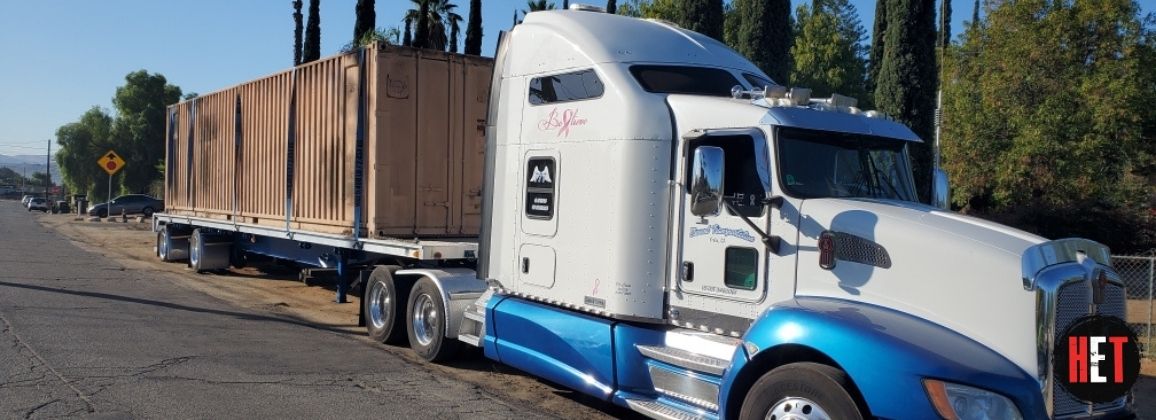
Weight and Safety Restrictions in Virginia
- Axle Weights: The Virginia Department of Motor Vehicles outlines standard weight restrictions for vehicles, specifying a limit of 20,000 pounds for single axles and 34,000 pounds for tandem axles.
- Bridge Formula: The Federal Bridge Formula, expressed as \(W=500\left(\frac{LN}{N-1}+12N+36\right)\), is used to determine compliance with weight regulations.
- Route Restrictions: Permits may specify certain routes to ensure that infrastructure can support the load, according to Virginia law.
Ready To Get Started?

Affordable and Safe Container Shipping Services in Virginia
Heavy Equipment Transport offers affordable container transport services in Virginia. The cost of shipping a container depends on the distance traveled, weight, size, route, and season.
Our shipping quotes are free and accurate. In addition, we offer expedited services for clients in need of urgent container moving services.
Get your Virginia container transport rate today
Our Recent Transports
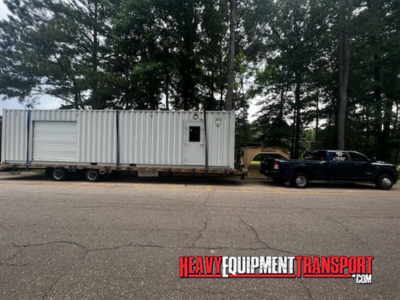
SHIPPING A 40FT HIGH CUBE CONTAINER ON A HOTSHOT TRAILER
Transport DetailsWildomar, CA
Big Stone Gap, VA
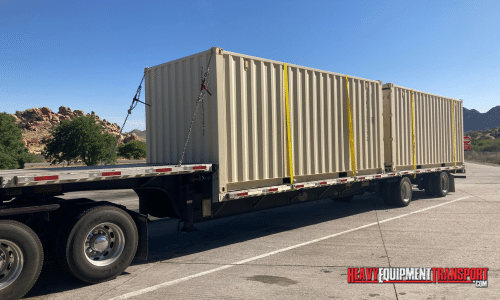
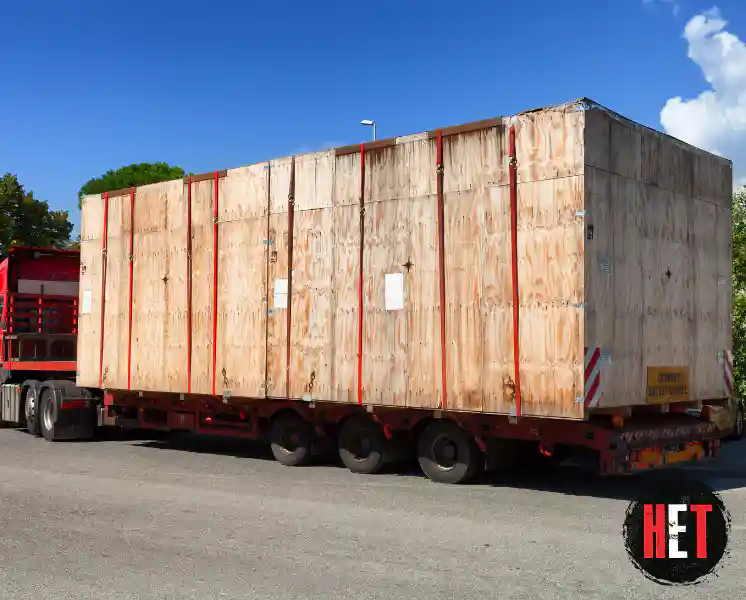
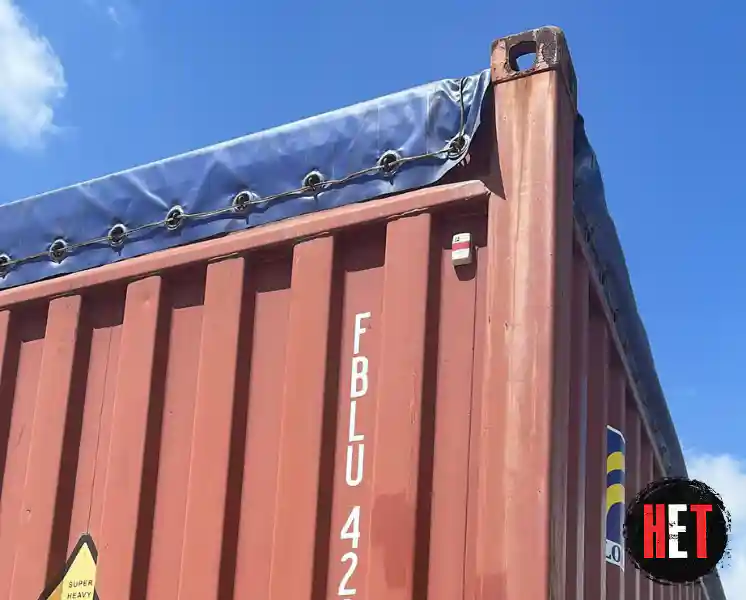
Heavy Equipment Transport is the best container transport company in Virginia. This 15,000 pounds and 41.6L 8W 9.6H high cube container was transported safely from Wildomar, CA, and delivered to Big Stone Gap, VA. Janelle Foltz is experienced and will get your container delivered anywhere on time. Call for a free quote.
Virginia Shipping Container Transport FAQs by Category
Transporting shipping containers in Virginia generally costs between $2.65 and $3.00 for every mile traveled. This applies to both 20-foot and 40-foot containers. The price covers the use of special trucks that can handle the containers and ensures that everything follows local rules about weight limits, which range from 37,500 to 43,500 pounds.
When planning for transport, it's important to think about factors like how far the containers need to travel, the impact of winter weather, and whether other types of transportation, like trains, could be used as part of the journey.
Cost and Logistics
What is the average cost to move a container in Virginia?
Shipping containers in Virginia costs between $2.65 and $3.00 per mile. For local moves using 8 to 16-foot containers, prices range from $150 to $950. In contrast, longer, cross-state moves cost between $2,500 and $7,100.
What factors affect the total cost of transporting shipping containers in Virginia?
The total cost for transporting shipping containers in Virginia can fluctuate based on various factors. These include the weight of your items, the distance of your move, the size of the container and the time of year.
What is an example of intermodal transport in Virginia?
An example of combining different types of transportation in Virginia is the work done at the Virginia Inland Port in Front Royal. This port connects trucks and trains to the shipping terminals located in the Virginia Beach area by the ocean.
This system seamlessly integrates various modes of transportation:
- Ship-to-Rail: Shipping containers arrive at deep-water marine terminals in the Virginia Beach area, including Norfolk International Terminals and The Port of Virginia, via large ocean-going cargo ships.
- Rail Transport: Containers are transferred from the marine terminal to Norfolk Southern or CSX intermodal trains, usually double-stacked, and transported about 220 miles by rail to the Virginia Inland Port in Front Royal, avoiding highway congestion and ensuring efficient delivery to inland markets.
- Rail-to-Truck: At the Virginia Inland Port, containers are offloaded from trains and loaded onto trucks for delivery to destinations in Northern Virginia, West Virginia, Pennsylvania, or Maryland.
This example shows how goods are moved using different types of transportation in Virginia. The key point is that the cargo stays in the same container the whole time, so there's no need to unpack and repack it. This makes transferring the cargo between ships, trains, and trucks much easier and more efficient.
Container Types and Sizes
What are the standard container sizes in Virginia?
In Virginia, the most common shipping container sizes are 20 feet and 40 feet. These containers are used for transporting goods, storing items, and a variety of other purposes, and they are widely available.
What can be shipped in a container to or from Virginia?
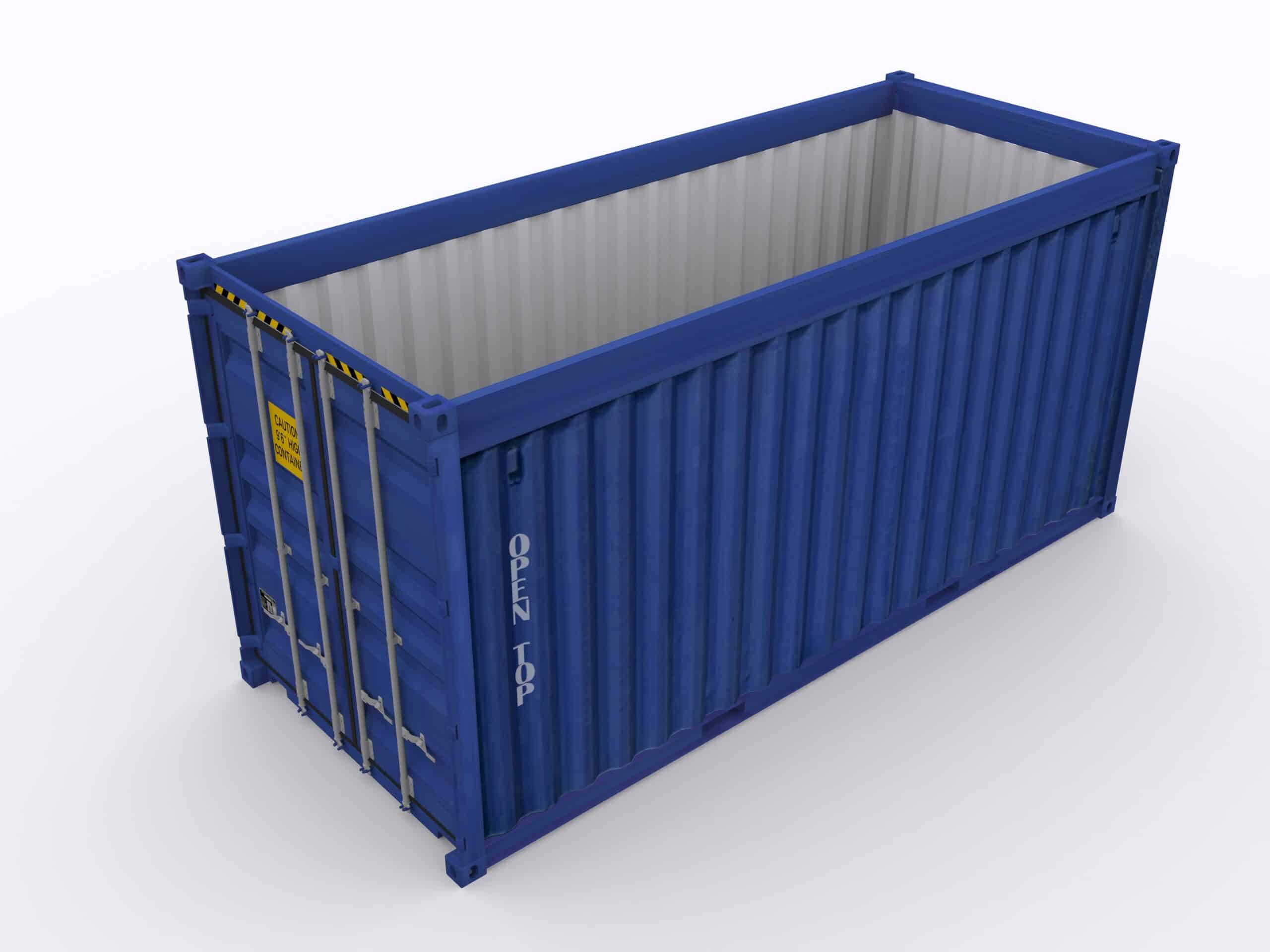
Containers shipped to and from Virginia, like those at the Port of Virginia, hold a variety of different goods. These can include things like household items, cars, machinery, construction materials and medicines. There are standard containers that are 20 feet and 40 feet long for regular items and boxes, as well as special containers that have open tops for larger items or refrigeration for temperature-sensitive products.
What items are prohibited from being shipped in containers to or from Virginia?
When shipping containers to or from Virginia, there are some items that you cannot include. These include dangerous materials like explosives, flammable substances, poisons, aerosol spray cans, and paints. Additionally, illegal drugs, guns, live animals and perishable food items are prohibited.
Certain special items, such as animal fur from dogs or cats, as well as some agricultural products, are also restricted. Virginia has strict rules about transporting waste by water to avoid problems like spills and bad smells.
How much weight can a 20-foot shipping container hold in Virginia?
In Virginia, a standard 20-foot shipping container usually carries up to 38,000 pounds (about 17,236 kilograms) when placed on a regular truck chassis. If the container is on a sturdier truck with three sets of wheels, it can hold a bit more, between 44,000 and 46,000 pounds (around 19,958 to 20,865 kilograms).
While containers are capable of holding more than 61,000 pounds, Virginia has set limits on how much weight can be loaded for safety reasons.
Delivery and Site Preparation
How are containers transported and delivered in Virginia?
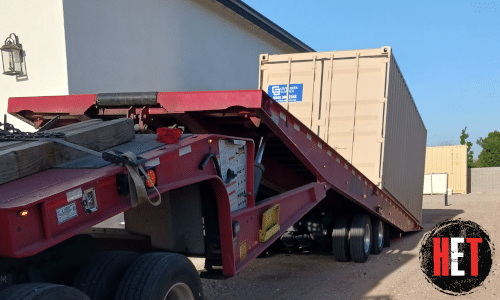
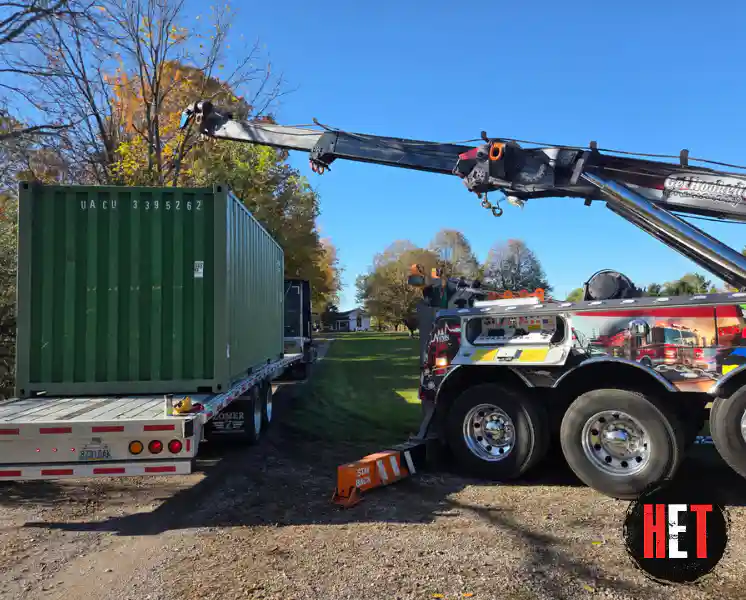
In Virginia, containers are moved by truck—using flatbeds, tilt-beds and sidelifters—or by rail, primarily from major hubs like the Port of Virginia (NIT and VIG). Deliveries are typically made using tilt-bed or Landoll trailers, ensuring a ground-level drop-off. The delivery routes are well-served by major interstates such as I-95, I-64 and I-81.
What is required to prepare a site for a container in Virginia?
Preparing a site for a container in Virginia involves ensuring the ground is level and dry, often with a gravel pad or concrete foundation. Steps include clearing debris, ensuring 70 feet of straight-line access with 16 feet of height clearance, and obtaining local permits.
Regulations and Safety
When is an overweight permit needed in the state of Virginia?
In Virginia, if a vehicle weighs more than 80,000 pounds in total or if any of its wheels (axles) carry more than 20,000 pounds individually or more than 34,000 pounds when two wheels work together, it needs a special permit to operate on highways.
This permit is also required for transporting certain items, such as dirt from construction sites, farm goods, forest products, or animal feed, with specific weight limits for each type of load.
What are the rules for naming an ISO shipping container in Virginia?
Shipping containers in Virginia follow international naming standards, including a four-letter owner code, six-digit number, check digit, and designation for size and type. Local regulations emphasize clear labeling, proper documentation of contents, and ensuring containers are waterproof for storage.
Are there any restrictions on loading shipping containers in Virginia?
In Virginia, there are rules about using shipping containers. These containers can weigh up to 80,000 pounds when they're on major highways, but if you have a special permit, they can weigh up to 51,000 pounds. You can only have one shipping container on a property in either business areas or neighborhoods.
It's important that these containers do not leak and keep everything inside secure. They also need to be placed in a way that allows for easy delivery.
Choose Your Region In Virginia And Get A Container Shipping Quote!
Regions
Don’t see your city or town listed?
No problem! Call now and speak with a live logistics agent.
We’ll get your container delivered to where you need it.
Shipping Container Transport Dimensions and Specifications
Virginia container transport costs vary based on distance, port terminal, container status (loaded or empty), permits, routing, and delivery requirements. Submit your details above to receive accurate pricing and availability for your move.
Popular Container Services
See All
Need A Specific Transport?
Where Is Your Heavy Equipment Headed