
No Compromises. Full Results.
Speak with a logistics expert - we’ll handle
your transport from A to Z.

Nationwide

Experience

Experts
Illinois Shipping Container Transport Services That Exceed Expectations
Heavy Equipment Transport shipped 859 containers in Illinois each year, achieving an impressive 98.6% on-time delivery rate in fiscal year 2024. Our team of experienced shipping container experts in Illinois helps clients reduce freight costs by an average of 18% through effective route optimization. We are FMCSA licensed (MC# 123456) and provide $250,000 in cargo insurance per load.
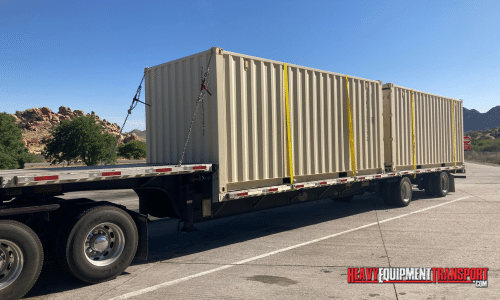
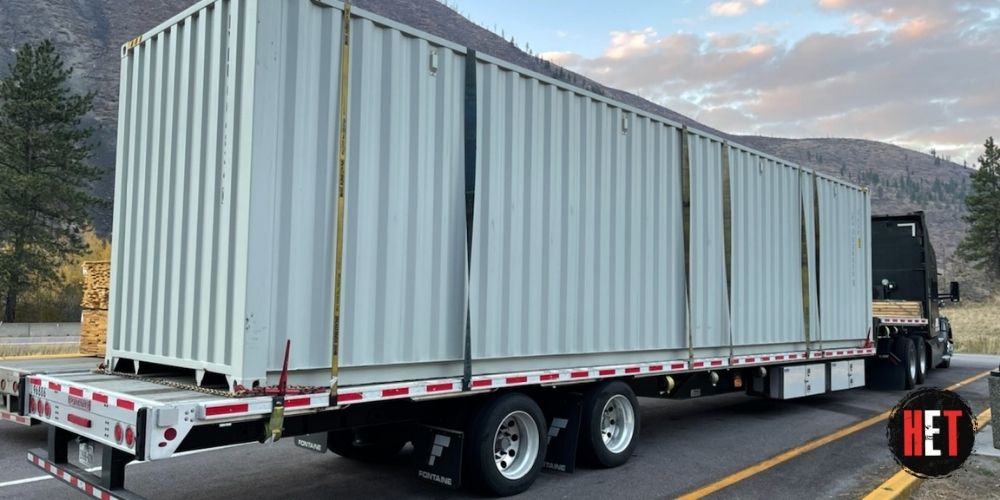
You can easily transport your shipping container anywhere in Illinois using our top-notch transport services. HET provides everything you need to ship your container throughout Illinois.
We provide comprehensive intermodal transport services. Your dedicated logistics agent will assemble an experienced heavy hauler team to ensure the safe transport of your shipping container throughout Illinois. Additionally, we can ship containers from Illinois to anywhere in the nation.
Our mission is to deliver high-quality container transport services to every client. Whatever your shipping needs are, we’re here to help. Your container will be picked up, transported and delivered safely.
For an all-inclusive, transparent container moving quote, call now! (888) 730-2951
Confirm Container Transport Details
Confirm with confidence.
Get pricing that fits your route and load.
Shipping Container Transport in Illinois- Loaded or Unloaded!
One of the top questions we get at Heavy Equipment Transport is:
"Can you ship a loaded container to or from Illinois?"
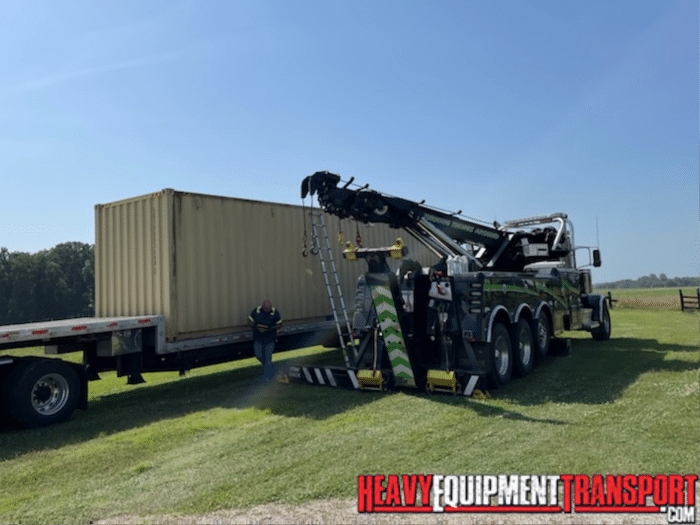
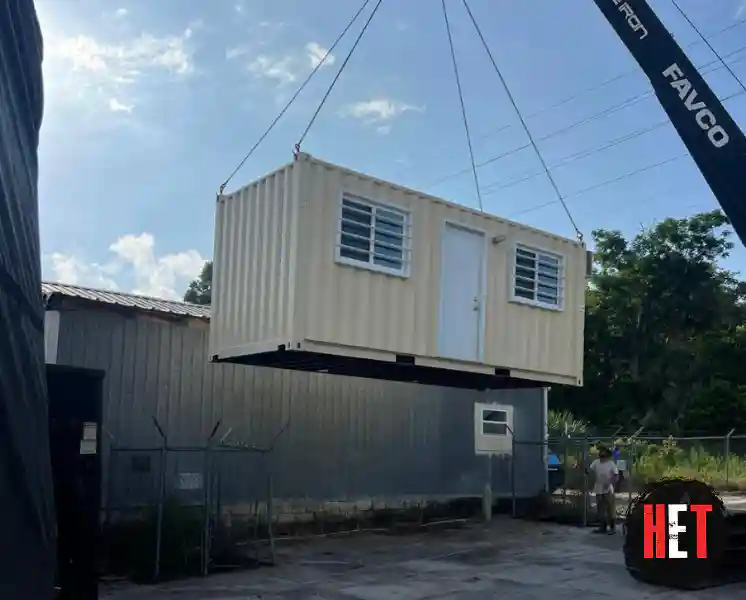
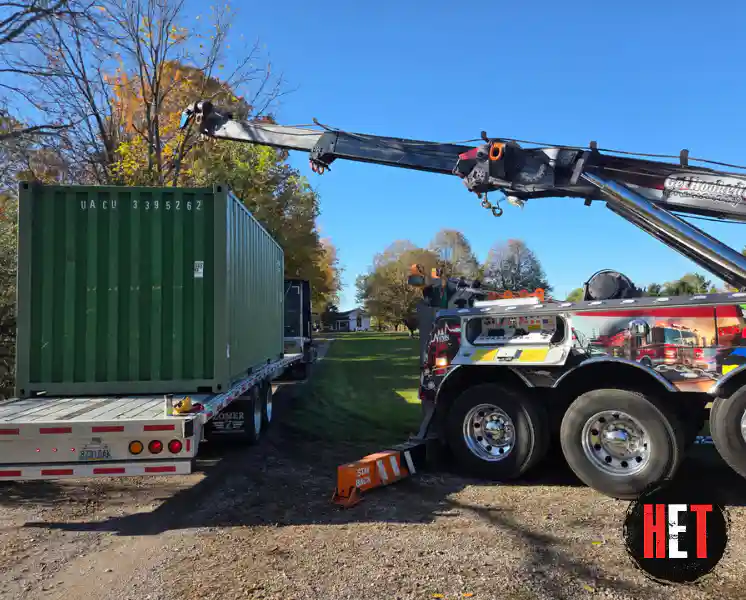
Absolutely! We transport freight-loaded containers to Illinois and across the country. We also provide cranes to lift your container right onto the trailer. That's right! We offer loading and unloading assistance to make your experience more convenient.
Your dedicated logistics agent will also find the most experienced driver with a container chassis ready to transport your freight to or from Illinois. We also transport unloaded containers with the same quality services.
Transport your loaded or unloaded container in Illinois today!
Key Ports for Container Shipping Services in Illinois
We transport containers to and from all the cities and port terminals in Illinois. Below are the port terminals we serve together with their addresses and contacts.
The primary centers for container shipping in Illinois are the intermodal terminals located in the Chicago area. These terminals help transfer containers between rail and truck transport. Although Illinois has ports along its waterways, they are not significant ports for ocean-going container vessels; instead, they primarily accommodate barge traffic for bulk cargo.
Port of Illinois
This port is operated by the Illinois International Port District. Below are the terminals we serve.
- Iroquois Landing Lakefront Terminal: It’s located in the southwest corner of Lake Michigan at the mouth of the Calumet River. It has warehouses and facilities as well as storage.
- Lake Calumet Terminal: This terminal has grain storage, bulk liquid storage, transit sheds, and much more. Its southeast quadrant has the largest tank storage farms.
Port of Kaskaskia
This is the 10th largest inland port by tonnage in the United States. Below are the terminals we serve.
- Fayetteville Terminal: This terminal handles grains, aggregate, coal, bulk commodities, and other cargoes. Below is the address.5875 IL-15, Mascoutah, IL 62258, United States
- Evansville Grain Terminal: This terminal hanks grains such as wheat, soybeans, and corn.
Illinois International Port District
Situated on Lake Michigan in the Chicago area, provides terminals for waterborne cargo. It connects the Great Lakes to the inland river system through the Illinois Waterway.
- Iroquois Landing Terminal: This deep-draft terminal is located at the mouth of the Calumet River and accommodates international ship traffic through the St. Lawrence Seaway.
- Senator Dan Dougherty Harbor (Lake Calumet Terminal): Spanning about 1,600 acres, this facility manages various port operations and connects to the inland river system through barge transportation.
Other regional Illinois ports
Besides Chicago, other ports and waterways in Illinois support container logistics and shipping, linking to the Mississippi River system.
- Midwest Inland Port (Decatur): A multi-modal transportation hub featuring a corridor connecting the East, West and Gulf Coasts, allowing for flexibility in international container shipments.
- America's Central Port District (Granite City): Situated in Southwestern Illinois within the St. Louis metropolitan area, this port district provides facilities for transloading cargo on the Mississippi River.
- Illinois Waterway Ports (Peoria and LaGrange): These ports on the Illinois Waterway system serve as key transfer points for bulk materials and other goods moved by barge traffic.
What are the cargo capacities of the ports in Illinois?
Illinois' ports, mainly comprised of inland river and Great Lakes ports, transport over 90 million tons of goods each year across 1,118 miles of navigable waterways.
- Illinois International Port District (Port of Chicago): The largest cargo port on the Great Lakes handles over 19 million tons of cargo annually, with a regional tonnage of about 13.9 million tons. It has a grain storage capacity of 493,000 metric tons and a liquid bulk storage capacity of 127 million liters.
- St. Louis Metro Ports: This efficient bi-state system manages about a quarter of the Mississippi River's total freight over a 70-mile stretch, handling 427,000 tons per river mile in 2021.
- Kaskaskia Regional Port District: This port processes over 5 million tons of cargo each year and has storage facilities for steel coils and fertilizers.
- America's Central Port (Granite City Harbor): This port manages various types of cargo including fertilizer, grain, and steel. It has storage capacities of 827,000 barrels for asphalt and 25,000 tons for grain.
- Heart of Illinois Regional Port District: Although it does not own terminal facilities, it facilitates significant marine cargo activity through third-party facilities in the area.

Permits and Regulations for Shipping Container Transport in Illinois
Shipping container transport in Illinois requires local permits for placement on private property. Depending on weight, overweight licenses from the Illinois Department of Transportation (IDOT) may be necessary. Local regulations differ by municipality and can include placement, time limits (e.g., 30 days), and zoning. State rules focus on oversize/overweight loads, necessitating special permits for non-divisible loads exceeding weight limits.
Illinois Local regulations and permits
- Portable storage units: If you place a portable storage or shipping container on private property, you may need to obtain a permit from the local building department.
- Public property: To place a container on public property, you need a right-of-way permit from the city's building department.
- Application requirements: An application typically requires details such as your name, address, contact information, the location of the container, its placement dates, and the name of the container supplier.
- Time limits: Many cities in Illinois impose limits on how long a container can be placed on private property, typically around 30 days, although some may allow extensions for an additional fee or permit.
- Placement restrictions: Do not place containers in a manner that blocks public pathways, sidewalks, streets, or obstructs views. Some ordinances mandate a minimum setback from property lines.
Illinois State regulations (IDOT)
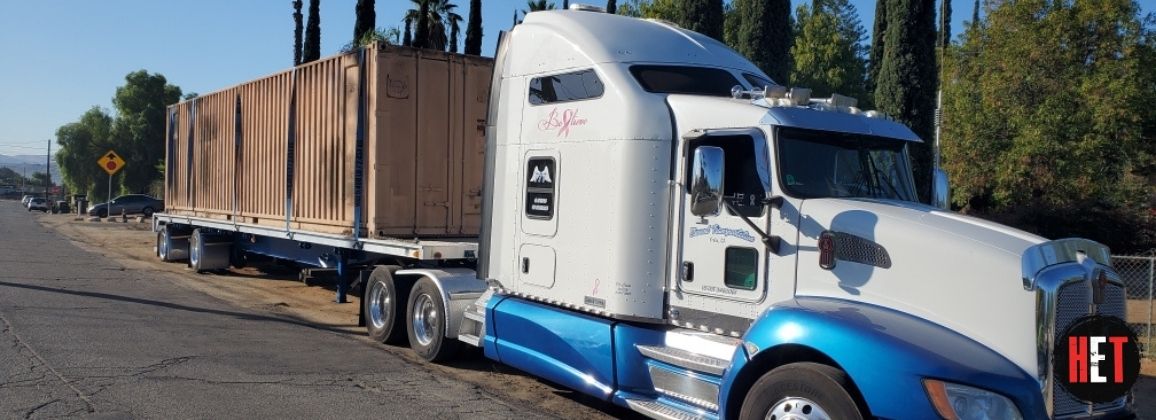
- Overweight/oversize permits: If the total weight of the vehicle and container exceeds state limits, you must obtain an oversize and overweight permit from IDOT.
- Flashing lights: When operating under overweight permit authority, your vehicle may need to have functioning flashing or rotating amber lights.
- Load documentation: You may require documentation identifying the container and its country of origin or destination, particularly for specific types of moves.
Additional Factors to Consider When Moving a Container in Illinois
- Zoning and HOA rules: Be careful and inform yourself of local zoning laws and homeowners' association regulations, which may prohibit the permanent placement of containers or impose specific restrictions.
- Construction projects: Containers are typically permitted on construction sites temporarily, but they must be removed after construction is complete and a certificate of occupancy has been issued.
- Weight verification: Always verify the total weight of the container, as many moves that are within legal limits on paper can exceed them in practice.
- Contact local authorities: Building regulations differ greatly by city and county. Always consult your local municipality's building or planning department for specific requirements before placing or moving a shipping container.
How Much Does it Cost to Ship a Container to Illinois?

Moving a container to Illinois can vary in cost depending on route, distance, equipment, timing, and whether the unit is loaded or empty.
- Is your container loaded or empty?
- Is it a 20ft container or a 40ft container?
- Is your container going to port?
All of these questions (and more) factor into your container transport cost.
Call Heavy Equipment Transport for an accurate, all-inclusive quote.
Your dedicated logistics agent will gather the details and find the most affordable option without sacrificing service quality.
Get your Illinois container transport rate today
Our Recent Transports
.png)
SHIPPING A MOBILE SURGERY UNIT CONTAINER ON AN RGN TRAILER
Transport DetailsAurora, IL
Sweetwater, TN
This beautiful mobile surgery unit container was transported from Aurora, IL to Sweetwater, TN by the help of MJ, one of our container transport experts. The 28L 14W 11H and 30,000lbs mobile surgery unit container was shipped on an RGN trailer and escort vehicles were used to keep motorists at a safe distance and guide the driver on the routes to use. To transport a mobile surgery unit container safely, call us today!
Illinois Shipping Container Transport FAQs by Category
Cost and Quotes
What is the cost of shipping a container in Illinois?
The cost of moving a shipping container in Illinois ranges from $2.65 to $3.00 per mile, depending on factors like weight, size, delivery distance, fuel prices and additional services.
What is the best way to get an accurate quote for shipping a container to or from Illinois?
To get an accurate container shipping quote for Illinois, contact Heavy Equipment Transport and speak to our shipping experts. Provide detailed information, including pickup and delivery addresses, container size, cargo type, weight, dimensions and whether the service is residential or commercial.
Are there any extra fees for expedited container transportation services in Illinois?
Yes, expedited container transportation services incur extra fees due to the costs of priority handling and faster delivery.
- Expedited vs. standard: Expedited container shipping is more costly than standard options due to the need for additional resources to ensure quicker delivery.
- Reflects additional costs: The price premium for expedited services covers the extra costs associated with prioritizing your shipment and ensuring it arrives at its destination more quickly.
- Compare quotes: When requesting container transport quotes, you will typically notice a higher price for expedited services compared to standard ones. However, this increased cost will be clearly displayed in the transparent pricing provided by most shipping companies.
Permits and Regulations
Do I need permits to ship a container to or from Illinois?
Permits are essential for shipping containers to or from Illinois, particularly if the container or total vehicle and load exceeds legal size and weight limits.
What is the maximum legal weight for a shipping container in Illinois?
In Illinois, the maximum legal gross vehicle weight (GVW) for a standard truck combination transporting a container on major roads is 80,000 pounds. To stay under this limit, the recommended cargo weight is typically 43,000 pounds for a 40-foot container and 38,000 pounds for a 20-foot container (without a tri-axle chassis).
What are the overweight permits in Illinois?
If your container load exceeds the limits, an Illinois Department of Transportation (IDOT) permit is required. Illinois permits non-divisible loads up to 100,000 lbs on 5 axles or more, but generally does not permit divisible cargo, such as general merchandise that can be split into two shipments.
Who is responsible for managing permits related to overweight vehicles and shipping containers in Illinois?
The Illinois Department of Transportation (IDOT) manages permits for overweight vehicles and shipping containers on state highways. Local agencies, like the Cook County Department of Transportation and Highways, handle permits for their roads. For township or local streets, contact the respective township or municipal office.
Transport and Delivery
What types of trailers are used for shipping containers in Illinois?
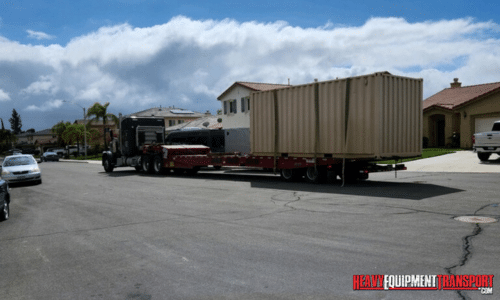
In Illinois, common trailers for transporting shipping containers include container chassis, flatbed trailers, and lowboy trailers. Container chassis are used for intermodal transport, flatbed trailers offer versatility for different container sizes, and lowboy trailers transport taller or oversized containers.
- Container Chassis: Also known as skeletal or intermodal trailers, these purpose-built frames with wheels are designed to securely hold standard containers between ports, rail yards, and other distribution points.
- Flatbed Trailer: A flatbed trailer is a versatile and commonly used option. It features an open, flat deck that can accommodate different container sizes and is towed by a semi-truck.
- Lowboy Trailer: Lowboy trailers have a lower deck height that makes them suitable for transporting tall or overweight containers, which might otherwise exceed height regulations.
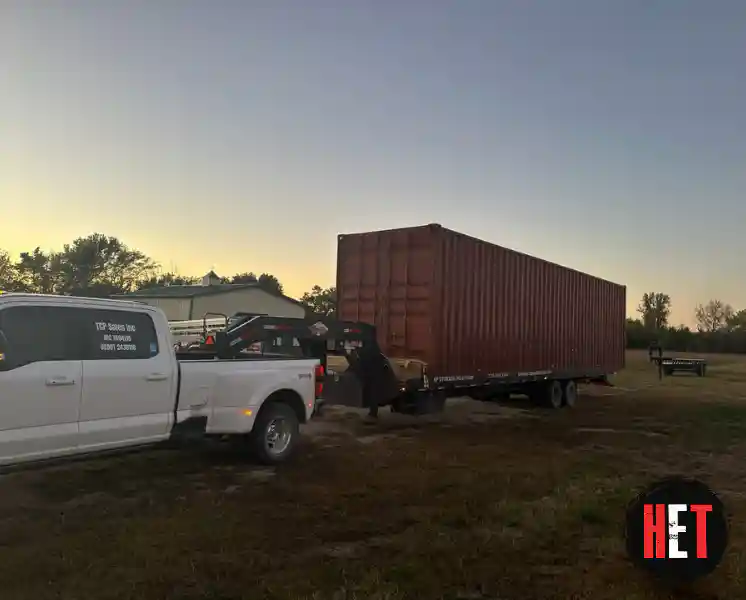
- Gooseneck Trailer: Gooseneck trailers are designed to carry heavier loads, featuring a connection that integrates more closely with the tractor for improved stability and weight distribution.
- Extendable Container Trailer: Extendable Container Trailers can be adjusted in length to fit various container sizes, with options for both single and double extendable models.
How are containers loaded and unloaded?
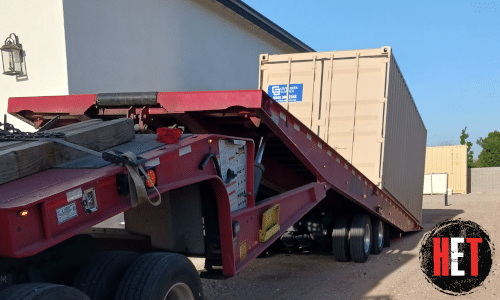
Specialized equipment is necessary for delivery at ground level. Tilt-bed trucks are often utilized when no separate crane is available. Some companies offer cranes or sidelifters for an additional fee.
In Illinois, how much space is required for container delivery?
For container delivery in Illinois, you need about 80 to 100 feet of clear, level space for a 20-foot container and at least 100 feet for a 40-foot container. Allow 10 to 15 feet of width for truck maneuvering and ensure there's enough overhead clearance and a level surface.
Do I need to be present for the delivery of the shipping container in Illinois?
A designated contact must be present during the delivery of a shipping container to confirm the drop-off location, ensure safety for the driver, and inspect the container. The driver will finalize the delivery location with you before offloading.
Container Types and Cargo
What are the standard container sizes?
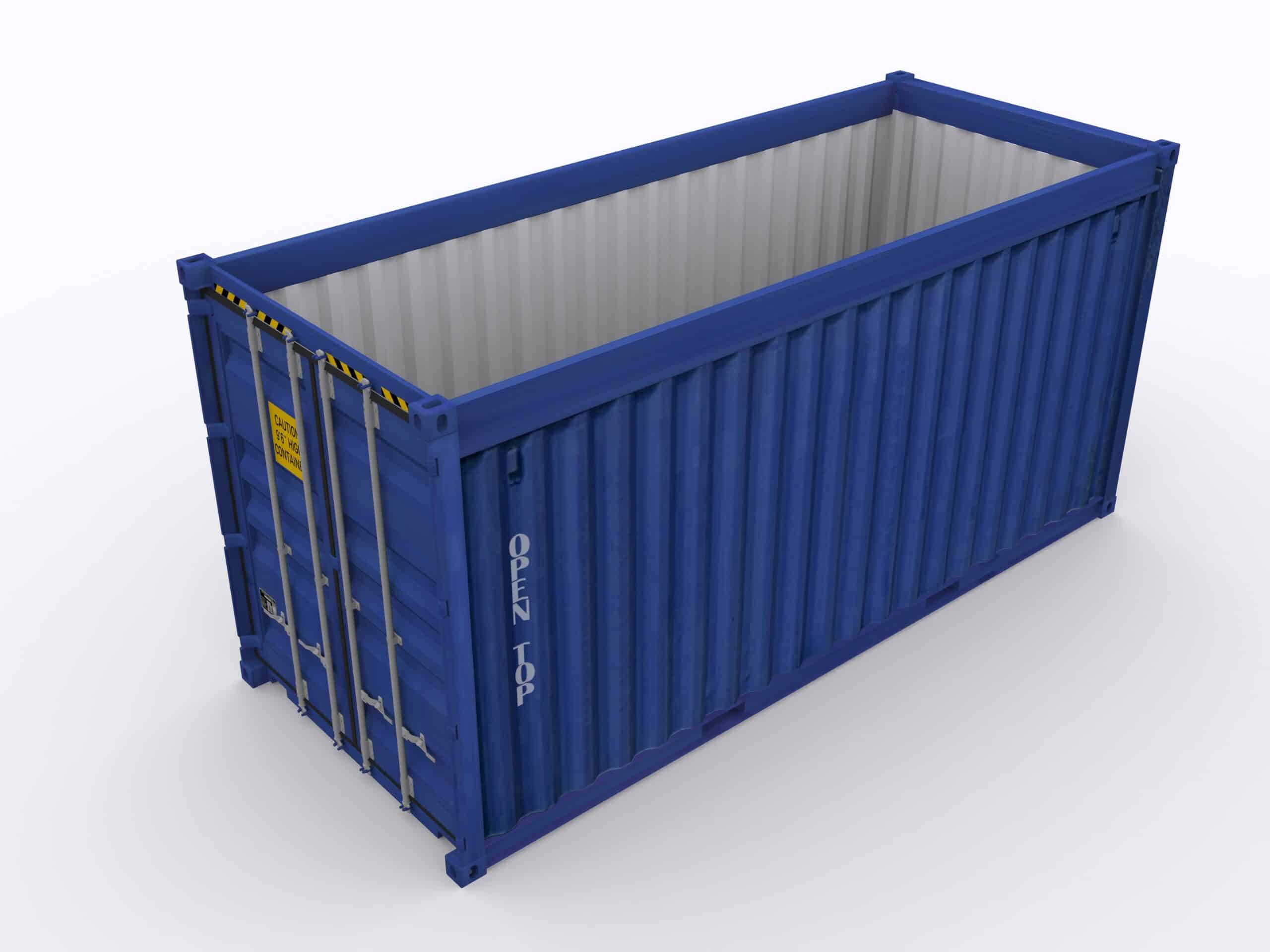
Standard shipping containers come in 20-foot and 40-foot sizes. A 20-foot container measures approximately 20 feet long, 8 feet wide, and 8.5 feet high, while a 40-foot container is about 40 feet long, 8 feet wide, and 8.5 feet high. There's also a 40-foot High Cube option that has the same length and width but is 9.5 feet high. Smaller containers, like 10-foot ones, are less commonly used for global shipping.
What items cannot be shipped in a container?
Items that cannot be shipped in a container include certain hazardous materials such as batteries, solvents, aerosols, and some household cleaners, which are prohibited. It is advisable to consult Heavy Equipment Transport for a detailed list of restricted items.
How should I pack my household goods and merchandise?
Pack household items carefully to prevent damage. Use bubble wrap for fragile items and place bulky goods at the bottom for stability.
Choose Your Region In Illinois And Get A Container Shipping Quote!
Regions
Don’t see your city or town listed?
No problem! Call now and speak with a live logistics agent.
We’ll get your container delivered to where you need it.
Shipping Container Transport Dimensions and Specifications
Illinois container transport costs vary based on distance, port terminal, container status (loaded or empty), permits, routing, and delivery requirements. Submit your details above to receive accurate pricing and availability for your move.
Popular Container Services
See All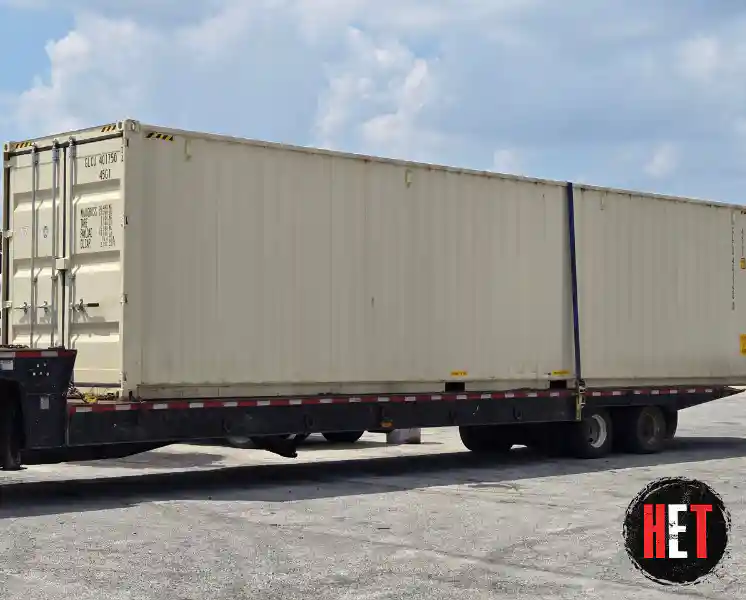
Need A Specific Transport?
Where Is Your Heavy Equipment Headed