
No Compromises. Full Results.
Speak with a logistics expert - we’ll handle
your transport from A to Z.

Nationwide

Experience

Experts
Reliable Colorado Shipping Container Transport Services
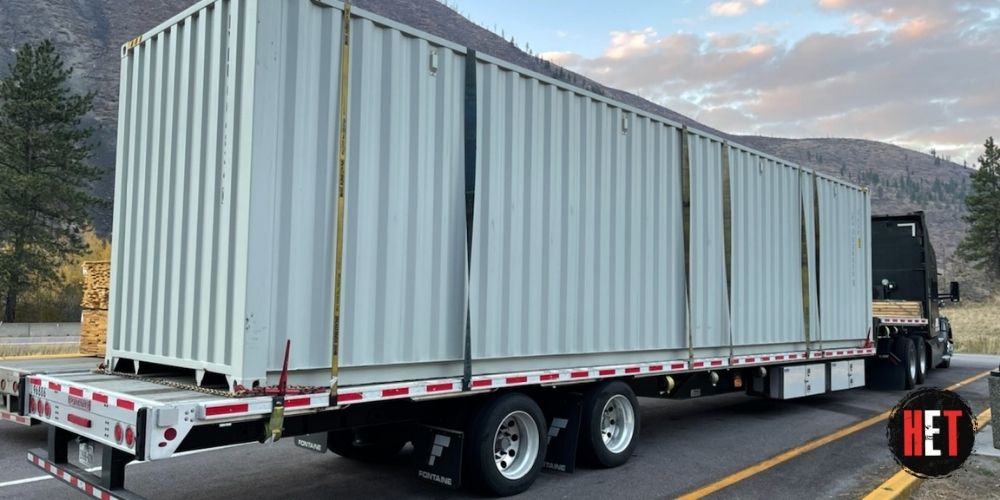
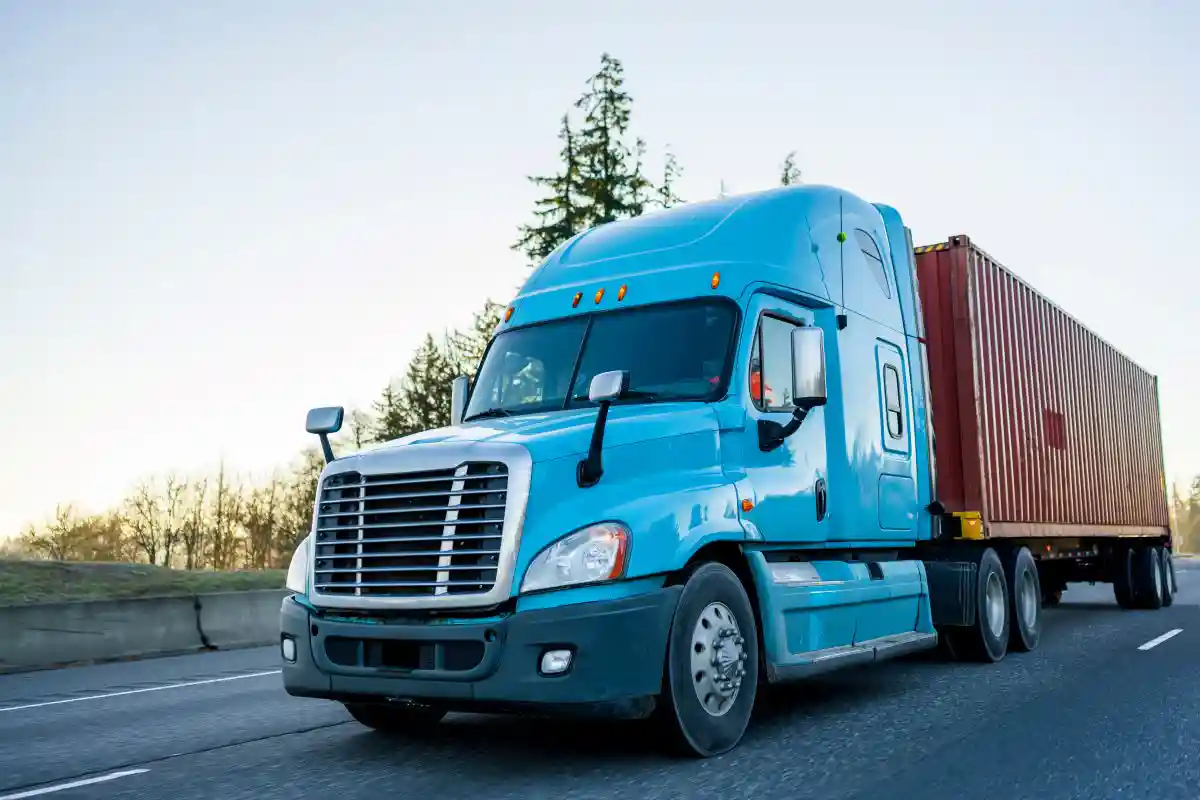
From Denver and Colorado Springs to smaller mountain towns and rural job sites, Heavy Equipment Transport moves shipping containers throughout Colorado.
Our team plans each move around your container size, route, access requirements, and delivery location, so your shipment is handled safely from pickup to drop-off.
Whether you need local container moving, long-distance transport, intermodal delivery, or site-to-site container relocation, we provide dependable service with clear communication from start to finish.
Get a Colorado shipping container transport quote today and work with a team that understands how to move containers efficiently and securely.
Confirm Container Transport Details
Confirm with confidence.
Get pricing that fits your route and load.
TWIC Drivers and Colorado Drayage Container Moves
For container shipments connected to ports, rail yards, terminals, or secure freight facilities, Heavy Equipment Transport can coordinate drayage services with qualified drivers who meet access requirements for restricted locations. When a container needs to be picked up from or delivered to a controlled facility, having the right driver credentials helps prevent delays at the gate.
TWIC drivers are especially important for container drayage involving port access, intermodal terminals, government facilities, and certain secured industrial sites. While Colorado is landlocked, many container moves still involve rail-connected drayage, inland terminals, transloading facilities, and long-distance routes tied to coastal ports.
Our Colorado drayage services may include:
- Rail yard and intermodal container pickup
- Container delivery to warehouses, farms, job sites, and storage yards
- Loaded and empty container transport
- Chassis coordination when required
- Short-haul and regional drayage moves
- Port-connected container transport into or out of Colorado
- TWIC-compliant driver coordination for secured facilities
Heavy Equipment Transport helps coordinate the right driver, trailer, route, and access requirements for Colorado container drayage. Whether your container is moving from a rail terminal, distribution center, or port-connected route, our team helps keep pickup and delivery organized from start to finish.
How to Choose the Right Colorado Container Transport Company
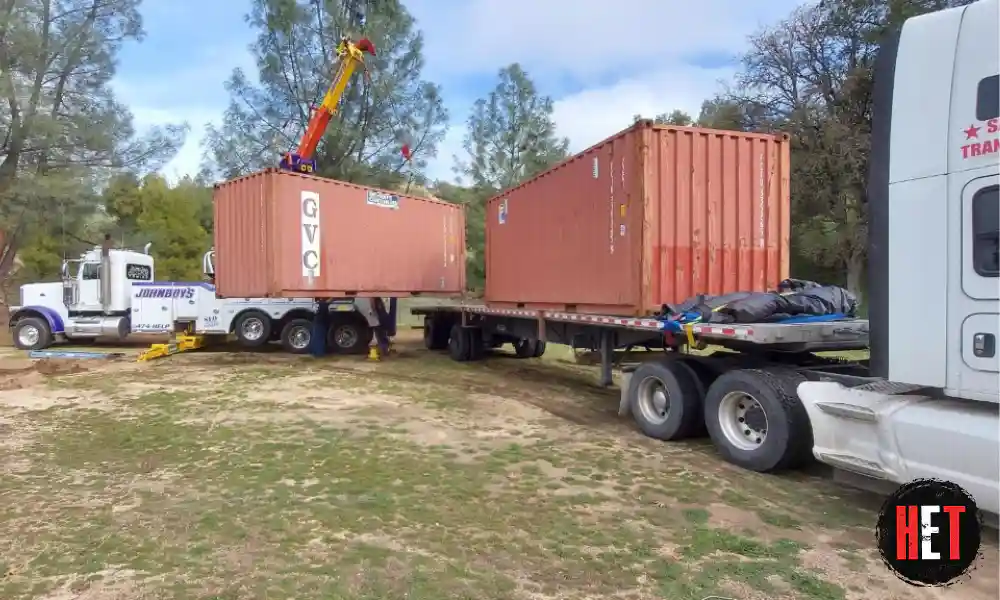
Choosing the right Colorado container transport company starts with experience, proper equipment, and clear communication. Look for a transporter that understands container size, weight, route planning, delivery access, and the challenges of moving containers across Colorado's cities, mountain routes, rural properties, and job sites.
Before booking, confirm that the company can handle your specific container move, whether it's a 20-foot container, 40-foot container, loaded container, storage container, or intermodal container delivery. A reliable Colorado container mover should provide transparent pricing, explain any permit or equipment requirements, and avoid surprise fees.
Trust signals to look for include:
- Licensed and insured container transport services
- Experience with 20-foot, 40-foot, and high-cube containers
- Access to tilt-bed, flatbed, step-deck, chassis, and heavy-haul trailers
- Clear quotes with no hidden fees or upfront deposits
- Route planning for city, rural, and mountain deliveries
- Positive customer reviews and proven transport experience
- Dedicated support from quote to final delivery
Heavy Equipment Transport provides dependable Colorado container moving services with competitive quotes, experienced logistics agents, and the equipment needed to move shipping containers safely and efficiently across the state.
Request a quote today to get started.
Fully Insured Shipping Container Transport Services in Colorado
We transport fully insured containers for both commercial and individual clients, prioritizing timely delivery, professional handling, and accident coverage. To receive a container shipping quote, please provide the dimensions, weight and route.
Why Choose Heavy Equipment Transport for Colorado Shipping Container Moving?
Heavy Equipment Transport provides dependable shipping container moving services throughout Colorado, with solutions built around your route, container size, loading needs, and delivery location. From local moves in Denver, Colorado Springs, Aurora, and Lakewood to rural properties, construction sites, farms, and mountain-area deliveries, our team plans each move for safety, access, and efficiency.
We help coordinate the details that can make or break a container move, including trailer selection, route planning, permits, site access, and loading assistance when forklifts, cranes, tilt-bed trailers, or other specialized equipment are needed. You’ll work with a dedicated logistics agent who keeps the process clear from quote to final delivery.
With Heavy Equipment Transport, Colorado customers benefit from:
- Shipment planning based on container dimensions, weight, and site conditions
- Trailer matching for empty, loaded, high-cube, and oversized containers
- Support for residential, commercial, construction, agricultural, and industrial moves
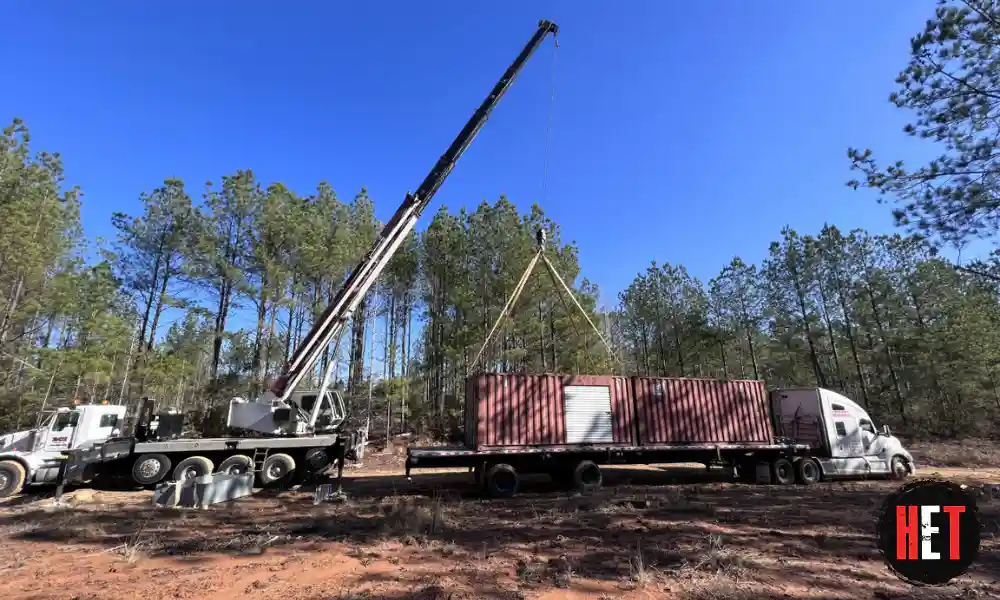
- Coordination for crane, forklift, or tilt-bed loading and unloading when required
- Route planning for urban areas, rural roads, and mountain corridors
- Clear updates throughout pickup, transit, and delivery
- Quote-first pricing, so you understand the cost before booking
Heavy Equipment Transport makes Colorado container moving straightforward, reliable, and professionally managed. Request a quote today to get your shipment planned with the right equipment and support.
Factors Affecting Shipping Container Duration to or from Colorado
Origin/Destination: Container shipping within Colorado or a neighboring state can take from 4 to 7 days, while cross-country and international shipments take much longer due to distance and logistics.
Mode of Transportation for Containers in CO
- Trucking (Domestic): Most freight in Colorado is transported by truck, taking a few days for regional shipments and over a week for cross-country ones.
- Rail: Colorado has 2,688 miles of freight railroads, providing an alternative ground transportation option. Rail transit times are comparable to trucking but may involve intermodal transfers.
- Air Freight (International): Air shipping is generally faster, taking about 4 to 7 days for door-to-door delivery, but it is also more expensive.
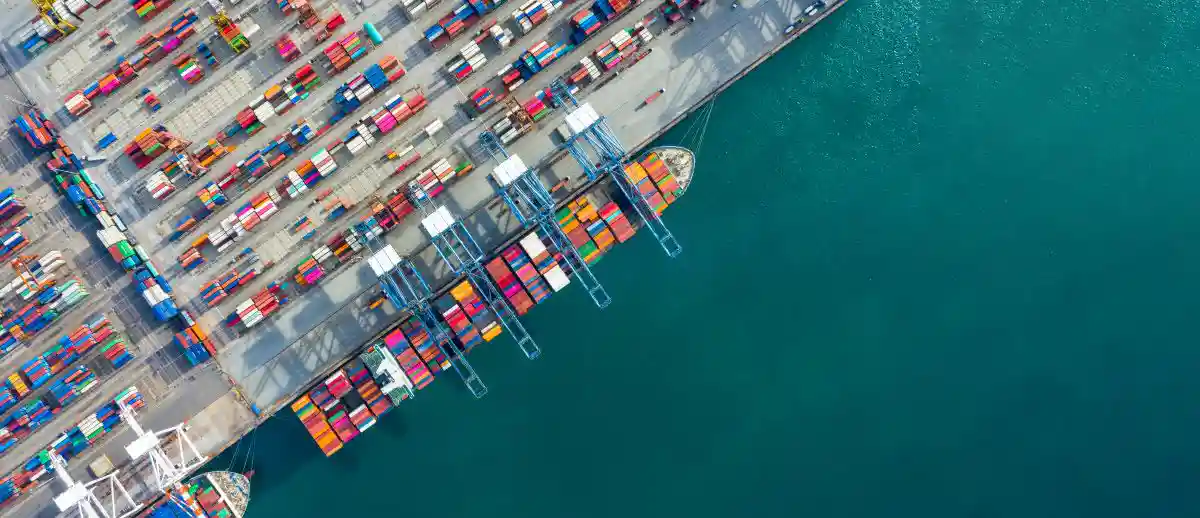
- Sea Freight (International): Port-to-port shipping from East Asia to the North American West Coast typically takes between 14 and 30 days. After that, additional time is required for customs clearance and ground transportation to Colorado, which can add another week or more. As a result, total door-to-door international sea shipments can take from 5 to 8 weeks or longer.
Customs and Processing: International shipments require time for customs procedures and inspections, which can add days or even weeks to the process.
Logistics and Delays: Delays can arise from weather conditions, shipment volume, specific carrier schedules, and the need for additional services such as container modifications.
Transport your loaded or unloaded container in Colorado today!
Colorado Container Transport Service Costs
The cost to transport a shipping container in Colorado depends on the container size, weight, distance, pickup conditions, delivery access, and whether the move requires drayage, intermodal rail, tilt-bed service, or a crane for loading and unloading. Most 20-foot container moves cost less than 40-foot or high-cube container transport because the equipment, trailer space, and weight capacity requirements are lower.
Typical Colorado container transport costs may include:
National 2026 container transport pricing commonly places 20-foot container moves around $1,500 to $5,000 and 40-foot container moves around $2,500 to $10,000 for major routes, before accessorial charges. Colorado routes can also be affected by mountain grades, rural delivery locations, seasonal weather, chassis availability, fuel costs, and loading requirements.
Additional costs may apply for:
- Crane, forklift, or tilt-bed unloading
- Overweight or loaded containers
- Limited-access job sites, farms, or construction locations
- Chassis fees, storage, prepull, or detention
- Permit requirements for oversized or overweight container loads
- Expedited pickup or delivery
Heavy Equipment Transport provides customized Colorado container transport quotes based on the exact container dimensions, weight, route, and loading needs. Whether you're moving a 20-foot storage container locally in Denver, hauling a 40-foot container to Colorado Springs, or arranging intermodal container delivery across state lines, our team plans the right trailer, permits, and equipment for a safe delivery.
Call today for a Colorado container transport quote and get reliable pricing based on your exact move.
Shipping Container Transport Dimensions and Specifications
Colorado container transport costs vary based on distance, port terminal, container status (loaded or empty), permits, routing, and delivery requirements. Submit your details above to receive accurate pricing and availability for your move.
Choose Your Region in Colorado and Get a Container Shipping Quote!
Regions
Don’t see your city or town listed?
No problem! Call now and speak with a live logistics agent.
We’ll get your container delivered to where you need it.
Popular Container Services
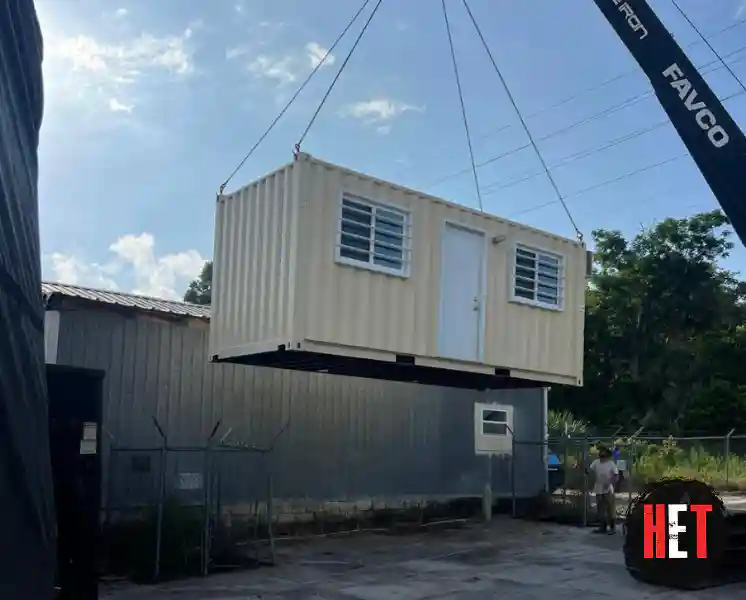
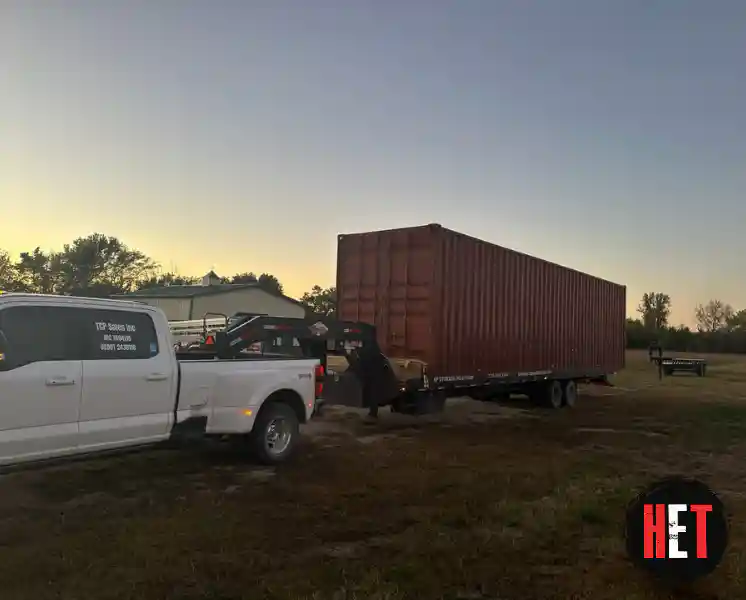
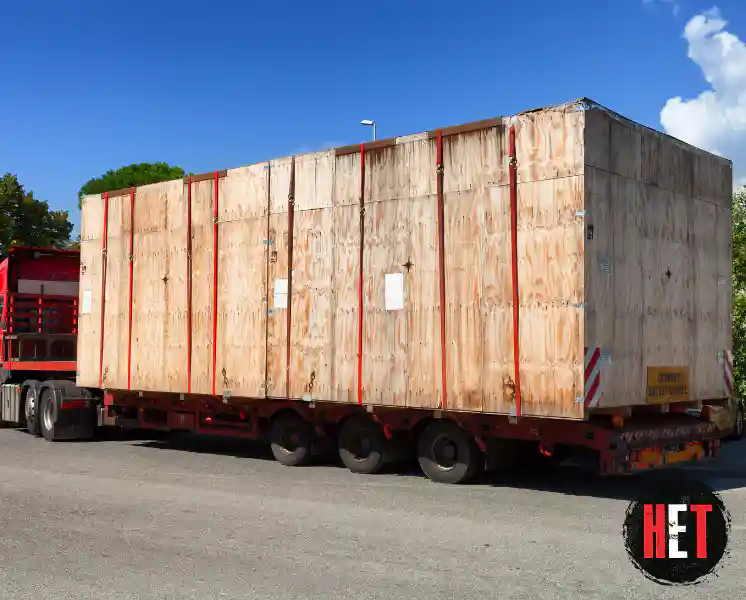
See All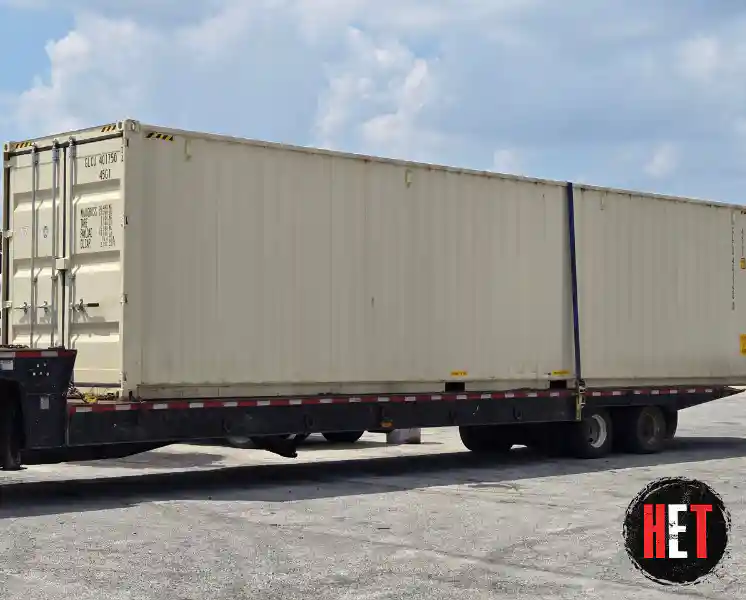
Colorado Container Transport Permits and Regulations
Moving shipping containers in Colorado may require compliance with state oversize and overweight rules, local access requirements, and property placement regulations. Permit needs depend on the container’s size, weight, contents, route, and final delivery location.
The Colorado Department of Transportation (CDOT) manages oversize and overweight permit access, while the Colorado State Patrol (CSP) oversees commercial vehicle size, weight, clearance, and Port of Entry requirements.
Legal Dimensions when shipping a container in CO
Standard container transport in Colorado is typically based on legal highway limits, including:
- Maximum legal width: 8 feet 6 inches
- Maximum legal height: 14 feet 6 inches
- Common container lengths: 20 feet, 40 feet, and 53 feet
- Standard gross vehicle weight limit: 80,000 pounds
Loaded 40-foot containers may require weight review before dispatch, especially when cargo weight, axle spacing, or route restrictions affect legal transport. Heavy Equipment Transport checks container height, gross weight, bridge clearance, tunnel access, and site conditions before pickup and delivery.
Permit Types for Colorado Container Transport
Depending on the shipment, route, and load details, container transport may require:
- Single-Trip Permits: Used for one-time oversize or overweight moves on approved routes.
- Annual Permits: Used by frequent carriers moving qualifying oversize or overweight loads throughout the year.
- Hazardous Materials Permits: Required when a container includes placardable hazardous materials or regulated cargo.
- Special route permits: May be required for restricted roads, toll roads, mountain corridors, or loads with added clearance concerns.
Safety Requirements
Oversized or overweight container loads may require proper lighting, flags, banners, and pilot vehicles depending on the load width, height, route, and travel schedule. Requirements can vary based on the permit, time of travel, and whether the route includes urban traffic, mountain grades, bridges, or restricted corridors.
Colorado Route Planning
Container moves in Colorado require careful route planning, especially on I-25, I-70, I-76, mountain passes, rural highways, and delivery routes with bridge or overhead clearance concerns. Our team reviews the container size, weight, pickup access, delivery access, and route restrictions to plan safe and efficient transport.
Sideloaders, tilt-bed trailers, flatbeds, chassis, and cranes may be used when site conditions limit placement options or require controlled loading and unloading.
Colorado Placement and Use Regulations
Container placement rules vary by city, county, zoning district, and property use. Some Colorado locations may allow temporary container placement, while others require permits for long-term storage, construction use, or placement in public rights-of-way.
Building/Zoning Permits
Local building or zoning approval may be required when a shipping container is used for permanent storage, commercial use, construction support, or as part of a structure. Some municipalities and counties require permits based on container size, placement duration, foundation requirements, anchoring, snow load standards, wind exposure, and property zoning.
Temporary Use Permits
Temporary container placement may require a short-term use permit, especially for construction sites, commercial properties, residential projects, or containers placed near streets, sidewalks, or public access areas. Time limits vary by location and may require approval from the local planning, zoning, or public works department.
Placement Standards
Colorado container placement may be subject to:
- Setback requirements for the zoning district
- Restrictions on placement in driveways, parking areas, or public rights-of-way
- Street occupancy or right-of-way permits when placed near or on public streets
- Appearance standards, including rust, color, screening, or visibility rules
- Limits on stacking, permanent storage, or use as an accessory structure
Before placing a shipping container in Colorado, check with the local city or county planning department to confirm zoning, building, and placement requirements. Heavy Equipment Transport can help coordinate the transport side of your container move and plan delivery around access, clearance, and equipment needs.
Need A Specific Transport?
Colorado Industries That Rely on Container Transport

Colorado's economy depends on reliable container transport to keep equipment, materials, inventory, and job site supplies moving across the state. Key industries such as advanced manufacturing, aerospace, energy, natural resources, food and agriculture, construction, outdoor recreation, and transportation logistics all rely on shipping containers for storage, distribution, and long-distance freight movement.
In Denver, Aurora, Colorado Springs, Fort Collins, Pueblo, and rural parts of the state, containers are commonly used to move machinery, industrial parts, building materials, agricultural supplies, retail inventory, and oversized freight. Mountain routes, construction sites, farms, warehouses, and rail-connected facilities often require careful planning, the right trailer, and experienced container movers who understand Colorado delivery conditions.
Heavy Equipment Transport supports Colorado businesses with shipping container transport for commercial, industrial, agricultural, and construction needs. Whether you're relocating a loaded container, delivering a storage container to a job site, or coordinating intermodal container transport, our team helps plan a safe and efficient move from pickup to final placement.
Transportation Infrastructure and Logistics in Colorado
Colorado's transportation network plays a major role in moving containers, equipment, materials, and freight across the Mountain West. The state's highways, rail lines, airports, intermodal connections, and local delivery routes support container transport for construction, manufacturing, agriculture, energy, warehousing, retail, and industrial operations.
Major freight corridors such as I-25, I-70, I-76, US-50, and US-287 help connect Denver, Colorado Springs, Fort Collins, Pueblo, Grand Junction, and surrounding rural markets. Denver's central location also makes it an important regional hub for freight forwarders, trucking companies, rail-connected shipments, and container delivery services.
Colorado container transport requires careful planning because traffic congestion, mountain grades, winter weather, bridge clearances, and route restrictions can affect pickup and delivery. High-traffic corridors such as I-25 and I-70 often require additional scheduling and route review, especially for loaded containers, oversized loads, or deliveries to job sites with limited access.
The Colorado Department of Transportation (CDOT), Colorado State Patrol, local transportation departments, and regional planning agencies help manage freight movement, road safety, permitting, and infrastructure planning across the state. For container movers, this means each shipment must be planned around the route, container size, weight, delivery access, and any permit or clearance requirements.
For timely and reliable container transport in Colorado, contact Heavy Equipment Transport today. Our team helps coordinate the right trailer, route, permits, and delivery plan for safe container transport across the state.
Colorado Industries That Rely on Container Transport
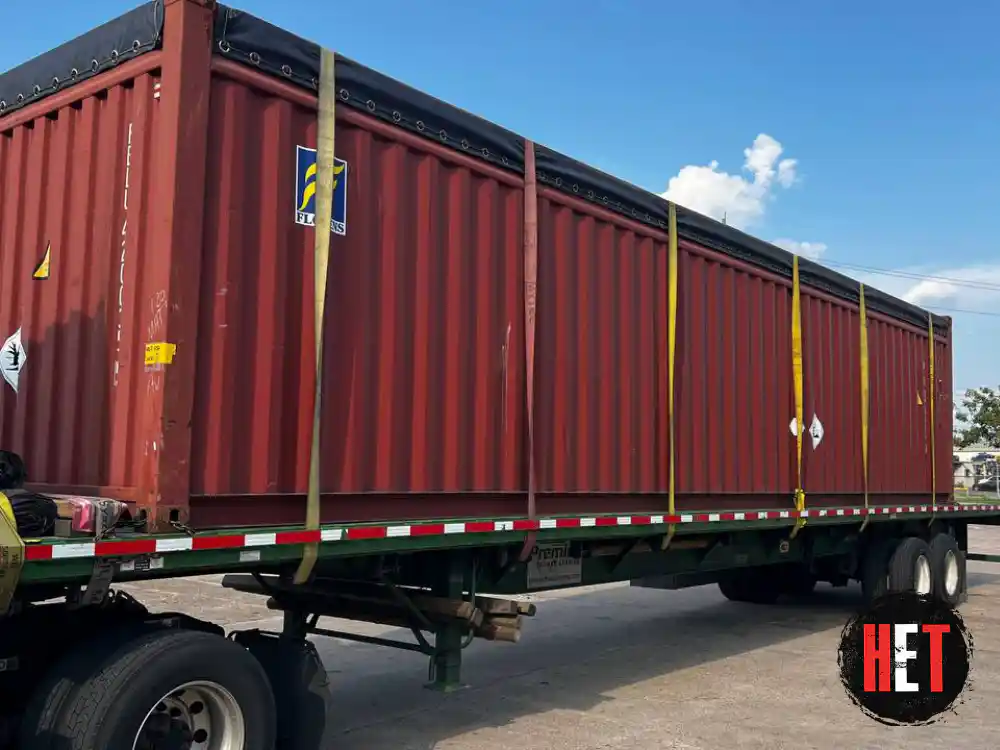
Shipping a container in Colorado starts with confirming the container size, weight, pickup location, delivery site, and whether the container is loaded or empty. From there, Heavy Equipment Transport matches your shipment with the right trailer, route, and loading support.
Our container transport process includes:
- Reviewing the container dimensions, weight, and cargo status
- Confirming pickup and delivery access
- Selecting the right trailer, such as a chassis, flatbed, step deck, tilt-bed, or sideloader
- Checking route restrictions, permits, bridge clearances, and mountain road conditions
- Coordinating loading or unloading equipment when needed
- Providing updates from dispatch through final delivery
This process helps keep Colorado container moves safe, organized, and efficient, whether the container is moving locally, across the state, or to another region.
Let's get started with your Colorado container move now!
Call and speak with a live specialist to get your free, no-obligation quote!
Our Recent Transports
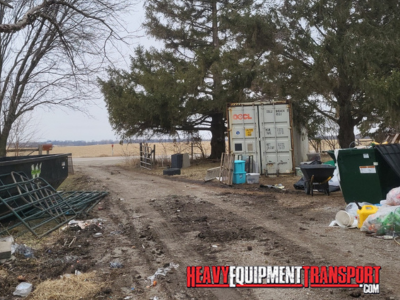
TRANSPORTING A LOADED 40FT HIGH CUBE CONTAINER ON A STEP DECK TRAILER
Transport DetailsAurora, CO
Centennial, CO
This loaded 40ft high cube container was shipped from Aurora, CO, to Centennial, CO, by the help of Janelle Foltz. She identified a step deck as the best trailer for transport and ensured the right paperwork accompanied it. Loading this container on a trailer was tricky because it was sandwiched between the trees but our team had it done. Call us for affordable and timely container shipping services to or from Colorado today.
Colorado Shipping Container Transport FAQs by Category
Costs and Quotes
How much does shipping a container in Colorado cost?
Shipping a container in Colorado costs between $2.25 and $4.95 per mile. A 20-foot container transport ranges from $1,500 to $5,000, while shipping a 40-foot container costs between $2,500 and $10,000. Extra fees and local charges may apply depending on the state where you are and the permits.
How do I get an exact container shipping quote in Colorado?
For an accurate container shipping quote in Colorado, contact Heavy Equipment Transport with details about your shipment, including pickup and drop-off locations, container type and dimensions and the desired date. You can reach us via their online quote, phone, or email.
Can the container shipping costs vary by city in Colorado?
Container shipping costs in Colorado vary by city due to distance from depots, local demand and accessibility. Shipping to remote towns is generally more expensive because of longer transit times and higher transportation fees.
Planning and Logistics
Do I need to be present for pickup/delivery?
For the pickup of a loaded container, your presence is required to unlock it and verify its contents. For delivery, you typically don't need to be there if you provide clear placement instructions and ensure the driver has access.
How much space is needed for delivery?
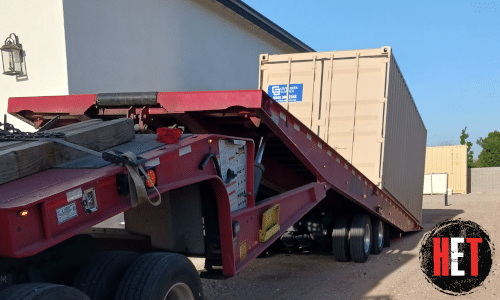
Tilt-bed trucks require significant height and width clearance for delivery. In Colorado, ensure at least 13 feet, 6 inches of height clearance and a width clearance of 12 feet.
Do I need local permits for placing a container on my property in Colorado?
In Colorado, you do not need planning permission to keep a container on private property. Local laws and Homeowners Association (HOA) restrictions can differ greatly, so it is crucial to examine local regulations.
Weight & Dimensions
Can you move a loaded container to or from Colorado?
Yes, you can transport a loaded container to or from Colorado, but there are weight restrictions. Most standard equipment can safely move a loaded 20ft container, provided it stays under a weight limit of around 30,000 lbs.
In Colorado, is it permissible to transport a loaded 40-foot container on public roads?
No, it is not permissible to transport a loaded 40-foot container on public roads in Colorado. Generally, 40-foot containers can only be transported on public roads when they are empty.
What are typical container sizes and weights?
The most common sizes of shipping containers are 20ft and 40ft. An empty 20ft standard container typically weighs between 4,850 and 5,300 lbs, while an empty 40ft standard container usually weighs between 7,980 and 8,820 lbs.
Safety and Regulations
Are permits required for shipping a container in Colorado?
Permits are essential for shipping a container in Colorado. If a container is classified as overweight or oversized, it cannot pass through Colorado or other states.
What items are prohibited from being transported in a container to or from Colorado?
Items typically prohibited from being transported in a container to or from Colorado include illegal substances, animals, humans, paint and flammable materials, as these pose safety risks.
What kinds of trailers are used to move a container?
Transporting containers often necessitates specialized equipment. Tilt-bed trucks provide a standard method for ground-level delivery, while flatbed trailers equipped with twist-lock devices are favored for secure transportation.
Are containers weatherproof?
We have waterproof containers that are windproof and watertight (WWT) to protect their contents during global transport.
Where Is Your Heavy Equipment Headed