
No Compromises. Full Results.
Speak with a logistics expert - we’ll handle
your transport from A to Z.

Nationwide

Experience

Experts
Why choose HET for transporting shipping containers in West Virginia?
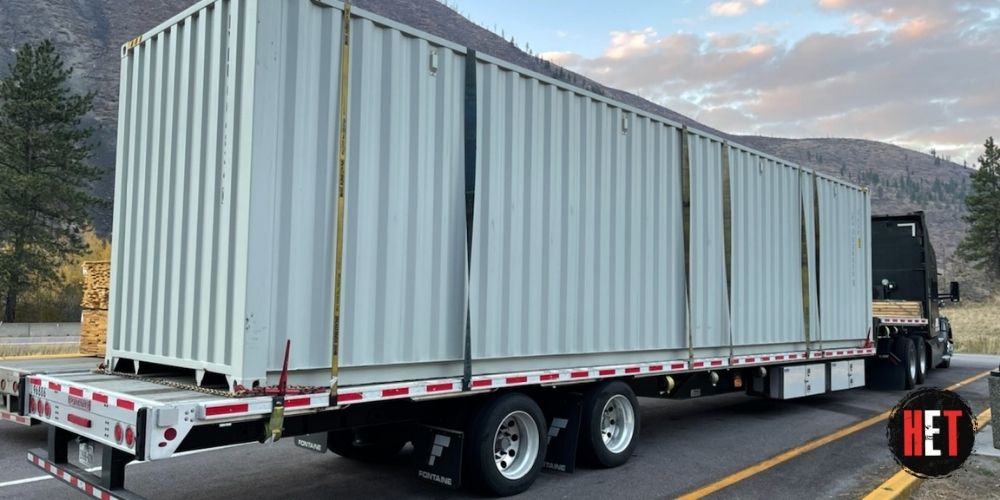
HET, a West Virginia transportation company, has delivered 551 shipping containers this year with a record 98.3% on-time delivery rate.
Heavy Equipment Transport is proud to hold ISO 9001 certification and delivers over 1,500 container shipments annually. We have already exceeded this number in the first ten months of this year. Our commitment to on-time delivery consistently helps our clients save around 18%, though this percentage may vary by service.
The FMCSA licenses us under MC-693977, maintains $250,000 in coverage, and is GSA-certified. As a FEMA Partner Approved company, we have been recognized as a potential Inc. 5000 fastest-growing company for seven consecutive years. With more than 16 years in business, our team comprises over 140 logistics experts located in Florida, Kentucky, Ohio, and West Virginia.
Confirm Container Transport Details
Confirm with confidence.
Get pricing that fits your route and load.
Professional Container Transport Services in West Virginia
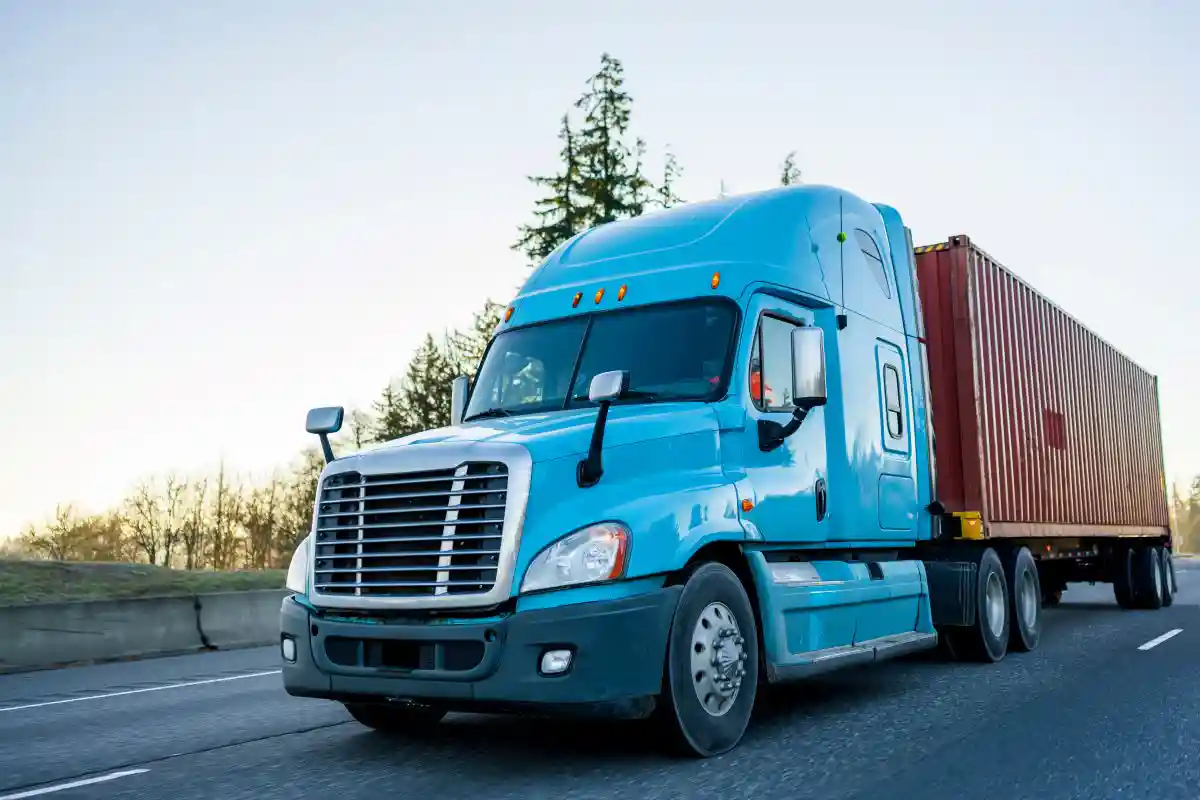
Heavy Equipment Transport is the leading container transport company in West Virginia, with over a decade of experience. We handle containers of all sizes and weights efficiently, thanks to our modern resources deployed statewide. Our team processes shipping requests promptly, ensuring the right trailer is used and that you receive door-to-door or terminal-to-terminal service. We’ll keep you updated until your shipping container is safely delivered.
Reliable and well-insured container transport services in West Virginia.
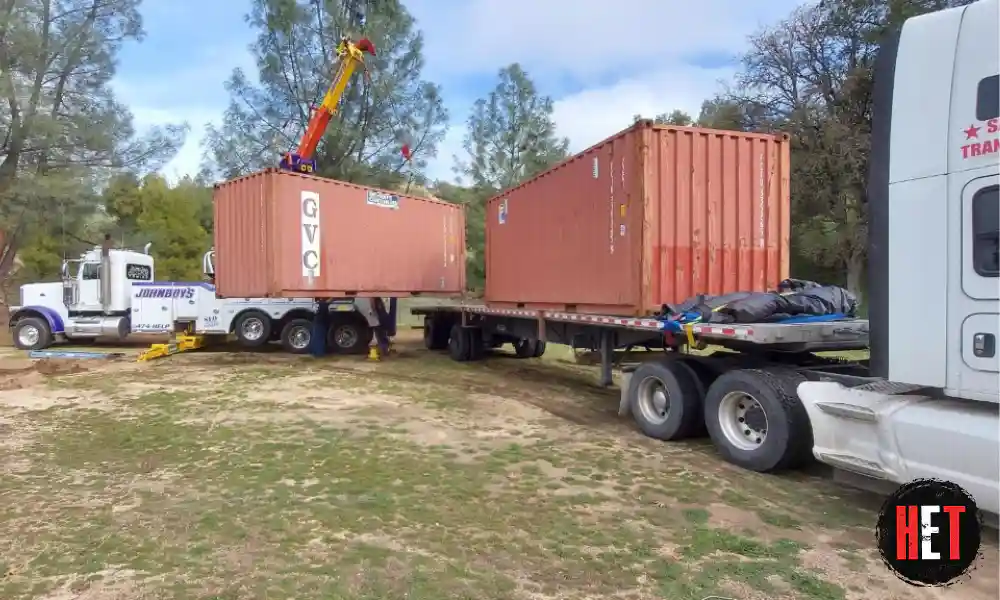
Heavy Equipment Transport offers full insurance for all shipping containers, allowing clients to contact the insurer directly for claims. Each container is inspected before transport, and its condition is documented on the BOL form for reference at delivery.
If the delivered container’s condition doesn’t match the BOL, clients receive full compensation. Our professional drivers safely transport containers to their destinations.
Transport your loaded or unloaded container in West Virginia today!
The Most Important Ports For Shipping Containers Transportation In West Virginia
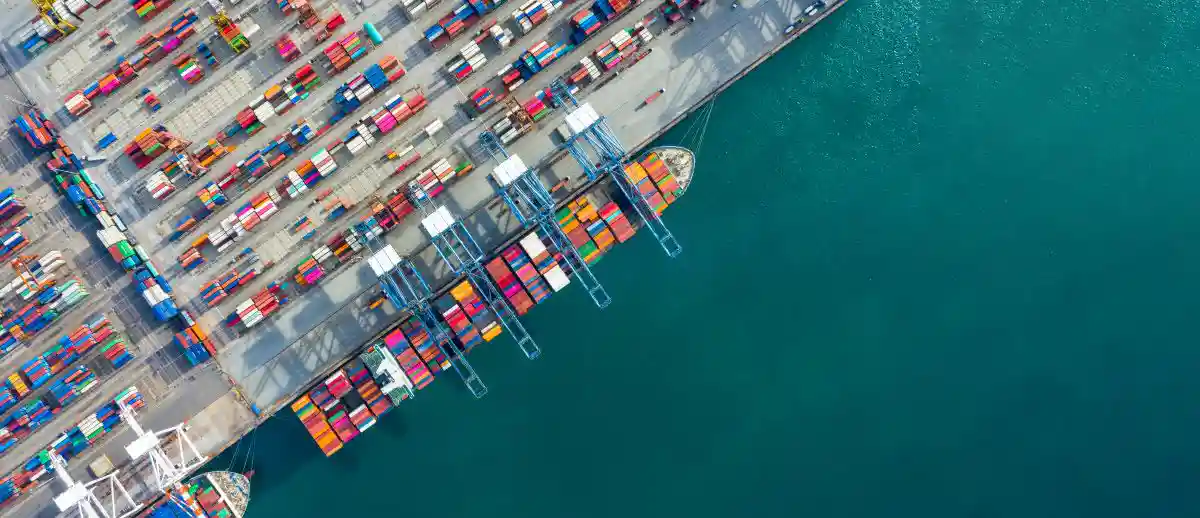
The Port of Huntington Tri-State is West Virginia's central hub for shipping containers and the second-largest inland port in the U.S. by cargo volume. Another key facility is the Port of West Virginia, which facilitates the transport of various goods.
The main transportation hubs in the state include inland river ports and intermodal terminals along the Ohio River. Notable examples are the Port of Huntington, the West Virginia Port in Follansbee, and the Heartland Intermodal Gateway. These facilities support the movement of cargo by barge, rail and truck.
Major Ports And Facilities For Container Transportation In West Virginia
- Port of Huntington Tri-State: Located in the heart of the country, this port is one of the biggest inland ports in the United States. It plays an important role in shipping and transporting goods, moving more than 58 million tons of cargo each year as of 2011. That’s a huge amount of freight, helping to keep various businesses and industries supplied with what they need.
- Port of West Virginia (Follansbee): This facility is situated along the Ohio River and provides a range of logistics services. These include storage options with warehouses and tanks, the ability to transfer goods between different transport methods, and over 20,000 feet of railway access for shipping both within the country and internationally.
- Heartland Intermodal Gateway: The West Virginia Department of Transportation has set up an important facility to connect highways, train tracks, and waterways. This makes it easier for people and goods to move around the state.
- Point Pleasant Rail Terminal & Warehouse Facility: Offers expert services for managing and storing goods safely and efficiently.
- Bridgeport Terminal (Twin Eagle): This facility is primarily dedicated to managing energy resources in the Marcellus Basin. It has ample space for storing train cars—about 130—and offers services to handle various materials efficiently.
These facilities mainly help local industries by transporting important goods like coal, machinery and plastic materials.
Central Appalachian Inland Port At Prichard in West Virginia
Formerly the Heartland Intermodal Gateway, this inland port transfers containers between rail and trucks. It is served by Norfolk Southern Railways and connects to major East Coast ports, including the Port of Norfolk.
These facilities enable container movement along West Virginia's navigable waterways, including the Ohio, Kanawha and Monongahela Rivers.
Intermodal Transport in West Virginia
Intermodal transport in West Virginia utilizes railroads, rivers, and highways to move goods like coal and chemicals. Key hubs include the Port of West Virginia on the Ohio River, with Norfolk Southern as a major freight rail carrier.
Key Examples of Intermodal Transport in West Virginia
Key examples include the Port of West Virginia in Follansbee, coal transport via rail-to-barge, and specialized services from companies like Orbital Transport.
- Port of West Virginia (Follansbee): There is an important transportation center located on the Ohio River, at Mile Marker 70, that brings together three modes of transport: barges, trains, and trucks. This facility allows for the easy transfer of various types of cargo, including large and loose goods, between these different transport methods. It works with Norfolk Southern Railway and Empire River Rail to move freight and plans to improve access for trains with a new bridge.
- Ohio River Barge and Rail System: Inland rivers and railroads are often used to move large quantities of materials, such as coal. This method is useful because it helps keep cars off the roads, making travel easier for everyone.
- Orbital Transport Container Services: A regional company specializes in transporting shipping containers using special trucks and trailers that can load themselves. These vehicles are designed to handle heavy containers, weighing up to 72,000 pounds, making it easier and more efficient to move goods across different modes of transport.
- Coal Industry Logistics: Coal has always been transported by train from mines to river docks, where it's then loaded onto barges for further transport. This process is a key example of how different transportation methods work together in this area.
Many transportation systems use specialized drayage trucks to pick up or drop off shipping containers at locations such as rail yards or ports. These trucks play a very important role in transporting goods between locations.
Regulations and Permits for Transporting Oversized or Overweight Loads and Containers in West Virginia
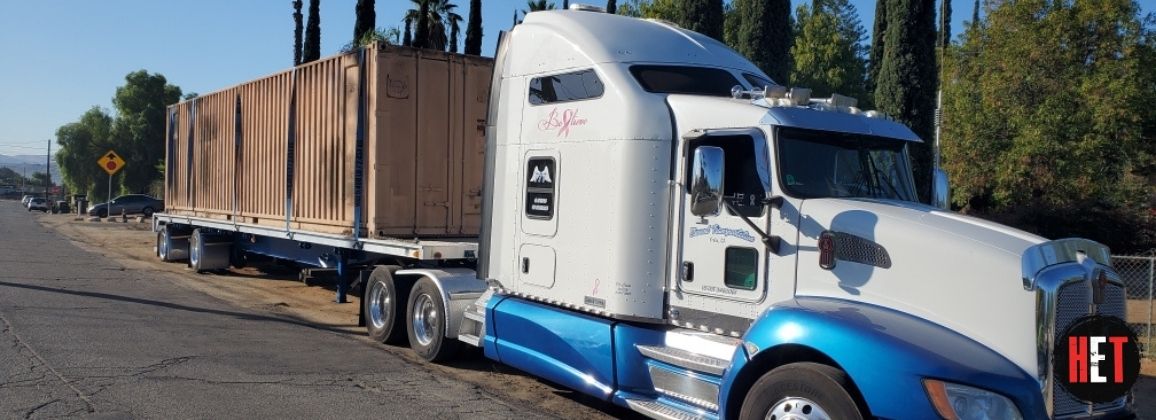
West Virginia requires special permits for transporting loads that exceed the following limits: 80,000 pounds, 53 feet in length, 13.5 feet in height, or 8.5 feet in width. The cost for a single-trip permit usually starts at $20. The West Virginia Department of Transportation manages these permits and can often be obtained online through GotPermits.
Permit Types and Costs
- Single-Trip/Super Loads: The fee is $20 for standard oversize or overweight transport.
- Blanket Permits: A $200 fee will be charged for oversize shipments, and a $500 fee will apply for shipments that are both oversize and overweight.
- Local Permits: Officer supervision may be necessary for municipal road usage, which incurs a fee of $5 plus an hourly rate of $10 for supervision.
Guidelines for Oversized Equipment and Container Restrictions and Regulations
- Maximum Dimensions (Without Permit): The vehicle specifications are as follows: a Gross Vehicle Weight (GVW) of 80,000 pounds, a trailer length of 53 feet, a height of 13.5 feet, and a width of 8.5 feet (equivalent to 102 inches).
- Container Transportation: Permits are necessary, and zoning and building regulations are applicable for the placement of structures at designated locations.
- Operating Hours: Travel is permitted during daylight hours, specifically from sunrise to sunset. However, there may be restrictions on nighttime travel for larger loads.
- Safety Requirements: It is necessary to utilize flags and banners for the transport of oversized loads.
Ready To Get Started?

Affordable Container Transport Services in West Virginia
The cost of transporting a shipping container in West Virginia depends on the distance travelled, route, season, size, and weight, among other factors. Our container shipping services are affordable without any hidden fees.
In addition, we have expedited services for clients who want their containers shipped urgently. Our shipping quotes are free and accurate.
Get your West Virginia container transport rate today
Our Recent Transports
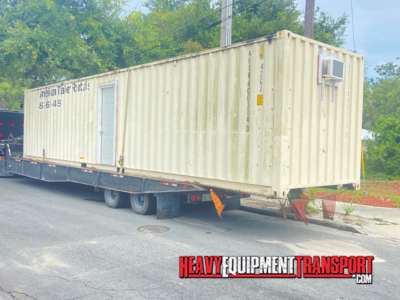
SHIPPING A 40FT CONTAINER ON A FLATBED TRAILER
Transport DetailsLong Beach, CA
Huntington, WV
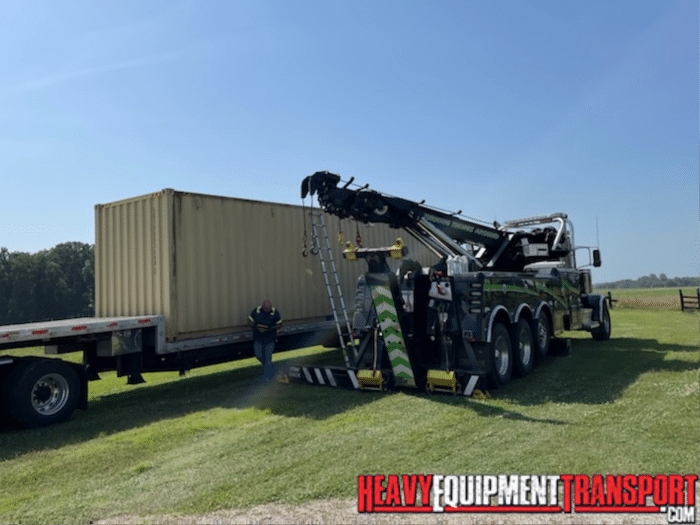
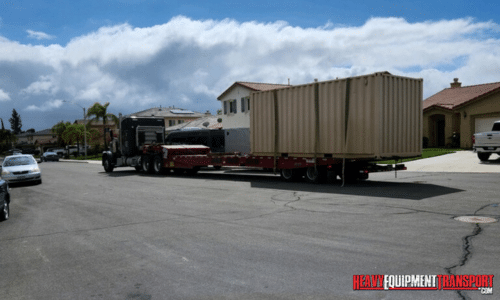
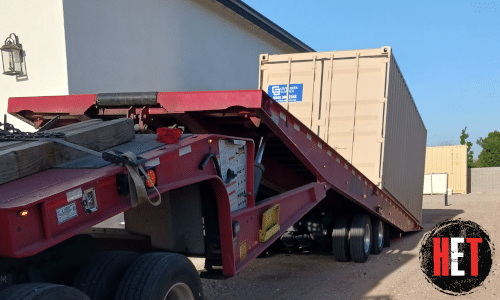
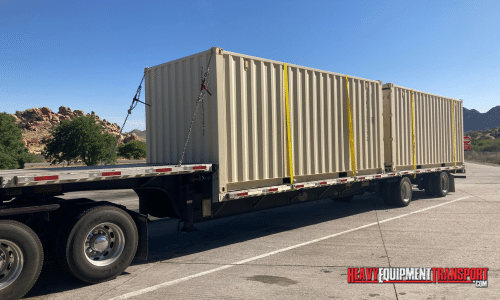
This 40ft loaded container was moved from Long Beach, CA, to Huntington, WV, safely. Adam Blanco, one of our container transport specialists, was in charge of this shipment. He acquired transport documents and identified a step deck as the most convenient trailer for transport. Call us for affordable container shipping services to and from West Virginia.
West Virginia Shipping Container Transport FAQs by Category
Shipping container transport in West Virginia requires specialized logistics for 20ft–40ft steel units, with costs ranging from $1,200 to $5,000 depending on distance. Key factors include weight limits, zoning laws, site accessibility, and container types, often necessitating specialized trucks.
Logistics and Transportation
How are containers moved in West Virginia?
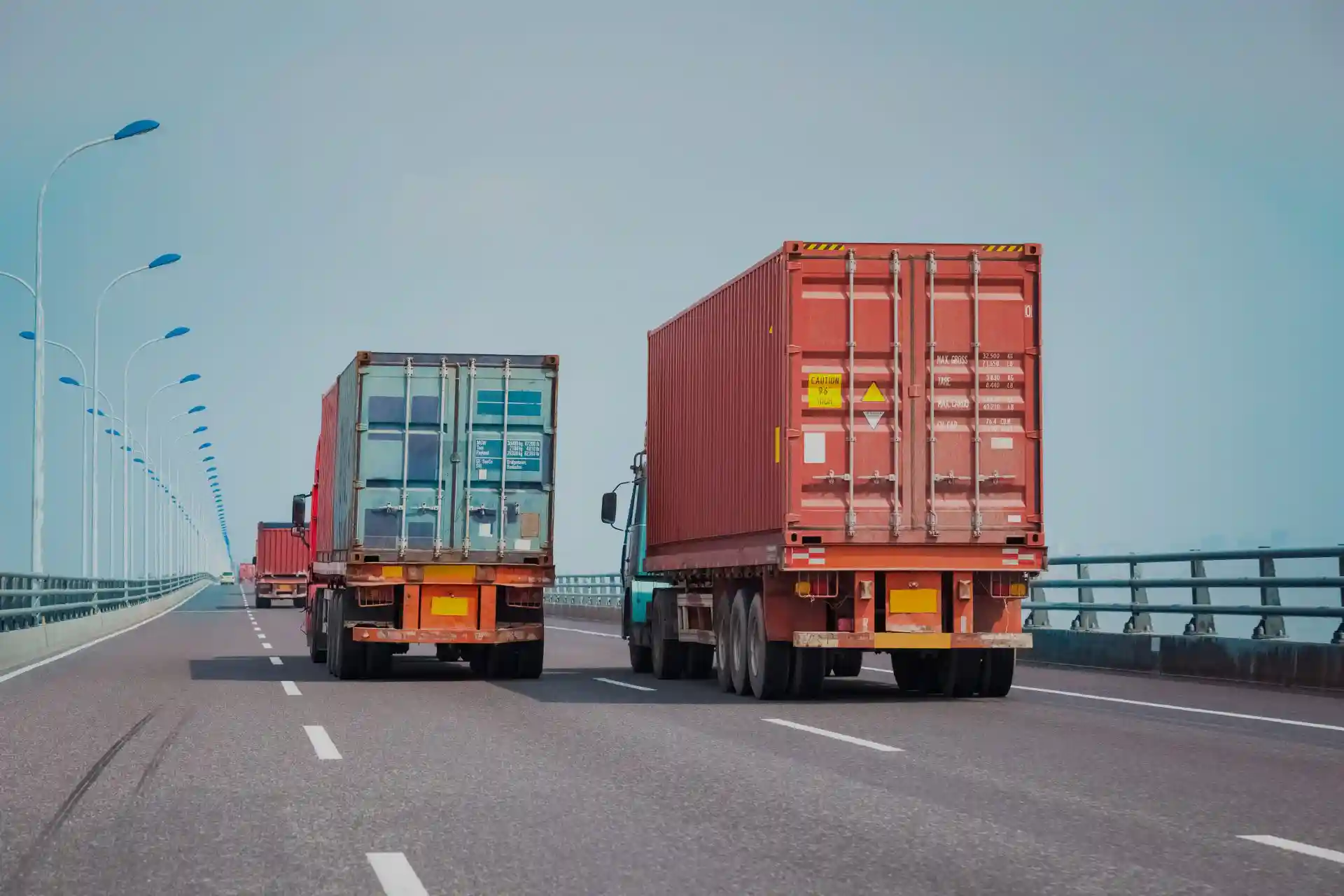
In West Virginia, containers are primarily moved by trucks, including flatbeds and specialized trucks and vehicles. Heavier shipments utilize railroads and river barges. Key highways for container transport include I-64, I-77 and I-79, while the Ohio River system efficiently handles larger shipments.
What are the weight capacities permitted in West Virginia?
In West Virginia, most vehicles can weigh up to 80,000 pounds, with limits of 20,000 pounds for single wheels and 34,000 pounds for dual wheels. A 10% weight allowance applies on smaller roads and special permits for coal transport allow vehicles to carry up to 120,000 pounds.
What are the most popular container dimensions in West Virginia?
The most popular container sizes in West Virginia, aligning with national standards, are the 20-foot, 40-foot, and 40-foot high cube units. These are commonly used for shipping, commercial storage, and residential projects.
What is intermodal transport in West Virginia?
Intermodal transport in West Virginia is all about moving goods using different methods, like trains, trucks, and barges, without needing to directly touch the items every time they change transport. One of the main places for this is the Port of West Virginia, located on the Ohio River. This port connects barges, trains (operated by Norfolk Southern and Empire River Rail), and trucks to help make shipping easier and more efficient.
What are the estimated costs for shipping containers in West Virginia?
On average, the fee can range from about $2.65 to $3.00 per mile you travel. Additionally, depending on your situation, you might need special equipment for loading or unloading the containers.
Regulations and Zoning
Are shipping containers allowed in residential zones in West Virginia?
Shipping containers are generally not allowed for permanent use in West Virginia residential areas, though some municipalities permit temporary storage for up to 30 days twice a year. Always check local zoning laws for details.
Do I need permits to place a container in West Virginia?
In West Virginia, you typically need permits to place a shipping container, especially for permanent structures or long-term storage. Requirements vary by county and may involve zoning laws and safety standards.
Do I need permits for transporting overweight equipment in West Virginia?
In West Virginia, permits are required for transporting loads over 80,000 lbs, 13'6" in height, 8'6" in width, or 53' in length. This applies to non-divisible loads and may require specialized transport like RGNs or lowboys.
Container Types and Condition
What are the primary common types of containers in West Virginia?
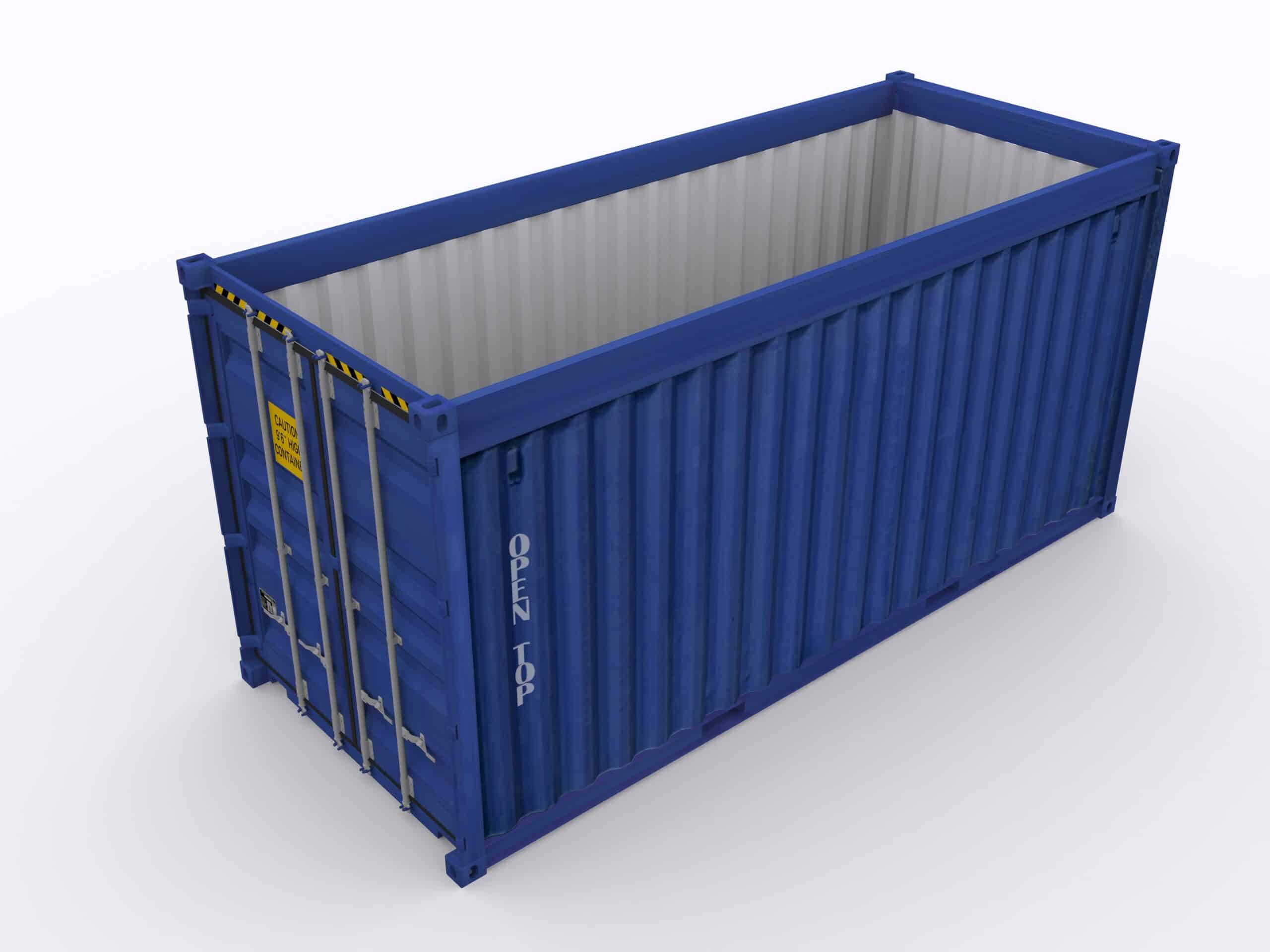
In West Virginia, the primary shipping and storage containers are 20ft and 40ft steel ISO, Dry, and High Cube containers. Conex boxes are also common, along with specialized types like reefers (refrigerated), open-top, and flat-rack containers.
What does "cargo-worthy" mean in West Virginia?
In West Virginia, "cargo-worthy" (CW) refers to used shipping containers that are inspected and certified for international transport. They are wind- and watertight, 10-15 years old, and suitable for secure storage or construction sites.
In West Virginia, what is a container "Grade B"?
In West Virginia, a Grade B shipping container is a used unit that is wind and watertight, structurally sound, and functional, though it shows noticeable cosmetic wear like rust and dents. They are ideal for storage, workshops, or business inventory.
Site Preparation and Delivery
What is required to deliver and place a container in West Virginia?
Delivering and placing a container in West Virginia requires local permits (especially for >30-day use), zoning approval, a stable site (preferably gravel or concrete), and 65-100 feet of straight clearance for the truck. Oversize/overweight transport permits may also be needed.
How are shipping containers unloaded in West Virginia?
In West Virginia, shipping containers are unloaded using specialized trucks such as sidelifters, tilt-beds, and flatbeds, as well as cranes or forklifts to lower the container to the ground. The cargo is then unpacked either at docks or directly with hand trucks and forklifts. Orbital Transport and Container Movers operate in the region.
Restrictions
What items are prohibited from being shipped in a shipping container to or from West Virginia?
Shipping containers to/from West Virginia cannot contain hazardous materials (e.g., aerosols, paints, gasoline, batteries), perishables, live animals, plants, or weapons/ammunition due to safety risks such as fire, explosion, leakage, and damage to other cargo.
Choose Your Region In West Virginia And Get A Container Shipping Quote!
Regions
Don’t see your city or town listed?
No problem! Call now and speak with a live logistics agent.
We’ll get your container delivered to where you need it.
Shipping Container Transport Dimensions and Specifications
West Virginia container transport costs vary based on distance, port terminal, container status (loaded or empty), permits, routing, and delivery requirements. Submit your details above to receive accurate pricing and availability for your move.
Popular Container Services
See All
Need A Specific Transport?
Where Is Your Heavy Equipment Headed