
No Compromises. Full Results.
Speak with a logistics expert - we’ll handle
your transport from A to Z.

Nationwide

Experience

Experts
Why choose HET for transporting shipping containers in Mexico?
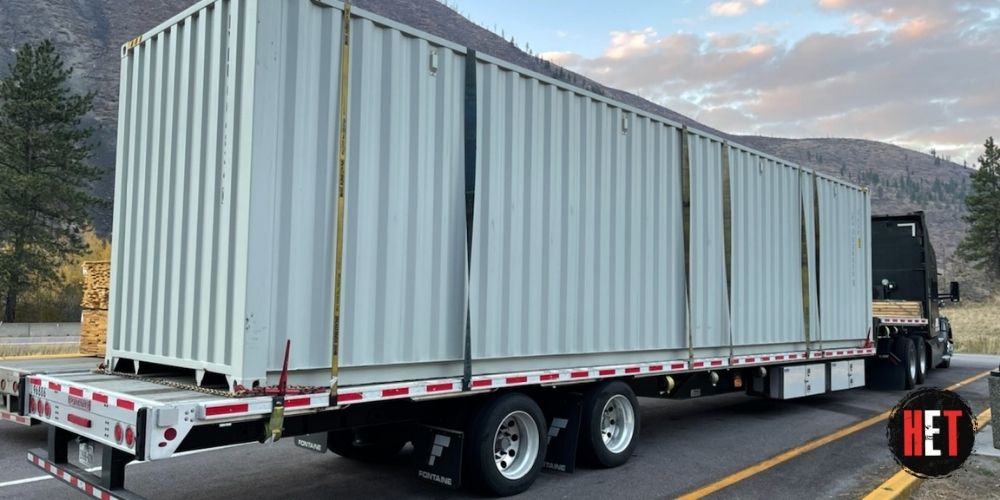
HET specializes in shipping containers to and from Mexico, delivering 854 containers this year with a 97.4% on-time rate.
Heavy Equipment Transport specializes in delivering large shipments. We handle more than 1,500 container deliveries every year, which helps you save around 18% on costs. You can rely on us for trustworthy transportation solutions that meet your needs.
As a licensed transport company with necessary insurance and quality certifications, we have been recognized as one of the fastest-growing companies for the past seven years. With over 16 years of experience, our team of 140 logistics professionals operates from Florida, Kentucky and Mexico, dedicated to excellent service.
- Experience: HET has over 13 years of experience in transporting containers between the United States and Mexico.
- The Care Factor: Our goal is to make transportation better by putting our customers first. We work hard to guarantee that your shipping experience is smooth and that your freight arrives safely.
- Transparency: We are fully qualified and protected to handle shipping containers to and from Mexico. Our shipping team takes care of everything for you, including providing the necessary insurance details and important identification numbers.
- Permits, Customs and More: We take care of your container shipment to Mexico by handling all the necessary permits and customs documents. We also provide help with loading your items to make the process easier for you.
Confirm Container Transport Details
Confirm with confidence.
Get pricing that fits your route and load.
Reliable and well-insured container transport services in Mexico.
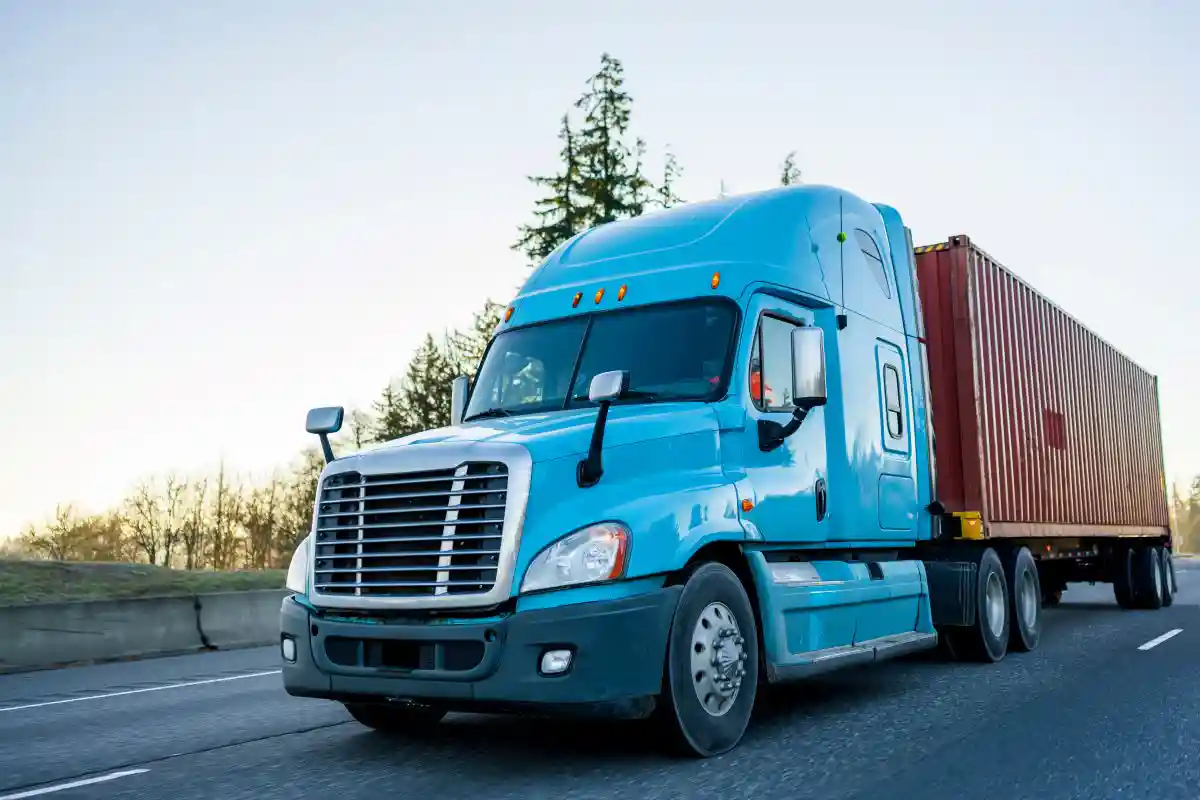
If you're looking for trustworthy container transport services in Mexico, check out Heavy Equipment Transport (HET). We provide a range of helpful features, like insurance for your goods, condition checks and GPS tracking, ensuring you know exactly where your containers are. We transport different types of containers, including standard ones, taller high-cube containers, and refrigerated (reefer) containers.
HET operates all over Mexico and has a team of shipping container specialists ready to assist you. We have experience handling heavy loads and obtaining necessary permits. We've also partnered with major logistics companies, like TFI International, to manage large shipping operations efficiently.
The Best Price to Ship Your Container From the U.S. to Mexico
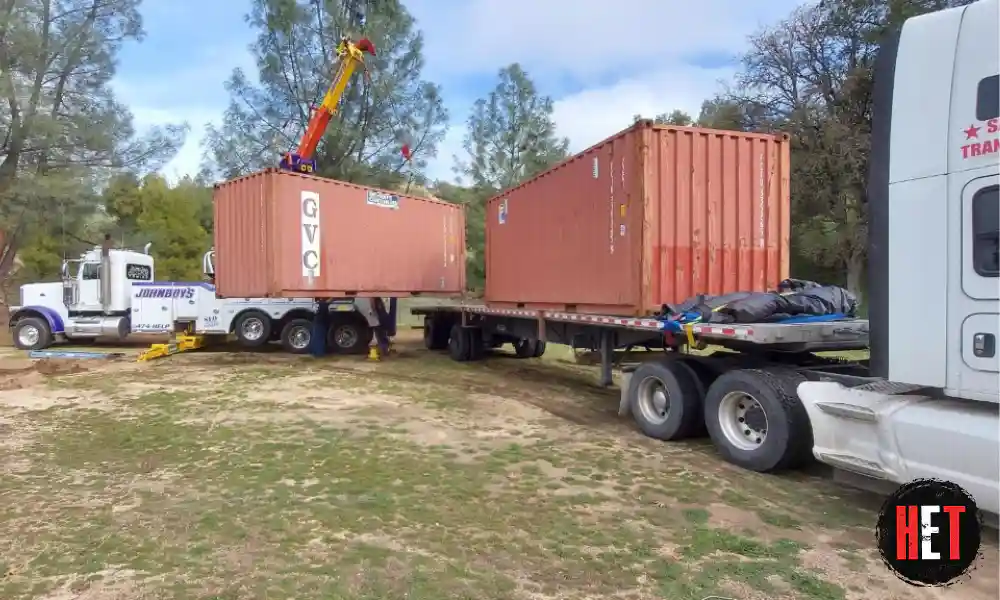
Shipping costs for containers from the U.S. to Mexico vary by location and service type, whether port-to-port or semi-truck across the border. For the best rates and safety, consult a Heavy Equipment Transport agent for an all-inclusive quote with no hidden fees.
Heavy Equipment Transport also helps move your containers between Mexico and the United States and vice versa. HET offers intermodal, drayage and standard container shipping to and from Mexico. With 13 years of experience, we ensure safe and efficient transportation for every container shipment.
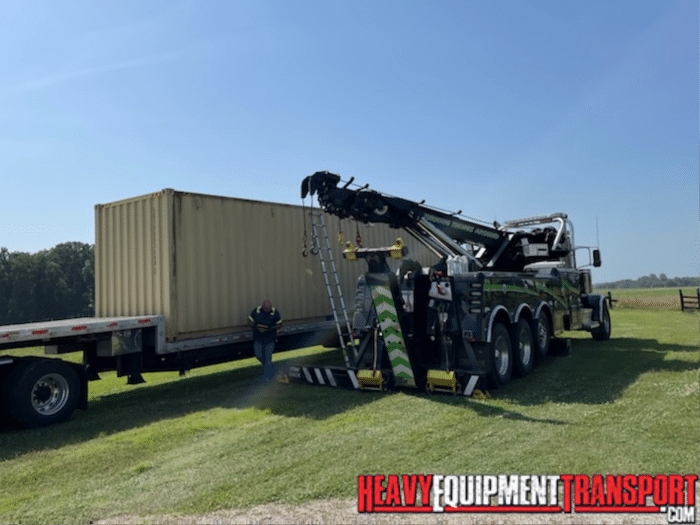
We also offer cranes and professional teams to help load and unload your containers for an additional fee.
Transport your loaded or unloaded container in Mexico today!
The Most Important Ports for Shipping Containers in Mexico
Mexico's key container ports are Manzanillo (Pacific access to Asia), Veracruz (Gulf hub for Europe and the East Coast), Lázaro Cárdenas (industrial port), Altamira (Gulf industrial focus) and Ensenada (Northern Pacific access to the U.S.). Manzanillo leads in TEUs, while Veracruz typically handles the highest cargo volume, supporting Mexico's global trade.
Key Container Ports in Mexico
- Port of Manzanillo (Pacific Coast): Mexico's busiest container port plays a vital role in trade between Mexico and Asia. It manages a large number of shipping containers, making it essential for moving goods across the Pacific Ocean.
- Port of Veracruz (Gulf Coast): The biggest port serves as a key center for shipping goods to and from Europe and the Eastern United States. It manages a large volume of container shipments, making it an important place for trade.
- Port of Lázaro Cárdenas (Pacific Coast): A pivotal hub for industrial and bulk cargo operations, this port is equipped to manage substantial container throughput, establishing itself as a critical entry point to the Pacific trade network.
- Port of Altamira (Gulf Coast): One more important port in the Gulf is known for handling a variety of goods, including shipping containers and bulk materials, as well as liquids. This port plays a key role in supporting the industries in the northeast region.
- Port of Ensenada (Pacific Coast): This area, located near the U.S. border, plays an important role in facilitating the movement of goods between countries. It is an important spot for trade with North America (USA and Canada).
Why are these Mexican Ports Important?
- Trade Routes: Manzanillo and Lázaro Cárdenas are important ports that support trade along the Pacific coast, while Veracruz and Altamira play a major role in shipping through the Gulf of Mexico.
- Infrastructure: These ports have many places to handle shipping containers and good rail connections, like the one in Manzanillo. They play an important role in helping global trade flow smoothly.
- Economic Drivers: They oversee the movement of products, helping Mexico become an important country in global trade.
What is the most important Port in Mexico for shipping containers to or from the US?
The main shipping ports in Mexico for sending containers to the U.S. are Manzanillo on the Pacific coast and Veracruz on the Gulf of Mexico. Another important port is Lázaro Cárdenas, which has deep water and good train connections to the Midwest. Ensenada is mainly used for trade between California and the U.S. Manzanillo is the busiest port for trade with Asia, while Veracruz is important for goods going to the East Coast and other areas around the Gulf.
Intermodal transportation in Mexico
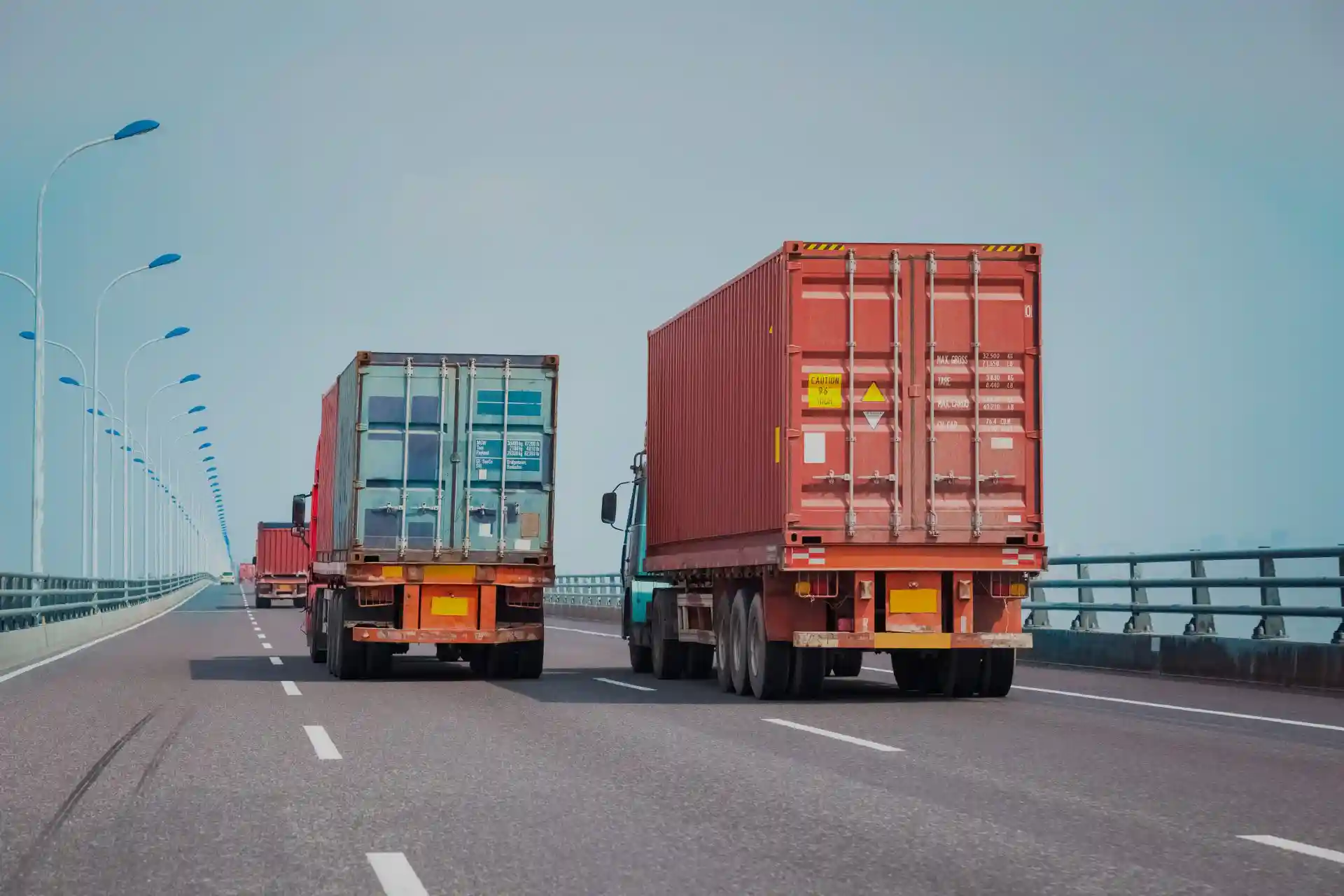
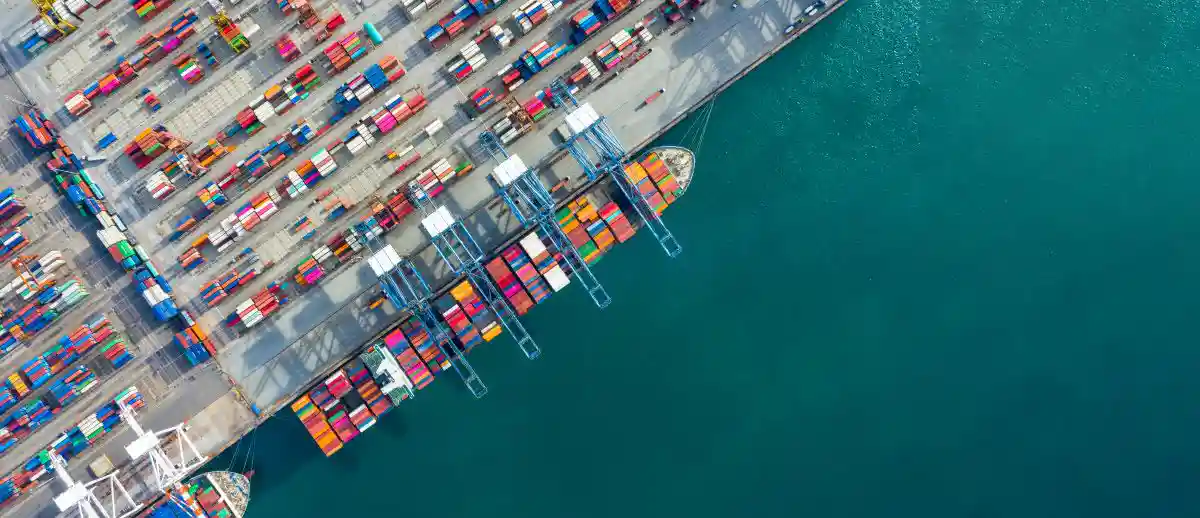
Intermodal transportation in Mexico uses rail and truck transport with sealed containers that cross borders without stopping. This speeds up cross-border shipping by enabling customs clearance at inland terminals instead of at the border. Major operators like Ferromex and KCSM provide secure and efficient door-to-door service for trade between the United States and Mexico, helping to reduce costs and alleviate congestion.
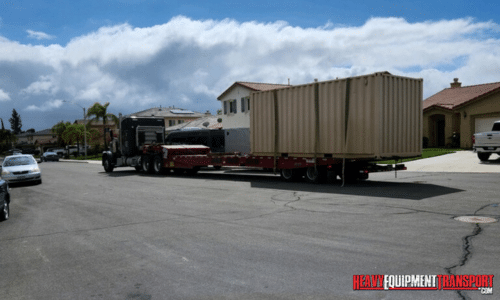
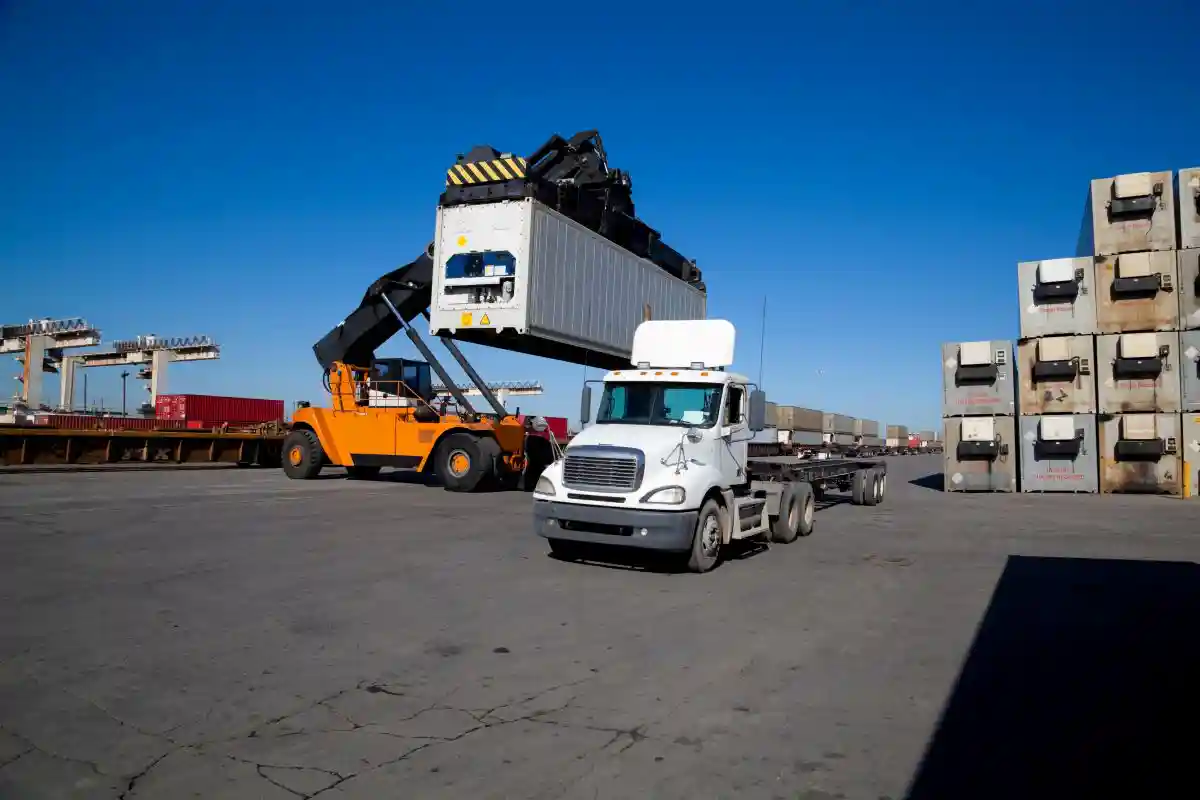
Example of Intermodal Shipping Containers Used Between Mexico and the USA.
Shipping goods between Mexico and the USA involves standard container sizes of 20, 40, 45 and 53 feet. It requires both trucks for final delivery and trains for long distances and it's suitable for items like car parts, electronics and food products.
How Intermodal Transport works between Mexico and the US, Example: Truck-Rail-Truck
- Loading (USA/Mexico Side): Things are loaded onto a truck, like a big delivery truck or a regular shipping container.
- To Intermodal Ramp: The truck takes the container to a nearby train station, which could be located in places like Laredo, Florida, or New York.
- Rail Transfer: At the loading area, the shipping container is taken off the truck and set onto a train car designed to carry it.
- Cross-Border Rail: A freight train transports shipping containers from one country to another, delivering them to the interior regions of Mexico or the United States.
- Customs Clearance: The container is kept at a safe location, either in Mexico or the United States, until it gets approved by customs.
- Final Delivery: After the container has been inspected and approved, it is taken off and put back onto a truck for delivery to its final location.
Mexico-US Intermodal Transport Key Features and Benefits
Transporting goods between Mexico and the US is becoming easier and more efficient. This is mainly done by using trains for long-distance travel and trucks for shorter trips, which helps move containers smoothly across the border without running afoul of truck traffic rules.
This method offers lower costs, enhanced security, faster processing, reduced pollution, and reliable service by integrating trains and trucks and simplifying customs for a safe, eco-friendly shipping solution.
Key Features
- Unified Container System: Goods are packed in uniform containers that can be easily transferred between trucks and trains, ensuring that the items stay sealed and protected during transport.
- Rail-Dominated Long Haul: Uses long train routes for transporting goods over large distances, while trucks take care of picking up and delivering items within local areas.
- Strategic Gateways: Utilizes key US-Mexico border gateways, with major railways serving all six major Mexican gateways, as mentioned by Union Pacific.
- Customs Integration: Uses strong connections with brokers and online platforms to make the process easier and more efficient.
Key Benefits
- Cost Savings: Cheaper per ton-mile than all-trucking for long distances, notes Union Pacific.
- Enhanced Security: Less human interaction with goods helps lower the chances of theft and damage, especially important at border crossings, according to InTek Logistics.
- Environmental Sustainability: Trains are much better at saving fuel compared to other forms of transport, which helps lower pollution and protect the environment.
- Increased Capacity: Double-stack rail cars can carry more goods at once, making shipping more efficient.
- Reliability & Speed: Reliable networks and technology help make things run more smoothly, which reduces delays. Additionally, digital tools make it easier for everyone to see what's happening, according to Union Pacific and Mexico Business News.
- Regulatory Compliance: Some trucking rules at the border are relaxed for U.S. transportation companies.
- Flexibility: MexCal Truckline manages different sizes of cargo and changes their delivery routes to steer clear of traffic jams.
Regulations and Permits for Transporting Overweight Loads and Containers to or from Mexico
Transporting overweight loads to/from Mexico requires special permits from U.S. states and Mexican authorities, focusing on axle weight and total weight (up to 80,000 lbs in the U.S.). Key steps include obtaining a Certified Weight Certificate (CWC), applying for state permits, and adhering to Mexican regulations, including potential restrictions in Mexico City. Specialized carriers or tri-axle chassis may be necessary for heavy containers.
Key Regulations & Requirements
- US Regulations (State & Federal):
- Federal Limits: In the United States, highways known as interstates have limits on how much weight vehicles can carry. The maximum weight for a vehicle is 80,000 pounds. For the different types of axles (the parts that support the wheels), the limits are 20,000 pounds for a single axle and 34,000 pounds for a set of two axles. These rules are set to ensure safety on the roads.
- State Permits: Every state, such as Florida, has its own rules about how big or heavy something can be. If you have something that is larger or heavier than these limits, you’ll need to get a special permit. There are fees to pay based on how much you exceed those limits.
- Safe Container Act (U.S.): If you're shipping containers that weigh more than 29,000 pounds, you’ll need to have an official weight certificate before they can be transported by rail or truck. This requirement is set by OOCL.
- Mexican Regulations:
- Federal & State: Mexico has different rules about the size and weight of goods and these rules can change depending on the state.
- Local Restrictions: Many large cities, like Mexico City, have traffic rules, such as banning trucks during peak hours (6 to 10 AM) to reduce congestion and improve road conditions for all.
Permit Process
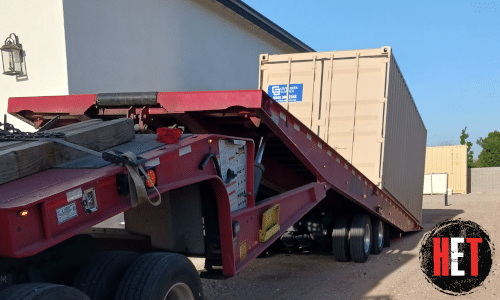
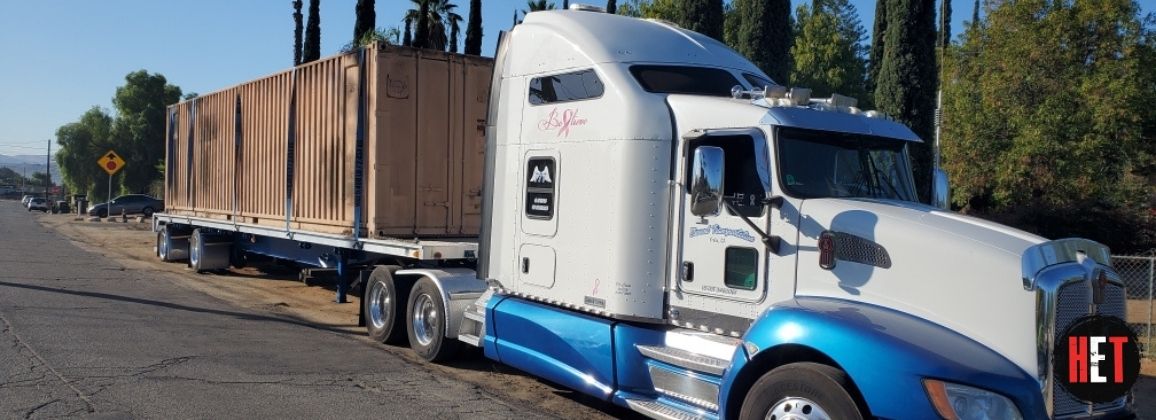
- For Containers: When shipping large containers, there are some important details to consider. If you have a standard 20-foot container that weighs more than about 37,500 pounds, or a 40-foot container that weighs over 43,500 pounds, you'll typically need a special truck with three axles to transport it. This type of truck may come with additional costs, according to Green Worldwide Shipping.
- Permit Types: You can choose from different types of permits based on your needs. These include an annual permit that covers all year, a 10-day permit for short trips, or a 3-month permit for specific routes.
- Application Details: To get started, make sure you have some important information ready. You'll need your USDOT number, details about your vehicle or trailer, like how many axles it has and how long it is, as well as the exact size and weight of the load you’ll be carrying. This means you should know the length, width, height and overall weight of your cargo.
Transport your loaded or unloaded container in Mexico today!
Mexico Shipping Container Transport FAQs by Category
Transporting shipping containers to or from Mexico requires essential documents like a Commercial Invoice, Packing List, Bill of Lading and Origin Certificate to meet customs regulations.
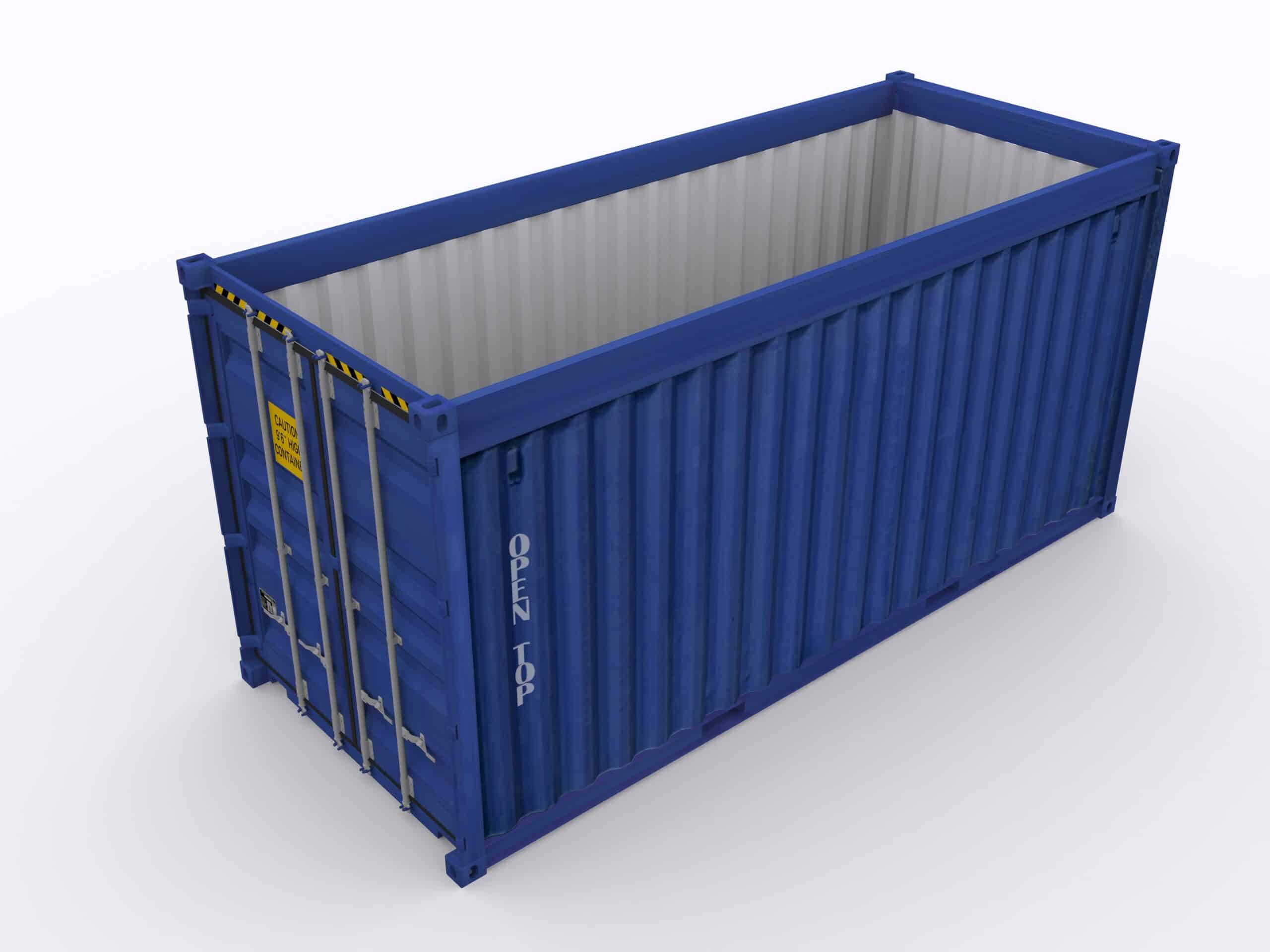
Container types include standard dry, refrigerated, and open-top, with shipping costs ranging from $1,900 to $7,000 and transit times of 4 to over 6 weeks by sea. Be aware of restrictions on items like valuable belongings and certain foods. Decide whether you need a Full Container Load (FCL) or a Less than Container Load (LCL) based on your requirements.
Costs and Pricing
What is the average cost of shipping a container from the United States to Mexico?
Shipping a container from the U.S. to Mexico can cost between $1,900 and $3,500 for a 20-foot container and between $1,900 and $6,500 for a 40-foot container. The shipping container price can vary based on where you're shipping from and to, current market conditions, and whether you are using a full container or sharing space with other shipments. For instance, shipping from the southern U.S. is usually less expensive, and factors like busy ports can significantly affect the cost.
How are inland trucking costs calculated in Mexico?
Trucking costs in Mexico depend on distance, fuel prices and the type of cargo. For Full Truckload (FTL), costs are usually charged per mile. For Less Than Truckload (LTL), charges are typically per pound or kilogram. There may be extra fees for delays, cancellations and special equipment. Key factors affecting costs include base rates, changing fuel prices, and border fees, all influenced by market demand and the rules of the transportation company.
Logistics and Operations
What is the duration of container shipping from Mexico to the United States?
Shipping containers from Mexico to the U.S. typically take 7 to 21 days. For quicker delivery, packages from the Mexican West Coast to the U.S. West Coast can arrive in 10 to 14 days. Times may vary based on factors like ports, customs processes and whether it's a full or partial container.
Other factors like traffic at the ports and the distance between locations, such as Los Angeles to Veracruz versus Manzanillo to Los Angeles, can also affect how long it takes.
What are the weight limits for containers in Mexico?
Container weight limits in Mexico usually range from 23 to 26 metric tons (50,700 - 57,300 lbs), depending on the carrier, container type and route. Standard dry containers generally have a limit of 26 tons, including tare weight.
Single-axle setups can also manage up to 26 tons. Always check with your carrier (like Hapag-Lloyd, Maersk, or OOCL) for specific limits, as local regulations and road conditions can affect allowable weights.
Can I ship a car or furniture in a container from the US to Mexico?
You can definitely send your car and furniture in a shipping container from the US to Mexico. You have two options: you can either rent a whole container just for yourself, or share a container with others to save money. Shipping this way is great because it keeps your belongings safe, and you can send your household items along with your car.
When shipping to Mexico, you can only send used household items. New items, alcohol, medications and guns are prohibited. Ensure your belongings follow these guidelines!
What is intermodal shipping to or from Mexico?
Intermodal shipping in Mexico combines rail and truck transport for efficient goods movement. Trains cover long distances, while trucks manage first- and last-mile deliveries. This approach ensures safe border crossings and simplifies customs, making it a cost-effective choice for logistics.
Customs and Documentation
What documents are needed for international container shipments in Mexico?
For shipping containers to or from Mexico, essential documents include the Commercial Invoice (in Spanish), Packing List, Bill of Lading and Certificate of Origin. Key documents for importing in Mexico include the Pedimento de Importación (Customs Declaration) and Carta Porte (tax document), both of which require HS codes and the importer's tax ID. Additional permits may be required for regulated goods such as food or chemicals.
Is a customs broker required in Mexico for shipping containers?
A licensed Mexican customs broker is needed to clear shipping containers into Mexico. They manage paperwork (Pedimento) and duties, ensuring compliance with regulations and helping importers (Padron de Importadores registration) to avoid delays and storage fees.
- Legal Mandate: According to Article 40 of the Mexican Customs Law, the engagement of a licensed customs agent is mandatory for all commercial import and export activities.
- Paperwork Expertise: The organization undertakes the filing of the Pedimento, which is the customs declaration, and is responsible for the management of intricate documentation, including Commercial Invoices, Packing Lists, and Certificates of Origin.
- Compliance & Duties: They properly identify products, calculate and pay the necessary fees and taxes, and make sure they follow all the rules in Mexico.
- Registration: They provide assistance to the importer in the process of registering with Mexico's Padron de Importadores (Importer's Registry).
Consequences of Not Using One:
- Shipments are often subject to detention at the border.
- Not addressing these problems could lead to additional storage costs, fines, and significant delays in completing container transport.
- Your items are not allowed to enter Mexico legally.
What items are prohibited from being transported in a container to or from Mexico?
Prohibited items for shipping to/from Mexico include weapons, explosives, illegal drugs, pornography, live animals, fresh food, certain medicines (like those with codeine/pseudoephedrine), and large quantities of commercial goods. Strict regulations also apply to alcohol, tobacco, and high-value items. Always check official sources like Gob MX, trade.gov, and UPS/USPS for detailed rules to avoid confiscation or penalties.
Choose Your Region In Mexico And Get A Container Shipping Quote!
Cities
Ports
Don’t see your city or town listed?
No problem! Call now and speak with a live logistics agent.
We’ll get your container delivered to where you need it.
Shipping Container Transport Dimensions and Specifications
Mexico container transport costs vary based on distance, port terminal, container status (loaded or empty), permits, routing, and delivery requirements. Submit your details above to receive accurate pricing and availability for your move.
Popular Container Services
See All
Need A Specific Transport?
Where Is Your Heavy Equipment Headed