
No Compromises. Full Results.
Speak with a logistics expert - we’ll handle
your transport from A to Z.

Nationwide

Experience

Experts
Navigate Colorado's Mountain Challenges With Confidence
Colorado's terrain tests equipment, trucks, and drivers like few other states. Steep grades on I-70, elevation shifts from plains to peaks, sudden weather changes, and winter chain laws create conditions that flatland carriers aren't prepared for. One miscalculation and your shipment sits at a weigh station or worse.
Heavy Equipment Transport plans Colorado moves with mountain realities baked in. Your shipment won't get stuck at a summit or delayed by a storm that everyone saw coming except your carrier.
Heavy Equipment Transport is built to handle every detail — from permits to delivery — with the same level of care you expect from your own team.
Why companies trust Heavy Equipment Transport in Colorado:

Expertise you
can trust
Need specialized heavy equipment shipping?
Our expert logistics agents have the solutions you need.
Your Local Colorado Transport Experts
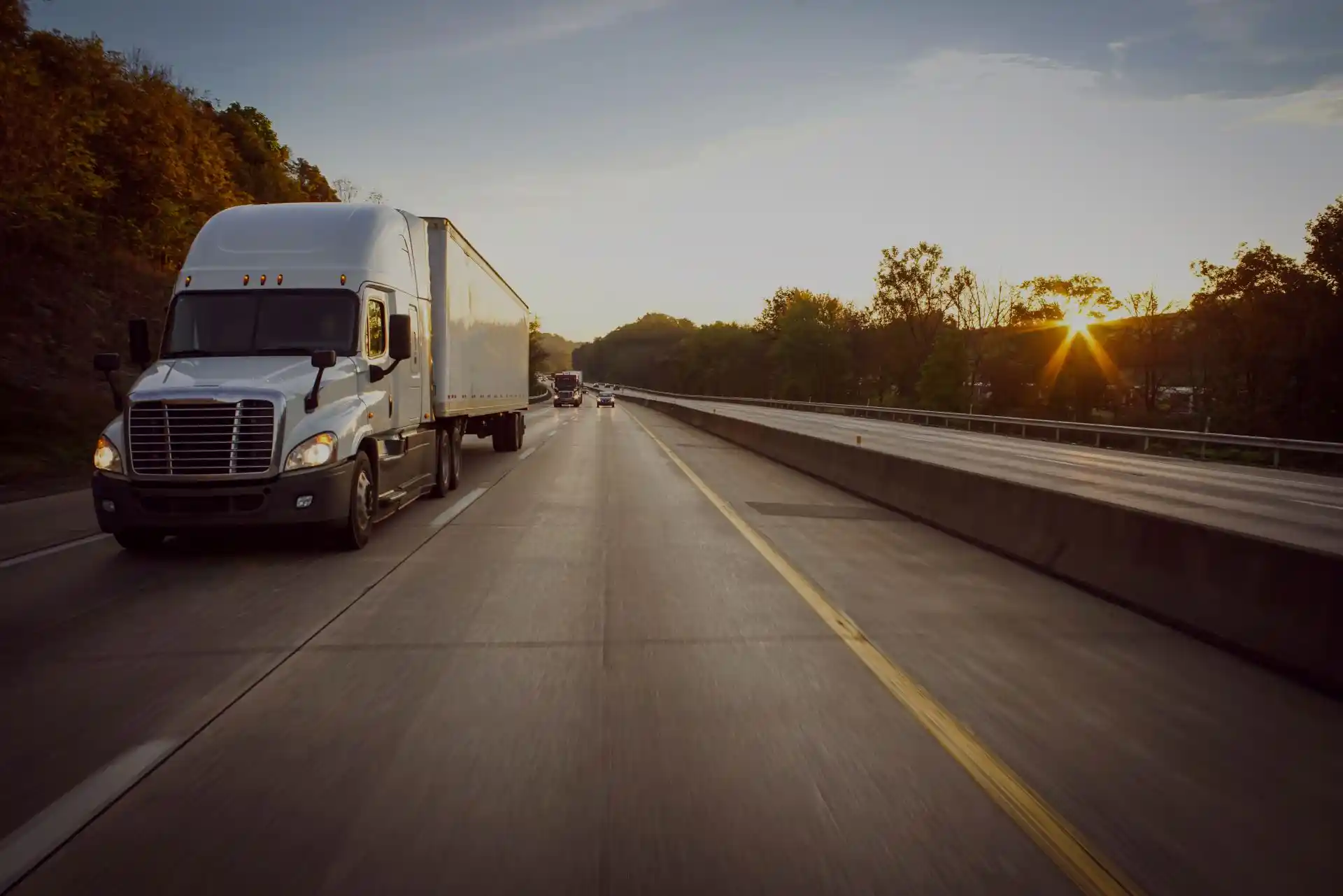
Colorado equipment shipping requires planning for elevation, steep grades, weather-driven closures, and some of the most heavily regulated mountain corridors in the country. From Front Range congestion to high-altitude passes and seasonal chain laws, even short-distance moves can become complex without the right preparation.
Colorado's road network presents unique challenges—tight mountain curves, brake-check zones, limited shoulder space, and travel restrictions tied to weather and traffic flow. That's why construction firms, energy operators, agricultural businesses, and industrial crews across Denver, Colorado Springs, Pueblo, Fort Collins, Greeley, and Grand Junction rely on Heavy Equipment Transport.
We plan each haul with Colorado conditions in mind, secure permits early, coordinate the correct trailers and escorts, and provide proactive updates from pickup to delivery so your shipment stays compliant and on schedule.
What You Get With Us
Local route knowledge and optimized planning
Full permit management and DOT compliance
Real-time dispatch communication
Licensed, insured, and bonded carriers
No delays. No confusion. Just dependable delivery and peace of mind.
Equipment We Move
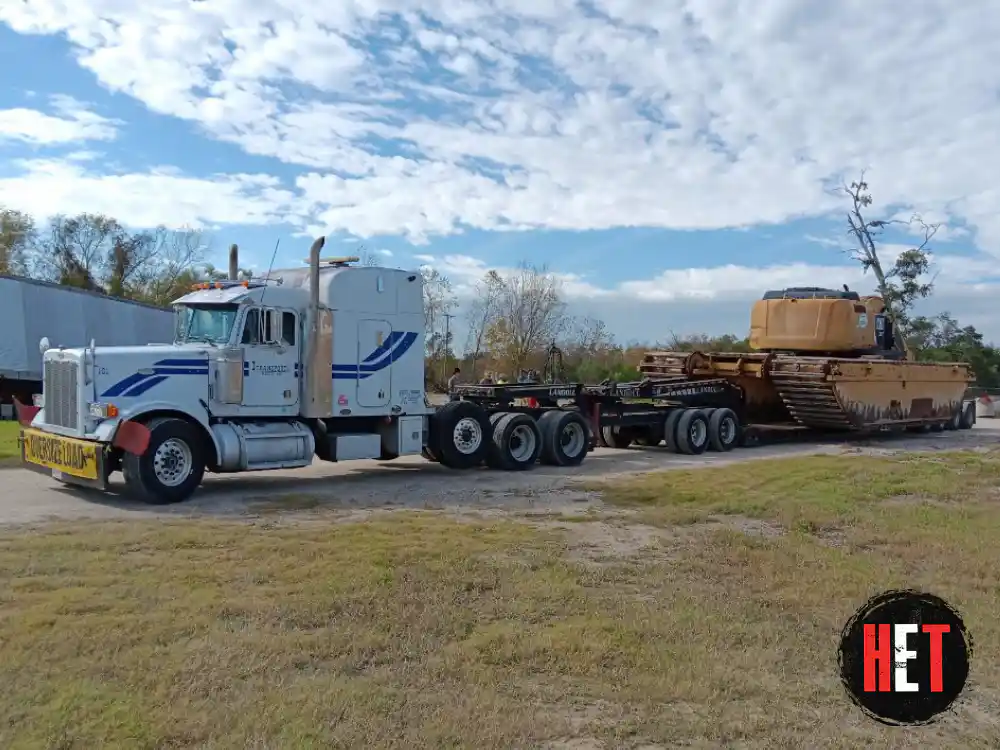
Heavy Equipment Transport provides equipment hauling for independent contactors, small businesses, and corporations across Alabama.
Industries Served
- Construction
- Mining
- Agriculture
- Energy
- Manufacturing
Common Equipment
- Excavators
- Bulldozers
- Cranes
- Tractors
- Forklifts
- Generators
- Compactors
- Industrial units
Every shipment is matched to the right trailer, route, and permit, ensuring safe and efficient transport every time.
Regions In Colorado We Transport To
Transporting Equipment Across All Colorado Cities Including:

Let Us Handle Your
Heavy Equipment Shipment
We’ve got the know-how and the haul power to get it done right.
(888) 730-2951Local Colorado Expertise from Front Range to High Country
Moving freight in Colorado means understanding two different worlds. The Front Range corridor from Fort Collins through Denver to Colorado Springs behaves like typical interstate shipping. Head west into the mountains, and everything changes.
Your Colorado specialist accounts for both:
- Evaluates grade severity, tunnel clearances, and seasonal pass conditions
- Times dispatches around afternoon mountain storms and morning ice
- Identifies staging areas that work for high-altitude loading and chaining up
Plans that ignore Colorado's geography fall apart fast. Ours don't.
Call now for your free, no-obligation quote!
Oversize And Overweight Permits In Colorado
Colorado oversize and overweight hauling is regulated with a strong focus on mountain safety, bridge capacity, and traffic management. Heavy Equipment Transport manages the full Colorado Department of Transportation (CDOT) compliance process so your shipment isn't delayed by permit issues or route conflicts.
From Front Range industrial corridors to Western Slope routes and high-elevation passes, our team builds permit strategies that reflect real-world Colorado travel conditions—not just paper limits.
Key Thresholds for Oversize and Overweight Loads in Colorado
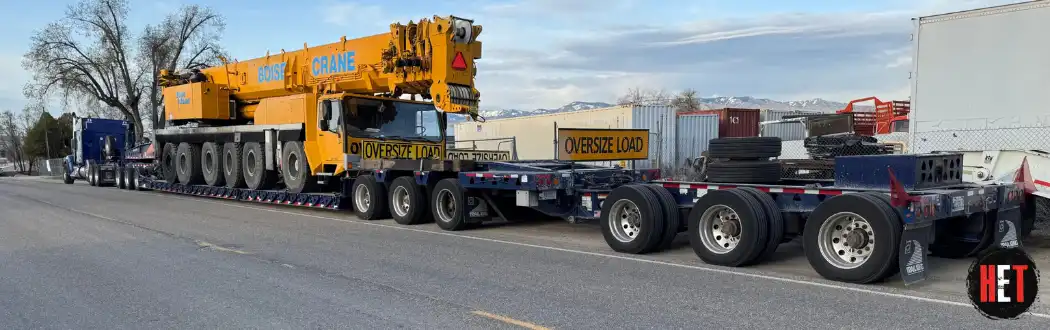
- Width: Over 8 ft. 6 in.
- Height: Over 13 ft. 6 in.
- Weight: Over 80,000 lbs gross vehicle weight
When equipment exceeds these limits, Heavy Equipment Transport coordinates state permits, approved routes, escort requirements, and travel timing in accordance with Colorado regulations.
Colorado Oversize Load Permits and Pilot Car Requirements
Any load exceeding Colorado's legal size or weight limits must obtain a state-issued oversize or overweight permit before transport begins. Permits are route-specific and frequently include additional conditions for mountain travel.
Legal Limits in Colorado
- Width: Over 8 ft. 6 in.
- Height: Over 13 ft. 6 in.
- Length:
- 53 ft. semi-trailer
- No fixed overall length limit when combinations comply with state standards
- Weight: 80,000 lbs gross, or per federal axle weight formula
Permits are issued through Colorado Department of Transportation (CDOT) and reviewed for bridge ratings, grade severity, clearance risks, and traffic impacts—especially on interstate and mountain routes.
Permit and Travel Notes (Colorado)
- Loads exceeding 150,000 lbs, 16 ft. wide, or 15 ft. high often require route surveys, bridge analysis, or engineering review due to Colorado's bridge ratings and elevation changes.
- Travel Times: Oversize loads are commonly restricted to daylight hours, and mountain routes may have additional time-of-day or day-of-week limitations.
- Night Travel: Rarely approved on mountain corridors and generally limited to select Front Range routes with CDOT authorization.
- Chain and Weather Controls: Chain laws, snow events, and high winds can trigger immediate travel restrictions or shutdowns.
Escort Requirements
Pilot Car and Escort Requirements in Colorado
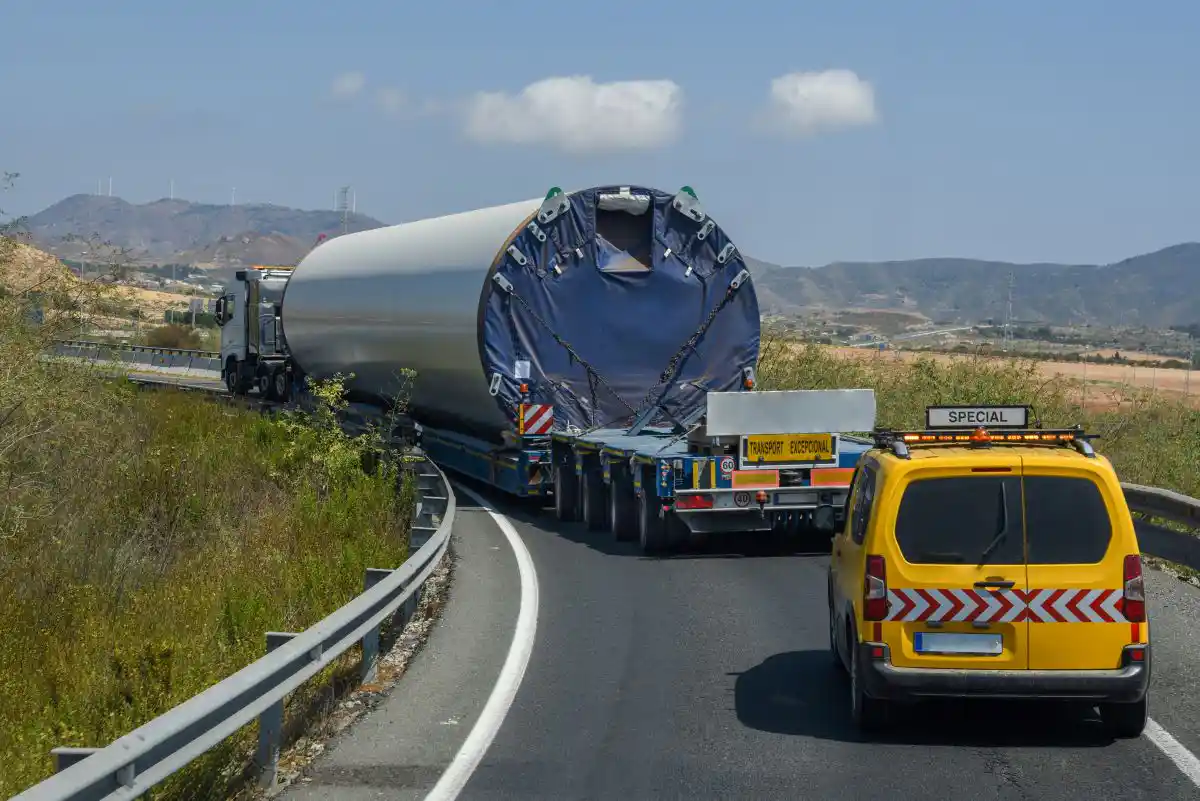
Escort requirements in Colorado are heavily influenced by terrain, elevation, and roadway geometry. A load that requires minimal support on the plains may need multiple escorts through mountain corridors. Heavy Equipment Transport confirms escort requirements early so your load isn't stopped mid-route.
Escort Vehicle Requirements in Colorado
Escort vehicles operating in Colorado must be equipped to handle high-altitude routes, variable visibility, and steep grades.
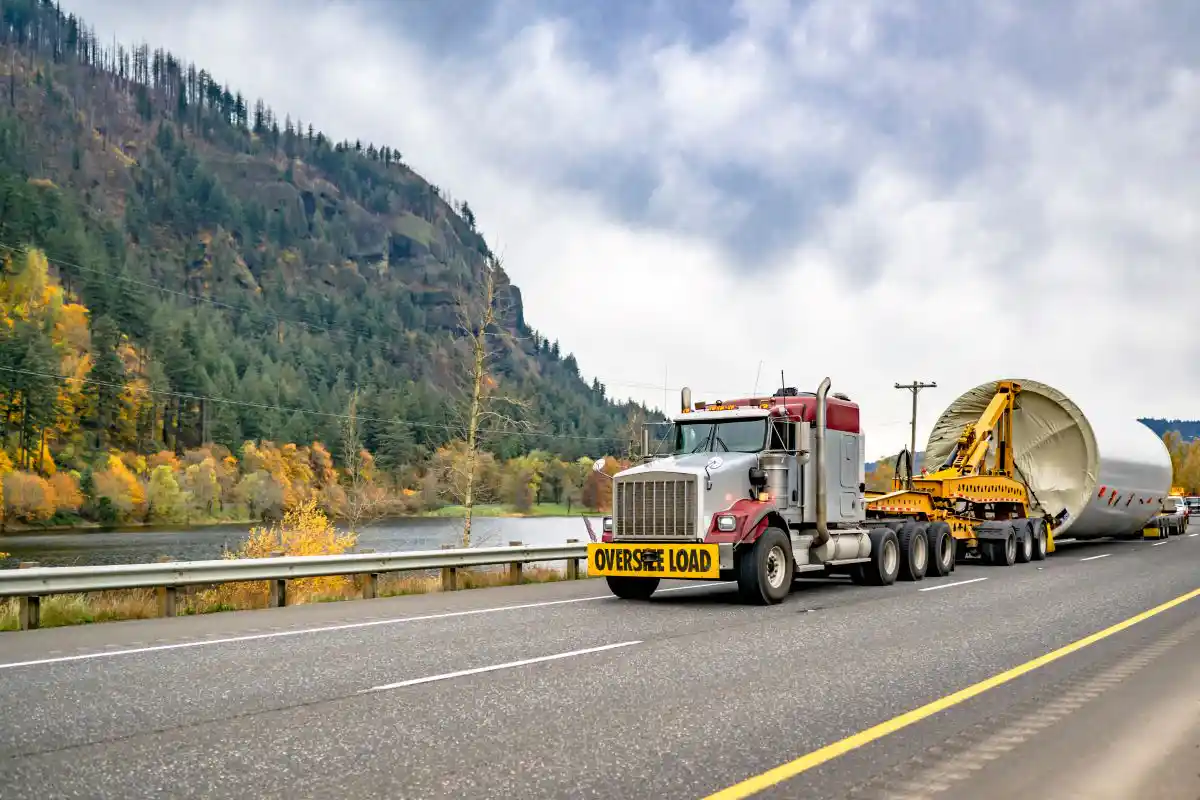
- Clearly displayed "Oversize Load" signage front and rear
- Amber rotating or flashing lights visible 360 degrees
- Two-way communication with the truck driver at all times
- Proper escort spacing (typically 100–300 feet, adjusted for terrain and traffic)
Spacing and positioning are often modified on mountain grades, narrow passes, and descent zones.
Colorado Oversize Load Routing Notes
Oversize routing in Colorado is shaped by mountain passes, elevation, weather volatility, and congestion along the Front Range.
- Interstate Restrictions: Loads wider than 16 ft. are often limited to daylight travel and may require additional escorts or law enforcement support on high-volume corridors.
- Mountain Pass Travel: Routes through the Rocky Mountains may impose grade, brake-check, or chain-control conditions, and alternate routing options are often limited.
- Front Range Congestion: Extra restrictions frequently apply around Denver, Colorado Springs, and Fort Collins, including time-of-day limitations to avoid peak traffic.
- Weather Impacts: Movement may be suspended during snowstorms, high winds, ice, or reduced visibility, particularly at higher elevations and on exposed corridors.
Oversize Transport Through Colorado's Mountain Passes
Wide and heavy loads through Colorado face tunnel restrictions, steep grades, runaway ramps, and weather-dependent travel windows. CDOT permits require accurate dimensions and realistic route planning.
Heavy Equipment Transport manages Colorado oversize transport with mountain-specific expertise. We secure permits, arrange pilot car escorts, and build schedules that account for elevation gains, weather forecasts, and traffic patterns. Your load moves when conditions allow safe passage, not before.
How Heavy Equipment Transport Ships Equipment Throughout Colorado
We’ve streamlined every step so you can focus on your job while we handle the logistics.
1. Request a Quote
Send your equipment details and pickup/drop locations.
2. Expert Planning
We determine the best route, permits, and equipment needed.
3. Load and Dispatch
Your dedicated specialist oversees loading and live tracking.
3. Load and Dispatch
Your dedicated specialist oversees loading and live tracking.
2. Expert Planning
We determine the best route, permits, and equipment needed.
4. On-Time Delivery
We confirm arrival, unload, and provide delivery confirmation instantly.
Why Colorado Companies Choose Heavy Equipment Transport
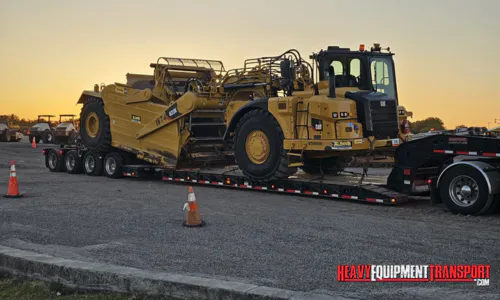
Colorado's grades, storms, and traction rules make "flatland thinking" dangerous. We plan every move with mountain realities front and center.
Colorado contractors rely on us for:
- Planners who talk plainly about elevation, weather, and timing
- Carriers that are comfortable with high-elevation and winter operations
- Delivery windows based on real mountain driving, not ideal conditions
- Clear status updates so you know when to stage people and cranes
Dedicated logistics specialist for your project
Clear pricing with no hidden fees
On-time delivery guaranteed
Trusted by 23,000+ carriers nationwide
We Provide Trailer Hauling in All Major Colorado Cities Including:
Cities in CO
Our Commitment to Colorado Businesses
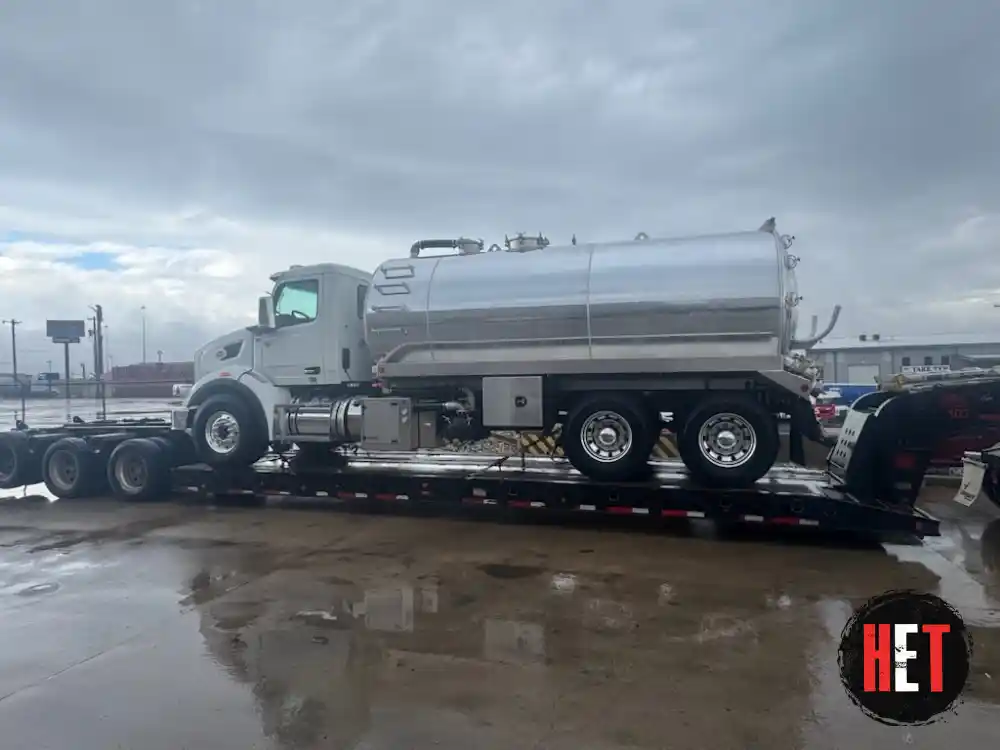
Heavy Equipment Transport supports Colorado's construction, energy, agriculture, mining, and industrial sectors. For over 15 years, we've helped teams move equipment across some of the most demanding routes in the country—without cutting corners.
We understand that delays in Colorado can be costly, especially when weather and elevation are factors. That's why we prioritize route-ready planning and consistent communication on every shipment.
Safety and Reliability Guarantee
Every haul represents your investment and timeline.
Our Safety Promise
- Pre- and post-transport inspections
- Secure tie-downs and route validation
- GPS tracking with milestone updates
- Full insurance coverage
Driveaway Services for Colorado's Mountain Routes
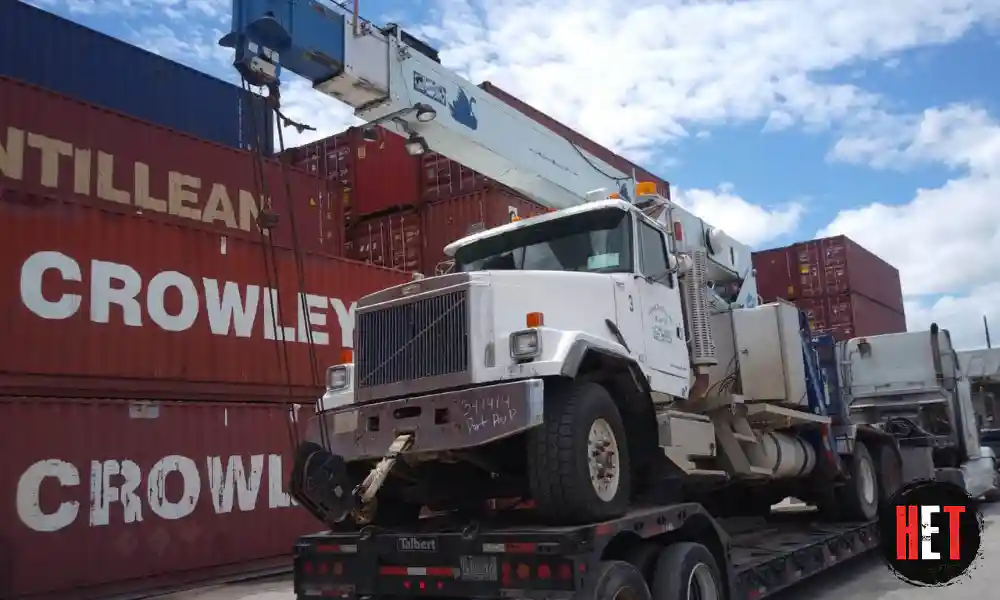
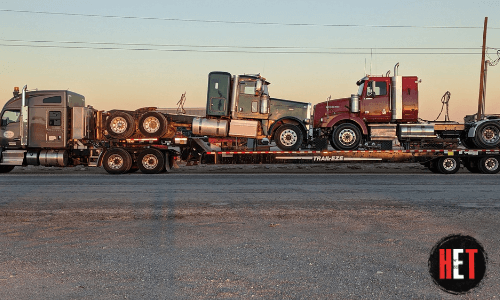
Driveaway through Colorado requires drivers who respect the terrain. Our CDL operators know Eisenhower Tunnel protocols, Vail Pass conditions, and the difference between a summer run and a January crossing.
Colorado driveaway makes sense when:
- A truck needs to reach a mountain town faster than trailer logistics allow
- You're repositioning units between ski country and Front Range yards
- Weather windows are tight and flexibility matters
We monitor conditions, adjust timing when needed, and keep you informed throughout.
Our Driveaway Services Include:
- Licensed, insured CDL drivers
- Pre-trip inspections and safety checks
- Route planning and real-time tracking
- DOT-compliant documentation and delivery confirmation
Heavy Equipment Transport provides driveaway services throughout Colorado. Every driveaway haul is handled with precision, reliability, and complete transparency.
Contact Our Expert Driveaway Specialists
Common Semi-Truck Transport Routes in Colorado
Colorado has two main routes that Heavy Equipment Transport uses to transport semi trucks through the state:
1. I-25
Follows a north-south path through Denver and Colorado Springs. Enters near Carr and exits near Starkville. Connects Fort Collins, Pueblo, and Loveland, following the eastern side of the Rocky Mountains. Passes Wootton, Trinidad, Orlando Reservoir, Colorado City, Pueblo, Fountain, Monument Hill (7,352 ft), and continues north to Denver.
2. I-70
A transcontinental interstate between Cove Fort, UT, and Baltimore, MD. In Colorado, follows an east-west path across the state. Connects metro areas in the Rocky Mountains in the west, including Denver, and crosses the Great Plains in the east, linking Denver with metro areas in Missouri and Kansas.
Heavy Haul Trucking Across Colorado Cities
Cities in CO
Colorado Equipment Transport FAQ
1. How do Colorado's mountain passes and winter conditions impact heavy equipment transport?
Steep grades, snow, ice, and traction rules affect speed, timing, and preparation. We plan around those factors to protect both load and schedule.
2. What are Colorado's height, width, and weight limits for equipment and semi truck hauling?
Colorado applies standard legal limits plus additional requirements for oversize loads. We classify your shipment and design a compliant plan.
3. What routes are most commonly used for machinery transport across Colorado?
We use a mix of major freight corridors and regional connections, chosen based on origin, destination, season, and conditions. Your specialist selects the most suitable route for each load.
4. What should I know about securing oversize load permits in Colorado?
Oversize permits must fit around terrain, weather, and traffic. The earlier you involve us, the easier it is to align permits, capacity, and your project timeline.
5. Are there seasonal travel restrictions for heavy equipment or semi truck transport in Colorado?
Cold-weather months bring extra traction rules and limits on when certain loads can move. We factor seasonal patterns into your plan.
Need A Specific Transport?
Heavy Equipment Transport Services We Offer:
Our Recent Transports
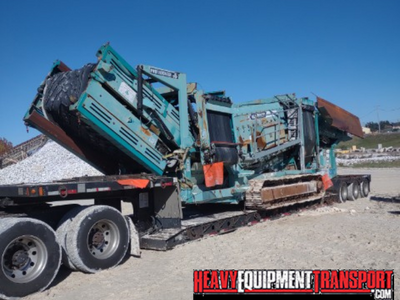
2007 POWERSCREEN WARRIOR 1800 ON A LOWBOY TRAILER
Transport DetailsPueblo, CO
Summersville, WV
Jackson Weeks headed the transportation of this 2007 Powerscreen Warrior 1800 from Pueblo, CO to Summersville, WV. He chose a lowboy trailer to transport the 50.6 L 10W 11.5 H and 64,500 lbs because it would accommodate its weight and size evenly. To transport a 2007 Powerscreen Warrior 1800, call us today!
Trailer Type
Heavy Equipment Transport uses all types of trailers. We provide the best trailer transport solutions to fit your needs. Find out more below!



Where Is Your Heavy Equipment Headed
Colorado State To State Transport
Most Popular Heavy Equipment Transport Services
See All

Pilot Cars For
The Biggest Loads
Certified, compliant, and ready when you are.
Call us or get a free quote today!