
Engine Shipping Packaging and Prep That Prevent Delays
Leaks are a common reason loads get rejected. For engine hauling, we prefer engines drained and sealed when possible, with ports capped and the exterior cleaned. If fuel is present, hazmat rules may apply, and draining the system can simplify the move.
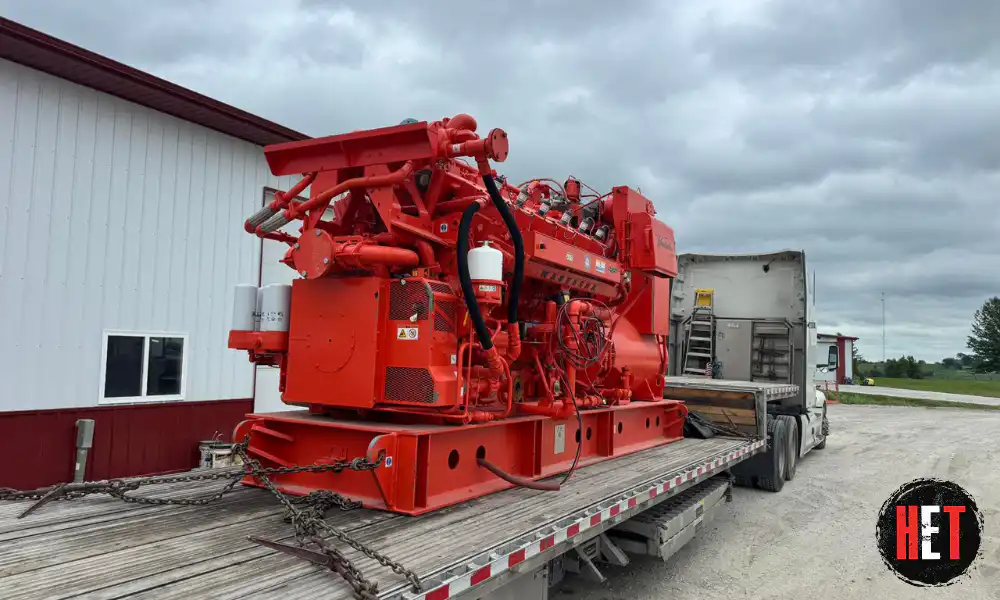
Crated and palletized engines are easier to handle in many shipping environments. A solid base supports forklifts and helps prevent tipping during transfers. Heavier engines often ship on skid mounts or cradles that spread weight and provide strong tie-down points.
If your engine is not crated or palletized, we can still handle engine hauling. It often becomes a dedicated move, with securement built around approved lift points and a stable base on the trailer deck.
Trailer Choice and Engine Transport Securement on the Road
Many engine hauling moves use open-deck trailers because cranes and forklifts can load from the side or top. Flatbeds are common for crated or skid-mounted engines that stay within legal height. Step decks and double drops help when we need a lower deck height for stability or more clearance.
Securement is built to stop sliding, shifting, and tipping. We use blocking and bracing, rated chains or straps, edge protection at contact points, and load checks during transit.