Hauling Heavy Equipment

Flatbed Trailer Transport Services

Specializing In Heavy Equipment Transport & Machinery Shipping

/>
Heavy Equipment Transport Logo

No Compromises. Full Results.

Speak with a logistics expert - we’ll handle
your transport from A to Z.

(888) 730-2951
Heavy Equipment Carriers
23,000+
Carriers
Nationwide
Freight Shipping
16+
Years of
Experience
Heavy Equipment
130+
Logistics
Experts

Top Quality Flatbed Trailer Transport Services

Flatbed trailer transport is one of the most common ways to ship heavy equipment. It is safe and efficient. Heavy Equipment Transport has high-quality flatbed trailers that are safe while on the road. They also come in different sizes, so we can provide the best flatbed trailer transport solutions for your needs.

We have experienced drivers, and for years, they have been transporting loads across the United States and beyond. They are responsible, and they understand that they have to keep your load safe during the shipping process. They collaborate with our exceptional team of logistics specialists and inform you of the current location of your freight, and when you are likely to receive it.

Boat loaded on flatbed trailer

Get your flatbed trailer transport rate now!

(888) 730-2951

Why Choose Our Flatbed Trailer Shipping Services?

Flatbed trailers are extremely flexible, and it is partly what makes them great to transport and ship your heavy materials and products, heavy equipment or any other cargo. Heavy Equipment Transport provides the best flatbed shipping services in the United States. We make sure that every transport is handled with top quality solutions at affordable flatbed shipping rates.

Flatbed transport solutions work for a variety of freight from construction equipment, to super load. Your dedicated transport specialist will find the best flatbed trailer to suit your needs. An expert driver will properly secure and deliver your equipment. For more information on flatbed shipping solutions, call us now! (888) 730-2951

Truck transport with expertise
Heavy Equipment Transport logo

Expertise you
can trust

Need specialized heavy equipment shipping?
Our logistics agents have the solutions you need.

16+ Logistics Experts
23+ Carriers Nationwide

Nationwide Flatbed Trucking Company

In 2025, HET delivered a total of 951 oversized loads using flatbed trailers, priced from $2.45 to $3.10 per mile, with an average delivery time of 5 to 10 days. Don’t hesitate to call us at (888) 730-2951 for an affordable shipping quote!

Delivery Time Across the Country Using Flatbed Trailer Transport

The delivery time for Flabed trailer shipping varies depending on the distance. The delivery duration using a flatbed trailer transport across the country typically ranges from 7 to 14 business days. This timeframe depends significantly on factors such as the distance, the specific origin and destination points and carrier availability. For cross-country (coast-to-coast) shipments, the process usually takes longer, averaging between 5 and 20 days for full truckload (FTL) services.

Estimated Delivery Timelines for Flatbed Trailer Hauling by Distance

Estimated Delivery Timelines for Flatbed Trailer Hauling are determined by a driver's capacity to cover roughly 500-600 miles each day, all while following federal Hours of Service (HOS) regulations.

Distance (Miles)
Estimated Transit Time (Business Days)
0–500 (Regional)
Same day – 3 days
501–1,500 (Mid-range)
3–6 days
1,501–2,500 (Long-haul)
6–8 days
2,501+ (Cross-country)
8–14 days

Factors That Impact How Long It Takes to Deliver Heavy Loads Using Flatbed Trailers

  • Distance and Route: The key factors in shipping a flatbed trailer are the chosen route and the total distance to be traveled. Direct routes on major highways are typically faster compared to routes to or from rural, less-traveled areas, which may take additional time for coordination with carriers.
  • Full Truckload (FTL) vs. Less-Than-Truckload (LTL): FTL shipments typically go straight to their destination, reducing stops and delivering faster. Conversely, LTL shipments make multiple stops for loading and unloading at different hubs, which prolongs delivery time.
  • Carrier Availability: Demand for flatbed trucks typically increases during peak seasons, such as pre-Christmas and summer months. This rise in demand may add a day or two to the timeline if a carrier is not readily available.
  • Weather and Road Conditions: Unfavorable weather conditions, heavy traffic in large cities, or road blockages can greatly hinder transit times.
  • Oversize Loads: Flatbed trailers transport oversized adsor heavy equipment, often requiring special permits and adhering to travel regulations such as nighttime restrictions and avoiding peak traffic. These factors can extend delivery times.

Heavy Equipment Transport Logo Talk to a Heavy Equipment Transport Specialist

Secure your transport today and see why we're the best
(888) 730-2951

Special permits and regulations for overweight transport using a flatbed trailer

Transporting overweight loads on a flatbed trailer requires special permits and compliance with state regulations. The federal government sets a maximum weight of 80,000 pounds for interstate highways, but does not issue permits.

Instead, individual states, counties and cities oversee their own permitting processes for travel within their jurisdictions.

Oversized Loads Hauling Key Requirements and Regulations

  • Permits are Mandatory:
    A special permit is needed for vehicle and load combinations exceeding legal weight limits, typically 80,000 pounds or specific axle limits. These permits are generally issued for non-divisible loads that cannot be easily broken down.
  • State-Specific Rules:
    Regulations vary significantly from state to state. You must obtain a permit from every state (and sometimes county or city) you plan to travel through, with specific routes often required in the application.
  • Axle Weight Limits:
    A load might be under the total gross weight limit but still be overweight on a specific axle or axle group. Weight distribution is a critical factor and must comply with the Federal Bridge Formula or state-specific rules.
  • Required Information for Permits:
    • Load dimensions (height, width, length) and total weight.
    • Vehicle information (type, number of axles, VIN, license number).
    • The planned route of travel

Operational Requirements

When applying for an overweight load transportation permit with a flatbed trailer, you must provide detailed information about the carrier, the specific vehicle combination, the load itself and the planned route.

Carrier and Company Information

  • Company Details: Please provide the Company's name, contact telephone number and mailing address.
  • Federal ID: USDOT number/Federal ID number.
  • Insurance: Evidence of insurance may be necessary, particularly for overweight transport and superloads.

Vehicle and Trailer Specifications

  • Vehicle Information: Please provide the year, make and model of the power unit, specifically the truck.
  • AIdentification Numbers: Please provide the unit number, VIN, serial number, and license plate number, along with the state that issued the license.
  • Trailer Type: The specific trailer type used (e.g., flatbed, lowboy, drop deck). In this case, it will be a flatbed trailer carrier.
  • Axle Configuration:
    • Total number of axles in the truck and trailer combination.
    • Weights of individual axles when in a loaded condition.
    • Individual axle spacings are measured from the center of one hub to the center of the other hub.

Load Details and Dimensions

  • Load Description: A comprehensive description of the freight, detailing the quantity of pieces and their loading method.
  • Load Dimensions:
    • Dimensions such as length, width, height and the overall weight of the load itself..
  • Overall Dimensions (Loaded):
    • Overall Weight: The total gross weight includes the combined weight of the truck, trailer and load.
    • Overall Height: The measurement extends from the ground to the apex of the load or vehicle.
    • Overall Width: From the ground to the very top of the load or vehicle.
    • Overall Length: The total length of the entire combination includes any front or rear overhang.

Route and Timing Information

  • Origin and Destination: The precise starting and ending locations, including the address, city, zip code and state, are required.
  • Planned Route: Travel routes, including city streets and state highways, are often verified by systems like Florida's Permit Application System (PAS) using GIS features.
  • Travel Dates: The exact dates for transportation, pickup and drop-off.

For specific applications in Florida, you can take advantage of the FDOT Permit Application System (PAS) to easily self-issue permits for specific standard loads. Alternatively, you can contact the Florida Department of Transportation Permits Office for assistance.

What happens if a load exceeds the dimensions allowed on the flatbed permit?

If a load's actual dimensions differ from those outlined in the transportation permit, the carrier and driver may encounter serious repercussions. This situation could lead to the vehicle being deemed as operating without a valid license.

(888) 730-2951
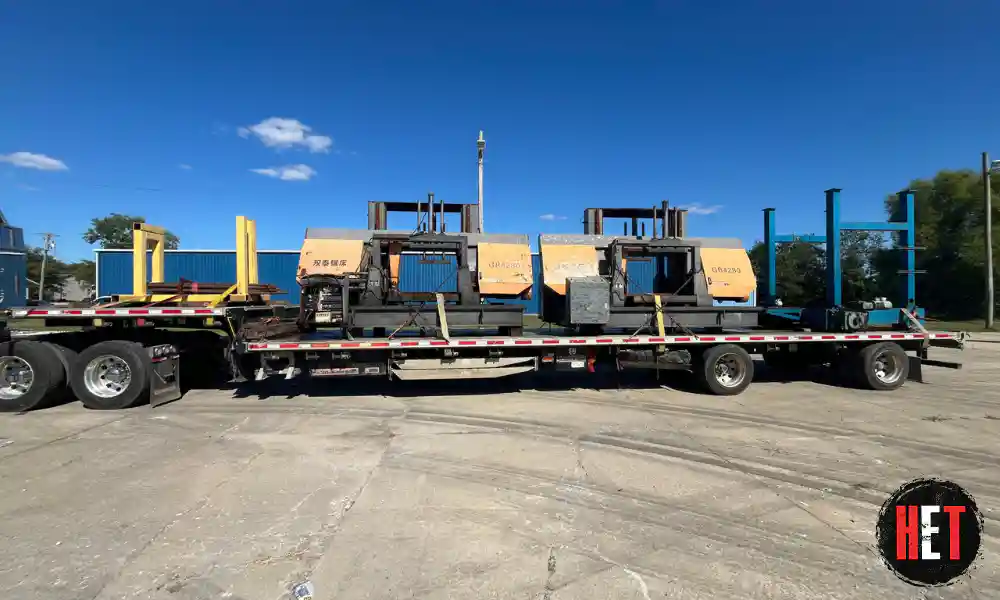
Manufacturing equipment being transported on a flatbed truck

Oversized Equipment Transport using a Flatbed Trailer FAQs by Category

Permits and Regulations

What regulations apply to oversized loads?

Transporting oversized and overweight loads comes with strict regulations that differ from one state to another and along various routes. It’s essential to ensure you have all the necessary paperwork in hand before you hit the road with your load.

When are permits required to haul heavy equipment?

Permits are required for transporting heavy equipment that exceeds legal limits for weight, height, width, or length, which vary by location. Key thresholds include a width of 8 feet 6 inches or more, a height of 13 feet 6 inches or more, and a gross weight over 80,000 pounds. These permits ensure safety, prevent road damage, and manage traffic disruptions.

When are escort vehicles needed to transport oversized loads?

Escort vehicles are required for oversized loads that exceed certain dimensions, typically widths over 12 feet, heights over 14.5 feet, or lengths over 90 to 100 feet. Loads wider than 14 feet usually need both front and rear escorts.

What are the sign requirements to haul overweight vehicles?

Sign requirements for hauling overweight or oversized vehicles vary by state. While there are no specific requirements for overweight loads, signage is typically needed for over-width, over-length, or over-height loads. Most states follow similar standards with slight differences.

Load Securing

How do I secure my heavy equipment during transport?

To secure heavy equipment for transport, use chains or strong straps attached to solid anchor points, block wheels, and lower movable parts for stability. Always inspect your tie-downs for wear and ensure compliance with legal requirements.

What are the minimum securement requirements?

For equipment weighing over 10,000 lbs, securement must occur at all four corners. Make sure the securement can handle at least 50% of the load's weight.

Equipment and Trailer Selection

What types of flatbed trailers are available?

There are several common types of trailers, including standard flatbeds, step-decks, lowboys (also known as low-beds), extendable flatbeds, and Conestoga trailers, which come equipped with auto-tarping features.

Which trailer type is best for tall loads?

For loads that are significantly tall, a double drop trailer is necessary, as it has a lower center section designed to accommodate such equipment.

How do I choose the right trailer to transport heavy equipment?

The best trailer selection depends on the dimensions and weight of your cargo. A carrier should have a fleet capable of accommodating your specific load, such as a step-deck, lowboy, or standard flatbed.

image

How to Get Outstanding Flatbed Trailer Shipping Services

There are countless transportation companies in the United States. Hence, deciding where you will get your flatbed trailer shipping services can be tricky. For that reason, it is essential that you take your time to pick a shipping company that you can trust. You should also be able to rely on them every other day. Thus, go to a shipping firm that is available all week.

If you want to land the best flatbed trailer transport services, select a shipping company that has insurance. Combined with your own insurance, you will have maximum protection for your goods. Let’s get started! (888) 730-2951

Common Types of Freight Shipped on Flatbed Trailers

  • Oversize Loads
  • Boats
  • Construction Equipment
  • Automobiles
  • Industrial equipment
  • Mining Equipment
  • Farm Equipment
  • Machinery
  • Forklifts