What is a Conestoga Trailer?

What is a Conestoga Trailer?

Heavy Equipment Transport Logo
Facebook
Twitter
LinkedIn

William Thomas / January 2021

In shipping, efficiency is the name of the game. A few extra seconds or minutes at each stop can add up to a considerable saving in time when you make hundreds or even thousands of deliveries a year.

Thankfully, the trucking industry has continued to evolve and develop new technologies and designs to improve shipping times and costs. Every type of cargo may have its own specific needs and transport requirements, but occasionally, something new comes along that transforms how business gets done.

A prime example of this is the development of Conestoga trailers. Dry cargo can be loaded and unloaded from these trailers much faster than traditional trailer designs. As the old saying goes, “Time is money,” and so many companies have come to love Conestoga trailers.

However, these wonders are very useful beyond general cargo. Because of their advantages, Conestoga trailers are also in demand in the heavy equipment transport field.

What is a Conestoga Trailer?

“It is easy to see how the benefits of Conestoga trailers would be especially appealing to heavy transport companies. “

Conestoga trailers take their name from the covered wagons used by Early American settlers as they moved outward from the original colonies. Pulled by draft animals, these early transports could haul up to six tons and were the backbone of the earliest transport industry in the U.S.

Today’s iterations are also covered wagons but of a very modern design. In simplest terms, today’s Conestoga wagons are a specialized type of trailer with a rolling frame tarp system.

This allows the curtain to be retracted for easy side loading but then stretched back into place to cover the load.

A few of the chief advantages that curtain-side trailers offer include:

  • • Decreased risk of damage from road debris
  • • Protection from the elements
  • • Efficient side loading and unloading
  • • Obscurity for high-security loads
  • • Eliminates the need for hauling, stretching, securing, and then removing tarps
  •  

It is easy to see how the benefits of Conestoga trailers would be especially appealing to heavy transport companies. The time and cost savings involved in handling and maintaining tarps are considerable. This is to say nothing of the liability a company incurs from drivers and riggers handling heavy tarps.

Transport Your Equipment Today

Heavy Equipment Transport is always available for a quote. Fill out the form or give us a call now! (888) 730-2951

Specs and Dimensions of a Conestoga Trailer Trailer

The one characteristic all Conestoga trailers have in common is the retractable curtain. That is what sets them apart from open or box trailers. Their lowered liability, security, and ease of loading and unloading all stem from this system.

Beyond that, several different configurations are available to meet specific needs. The most commonly seen types of curtain-side trailers are:

  • • Conestoga flatbed trailers
  • • Double drop Conestoga trailer
  • • Step-deck Conestoga trailer
  •  

Flatbed Conestoga trailers will normally be:

  • • 48 or 52 foot long
  • • Be A maximum of 100 inches (8’4″) wide
  • • Have a maximum height of 96 inches (8′)
  • • Carry a maximum of 44,000 lbs.
  •  

Double drop Conestoga trailer specifications are:

  • • Front deck length 9 feet
  • • Front deck maximum height of 8 feet (96″)
  • • Lower deck length 26-30 feet
  • • Lower deck maximum height 11 foot 7 inches (139″)
  • • Rear deck length 9 feet (108″)
  • • A rear deck maximum height of 9 feet 6 inches (145″)
  • • Load capacity of 35,000 lbs.

Step deck or single-drop Conestoga trailers are:

  • • Overall length of 48 or 53 foot
  • • Upper deck maximum height of 8 feet (96″)
  • • Upper deck length 10 feet (120″)
  • • Lower deck maximum height of 9 foot 8 inches (110″)
  • • Lower deck length of 38 or 43 feet
  • • Overall width 8 foot 4 inches (100″)
  • • Load capacity of 41,000 lbs.


Types of Equipment Transported on a Conestoga Trailer

Conestoga trailers excel at transporting any type of tall heavy equipment that needs protection and/or security beyond what a standard flatbed or lowboy can provide. Just a few of the types of equipment Conestoga trailers are ideal for would include:

  • • CNC machinery
  • • Robotics
  • • Helicopters
  • • Boats
  • • Military cargo
  • • Custom cars and trucks
  • • Large artwork
  • • Mainframe computers
  • • Airplanes
  • • Much more

As a general rule, Conestoga trailers are slightly more expensive than standard trailers, but the advantages they offer far outweigh the added expense. If you have sensitive cargo that requires protection but would be difficult or impossible to transport in a box trailer, they are the best option available.

William Thomas

William Thomas

Heavy Transport Specialist

Being able to lead a team of such talented logistics agents has been a wonderful experience over the past ten years. If you would like to know anything more about the heavy equipment transport services we offer, don't hesitate to give us a call!
What is an RGN Trailer?

What is an RGN Trailer?

Heavy Equipment Transport Logo
Facebook
Twitter
LinkedIn

William Thomas / January 2021

Many types of trailers are used to move heavy equipment and other oversized loads. One of the most convenient and commonly used is the RGN trailer. If you have spent any time on American highways, you are bound to have seen a few of these. However, you may not have realized it.

To those outside the industry, a flatbed is a big flat trailer. A few can tell you the difference between a flatbed and a low boy. They do look very different from each other. But what is an RGN trailer, and how does it differ from a standard lowboy?

RGN stands for Removable Goose Neck, and the word “removable” is what sets them apart and makes them so useful in heavy equipment shipping.

What is a Removable Gooseneck Trailer?

RGNs were first introduced in 1958 to answer the need to move ever taller and heavier cargo over America’s quickly growing interstate system.

You can probably guess that RGNs have an extended tongue, a gooseneck, that is used to connect it to the truck pulling it. Unlike a lowboy, on these trailers, it can be detached to make loading and unloading large cargo much easier. But that is just part of the story.

RGNs were first introduced in 1958 to answer the need to move ever taller and heavier cargo over America’s quickly growing interstate system. New height and axle weight restrictions made designing a new type of trailer necessary, and the RGN was just what was needed.

An RGN has a lowered portion or deck. You will generally see two types: single drops and double drops. Single drops have a standard height deck at the front with a lowered deck behind it. Double drop RGNs have a raised deck fore and aft with the well in the middle.

There is a third type of RGN trailer that you will occasionally encounter. These are smaller, non-DOT regulated trailers that haul “Hot Shot Loads.” You will see these trailers pulled by work trucks or even dually pickup trucks. Because of these trailers’ diminutive size, they are often used to move smaller farm tractors, backhoes, and tractor attachments.

Because they are unregulated, like the rigs used by heavy equipment specialists, it is always advisable to give these a wide berth when you see them on the road.

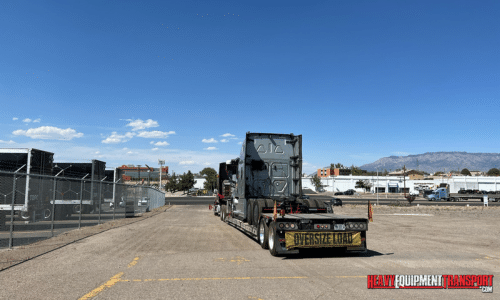
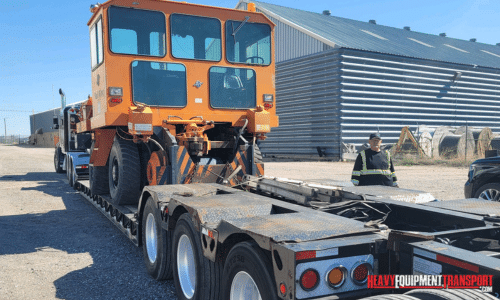
Semi truck on an RGN trailer

Transport Your Heavy Equipment Today!

Heavy Equipment Transport is always available for a quote. Fill out the form or give us a call now! (888) 730-2951

Specs and Dimensions of an RGN Trailer Trailer

Removable gooseneck trailers are true engineering marvels, and the wide variety of specifications for RGNs reflect that. A regular lowboy trailer most often has numbers that look like this.

• Double or Tri-axle configuration

• 40,000 to 80,000 lbs load weight limit

• 24-foot to 29.6-foot well length

• Fixed tongue and bed height

Now, compare these to the specifications of RGN trailers:

• From 2 to 22 axles

• Max load limit of 150,000 lbs

• 29-foot or longer well

• Removable tongue to make loading easy

It should also be noted that many RGNs are equipped with hydraulics to make raising and lowering the bed even easier. In most cases, these trailers are lighter than other removable goosenecks, which increases their load capacity.

Types of Equipment Transported on an RGN Trailer

There is no limit to the types of loads and equipment hauled on RGN trailers. However, as a rule, they are reserved for tall and heavy loads. After all, the depth of their well and load capacity are two of their most significant advantages.

• Articulated

• Trucks

• Backhoes

• Boats

• Buses

• Combine Harvesters

• Cranes

• Excavators

• Heavy Machinery

• Large Industrial Components

• Longwall Mining Machinery

• Off-Highway Trucks

• Pavers

• Pipelayers

• Tractors

• Wheel Loaders

As you can see, RGN trailers are highly versatile and easily adapted to various uses. Loading drivable equipment is as simple as parking because they can be lowered to near ground level. This same feature also makes loading items with a forklift much simpler. Because they have such spacious deck areas and offer over an extra foot of cargo height, they are ideal for large loads, especially taller items that might run into clearance issues.

If you are associated with the agricultural industry, mining, manufacturing, or construction and have heavy equipment, you need to get from point A to B with as little fuss as possible a removable gooseneck trailer might be your best option.

William Thomas

William Thomas

Heavy Transport Specialist

Being able to lead a team of such talented logistics agents has been a wonderful experience over the past ten years. If you would like to know anything more about the heavy equipment transport services we offer, don't hesitate to give us a call!
What is a Lowboy Trailer?

What is a Lowboy Trailer?

Heavy Equipment Transport Logo
Facebook
Twitter
LinkedIn

William Thomas / January 2021

Clients and truckers looking for heavy and oversized transport services should consider working with an established, reputable, and honest company with the right hauling equipment like lowboy trailers and others.

Heavy Equipment Transport has more than a decade of experience shipping wide and oversize loads for clients using Lowboy trailers. This industry-leading oversized freight transport company has well-trained and licensed drivers to handle this trailer type safely and efficiently. But what is a Lowboy trailer?

What is a Lowboy Trailer?

The trailer, also known as a low-loader or low-bed ship, is super large construction, industrial, agricultural, and other heavy and wide loads safely.

Lowboy trailers are semi-trailers that haul super-heavy and oversized loads with a low deck height. This level allows it to contain the weight and height of such machinery and cargo. The trailer, also known as a Low-loader or Low-bed ship, super large construction, industrial, agricultural, and other heavy and wide loads safely.

Heavy Equipment Transport understands the needs of clients looking for comprehensive and heavy-load shipping services and is equipped with a modern fleet of trailers, including the Lowboy. Equipment hauled on Lowboy trailers is determined by our experts, who ensure they are delivered safely and on time.

The key feature of Lowboy trailers is their low deck height, which enables them to accommodate super heavy and oversized tall loads. This design helps maintain stability for equipment hauled on Lowboy trailers and is ideal for over-height loads.

Its design also helps you avoid excess or extra permits, and the low height allows for clearance under power lines and bridges where trailers with standard height cannot fit.

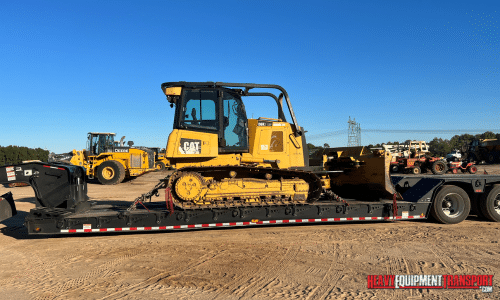
Dozer Transport

Transport Your Equipment Today

Heavy Equipment Transport is always available for a quote. Fill out the form or give us a call now! (888) 730-2951

Specs and Dimensions of a Lowboy Trailer

The dimensions and specifications of Lowboy trailers make them ideal for tall, heavy, and wide-load transport for clients looking to haul such equipment. These aspects usually vary depending on the intended capacity, design, manufacturer, and use. However, the main specifications include:

  • • Low deck height, which is very close to the ground, usually lower than standard trailers
  • • Multiple axle configurations for weight distribution
  • • Ramps to facilitate loading and off-loading
  • • Detachable gooseneck
  • • Various sizes to handle different weights and cargo, which include the number of axles and spacing
  • • Steerable axles for maneuverability
  •  

Heavy Equipment Transport experts also understand the dimensions of this transporter, which helps us determine the load type or equipment hauled on Lowboy trailers. Since the payload capacity ranges from 40,000 to over 80,000 pounds for heavy-duty models, the dimensions of the Lowboy trailer are optimized to handle such weight.

Generally, the standard dimensions of a Lowboy trailer include a legal length of about 24 feet to 29 feet, but sometimes, it can be longer, ranging from 48 feet to 80 feet. The maximum well height ranges from 18 inches to 29 inches. The legal freight height ranges from 11 feet to 12 feet, and the maximum legal width is 8.6 feet.

Heavy Equipment Transport considers these legal dimensions of the Lowboy trailer, gauging the right load it can ship, which also helps avoid unnecessary delays and fines or potential risks to the drivers, your load, and other road users.

Still, with these dimensions, there are also additional extensions called outriggers. These are added on the trailer’s sides for enhanced stability and support when shipping wide or oversized cargo. They prevent your hauled equipment or machinery from tipping over or shifting during transit.

Railcar Transport

Types of Equipment Transported on a Lowboy Trailer

As a dignified, distinguished, reputable, super-heavy, and wide-load shipping company, Heavy Equipment Transport experts have enough experience to understand the equipment hauled on Lowboy trailers.

Since the Lowboy trailer is one of the most common types used for heavy-load shipping, we have dedicated and well-trained international agents ready to guide you on the requirements and the type of loads shipped on a Lowboy trailer.

Our core mission as a company with over a decade of experience is to provide super-heavy and oversized load shipping solutions to every client and any destination in the United States. With our logistics agents, we know the right loads to transport on a Lowboy trailer, including but not limited to the following:

  • • Excavators
  • • Backhoes and Backhoes attachments
  • • Agricultural machines such as tractors, planting and harvesting machines
  • • Vans and Buses
  • • Boats
  • • Bulldozers
  • • Tanks
  • • Military Equipment
  • • Oil, gas, and mining equipment like drilling rigs
  • • Aircraft
  •  

When you choose Heavy Equipment Transport Lowboy trailer services for your heavy and oversized load transport, our experts and agents will provide everything to ship and deliver your cargo safely and efficiently.

William Thomas

William Thomas

Heavy Transport Specialist

Being able to lead a team of such talented logistics agents has been a wonderful experience over the past ten years. If you would like to know anything more about the heavy equipment transport services we offer, don't hesitate to give us a call!
What is a Flatbed Trailer?

What is a Flatbed Trailer? Understanding Uses, Types, and Dimensions

Heavy Equipment Transport Logo
Facebook
Twitter
LinkedIn

William Thomas
Updated: October 31, 2025

The flatbed trailer is the workhorse of the freight world. It’s an open-deck platform built to haul the oversized, irregular, and awkward loads that standard enclosed trailers can’t handle.

It is the unsung hero of American industry. At Heavy Equipment Transport, we move everything from excavators to generators using a large fleet of flatbed trailers across the US and Canada. 

We don’t simply move freight; we keep your business running on schedule and on budget with predictable delivery times, equipment-specific expertise, and clear communication built up over 13 years in the industry. 

In this quick guide, we’ll walk through what a flatbed trailer is, the different types and dimensions, and how our team uses them to keep your business moving.

What Exactly Is a Flatbed Trailer?

A flatbed trailer is a platform-style trailer without sides or a roof, designed to carry oversized or oddly shaped cargo. The open design makes it versatile, so it is ideal for machinery, building materials, and freight that wouldn’t fit in a standard dry van.

Typical flatbed cargo includes:

  • Construction materials like beams, lumber, and steel pipes.
  • Heavy machinery such as bulldozers, loaders, and tractors.
  • • Large equipment that needs top, side, or rear loading and better access.

Advantages of flatbed trailers:

  • • Open design allows loading from any side, which is faster, cheaper, and safer.
  • • Handles non-standard shapes and equipment.
  • • Enables faster loading/unloading with cranes or forklifts.
  • • Perfect for industrial, construction, and agricultural freight.

At Heavy Equipment Transport, we use flatbeds daily because they simplify loading and cut turnaround timeletting crews focus on the job instead of struggling with the delivery.

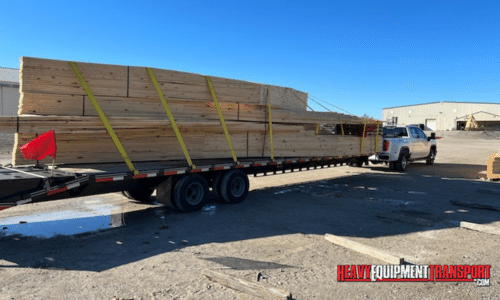
Lumber transported on a flatbed trailer.

Transport Your Equipment Today

Heavy Equipment Transport is always available for a quote. Fill out the form or give us a call now! (888) 730-2951

Understanding flatbed trailer specs helps you match each job to the right piece of equipment.

Key Benefits of Flatbed Trailer Transport

When your job depends on keeping operations moving, the benefits of flatbeds go far beyond their shape. They’re built for efficiency, accessibility, and reliability, which are crucial for everyone from regional logistics planners to the crews on the ground.  

  • • Accessibility: Flatbeds can be loaded from the top, side, or rear. So there’s no waiting for dock space.
  • • Flexibility: Ideal for everything from generators to girders. One trailer covers multiple job types, which saves time and money.
  • • High Weight Capacity: Most flatbeds can handle up to 48,000 lbs, making them ideal for heavy machinery and substantial loads.
  • • Reduced Loading Time: Less handling and repositioning mean faster turnarounds on-site.
  • • Safety Options: Freight is secured using chains, straps, and binders rated for highway transport.

Whether you have to move a single bulldozer or a full mixed-load haul of construction equipment, Heavy Equipment Transport’s fleet is built for reliability, each and every time. Our drivers know exactly how to secure each load for safe transit, and we use the best equipment to take the best care of yours.

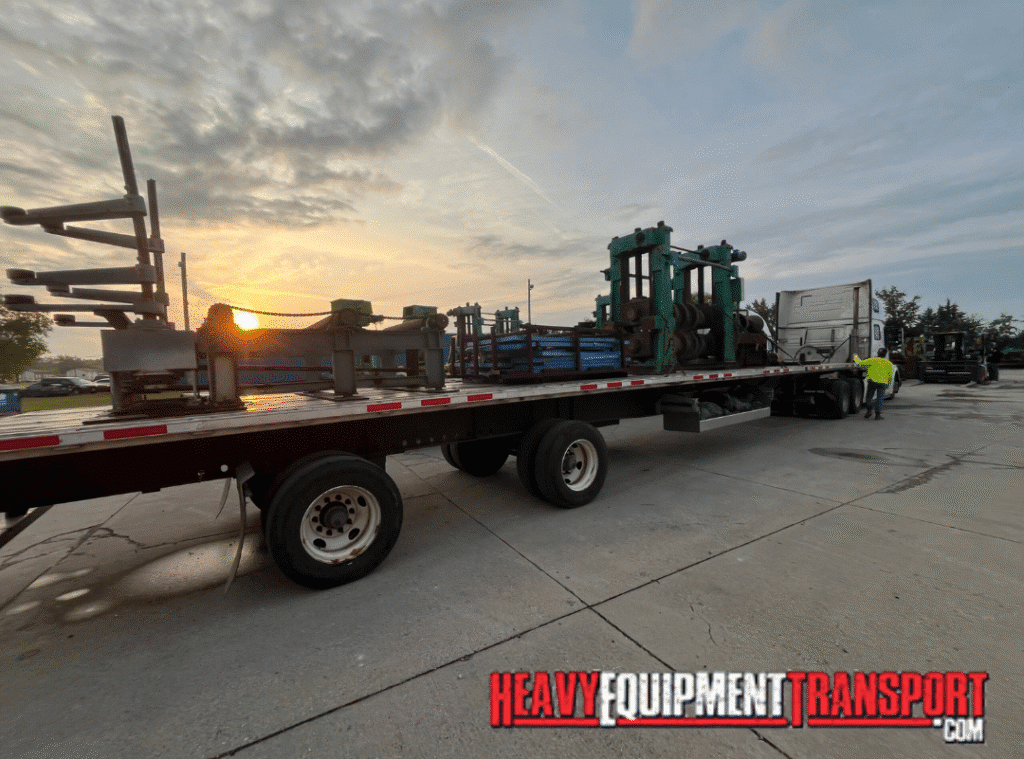
transporting multiple manufacturing equipment

Flatbed Trailer Specifications and Dimensions

Understanding trailer specs helps you match each job to the right piece of equipment. Every inch and pound matters, for safety, regulatory compliance, and cost.

Specification 

Standard Measurement    

  • Length    48–53 feet    
  • Width    8.5 feet (standard legal width)    
  • Height Limit (freight)    Up to 8.5 feet without permits    
  • Maximum Freight Weight    ~48,000 lbs    

Choosing the right flatbed depends on:

  • • Weight class of your equipment
  • • Height clearance needs
  • • Loading method (forklift, crane, ramp)
  • • Fastening requirements

Heavy Equipment Transport handles the permits, route planning, and escort coordination for oversize dimensions. You tell us what you’re moving, we do the heavy lifting and take care of the rest.

Common Types of Flatbed Trailers

Standard Flatbed Trailer

This is the industry standard for construction materials, machinery, and almost everything that goes on almost all pallets. The flat and open deck makes it the go-to option for most heavy-duty loads.

Step Deck (Drop Deck) Trailer

Designed with two deck levels, giving extra clearance for taller freight while staying within legal height limits. Perfect for medium-sized excavators or agricultural equipment.

Double Drop Deck Trailer

This is designed for the heaviest, tallest and toughest machinery, from cranes through to transformers and industrial tanks. The lower center section provides crucial height clearance without special permits in some regions.

Extendable Flatbed Trailer

Ideal for long loads like steel beams, wind turbine components, or large machinery parts. Its adjustable frame keeps freight balanced, compliant, and safe on its journey.

Each type of trailer serves a specific purpose, and our dispatchers match the right one to your needs when they give you a personalized quote.

Types of Equipment Commonly Hauled on Flatbeds

Flatbeds serve virtually every heavy industry, from construction and energy to agriculture. Here’s a quick breakdown of the most common loads:

  • • Construction Equipment: Dozers, excavators, loaders
  • • Agricultural Equipment: Tractors, combines, sprayers
  • • Energy Equipment: Generators, turbines, transformers
  • • Industrial Machinery: Compressors, tanks, conveyors, 
  • • Forestry Equipment: Log loaders, skidders, feller bunchers
  • • Building Materials: Steel beams, lumber, prefab concrete panels

Every load is secured, protected, and insuredOur teams understand how each machine behaves under loadand how the types of load can affect that. You can rest assured that no load leaves without the proper tie-downs, blocking, and padding for transport.

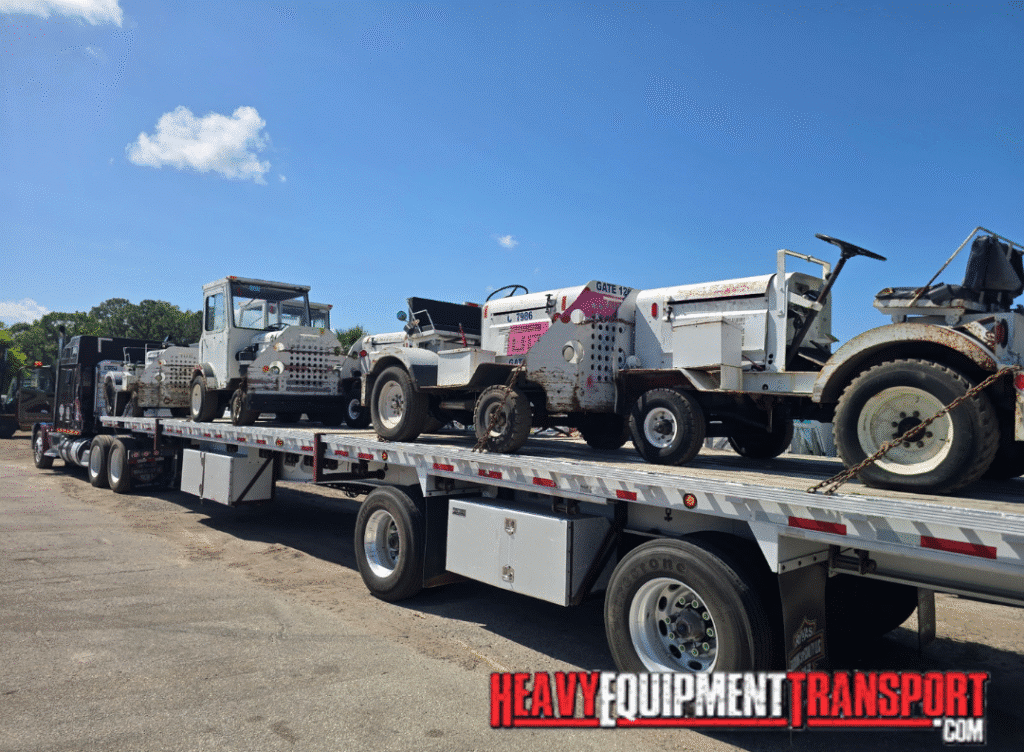
transporting airport baggage tractors

Choosing the Right Flatbed for Your Equipment

Picking the right trailer prevents compliance headaches, delays, and damage, which all have an impact on the cost. Incorrect deck height or load configuration can result in hours of wasted time, rejected permits, and substantial financial costs.

Considerations when choosing a trailer:

  • Load dimensions and total weight
  • Loading method (crane, forklift, ramp)
  • Permit requirements for oversize loads
  • Route restrictions (bridges, height limits, state rules)

When you partner with Heavy Equipment Transport, our specialists run through the whole checklist with you, ensuring every move is legal, safe, and efficient. Our logistics experts put you on the right track, right from the start. 

Why Choose Heavy Equipment Transport for Flatbed Hauling

Flatbed hauling isn’t just about trucks and trailers. It’s about planning, precision, reliability, and communication. Heavy Equipment Transport has spent more than a decade building a reputation for reliability in heavy logistics.

Here’s what sets us apart:

  • • Permit-ready, route-cleared service across all 50 states and Canada
  • • Dedicated logistics specialists who manage every move start to finish
  • • Nationwide coverage with local expertise and support
  • • Cross-border capability for US–Canada and US–Mexico freight
  • • 24/7 customer updates and GPS-tracked shipments

When you need heavy equipment delivered safely and on time, our flatbed team is ready. Get a quote in minutes and speak with a real logistics expert — not a call center.

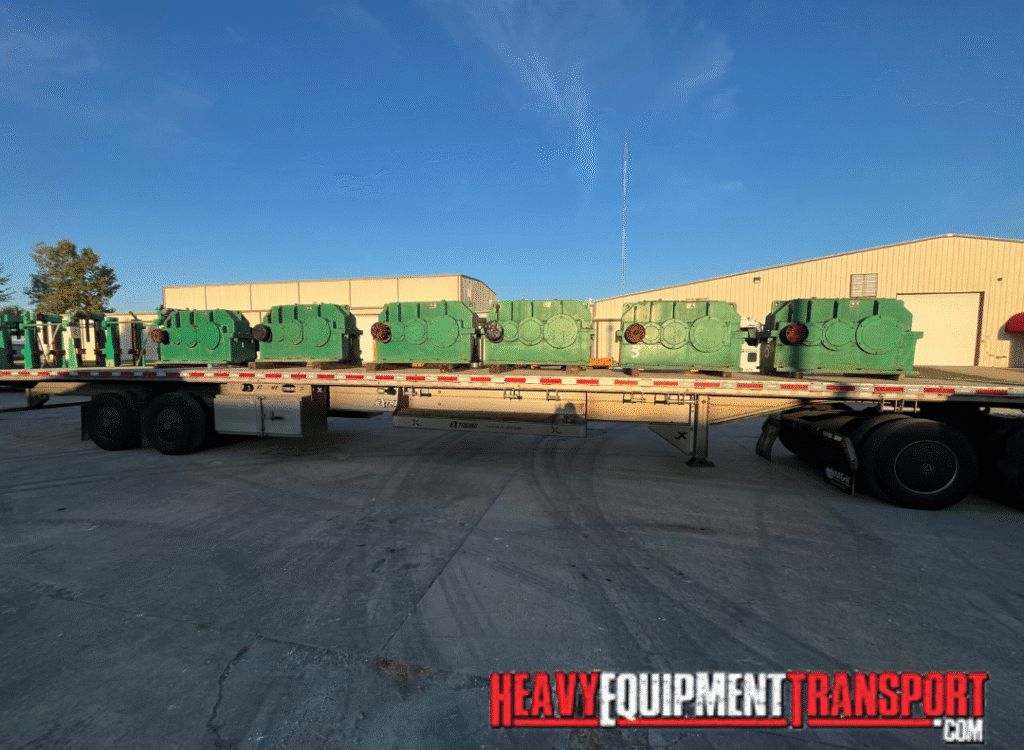
transporting manufacturing equipment

FAQ — Flatbed Trailer Transport with Heavy Equipment Transport

What are the standard dimensions of a flatbed trailer?

Most standard flatbeds measure 48 to 53 feet long, 8.5 feet wide, and can carry up to 48,000 lbs of freight.

What types of loads can be shipped on a flatbed?

Flatbeds are used for construction materials, machinery, agricultural, industrial, and energy equipment, or any cargo that can’t fit inside an enclosed trailer.

How is equipment secured during flatbed transport?

We use chains, straps, and edge protectors rated for heavy loads, along with load checks throughout the route by experienced drivers with years in the field.

When should I choose a step deck instead of a flatbed?

A step deck trailer is best when your load is taller than 8.5 feet and you want to avoid oversize permits.

Does Heavy Equipment Transport handle permits for oversize loads?

Yes. Our compliance team secures all permits and escorts for over-height, over-width, or overweight freight before dispatch. 

William Thomas

William Thomas

Heavy Transport Specialist

Being able to lead a team of such talented logistics agents has been a wonderful experience over the past ten years. If you would like to know anything more about the heavy equipment transport services we offer, don't hesitate to give us a call!
How to Choose The Best Trailer for Shipping Equipment

How to Choose The Best Trailer for Shipping Equipment

Heavy Equipment Transport Logo
Facebook
Twitter
LinkedIn

William Thomas / January 2021

To properly transfer your equipment, one of the most crucial factors is picking the right trailer. The last thing you want is to risk choosing the wrong trailer, leading to damage to your expensive equipment. Read on to learn more about choosing the best trailer for shipping equipment.

Flatbed Trailers
The Best Trailers for Compact Equipment

Flatbed trailers can be found in lengths between 48 and 53 feet, with the former being the more common option. Towing capacities of standard flatbed trailer transports typically top out at 48,000 pounds. A flatbed can be no more than 8.5 feet in height or breadth. A flatbed trailer is usually sixty inches off the ground.

The transportation and shipping industries rely heavily on flatbed trucks because of their adaptability. They’re versatile enough to haul loads of varying sizes. Because of their open design, loading and unloading from and onto flatbed trucks is a breeze. A crane can raise the weight from above, or forklifts can access the load from the sides.

Flatbed trailers are the best trailers for oversize loads with irregular shapes and heights. Due to their open layout, tarps and tied own traps can be used to keep your shipment dry and secure throughout the transport.

Benefits of Flatbed Trailer Transport

A flatbed, being an open trailer, can transport anything. Its open design makes it practical for transporting irregularly shaped or oversized items. You don’t need to worry about banging into walls and breaking anything.

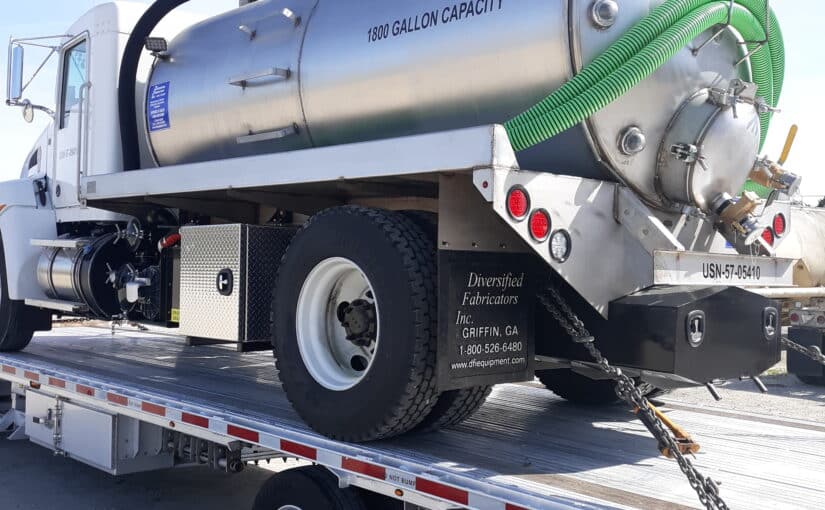
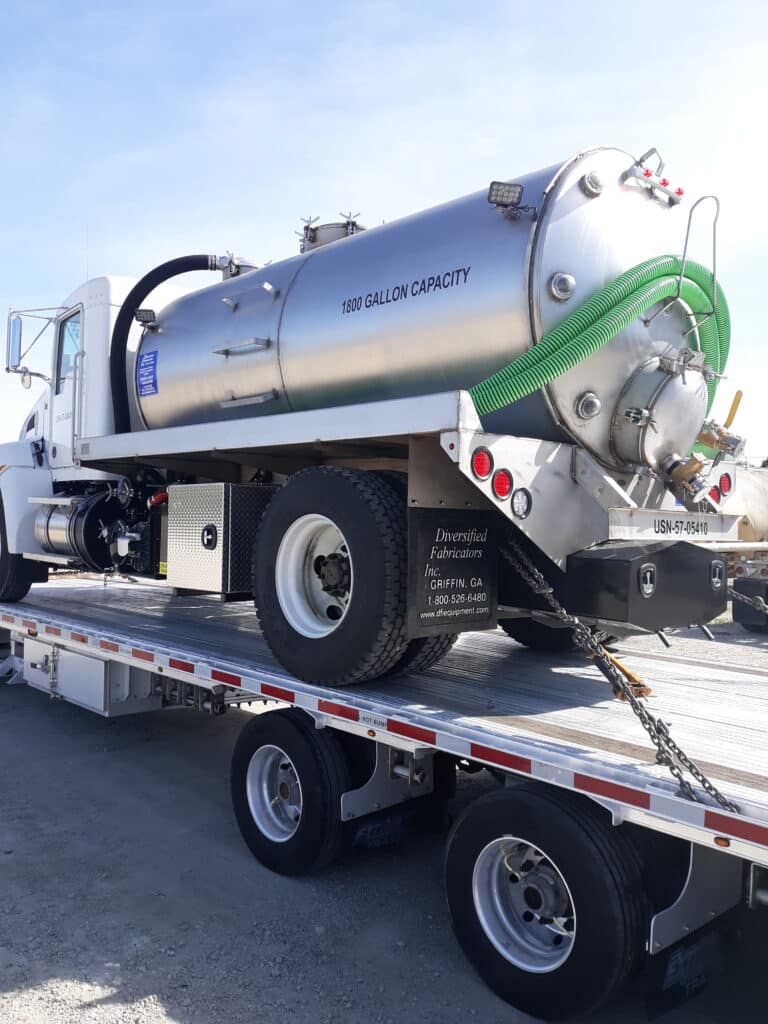
Transporting a vacuum truck on a flatbed trailer.

“Knowing the make, model, and dimensions of your heavy equipment helps determine the best trailer for transport.”

Step-Deck Trailers
The Best Trailers for Partial Loads

A step-deck trailer’s maximum payload capacity is 48,000 pounds. The maximum height for cargo is 10 feet, while the width is eight and a half feet. A standard length for a step-deck trailer is 48 feet. A step-deck trailer has a well that is 37 feet long and a deck that is 11 feet long.

Step deck trailer transports sit lower to the ground than flatbed trailers. Smaller pieces of self-propelled machinery may be driven up the ramps with a step-deck trailer. Step deck trailers have a well almost a foot lower than the deck of a flatbed trailer, allowing for the carriage of equipment that barely exceeds the height limitations on a flatbed. It is possible to utilize a step deck trailer as an alternative to a flatbed trailer if the intended cargo is too tall to fit on the latter. Equipment too tall to ship on flatbed trailers typically travels as a partial load on step-deck trailers.

Transporting multiple heavy equipment on a step deck trailer

Transport Your Equipment Today

Heavy Equipment Transport is always available for a quote. Fill out the form or give us a call now! (888) 730-2951

Benefits of Step-Deck Trailer Transport

You can avoid the headache of obtaining height permits by stowing your cargo a few inches lower on the step deck.

Because of their low loading height, step deck trailers are ideal for transporting heavy or bulky items. They are the perfect trailers for oversize loads.

RGN Trailers
The Best Trailers for Oversize Loads

You may load up to 42,000 pounds into an RGN trailer. The RGN trailer’s low-sitting well allows it to transport items up to 11.5 feet in height. The typical width of an RGN trailer is eight and a half feet. In most instances, the length of the well is 29 feet.

For heavy, self-propelled equipment, RGN trailer transports are your best bet. This heavy equipment may weigh up to 80,000 pounds, so the RGN’s drive-on/drive-off capability is essential for safe transport. On top of that, RGN trailers have around 1.5 feet of additional headroom than step-deck trailers.

Choosing The Best Trailer for Shipping Equipment

Hauling Capacity

To calculate a vehicle’s towing capacity, you must first determine its empty weight and then add the weight of everything you plan to transport. Even though you may be able to fit more items inside the truck’s bed, you should never do so. This is because legal and structural safety restrictions dictate a trailer’s hauling capacity.

Type of Equipment Being Hauled

You must be familiar with the machinery you will be transporting. For example, an ATV deck over won’t look the same as one for a vehicle. Knowing what you’re hauling will give you a better idea of what you require.

Selecting the proper trailer is the first step in ensuring your machinery’s safe and effective transport. You need to find the most practical solution at the lowest possible cost.

What are Iron Bull Dump Trailers?

What are Iron Bull Dump Trailers?

Heavy Equipment Transport Logo
Facebook
Twitter
LinkedIn

William Thomas / January 2021

Dump trailers are hauling trucks designed to transport a variety of items, such as construction materials like sand and gravel. A typical dump truck has an open-box bed that is hinged at the back and has hydraulic rams to raise the front. This makes the material in the bed fall to the ground behind the truck at the delivery site.

Iron Bull Dump Trailers are manufactured by a company called Iron Bull Trailers. Iron Bull trailers have one of the most durable dump trailers for construction on the market.

Iron Bull Dump Trailer

Iron bull dump trailers can make it much easier to load and unload materials like bricks and dirt.

When it comes time to unload their cargo, iron bull dump trailers are equipped with hydraulic lift systems that elevate one side of the trailer. Additionally, it is able to independently raise either one end or side. Iron bull dump trailers can make it much easier to load and unload materials like bricks and dirt. This is because they don’t need extra equipment like dump trucks, which require special training to use.

Iron Bull dump trailers are available in a variety of sizes, materials, and features; selecting the appropriate trailer for your needs may be an investment that will last for a long time, saving you both time and effort. To determine whether or not you need a dump trailer, or which kind of dump trailer would be most suitable for you, you must first evaluate the requirements of your work, determine the maximum weight your truck can pull, and establish a financial plan.

What are Iron Bull Dump Trailers?

Heavy Equipment Transport is always available for a quote. Fill out the form or give us a call now! (888) 730-2951

The Advantages of Iron Bull Dump Trailers

These units have a number of significant advantages over standard transport trailers, which makes them a good option for a variety of different applications. These include:

Safety: Due to the reduced load height and easy unloading, these trailers are safer for the workforce than dump trucks or standard trailers.

Easy-to-load: Dump trailers are lower than dump trucks and conventional trailers. This makes loading simpler since your workforce doesn’t have to lift as much.

Versatility: The two main designs of this hauling equipment are side-dump and back-dump. Back dumps are better for close-quarters work on construction sites, whereas side dumps are better for longer hauls.

Cost-Effectiveness: Trailers are less expensive to purchase and to maintain than dump trucks. This equipment will save you money because it is not that expensive to buy and it is faster to load and unload compared to dumping trucks.

Final Heavy Equipment Transport Thoughts

  • Unlike bigger and more costly dump trucks, Iron bull dump trailers may be detached from their towing vehicles and left at a construction site, regardless of how remote the location may be. The appropriate investment in a dump trailer might save hours of time and money on labor costs. When looking for a dump trailer, you should pay close attention to its size, including its height, capacity, and design.

What are Outriggers on a Trailer?

What are Outriggers on a Trailer?

Heavy Equipment Transport Logo
Facebook
Twitter
LinkedIn

William Thomas / January 2021

To haul equipment with a lowboy trailer that is 1.5 ft. narrower than the equipment, you need to attach special equipment that acts as an expansion support system. Such equipment is called an outrigger and is used to increase the surface area of the trailer deck so that the trailer can support wider heavy equipment. Outriggers are very useful when trucking heavy machinery that have wider separations between the wheels. They make trailers become more versatile and help trucking and delivering heavy and wider loads efficiently and safer.

When it comes to overwidth loads, it’s a common occurrence to see trailers use outriggers. The reason why heavy equipment transport experts use outriggers on a trailer is twofold. First, outriggers are used to widen the base of the trailer for stability reasons. They make the heavy equipment harder to tip over or rollover during hauling. This means that the transport trailer can carry heavier and wide equipment without compromising safety. Secondly, the outriggers are used to hold the wheeled heavy machinery rigidly. If the outriggers are not used, parts of the heavy equipment will be suspended on the edges of the trailer. Which means, the strains and chains used to secure the load will be under high tension when the truck hits the road. As such, the heavy equipment will be at risk of wobbling back and forth as the truck accelerates, moves on an even terrain, and breaks. With outriggers in place, it will be difficult for the heavy machinery to swing back and forth, making the trucking and towing smooth and safe.

close up of outrigger
outriggers on trailer for transport

To haul a tractor with a lowboy trailer that is 1.5 ft. narrower than the tractor, you need to attach special equipment that acts as an expansion support system. Such equipment is called an outrigger and is used to increase the surface area of the trailer deck so that the trailer can support wider heavy equipment.

How are Outriggers Fitted on a Trailer for Seamless Trucking

Outriggers, commonly known to most trucking specialists as trunnion or trunnions, are load-bearing equipment that can either be pull-out, swing out, or attached type. The pull out outrigger is usually made of forged steel in a wedged shape to allow indexing at a right angle. The pull-out is designed with a mounting base that fits in the access spaces on the sides of the trailer. The mounting base features upper and lower mounting brackets and three locking positions for flexibility.

The next type of outrigger is a swing out, which ideally provides a towing solution for wider and oversize load when needed. When not in use, these types of outriggers are locked against the trailer frame. Attached outriggers are also available and are widely used with a wooden outrigger board. As the name suggests, these types of outriggers can be attached and detached when not in use. Among the three types, pull out outriggers provide a more stable load-bearing platform as the cargo doesn’t experience the back-and-forth movement during trucking.

Transport Your Equipment Now!

Heavy Equipment Transport is always available for a quote. Fill out the form or give us a call now! (888) 730-2951

Trailers Fitted with Outriggers for Trucking Wider Machinery

Agricultural, earthmoving, on any other wheeled heavy load are generally wider’ Given that the standard length of most trailers is 8.5 ft. (102 in.) trucking loads wider than 8.5 ft. might pose a challenge. But a drop deck trailer, removable gooseneck trailer, or double-deck trailer fitted with a set of outriggers are an excellent solution for moving most of the wheeled and wide loads. Swing outriggers can add a step-deck trailer with 10 in. bed width to each side while pull-out outriggers will extend to allow a 13 ft. 6 in. wide trailer base.

Choosing a heavy-haul trailer for trucking oversize is a complicated process, but an ideal trailer should have the weight and dimension capacity of the largest intended load. Trailers with the lowest center of gravity are best for trucking and moving wider heavy equipment that requires an extension of the trailer width.

The Versatility of Trucking Trailers Equipped with Outriggers

Most outriggers are made of oak (a strong hardwood) or aluminum forging. The aluminum types are more preferred as they are sturdier and have higher elasticity value. This means that the aluminum made outriggers can bend slightly under load and bounce back after unloading. With an increased trailer base, the trailer can tow a wide variety of cargo with enhanced agility and versatility. For instance, with strong pull-out outriggers, RGN trailers can be increased from the 8.5 ft. standard width to 10 ft. or even 13 ft. for much wider loads and stability when hauling an oversized load.

What is Flatbed Trucking and Why is it Common in Heavy Equipment Towing?

What is Flatbed Trucking and Why is it Common in Heavy Equipment Towing?

Heavy Equipment Transport Logo
Facebook
Twitter
LinkedIn

William Thomas / September 2022

As the name flatbed trucking suggests, a flatbed trailer has no roofs or sidewalls. Instead, the vehicle has a robust flatbed trailer for transport, usually with a layer of wooden material to cover the spaces between the trailer frames. Flatbed trailers come in different shapes and sizes designed for various trucking jobs. From the federal bridge weight formula, a standard flatbed of length 48 feet and width 8.5 feet (without outriggers) has a maximum weight capacity of 48,000 lbs. and a limit of 8,5 ft. load height.

Flatbed trucking is the most common type in the heavy equipment towing industry. This is because of the versatility and the availability of a large pool of flatbed trailer types. Also, loading and unloading of flatbeds are much easier and faster and can be done from any side. A Removable Gooseneck is a common type of flatbed that has a removable neck that can be used as a ramp for easier and safer loading. Step decks and double drops are flatbed trailers ideal for moving over height loads up to 10 ft. 2 in. Another variation of a flatbed is a stretch trailer, which is suitable for trucking extra-long loads.

Particular Skills a Flatbed Trucking and Towing Driver Needs

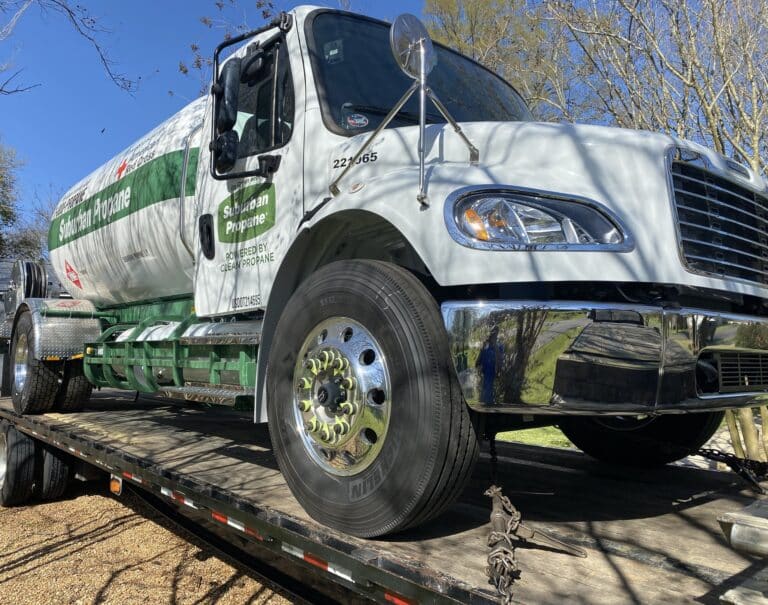
A propane truck transported on a flatbed trailer.

Flatbed trailers have no walls to secure the loads firmly. For safe delivery with a flatbed, a driver needs a particular skill-set, which includes;

Tarping: Ideally, flatbeds are designed for trucking oversize loads that are not vulnerable to environmental changes such as scorching sun and heavy downpours. Having said that, there are circumstances where drivers need to cover the load. For instance, a customer may request for privacy while moving the load. As such, the driver will be required to hand tarp or use the available tarp system to cover the load before leaving the pickup point.

Quick and Efficient Load Securement; The time spent loading and securing cargo has a significant impact on the overall annual mileage that a driver covers. So, the quicker the load is secured, the faster the truck leaves the pickup point. Also, the absence of sidewalls requires a driver to ensure that the load is adequately secured to avoid weight shifting or back and forth wobbling of the cargo while towing. The driver needs to know the protocol to follow and the down downs of the straps and chains that are permitted under the safety road regulations. With such skills, the trucking process will be smooth, and the loading and unloading process will be fast and safe.

Loading and unloading. Both the processes will be done by special handling equipment such as forklifts and cranes. Even though such equipment will be handled by trained operators, a driver’s skills will be required when positioning the load. Load distribution and balance are very important and have to be done right while loading. During unloading, the driver needs to ensure the process is safe, and the load is not damaged.

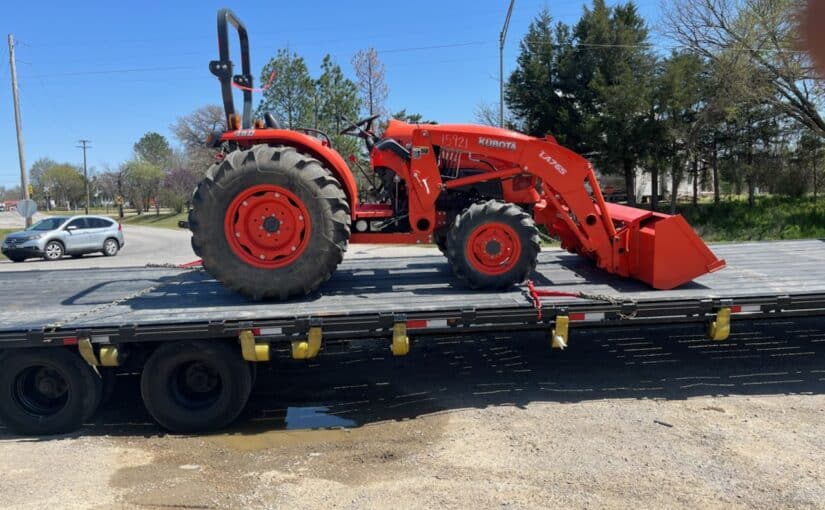
Shipping a Kubota tractor

Transport Your Load on a Flatbed Trailer Today

Heavy Equipment Transport is always available for a quote. Fill out the form or give us a call now! (888) 730-2951

Specialized Flatbed Trailer Trucking for Heavy Cargo Moving

When a regular flatbed weight limit is reached, specialized multi-axle trailers present the most viable solution. Specialized multiple axial trailers are designed to move up to 160 tons of oversize load over a long distance. There are also dual-lane flatbed trailers that can tow up to 250-ton cargo. To carry such a load, you need a trailer with at least six-axle configuration. Other common axle configurations include; 7,8,9,10,11,13, and 20. The capacity of multiaxial trailers to tow over 200 ton of weight is derived from an equal distribution of the weight of the shipment over a large surface area created by the many wheels. What limits the trucking capacity of the multi-axle flatbed trailer is the towing power of the tractor. To avoid this limitation, multiple tractors can be used. In such a scenario, one tractor will be used to push as well as pull the trailer.

Common Heavy Equipment That Are Best Delivered by Flatbed Trailers

  • Flatbed Trailers Are Best Suited When Trucking;
  • Moving Building Supplies Like Lumber, Steel Metals, Pipes Plumbing Equipment, And Oversize Metal Sheets.
  • Equipment Hauling
  • Towing Airplane Wings
  • Any other oversized load cannot fit in an enclosed trailer due to its abnormal shape or size.
William Thomas

William Thomas

Heavy Transport Specialist

Being able to lead a team of such talented logistics agents has been a wonderful experience over the past ten years. If you would like to know anything more about the heavy equipment transport services we offer, don't hesitate to give us a call!
Types of Trailers for Heavy Equipment Transport

Types of Trailers for Heavy Equipment Transport

Heavy Equipment Transport Logo
Facebook
Twitter
LinkedIn

William Thomas / September 2022

Heavy equipment transport trailers are integral components when it comes to towing overload and weirdly shaped freight. Numerous industries, including agriculture, construction, and defense, rely on these trailers when moving heavy machinery between job sites. The trailers come in a wide range of options, each uniquely designed and built for different freight capacities and special purposes. The hack is choosing one whose ability best matches your cargo towing and delivery needs.

Three Main Types of Trailers for Heavy Equipment Transport

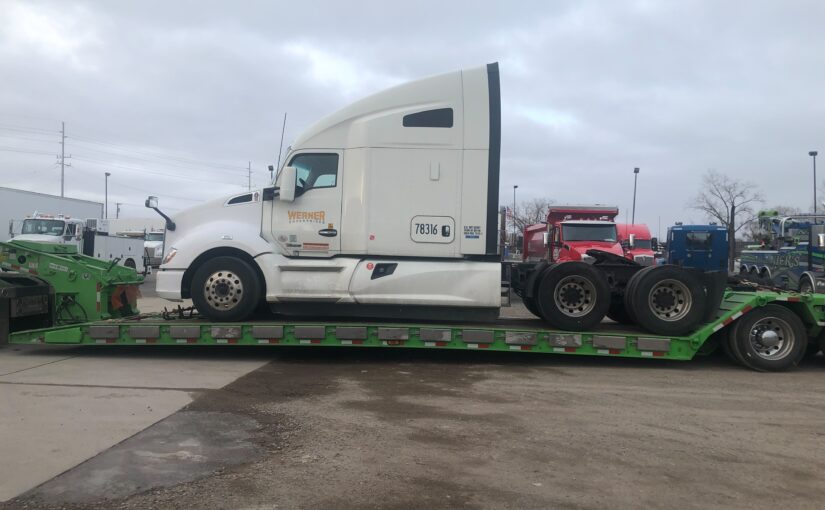
Shipping a semi trailer

Flatbed Trailers

The flatbed trailer is perfect when it comes to trucking compact loads. There are many reasons why these trailers have gained so much traction in the logistics industry. For starters, they exude a great sense of versatility and can conveniently transport loads weighing up to 48,000 pounds. The trailer’s length generally ranges from 48 to 53 feet and can therefore haul cargo that is up to eight and a half feet long. Besides, they have a flat level surface, making it easy to safely load, secure, and offload the cargo upon delivery.

Flatbeds can quickly load cargo from their tips, sides, or rear-end. However, these trailers do not dropdown. As such, cranes, forklifts, and loading docks go a long way in facilitating easy cargo loading during pick-up.

What are the Examples of Flatbed Cargo?

  • Agricultural Equipment
  • Construction Equipment
  • Tubing
  • Steel Products

RGN Trailers

Removable gooseneck trailers are fitted with a hydraulic-powered gooseneck, which easily disconnects from the trailer body. Once detached, the trailer’s front deck drops to the ground creating a shallow slope for easy loading and offloading of heavy equipment. RGN trailers can help you hold your heavyweight cargo closer to the ground during trucking. They also come with an extra trailer option, which increases the trailer length to 74 feet, providing additional space for large-sized cargo. Resultantly, this alleviates problems related to height permits and restrictions. Also, it gets easy to load the cargo to the trailer without cranes and forklifts, making the process safe and economical.

RGN trailers are incredibly versatile and can be used to transport numerous heavyweight and weirdly shaped equipment. RGN trailers are popular for towing such loads as specialized vehicles, combined harvesters, boats, mining machinery, and off-highway trucks. They also transport tanks, forklifts, and a wide range of construction materials and equipment.

Step Deck Trailers

Step-deck trailers offer numerous trucking advantages over their RGN and flatbed counterparts. They are overly versatile and can conveniently ship a wide range of heavy equipment. A step deck does not have any restrictive sides or roof and can quickly ship heavy loads weighing between 45000Ibs and 62000IBS. One of the most significant advantages of these semi-trailers is their capacity to haul higher goods without necessarily applying for additional permits. This is attributed to the fact that these trailers are designed and built to hold heavy equipment lower down, thus avoiding issues with height restriction. Besides, being closer to the ground means the loading crew does not have to lift the forklift too high while loading or offloading your freight. The loading process is, therefore, made easier, more convenient, and safer.

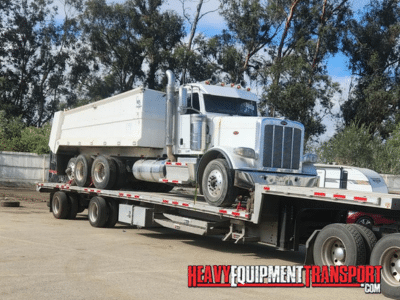
Semi trailer loaded on an rgn trailer

Transport Your Trailer Today

Heavy Equipment Transport is always available for a quote. Fill out the form or give us a call now! (888) 730-2951

What to Consider When Choosing a Heavy Duty Trailer

  • If you are looking for a heavy-duty trailer for your oversized load, you probably have numerous options at your disposal. All the same, doing enough due diligence will help you avoid unnecessary costs and damage possibilities. Besides, not every heavy hauling company has the necessary trailer to handle your cargo. Before deciding on the ultimate trucking option, you should consider:
  • Your freight dimensions vs. the trailer capacity: The size and weight of your load are major determinants of the type of trailer you choose.
  • Your Budget: When choosing the right trailer for your heavy load, it is natural to get lured by cheaper options. Nevertheless, you should not compromise other crucial factors, such as safety and reliability.
  • Convenience: While towing your heavy equipment, go for trailers that guarantees you the utmost safety. For instance, the best trailer should come with the much-needed forklifts, quality chains, and ropes for easy securing of the load. All the same, you should consult your logistician to guide you on the best towing option for your freight.

To ensure safe and quick delivery of your equipment from the pick-up point to your doorstep. You need to work with an experienced and well-equipped trucking and shipping company. Here’s where Heavy Equipment Transport comes in. We pride ourselves on working with a team of qualified truck drivers and logisticians dedicated to meeting and exceeding our clients’ shipping needs.

William Thomas

William Thomas

Heavy Transport Specialist

Being able to lead a team of such talented logistics agents has been a wonderful experience over the past ten years. If you would like to know anything more about the heavy equipment transport services we offer, don't hesitate to give us a call!
Shipping a 2012 Dump Trailer with Heavy Equipment Transport

Hauling a 2012 Dump Trailer | Heavy Equipment Transport

Heavy Equipment Transport Logo
Facebook
Twitter
LinkedIn

William Thomas / July 2022

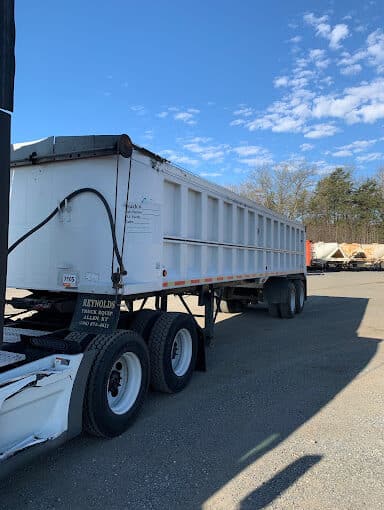
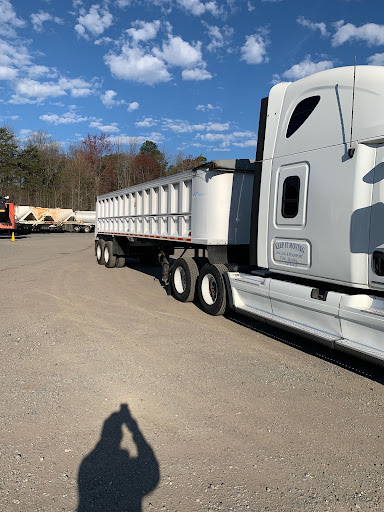
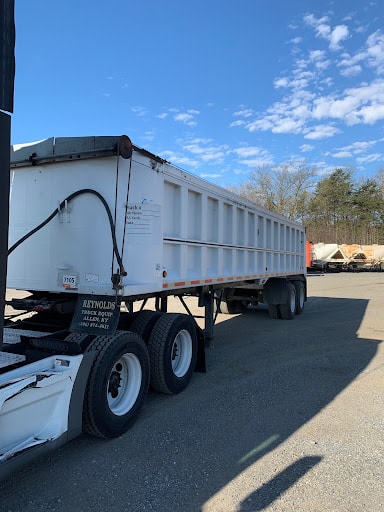
Jay Hays, one of our most experienced heavy equipment specialists received a call from a client who needed his 2012 dump trailer shipped from Northeast, MD to Brooklyn, NY. The client needed the 2012 dump trailer transported the same day. Therefore, he paid an extra fee for our expedited shipping services. Jay Hays immediately insured the 2012 dump trailer and acquired the paperwork necessary. He then called one of our drivers in Northeast, MD and told him where to pick up the 2012 dump trailer.  At Heavy Equipment Transport, we provide power-only transportation. We provide you with a professional driver with an understanding of the most convenient route.

Convenient 2012 Dump Trailer Shipping Services

dump trailer transport

When our driver got to the pick up location, he called Jay who dispatched the shipment. With an option to use I-95 N or NJ Tpke and I-95 N, he chose the latter. It was the shortest and had minimal traffic. Before any shipment is dispatched, we evaluate the most suitable routes to ensure that we use the most convenient one. This saves on time and our clients are able to get their shipment on time. After 3 hours, our driver was already at the delivery point. Our client was impressed because we were reliable and efficient. We kept time and delivered the 2012 dump trailer safely.

dump trailer transport

Transport Your Dump Trailer Today

Heavy Equipment Transport is always available for a quote. Fill out the form or give us a call now! (888) 730-2951

Affordable Power Only Transport with Heavy Equipment Transport

At Heavy Equipment Transport, we ensure that every heavy equipment or super load we transport is fully insured. We provide all our clients with a specific specialist whom they can call at any time. With a specific specialist responsible for your shipment, it’s easy to get updates and communicate. Our power only transportation is accessible at affordable rates. Our drivers are professionals with years of experience. They know the most convenient and fastest routes to use. This guarantees safety and timeliness. We provide all our clients with free and accurate shipping quotes. For power only transportation, contact us through our toll free number (888) 730-2951

William Thomas

William Thomas

Heavy Transport Specialist

Being able to lead a team of such talented logistics agents has been a wonderful experience over the past ten years. If you would like to know anything more about the heavy equipment transport services we offer, don't hesitate to give us a call!