How to Load Containers on a Trailer

How to Load Containers on a Trailer

Heavy Equipment Transport Logo
Facebook
Twitter
LinkedIn

Everything You Need to Know About Loading Containers on a Trailer

Loading a shipping container onto a transport trailer is a complex process demanding specialized knowledge and equipment. This complete guide breaks down the essential shipping container loading steps, from verifying the unit’s condition to proper securement.

You’ll learn how to load containers on a trailer safely, understand trailer requirements (like twist locks and corner castings), and see why professional help is necessary for complex container trailer loading scenarios. Heavy Equipment Transport ensures compliance and safety for every load.

Understanding Trailer Requirements for Safe Container Loading

“Heavy Equipment Transport ensures the correct chassis or trailer arrives based on weight, port rules, and container condition.”

Shipping containers require specific trailer and chassis configurations designed to secure them for road transport. Heavy containers use corner castings to focus their weight, so trailers must be strong and use twist locks that connect directly into these castings to prevent shifting and ensure compliance.

When considering container trailer loading, the type and condition of the container are also critical factors:

  • Empty vs. Loaded: An empty unit is straightforward, but a loaded or sealed container must have its weight verified to ensure the chassis’ gross weight rating is not exceeded.
  •  
  • Modified Containers: Units that have been modified (e.g., cut for windows or doors) may have non-standard weight distribution or require special permits due to altered dimensions.
  •  

Heavy Equipment Transport ensures the correct chassis or trailer arrives based on weight, port rules, and container condition.
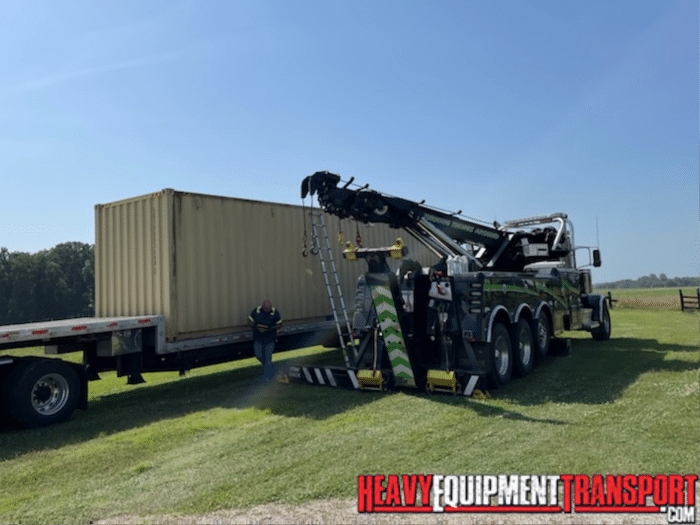
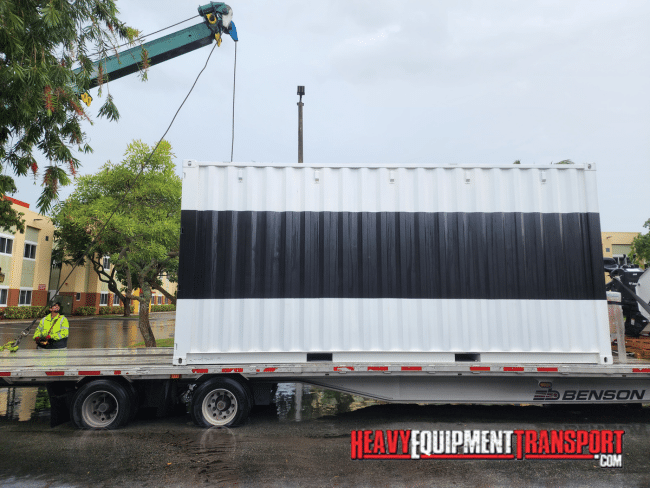
container on trailer for transport

Transport Your Containers Today

Heavy Equipment Transport is always available for a quote. Fill out the form or give us a call now! (888) 730-2951

Verifying Container Condition Before Trailer Placement

You must thoroughly check the container’s structural integrity before any lift occurs. Inspect all elements, especially the corner castings, rails, floors, and doors, for any dents, bowing, or compromised corners. Damage can severely affect safe lifting and securement.

For loaded units, confirm internal weight distribution to prevent imbalance during the lift and transit. Heavy Equipment Transport’s team reviews the container’s condition and confirms safe lift points before positioning the trailer.
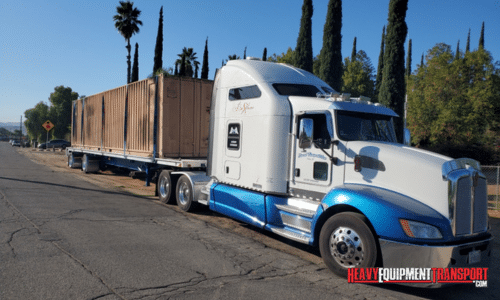
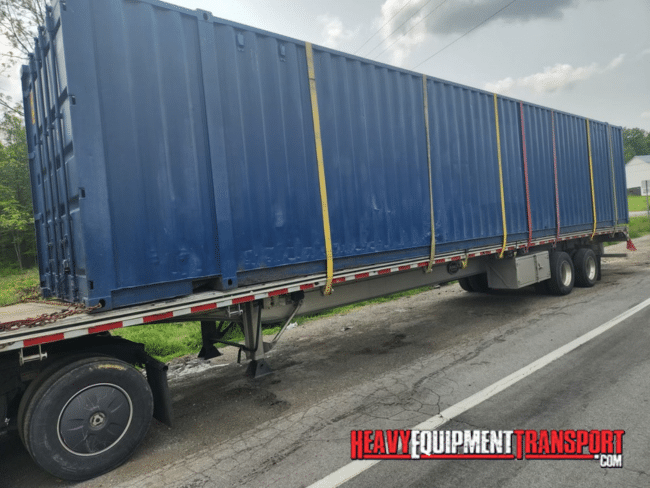
Shipping a container on a trailer.

Selecting the Proper Trailer or Chassis for Container Loading

Choosing the right equipment depends on container size, weight, and condition. A standard chassis is suitable for typical port-to-door moves. However, heavier loads require a tri-axle chassis to distribute weight and comply with overweight regulations, often necessitating special permits.

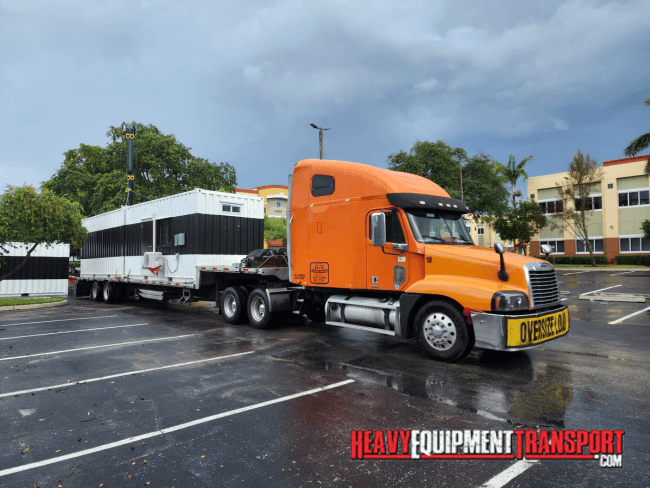
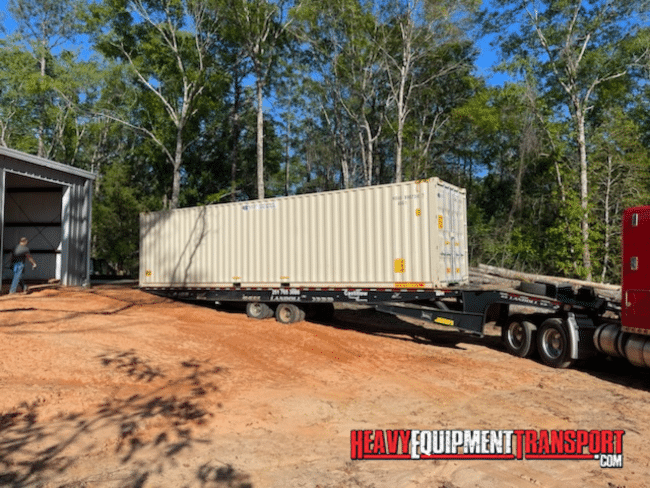
For non-standard, modified, or oversized containers, a flatbed, step deck, or Landoll trailer is often preferred. These provide greater flexibility for securement, especially when corner castings are compromised or inaccessible. Heavy Equipment Transport dispatches the right trailer based on port access requirements, the load’s exact weight, and the client’s specific needs.

Preparing the Trailer and Loading Zone for Container Placement

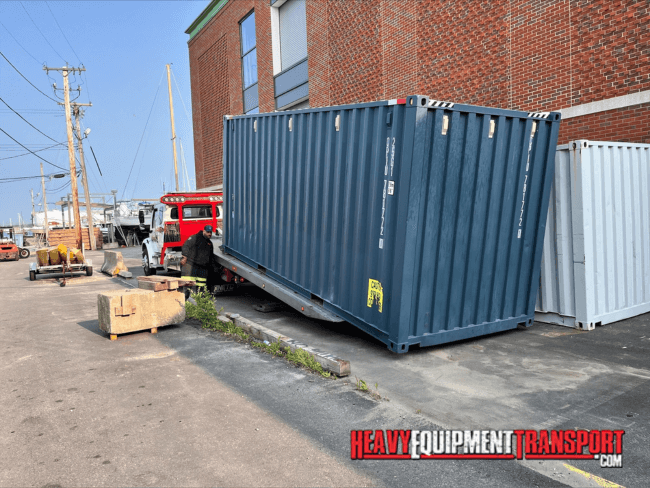
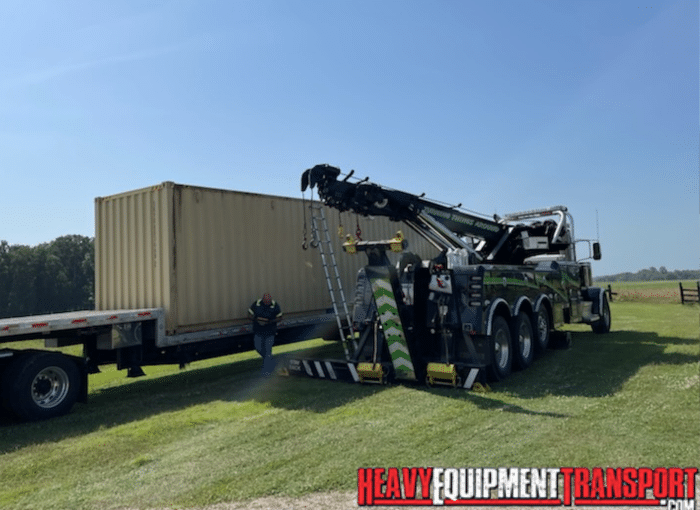
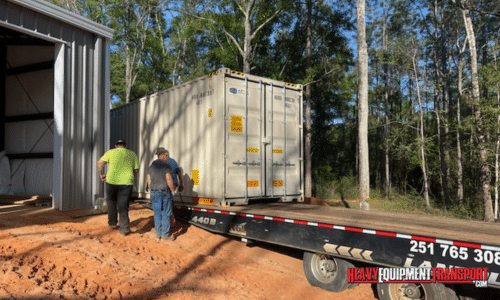
The loading environment must be secured before the container is moved. First, the trailer must be positioned on a stable, level surface. Leveling is necessary for the twist locks to align properly with the container’s corner castings during placement. Next, the entire loading zone, whether a terminal, yard, or construction site, must be cleared of all personnel and obstructions to provide safe access for the crane, forklift, or top-loader.

Throughout the process, establishing clear communication between the equipment operators and ground spotters is mandatory for precise and safe placement. Heavy Equipment Transport coordinates with terminals, yards, and onsite teams to ensure a safe, organized container trailer loading area, managing all preliminary shipping container loading steps efficiently.

Executing the Container Lift and Trailer Positioning

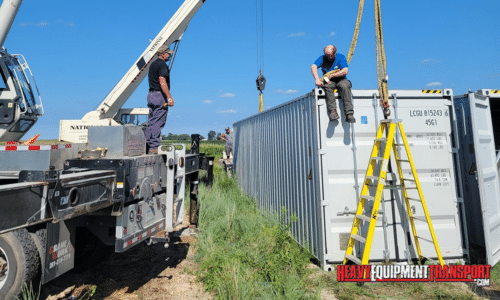
The lifting equipment must be perfectly aligned with all four top corner castings. Operators must maintain an even lift to prevent the container from swinging or twisting. The unit is then lowered slowly, matching the exact alignment of the chassis or trailer. This step ensures the container sits square, with all four bottom corner castings securely resting on the twist locks. Heavy Equipment Transport manages the complete lift plan and ensures all operators follow proper container-handling protocols.
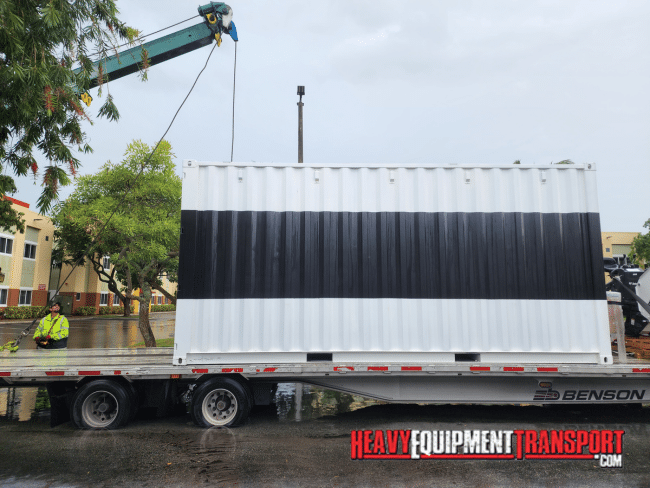
container transport

Securing the Container to the Trailer for Transport

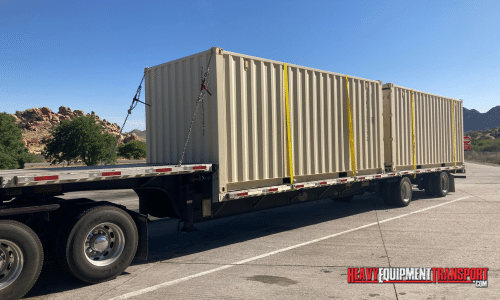
When using a standard container chassis, securing the container means fully and correctly engaging all twist locks on the bottom corner castings. For flatbeds or step decks, container trailer loading requires specialized methods, such as securing the container with heavy-duty chains, binders, and other corner securing attachments. 

The goal is total immobilization regardless of the trailer type. The container must be fully secured with no movement possible before the trailer begins its journey. Heavy Equipment Transport only uses Department of Transportation (DOT) and Federal Motor Carrier Safety Administration (FMCSA)-compliant securement methods for all container types, assuring safe transit.

Conducting Final Trailer and Container Safety Checks

A final compliance review is essential before travel once you secure the container. This involves a detailed inspection of all twist locks, chains, and tie-down angles to confirm they are tight and correctly positioned.

Also, verify that the container doors are securely locked and sealed, and that appropriate signage and lighting are in place. Moreover, check the axle weight distribution to prevent overweight risks and ensure legal road operation. These final shipping container loading steps confirm readiness. Heavy Equipment Transport completes a full compliance checklist before leaving any port, yard, or customer location.

When Trailer Container Loading Requires a Professional Team

While small, empty containers may be manageable, complex container trailer loading scenarios demand professionals. This includes moving loaded or overweight units that require specialized lift equipment and permits, or handling high-value/modified containers that need expert handling.

Ports and railyards have strict appointment and access rules, and cross-border shipments need precise bilingual coordination and documentation accuracy. Heavy Equipment Transport handles these complexities with precision, using our port expertise to move loaded, modified, or sealed containers without costly delays.

Still have questions about container trailer loading? Below are quick answers to the most frequently asked questions about how to load containers on a trailer safely.

FAQs — Loading Containers on a Trailer

What’s the safest way to load a shipping container onto a trailer?

The safest way involves careful preparation, such as verifying the container’s condition, leveling the trailer, using appropriate lifting gear aligned with all four corner castings, and lowering the container slowly onto the locks.

For standard containers (20ft or 40ft), a dedicated chassis is typically used, as it has built-in twist locks. Flatbeds, step decks, or Landolls are preferred for modified, oversized, or non-standard units that require flexible securement methods.

The container is slowly lowered until its bottom corner castings sit directly on the twist locks mounted on the trailer. An operator then manually rotates the locks until they secure the container firmly in place.

This depends on the location. Equipment includes cranes, reach stackers, top-loaders, or large forklifts. The equipment must have the necessary capacity and spreaders to engage all four top corner castings simultaneously for an even lift.

We provide the correct trailer (chassis/flatbed/tri-axle) based on weight and port rules, confirm safe lift points through inspection, manage the lift plan, and use only DOT/FMCSA-compliant securement methods.

William Thomas

William Thomas

Heavy Transport Specialist

Being able to lead a team of such talented logistics agents has been a wonderful experience over the past ten years. If you would like to know anything more about the heavy equipment transport services we offer, don't hesitate to give us a call!
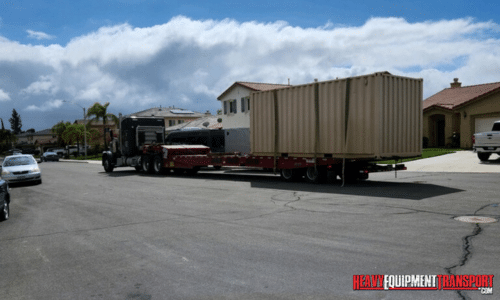
What is a Top Picker Used For In Container Transport?

What is a Top Picker Used For In Container Transport?

Heavy Equipment Transport Logo
Facebook
Twitter
LinkedIn

If you are in a shipping company or a client and want to know what a top picker is, you are in the right place. Also known as top picks, top loaders, or top lifts, they are essential in lifting empty or loaded containers in transport and shipping cargo. The top loaders or handlers move cargo from one point to the other.

The cargo-lifting equipment is more efficient and flexible than the traditional lifting tools in seaports or shipping yards. They are the best option for container moving that requires top lifting, especially during intermodal shipping. This article will explain all about top pickers for containers, including their alternatives and when to use them.

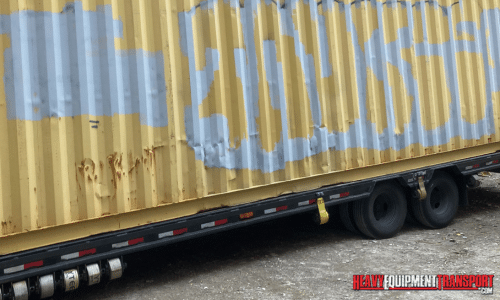
Moving a container on a trailer.

A top picker is an indispensable piece of equipment that helps shipping companies and clients move containers from one mode of transport to another, such as from a truck to a train.

What is a Top Picker?

A top picker is an indispensable piece of equipment that helps shipping companies and clients move containers from one mode of transport to another, such as from a truck to a train. It can also help place the cargo down after they arrive in port terminals or a freight company. The cargo-handling equipment is the best because it works efficiently where other cargo-lifting tools are inefficient. It can handle all types of freight, from the lightest to the heaviest.

Top pickers are highly versatile and come in different brands, sizes, and models like Toyota, Crown Equipment, and Hyster-Yale, allowing shipping companies to choose the one that perfectly meets their container-lifting needs. Read on to understand and answer the question, What does top picker mean in transport?

Transport Your Container Today

Heavy Equipment Transport is always available for a quote. Fill out the form or give us a call now! (888) 730-2951

When Should You Use Top Pickers for Container Moves?

After describing top pickers, it is time to understand how they work and when to use them. What does top picker mean in transport? This is the question they try to answer when they provide uses of top picks in seaports and other container handling terminals.

Shipping companies can use top picks in the following ways:

  • Loading: top picks are the best for loading trucks, trains, and ships with light to heavy containers for hauling and transportation to final destinations.

  • Unloading: once the cargo arrives at port terminals, ports, or shipping companies, top picks are for unloading the ships, trains, planes, or trailers. The cargo-lifting equipment moves containers in another truck or a designated storage space before a client picks it up.

  • Stacking: top pickers for containers are the best for stacking in the shipping industry. They can lift containers and stack them on top of others for storage or when unloading many containers simultaneously.

  • Container moving: Shipping companies and freight owners also use top picks to move freight or cargo from one point to another within terminals or ports.

After understanding where and when to use top picks in shipping, you can also learn where the equipment is off-limits. Agents and experts in logistics and shipping industries do not use top picks to transport containers outside a port terminal or company. The equipment is for lifting, loading, unloading, and stacking within the location

Container transport.

What are Top Picker Alternatives?

Most reputable shipping companies use many other cargo-lifting equipment instead of top pickers for containers. The alternatives in logistics and shipping can meet different needs that facilitate operations at the port or shipping company, including cargo-lifting. If you don’t have top picks, you can opt for:

  • Automated guided vehicles (AGVs): The driverless AGVs use technology such as lasers, cameras, and guide wires to move containers from one point to the next or to load, unload, and stack cargo.
  •  
  • Forklifts: They are powered trucks with two forks that lift and move cargo from one place to another within ports and freight companies. They come in diverse sizes and work best over short distances. The forklifts include pallet jacks, terrain lifts, and top pickers.

  • Chassis rotators: These are heavy-duty forklifts for lifting and storing container chassis when creating space for more cargo. They are also known as chassis flippers that rotate when finding the correct position to place the containers.

  • Material handlers: They are similar to cranes and work with their interchangeable attachments, such as bars and hooks, to wrap around cargo or lift containers for short-distance transportation within the seaports and shipping terminals.

  • Container cranes: Another alternative to top picks is the cranes that are useful in loading and unloading cargo during intermodal shipping. They include harbor, shi[-to-store, gantry, and container-handling cranes.

  • Reach stackers: The equipment is the best alternative for loading, stacking, and unloading containers.

  • Side handlers: Handlers are overhead telescopic equipment that lifts and moves containers sideways. They grab the sides, bottom, or top of empty containers.

Straddle carriers: The equipment can stack up to four containers without the help of forklifts, top picks, and cranes.

Find the Best Container Solution

When transporting cargo locally or internationally, you might need top picks or top handling equipment to help with loading, unloading, and stacking. You can count on Heavy Equipment Transport for the best container moving services.

The experts can help you explain what top pickers mean in transport. It is essential in the loading or unloading of shipping containers within a terminal. So, call us today if you want the best intermodal transport services for your cargo.

William Thomas

William Thomas

Heavy Transport Specialist

Being able to lead a team of such talented logistics agents has been a wonderful experience over the past ten years. If you would like to know anything more about the heavy equipment transport services we offer, don't hesitate to give us a call!
What is The Difference Between a High Cube Container and a Standard Container?

What is The Difference Between a High Cube Container and a Standard Container?

Heavy Equipment Transport Logo
Facebook
Twitter
LinkedIn

Do you need a container to transport, store, or move goods? When looking for the perfect option, you must choose between a standard container and a high cube container. The two types of containers look almost exactly alike, except for a slight difference in dimensions.

High cube containers are taller than standard ones. Below, you will find out why that difference matters and when to use each container.

What is Considered a Standard Container?

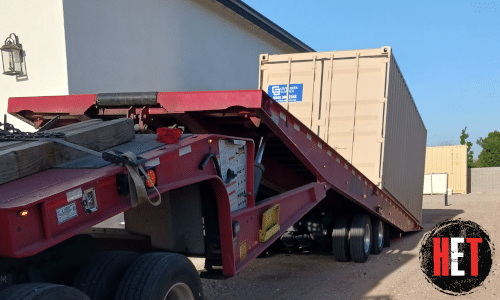
Loading a container for transport

“A high cube container is one foot taller than a standard container. This extra foot easily transports bulky goods, machinery, statues, and other tall items.”

A standard container’s dimensions are 8.6 ft high by 8 ft wide and can be 40 ft, 20 ft, 10 ft, or less long. They are considered standard, as they are widely available and relatively cheap.


Most people use a 20 ft container when moving, as it can easily fit the contents of a 3-bedroom house. This container weighs 4,585 lbs and has a carrying capacity of around 62,600 lbs.

Transport Your Heavy Equipment Today

Heavy Equipment Transport is always available for a quote. Fill out the form or give us a call now! (888) 730-2951

What is a High Cube Container?

The only difference between high cubes and standard containers is the height. A high cube container is one foot taller than a standard container. This extra foot easily transports bulky goods, machinery, statues, and other tall items.

The added height, however, makes the containers a few hundred pounds heavier. A 20 ft high cube container weighs over 5,000 lbs. Yet, it has the same maximum weight capacity as a standard container.

Container on a Trailer.

When to Use a High Cube Container Vs a Standard Container

  • •Moving Oversize Goods. A high cube container is better for transporting bulky or tall items. The internal dimensions of a container are slightly smaller than the state size. Therefore, an object that can barely stand in a standard container will fit more comfortably in a high cube.
  •  
  • •Weight VS. Volume. As mentioned above, a high cube container weighs more than a standard container. When transporting heavy goods that are neither bulky nor tall, a standard container allows you to carry more weight than a high cube.
  •  
  • On the other hand, if you want to store in bulk, like stacking a bunch of boxes, a high cube container could save you money. A 20 ft high cube container has 150 ft more capacity than a standard container of the same length. This extra volume is enough to fit a few hundred shoe boxes.
  •  
  • •Cost Considerations. Buying or renting a standard container is cheaper than a high cube container. It also costs more to transport a high cube, as the extra weight results in a higher fuel consumption. Because freight companies price their services according to weight, you might be charged a premium for the high cube. A standard container is more cost-efficient if you do not need the extra space to move your cargo.
  •  
  • •Container Builds. High cube containers are the preferred choice for container homes and other modifications. The added headroom makes for a healthier, more comfortable living space. As such, you will often find high cube containers used for mobile offices, pop-up bars and cafes.
  •  
  • •Safety Concerns. Standard containers can be transported almost anywhere, as you do not have to worry about power lines and low bridges. When transporting a high cube container, you should carefully plan the route to avoid low-hanging obstacles.
  •  
  • •Storage. Whether you need extra storage for business or personal use, the type of container you choose will depend on a few factors. Standard containers are the most common choice for most people as they can fit easily on a property. Agricultural businesses and farmers often prefer high cube containers to store their large machinery and tools.

A Container For Your Needs

When to use a standard or high cube container will primarily depend on your needs and budget. As you can see, no one container is better than the other. Yet, knowing the dimensions is essential, especially if you are planning to move a container.


If you want to learn more about the different container sizes, contact our specialists at Heavy Equipment Transport. We move large pieces of equipment and can help you transport your container.

What is an Open Top Container? Everything You Need To Know

What is an Open-Top Container? Everything You Need To Know

Heavy Equipment Transport Logo
Facebook
Twitter
LinkedIn

The open-top container is an optional solution to today’s dynamic shipment and logistics environment requiring precision. These customized vessels are intended to accommodate a variety of goods, creating an adaptive and practical transportation mode.

So, let’s talk about open-top containers. We will also discuss the different uses across various sectors and specs of open-top containers compared to standard container transport.

What is an Open-Top Container?

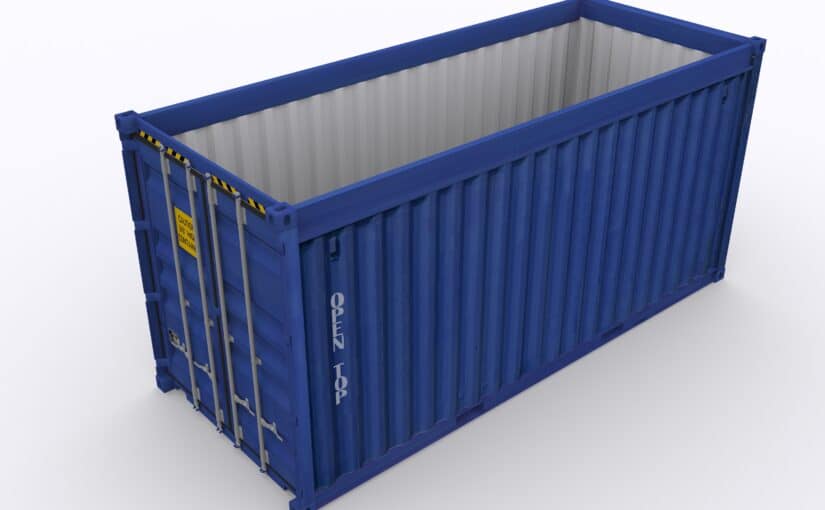
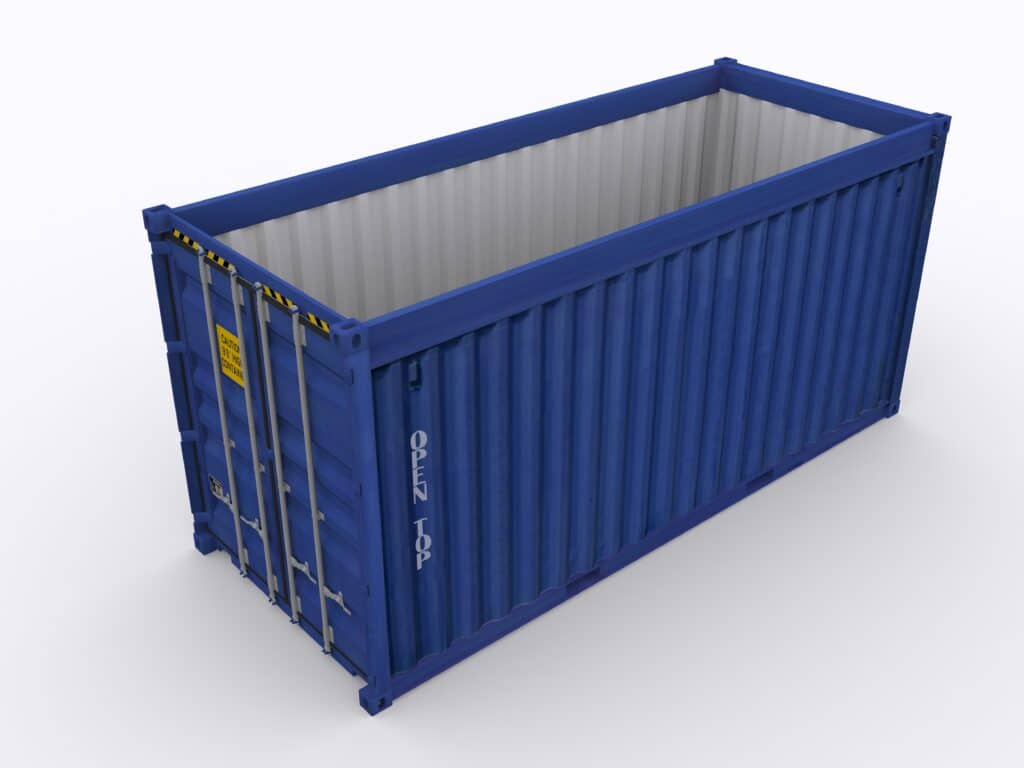
An open-top tank does not have a traditional lid like standard containers.

To answer the question, “What is an open-top container?” An open-top tank does not have a traditional lid like standard containers.

However, it has an openable top made of tarpaulin or a removable convertible roof. This construction provides top-loading and easy unloading, even oversized or cumbersome cargo that won’t fit in ordinary containers.

Open Top Container

Transport Your Container Today

Heavy Equipment Transport is always available for a quote. Fill out the form or give us a call now! (888) 730-2951

What are Open-Top Containers Used For?

The various industries in which open-top container movers are used is attributed to these machines’ unique designs and features. Here are some critical uses:

  • Heavy Machinery Transportation
    Large machinery and equipment that cannot be taken apart are often moved with the help of open-top container movers. This refers to industrial machines, building implements, and also large parts.

  • Bulk Cargo Transport
    Open-top containers are the most commonly used shipment methods in processing industries and shipping large quantities of scrap metal, wood, or paper. The open design provides free access for loading and unloading loose or irregularly shaped materials.

  • Project Cargo Shipping
    The movement of non-standard and oversized items is commonly associated with large construction projects. Open-top container movers are indispensable in such circumstances, transporting the project cargo like generators, turbines, and also components of infrastructure projects.

  • Agriculture
    Open-top containers are well-suited for the shipment of many agricultural products, such as grain or hay bales. The top-loading design of this product makes it much easier to manage and stack these products, leading to very efficient logistics in the agricultural industry.

  • Tarp Coverings
    Using tarpaulin coverings on the open-top containers helps shield the cargo from all the elements. These strong covers protect the cargo from rain, wind, and other natural phenomena during transit, so it arrives at its target in good health.

Industries Benefiting from Open-Top Containers

  • Construction Industry
  • Mining and Extraction
  • Manufacturing
  • Energy Sector

Specs and Dimensions of Open-Top Containers

Specs of Open-Top Containers

  • Material: These containers are usually built from steel; the open container movers have a long life span and help safely transport large or oddly shaped loads.
  • Tarp Coverings: At the top of the convertible roof is a weather-proof tarpaulin, which protects the cargo from environmental factors while moving around.
  • Loading and Unloading: The option to be opened makes it much easier to load and unload cargo via cranes or any other lifting equipment.

Dimensions of Open-Top Containers

  • Length: Open-top containers are available in different sizes, with the standard models including 20 feet and 40 feet to meet various cargo requirements.
  • Width and Height: Although the width corresponds to the standardized container dimensions, the height is variable, being able to accommodate tall cargo as a result of an open-top design.
  • Payload Capacity: These containers have different payload capacities, making handling large and heavy shipments possible.

When to Use Open-Top Containers

  • Oversized Cargo: The solution to oversized cargo is the open-top containers that make handling large shipments much easier.
  • Top-Loading Requirement: Open-top containers offer accessibility for goods that require top-loading in terms of dimensions or shape.
  • Protection from Elements: In the case of cargo that is exposed to weather conditions, and at the same time, its volume must be preserved, these container types have a covered yet open design advantage.

Final Thoughts

In the complex shipping world, open-top containers come to light as a rational and adaptable solution for moving oversized irregular cargo. These applications across many industries, from heavy machinery to bulk materials, offer a dependable transport mechanism. With knowledge of the specs of open-top containers, companies can also develop more efficient and accurate logistics strategies for shipping the products overseas.

If you need transportation for the heavy equipment, call Heavy Equipment Transport. Our representatives will ensure you receive efficient and customized shipping services suited to your needs!

William Thomas

William Thomas

Heavy Transport Specialist

Being able to lead a team of such talented logistics agents has been a wonderful experience over the past ten years. If you would like to know anything more about the heavy equipment transport services we offer, don't hesitate to give us a call!
What is Container Drayage?

What Is Container Drayage?

Heavy Equipment Transport Logo
Facebook
Twitter
LinkedIn

When you want to ship goods or equipment in containers from another state or country using a train, plane, or sea, you need a semi truck to get them from manufacturers to the designated transportation mode. So, first things first: Container drayage is short-distance transport to ports, railway stations, or airports. It is vital in intermodal transport, which involves transporting cargo between ports in the same town, city, county, or metropolitan area.

But remember that drayage only refers to truck transportation that covers short distances from manufacturers or warehouses to rail and from railways to final destinations. It facilitates the chain supply process by moving cargo between different modes of shipping.

If you want to understand how drayage works, it’s best to start by answering the question, what is intermodal container transport? Read more to learn more about container drayage.

What is Container Drayage?

Drayage ensures the cargo gets to and from its primary transportation mode, including train, plane, or ship, to your business, farm, or construction site.

After understanding “what is intermodal container transport?” it becomes easy to explain drayage in the shipping process. Intermodal transport is the hauling of cargo from one state or country to another using diverse modes of transportation, such as ships in oceans and trains.

For instance, if you are moving things to another state or country, the hauling process can start by using a truck to and from the airport or railway station. From the example, the trailer or truck transport only happens to and from the docks or ports.

Drayage ensures the cargo gets to and from its primary transportation mode, including train, plane, or ship, to your business, farm, or construction site. The container moving between ports and railways and last-mile delivery to destinations is called drayage.

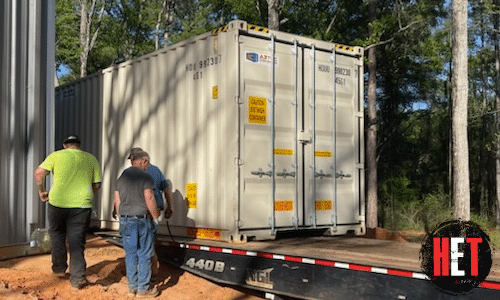
Shipping containers on a step deck trailer.

Transport Your Containers Today

Heavy Equipment Transport is always available for a quote. Fill out the form or give us a call now! (888) 730-2951

How Does Container Drayage Work?

For starters, drayage is a simple process in intermodal transport that might seem complicated, but it’s not. Shipping companies use drayage in container moving to ensure cargo gets to you in time.

Drayage starts after purchasing equipment or goods abroad or from another state far from your location and might need several modes of transport to get to you.

The hired shipping company plans the route the cargo will take to reach you safely and securely. It first uses trucks to move the containers from distribution hubs, warehouses, or manufacturers to the primary mode of transport, which includes planes, ships, or trains. The trucks transport the equipment or goods to the nearby ports, docks, railways, or airports for further transportation.

After unloading the drayage trucks, the shipping company uses top pickers to load ships or trains for transportation to your destination. When the cargo arrives in your town or city, you need another truck for drayage. The shipping company offloads containers from the train or ship for stacking. It then loads the cargo to another truck in the location to the final destination, which is your business or farm.

Hiring the best logistic company that offers intermodal transport makes the necessary arrangements, ensuring trucks are available for container drayage services in all locations with short-distance road hauling.

Transporting a Container on a step deck trailer.

What Are The Benefits of Container Drayage?

Container drayage offers numerous benefits for clients, truckers, and shipping companies, including:

  • Make containers move from one place to another easily.
    Using truck or trailer drayage helps shipping companies quickly move containers to railway stations or seaports for further transportation and to 
  • the final destination after unloading from ships, planes, or trains.

  • Without truck drayage, containers moving from docks, seaports, and shipping companies become problematic because of the short distance.
  •  
  • Enhanced efficiency:
    Drayage is the best way for shipping companies to improve efficiency when transporting cargo between docks and ports. It entails unloading from one mode of transport and reloading to another with the help of top-pick equipment.
  •  
  • Aids in logistics planning
    Drayage in intermodal transport improves logistics as shipping companies plan the route to your destination.
  •  
  • Increase of container safety
    Container drayage is essential in increasing safety as shipping companies ensure the cargo is secure before transportation from one dock or port to another.
  •  

Affordability of the services:
Container moving that has drayage services at some point might be cheaper than using a direct long route that has increased risks of cargo damage. The drayage is affordable because it covers short distances within the location.

Do you need Drayage Container Trucking Services?

Call Heavy Equipment Transport if you are searching for the best shipping company that offers unmatched drayage container services. It ensures a seamless logistic and transportation process that gets your cargo in the same state before departure.

Our experts can help you understand drayage by answering the question of intermodal container transport, which clearly explains the process. We offer the best solution to all your container moving needs for maximum client satisfaction.

William Thomas

William Thomas

Heavy Transport Specialist

Being able to lead a team of such talented logistics agents has been a wonderful experience over the past ten years. If you would like to know anything more about the heavy equipment transport services we offer, don't hesitate to give us a call!
What is Intermodal Container Transport?

What is Intermodal Container Transport?

Heavy Equipment Transport Logo
Facebook
Twitter
LinkedIn

William Thomas / January 2021

The term intermodal might sound complex, but that is not the case, as it means transporting cargo using different modes of transportation. If you ship your heavy equipment using the road through trailers and then by ship in the ocean, that is intermodal transport.

Most containers use intermodal shipping as you receive goods through the port and then use road transport to get them to your home or business. Experts in shipping companies can explicitly explain what is intermodal container transport. This masterpiece will explain more about intermodal container shipping.

“Intermodal transport of closed containers is a suitable replacement for the old break bulk cargo method. “

Transporting a container on a flatbed trailer.

What is intermodal container transport?

Intermodal transport of containers is a process that requires clients and shipping companies to work together to ensure seamless container moving and delivery. It entails careful planning of the multiple modes of freight transportation from within or outside the country to you.

Some shipping companies use intermodal container transport to imply the use of rail, ship, and road to ship containers from state to state. In such a case, the shipping process starts with truck transportation to the railway station for rail shipping and concludes with a truck or trailer. Intermodal transportation for international shipments might include air and truck shipping or sea and rail hauling.

Logistic experts can recommend road, rail, and road transportation for your cargo if shipping locally or road, air, sea, and road when transporting internationally. They use aspects such as total distance, truckload rates and proximity to rail or road, shipment requirements, and routing to determine the best intermodal transport.

Transport Your Container Today

Heavy Equipment Transport is always available for a quote. Fill out the form or give us a call now! (888) 730-2951

A Brief History of Intermodal Container Shipping

Intermodal transport of closed containers is a suitable replacement for the old break bulk cargo method. It was so tiring and time-consuming for shipping and logistics companies and involved hiring labor for loading and unloading tasks of small packages in trains, trailers, ships, or trucks.

The old process had too many issues, such as constant loss of goods and items while in transit because offloaders and loaders could access the contents and slow loading and unloading of cargo. Logistics companies have started to create containers to replace the old packaging methods.

Towards the end of the 19th century or early 20th century, closed containers emerged to help move goods in transit and on rail. England was the best example of countries that first used large containers to move cargo in ships and rail. The USA made steel containers to ship war supplies and ammunition during World War 11.

1931 was the year of the first container ship, followed by the first transport intermodal standards for containers in 1933. Most logistics companies saw the need to develop larger shipping containers in the 1950s for easy transportation of equipment, machinery, and goods of whichever size and weight. In the 1960s, intermodal shipping for smooth container moving facilitated sea freight shipments.

Afterward, rail and ship intermodal container transport became famous because of reduced transportation costs. In the 1970s, inventors preferred the double-stack cars, which became more popular by 1984 for container moving.

Intermodal transport is now more efficient because it facilitates freight shipping and encourages exporting of goods through different modes, including road, rail, sea, and air. The widely used containers in the shipping company range from 20-foot long to 52-foot long units and are 8 feet high.

Shipping a container on a trailer.

What Are The Benefits of Intermodal Container Shipping?

Learning and understanding the benefits of intermodal transport is vital after answering the question, what is intermodal container transport?

Moving containers that carry large, heavy, and bulky goods, equipment, and machinery comes with many benefits for logistics and shipping companies and clients, including:

  • Cost savings: Intermodal container transport eliminates the risk of losing packages and items while trains, ships, trucks, or planes are in transit. It helps move bulky or massive goods in one container, saving on the cost of several trips.

  • Eliminates the need for unloading and reloading goods or equipment from one ship to another or train to truck.

  • Facilitates the supply chain process as the logistics companies move containers from one mode of transport to another.
  • Saves on time: The stress of loading, unloading, and reloading the trucks, trains, and ships becomes significantly lower thanks to intermodal shipping, hence saving time.

  • Increases capacity for more goods: Makes bulk shipping and equipment transportation easy as the goods, equipment, and machinery are in containers.

  • Prevent congestion in shipping companies as double stacks carry more containers at once.

Call Heavy Equipment Transport for Safe and Efficient Intermodal Transport

When looking for a logistic company to handle your heavy equipment and cargo through different transportation modes, consider Heavy Equipment Transport. We are an all-inclusive shipping company specializing in freight shipment, hauling of super load, and LTL cargo transport.

Our logistics experts provide the best services and advice to ensure your cargo arrives safely at its destination. You can count on us for the best intermodal shipping, affordable rates, and highest-quality services. We go above and beyond to ensure client satisfaction as we meet their transport needs.

William Thomas

William Thomas

Heavy Transport Specialist

Being able to lead a team of such talented logistics agents has been a wonderful experience over the past ten years. If you would like to know anything more about the heavy equipment transport services we offer, don't hesitate to give us a call!
5 Container Shipping Trends for 2024

5 Container Shipping Trends for 2024

Heavy Equipment Transport Logo
Facebook
Twitter
LinkedIn

William Thomas / January 2024

The container shipping industry constantly evolves, with many factors shaping its future. Changing consumer trends, technological advancements, and global economic shifts are some of the critical impacts that shaped the freight forwarding industry. This article summarizes the container moving trends in 2023 and a forecast of the 2024 container shipping trends. Also, you understand why you should work with a reliable container-hauling company.

A Recap of Container Moving in 2023

While the container shipping industry witnessed a significant peak in 2021 and 2022, there was a complete shift in 2023, marked by a profit drop. With many consumers cutting spending on high-value goods, rapid interest rate increases, and shocking inflation that faced the global economy, the container moving in 2023 was highly affected.

The deteriorating market conditions, combined with an increase in stockpiles of empty containers by the end of 2022, drove the shipping industry downhill in 2023. Moreover, sanctions imposed on Russia affected several European ports. Despite a post-pandemic boom in container shipping, decreasing demand and geopolitical uncertainties affected shipping rates. For instance, the cost of moving freight between Asia and Europe or the US in 2023 was more than 80% lower than a year earlier. In addition, low water levels affect traffic through the Panama Canal, the Yangtze River in China, and the Rhine in inland Europe.

Container being strapped for crane loading

Move Your Container Now!

Heavy Equipment Transport is always available for a quote. Fill out the form or give us a call now! (888) 730-2951

“The deteriorating market conditions, combined with an increase in stockpiles of empty containers by the end of 2022, drove the shipping industry downhill in 2023.”

The 2024 Container Shipping Forecast

2023 was characterized by ups and downs in shipping containers, but will this be the trend in 2024? Here are five container shipping trends to watch out for in 2024:

More Freight Capacity

It is estimated that the global container volume capacity will increase by 4% in 2024 while the ocean fleet will grow by 7.8%, according to the BIMCO, an international shipping association. On the other hand, the air freight forwarding capacity is estimated to increase in 2024.

As a result, there will be increased competition among shipping companies, and customer loyalty may waver, forcing them to tighten their belts to stand out. So, if you are looking for a shipping company in 2024, you should consider one that offers top-quality container shipping services at affordable rates.

Sustainability

Geopolitical tensions and climate change characterized the 2023 container shipping trends. However, in 2024, the main focus in the logistics sector will be sustainability. Many shipping companies prioritize flexibility, agility, and visibility to navigate various supply chain challenges. In addition, companies are exploring new ways of reducing environmental impacts by adopting green energy technologies and optimizing various shipping routes. As such, you should work with a company offering top-tier schedule reliability.

Digitalization to Increase Efficiency

Digitalization or port automation has been a growing trend in container shipping. Increasing visibility and customer demands force several freight forwarders to invest in advanced technological solutions. Also, the need to reduce container ship’s turnaround times and increase efficiency, automated container handling equipment, and other innovations are being implemented. Working with a shipping company that has embraced digitalization will help improve efficiency.

Shifts in Global Trade Dynamics

Global economic conditions, trade agreements, and geopolitical events will impact container moving in 2024. Shifting of transportation routes, geopolitical tensions, and fluctuations in demand will influence container shipping across various regions. As such, you should consider a container shipping company with strategies to navigate different market conditions.

Increased Mergers and Acquisition

Since the pandemic period, there has been a significant increase in mergers and acquisitions in the container shipping industry. This trend is expected to continue in 2024, with many smaller independent shipping companies consolidating to beat up challenging marketing. On the other hand, established freight forwarders will take this opportunity to acquire competitors. If you are in the market for a container moving company in 2024, choose one with established years of experience offering quality services.

Make Sure to Work with a Reliable Container Moving Company

2023 was a year full of opportunities and alarming challenges for container-moving companies. However, while 2024 will present significant challenges, there will be new opportunities due to emerging container shipping trends. As such, you should ensure you work with a reliable container-hauling company that prioritizes sustainability initiatives and digital transformations and understands the importance of supply chain resilience.

Working with an established and experienced wide-load equipment shipping company will ensure your freight reaches you on time and hassle-free, as they know how to navigate various container moving challenges.

William Thomas

William Thomas

Heavy Transport Specialist

Being able to lead a team of such talented logistics agents has been a wonderful experience over the past ten years. If you would like to know anything more about the heavy equipment transport services we offer, don't hesitate to give us a call!
What Type of Trailer Do You Need to Ship a Container?

What Type of Trailer Do You Need to Ship a Container?

Heavy Equipment Transport Logo
Facebook
Twitter
LinkedIn

Francisca Olive / July 2023

There are several types of trailers to choose from when transporting shipping containers, including flatbeds, goosenecks, and chassis. While each type has its advantages, the chassis trailer has become the go-to option for many shipping companies and container movers. This article will explore why the chassis is the best shipping container transport trailer.

What Is a Container Chassis?

A chassis (or skeletal trailer) is a wheeled trailer structure designed to carry many different kinds of containers (standard and special). These metal frames are built to transport containers from one terminal to another, as well as between warehouses, ports, and other warehouses. There are different types of container chassis, so you can choose the one that best fits your needs.

A container chassis is essentially a steel frame with tires and axles connected. The capacity of a chassis depends mainly on its axles. The axle is the lengthy shaft connecting the wheels. A regular chassis can haul 20-foot and 40-foot containers with only two axles. A tri-axle chassis is required to transport 20ft containers weighing more than 36,000 pounds or 40ft containers weighing more than 44,000 pounds.

container haul

Transport Your Container Today

Heavy Equipment Transport is always available for a quote. Fill out the form or give us a call now! (888) 730-2951

What Makes the Chassis the Best Shipping Container Transport Trailer?

The purpose of a chassis is to move shipping containers quickly and safely. They’re sturdy and strong, shielding containers from shocks and vibrations on the road. Containers are fastened safely and securely to the chassis, eliminating the need for excessive container movements and making transportation significantly safer.

Although typically constructed of lightweight materials, a container chassis is strong enough for heavy equipment transport. They also come in various types so that transport companies can choose the best for their needs.

Types of Container Chassis

➤ Common Chassis

The common chassis does not provide any customization options. It’s just a simple, permanent structure designed to move containers from one location to another. These chassis require the use of overhead cranes for loading and unloading freight.

Standard 20-foot, 40-foot, and 45-foot containers can be transported using the common chassis. Distinctive body markings indicate where your containers should go. This chassis is not only inexpensive but also easy to operate. However, external equipment, such as overhead cranes, may result in additional costs.

➤ Tilt Container Chassis

Because of the nature of this chassis type, loading and unloading containers is a breeze. A tilt chassis, as opposed to a common chassis, features upper and lower frames. The upper structure may tilt upward using hydraulics. In addition, the chassis’ upper frame includes a roller that links to the bottom frame.

This setup ensures a safe and manageable loading and unloading process. You’ll have to shell out more cash for this one, but if ease of use is your top priority, it’s worth it.

➤ Extendable Chassis

As their name suggests, extendable chassis can be adjusted to accommodate various containers. This type of chassis functions in much the same way as a common chassis, with one key distinction. Because the back can be extended, it can be used for various purposes.

This is the chassis for container movers transporting containers of various lengths.

Choosing the Right Chassis Trailer for Your Needs

container haul

Which chassis is best for you depends solely on your needs. The following should be taken into account when deciding the type to go with:

➤ Usage

A container-specific chassis is the best option if you need to move containers. On the other hand, flatbed chassis trailers are the best option if you need to transport containers along with other goods. A tilt chassis is convenient if you have to load and unload items in specific locations since it eliminates the need for renting a crane or other lifting machinery.

➤ Weight Threshold

You can select the number of axles in the chassis best to accommodate the weight of the container. The more axles a chassis has, the more weight it can carry. The ideal option for moving conventional containers is a two- or three-axle chassis.

➤ Cost

Before deciding on a chassis, consider the container’s requirements and specs carefully. You should expect to pay more for a customized chassis than a standard one. Hence, when you look for a container chassis, you should ensure that you completely understand your requirements.

Key Takeaway

A container chassis is the most effective shipping container transport trailer. These trailers are built for container hauling. Because there is such a large selection of trailers to choose from, you can pick the one that’s most appropriate for your needs.

William Thomas

William Thomas

Heavy Transport Specialist

Being able to lead a team of such talented logistics agents has been a wonderful experience over the past ten years. If you would like to know anything more about the heavy equipment transport services we offer, don't hesitate to give us a call!
What Happens If My Container is Damaged During Transport?

What Happens If My Container is Damaged During Transport?

Heavy Equipment Transport Logo
Facebook
Twitter
LinkedIn

Francisca Olive / July 2023

The shipping industry’s catch-22 is container damage. Even the strongest boxes can suffer damage during delivery, no matter how careful you are. Container damage, beyond normal wear and tear, can result in a significant economic loss for owners and end users. This article will outline what to do if your container is damaged during transport.

What is Container Damage?

Damage to a container occurs if there is a breach in the container’s structural integrity. In essence, it’s a catch-all phrase for several types of damages. Container damage can range from a small ding to a complete loss at sea.

You should keep in mind that the condition of your cargo might be affected by the state of your container. Once a shipping container sustains damage, the contents within also suffer. A recent report from the UK P&I club found that missing containers accounted for nearly 11% of all cargo damage claims made that year. This significant financial risk may get you tangled up in a long, drawn-out claims process.

One in four containers going through U.S. ports sustains damage at an interchange point, reports Freightwaves. Potential causes of the destruction include natural calamities, careless humans, and broken machinery.

Human error typically begins with selecting the incorrect container for your shipment. It can also affect how effectively you pack your load to prevent freight damage. Damages due to human error are avoidable.

After the suitable container has been chosen, a thorough inspection should be conducted to ensure that it is free of any odors, holes, damage, lack of ventilation, unsanitary conditions, improper temperature regulation, and improper flooring.

container transport

Transport Your Container Today

Heavy Equipment Transport is always available for a quote. Fill out the form or give us a call now! (888) 730-2951

Reasons for Container Damage

One of the most common causes of damage to a container is improper loading. Cargo that sways during transit may result from an overloaded container, unequal distribution of weight, poor securing, or an absence of dunnage. This is due to inadequate oversight, a lack of expertise in cargo transport, and an attempt to save costs without fully realizing the consequences.

As a result of contamination, certain containers may be ruled unusable. They could be infested with pests or have an unpleasant odor. For instance, if a shipping container was used to transport food products before being used to transport garments, the garments may absorb the smell of the food.

In addition to occurring during transport, container damage can also occur during loading and unloading. Untrained forklift operators risk damaging the containers by puncturing or denting them, stacking them improperly, or dropping them. Damages from dings and punctures can be repaired if they are minor.

As a result of the wear and tear they endure during shipping and transport, containers require frequent inspections.

container loaded on trailer

Types of Container Damage

➤ Broken Doors

This may occur due to irresponsible handling of the container, negligent securing of the container while it is being loaded, vehicle accidents, or the actions of robbers. Make sure the container frames are inspected at the terminal. Attempt repair if feasible; otherwise, contact the shipper before dispatch.

➤ Loss of Container

A container can be lost if the ship is rocking because of rough seas, the ship sinks, the containers are stacked improperly, the weight is miscalculated, or the cargo is not stowed properly. In order to avoid a collision, the crew should heed weather warnings, stay clear of bad weather, adhere to all applicable regulations, ensure that all lashing is done correctly, and inspect lashing regularly.

What Happens When My Container is Damaged During Transport?

You must document every aspect of the damage to your container upon its arrival. You can use this information to file a successful claim.

It is strongly recommended that the user take pictures before transport in case the shipping container is damaged during the move. When a container is returned to a depot, the owner often has a surveyor look at it to determine how much damage it sustained during transport.

After taking photos of the damage, the depot issues a repair invoice. If the repair cost is less than the amount specified in the Damage Protection Plan, the supplier will foot the bill. The container’s user will get an invoice if the value is higher. The user is given 30 days from the invoice receipt date to pay. If users disagree with the charges, they have ten days to file a dispute.

At this stage, the two sides can agree on one surveyor to represent them, or each can send their surveyor. The survey’s findings are used to determine who foots the bill. In the event of a total loss, the user is responsible for replacing the container (this cannot be disputed).

However, as the circumstances surrounding container damage might vary widely, remedies are often provided on a case-by-case basis. Depending on the gravity of the disagreement, these conflicts can last anywhere from two days to several weeks.

Key Takeaway

Getting container insurance is a smart financial move due to the frequency with which shipping containers get damaged during a move.

William Thomas

William Thomas

Heavy Transport Specialist

Being able to lead a team of such talented logistics agents has been a wonderful experience over the past ten years. If you would like to know anything more about the heavy equipment transport services we offer, don't hesitate to give us a call!
Transporting a Loaded Shipping Container – What You Need to Know

Transporting a Loaded Shipping Container - What You Need to Know

Heavy Equipment Transport Logo
Facebook
Twitter
LinkedIn

Francisca Olive / June 2023

While moving a loaded shipping container may look simple, it calls for meticulous preparation and execution to minimize mishaps and delays. This article will cover the essentials of transporting a loaded shipping container.

Weight and Size Considerations of Loaded Shipping Containers

20-foot and 40-foot shipping containers are the most commonly used containers by transport companies. The maximum weight that may be safely transported in a 20-foot container is 28,000 pounds, whereas a 40-foot container can take up to 57,000 pounds. Nevertheless, a container’s maximum load-bearing capacity might change with time, condition, and manufacturer guidelines.

You should research weight limits for road, rail, and ocean transit when shipping a loaded container. In the United States, for instance, the combined weight of a vehicle and trailer transporting a loaded container should not exceed 80,000 pounds. A special permit may be needed if the weight exceeds the specified maximum.

In addition to weight considerations, there are also size limitations when transporting a loaded container. For instance, some highways and bridges may not be able to accommodate the height or width of certain containers. Sometimes this means finding another route or transportation mode.

container transport

Transport Your Container Today

Heavy Equipment Transport is always available for a quote. Fill out the form or give us a call now! (888) 730-2951

Factors to Consider When Selecting a Transportation Mode For Your Loaded Shipping Container

While deciding on a means of transportation, it is crucial to consider the total distance the container will travel and its final destination. Transport by sea, for instance, is the best choice for overseas shipments, whereas transport by land, such as by road or rail, might be better for interstate or local shipments.

The size and weight of the cargo are major factors in determining the most appropriate mode of transport. Air and road transport are best for small, fragile shipments, whereas water transport is preferable for heavy goods. The degree to which the goods are hazardous, delicate, or valuable is another factor that determines the transportation mode used. High-value, easily damaged items are best shipped via air or land.

Cost is another major consideration. Rail transport is the most cost-effective option when transporting large or bulky goods across a long, inland distance. Road transport (most commonly trucks) is the most cost-effective option when shipping a few items over a short inland distance since it eliminates the need for packaging and handling. Water transport is the cheapest means of transportation but also the slowest; it is best suited for transporting large or bulky products across great distances when time is not a consideration. Air freight is the way to go for shipping perishable, delicate, or important items, despite being the most expensive alternative.

The safety of the cargo is also an important consideration when deciding on a mode of transportation. Since road transport losses are lower than rail travel, it is the favored mode of transportation. The dangers of the sea and the higher transit time make ocean freight the least secure mode of transport.

container transport

Challenges and Risks Associated with Transporting Loaded Containers

➤ Poor Handling

Handling involves picking, packing, loading, and unloading cargo. And in many cases, careless handling is the root cause of mishaps resulting in slips, trips, and potential financial losses. For instance, if you are shipping fragile items, there is always a risk of damage during transport if the proper precautions are not taken. Because of the many hands that touch a product throughout the transportation process, it is more likely to sustain damage due to carelessness or accident (such as being dropped by a delivery driver or mishandled while being unloaded).

➤ Weight and Size Issues

Oversize or overweight shipments can cause issues. If the container exceeds the weight and size limitations for a specific mode of transport, special permits may be required, which can lead to delays and increased expenses.

➤ Theft

Cargo robbers prey on loaded containers at transit hubs, parking lots, and other locations where the cargo is left unattended. Though robbers are known to steal goods directly, occasionally, personnel with knowledge from the “inside” also get engaged in this cargo theft operation by supplying transportation information to others. Besides these more obvious methods, hijacking, piracy, and cyber-attacks are frequently used by criminals to gain access to networks and steal valuable goods.

➤ Compliance Issues

Transporting hazardous materials or cargo that requires special handling can be challenging due to regulatory compliance issues. Failure to comply with regulations can result in penalties, fines, and even legal action.

Key Takeaway

Transporting a loaded shipping container requires careful planning and consideration of various factors such as weight and size, transport mode, costs, and compliance issues. To guarantee the timely and secure delivery of your cargo while keeping expenses to a minimum and maximizing efficiency, you must mitigate the dangers and difficulties inherent in moving a loaded shipping container.

William Thomas

William Thomas

Heavy Transport Specialist

Being able to lead a team of such talented logistics agents has been a wonderful experience over the past ten years. If you would like to know anything more about the heavy equipment transport services we offer, don't hesitate to give us a call!