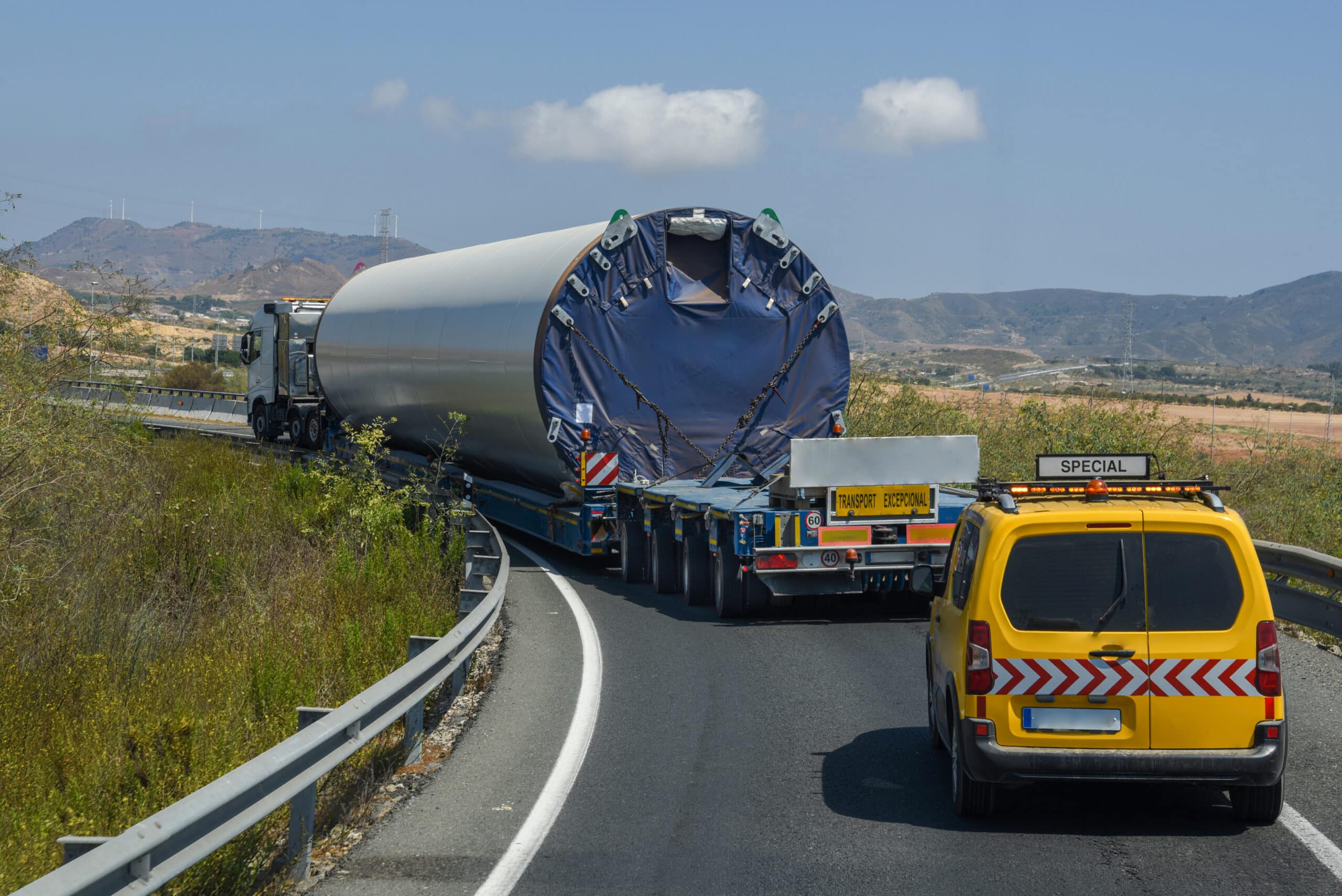
Tips To Safely Transport Your Construction Equipment
(And When To Get A Quote)
Article Contents
- Tips To Safely Transport Your Construction Equipment Without Costly Mistakes
- Start With Accurate Equipment Details (Before You Get a Quote)
- Determining What Type of Boat Hauling Services You Need
- Choose The Right Trailer To Transport Construction Equipment Safely
- Loading And Weight Distribution Are Where Safety Is Won Or Lost
- Securement Isn’t Optional — It’s A Compliance Requirement
- Permits, Routing, And Escorts Are Not DIY Decisions
- Delivery Site Preparation Is Part of Transport Safety
- When It’s Time To Request A Construction Equipment Transport Quote
- Why Contractors Choose Heavy Equipment Transport
- FAQs
Share
Tips To Safely Transport Your Construction Equipment (And When To Get A Quote)
Construction equipment is high-value, high-risk cargo often worth hundreds of thousands of dollars. When it comes to moving such machinery, safety, efficiency, and peace-of-mind are all top-of-mind.
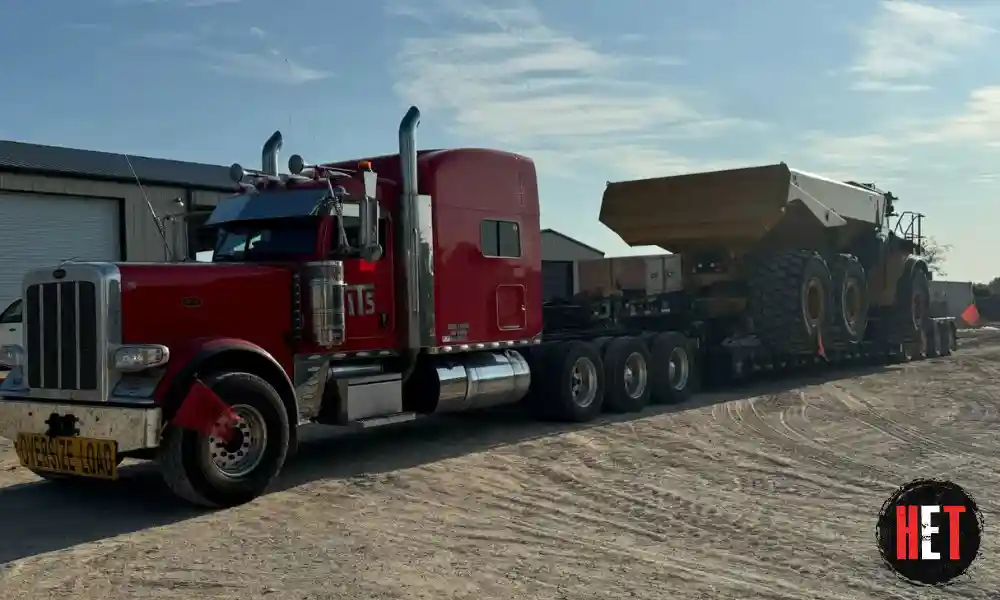
Tips To Safely Transport Your Construction Equipment Without Costly Mistakes
Construction equipment shipping requires that everything be synchronized, from route planning to trailer selection. When transporting construction machinery, challenges may arise due to:
- Incorrect specifications
- Oversights in route planning
- Rushed bookings
Those tasked with planning heavy hauls must consider safety every step of the way. Risk aversion begins with a quote that is at once comprehensive and professional. Use this guide to confirm that your upcoming construction equipment hauls are quote-ready.
Start With Accurate Equipment Details (Before You Get a Quote)
Know the exact dimensions and weight of your equipment, including attachments. The wrong measurements lead to improper trailer selection and permit problems. Think of accurate data as the foundation of a successful haul.
Many factors impact costs, including:
- Specialized trailer needs
- Challenges with loading/unloading
- Expedited delivery
A good transport quote is about much more than cost. Rather, it is a planning tool. The quote should be thought of as part of a process to get equipment to its destination safely and cost-effectively.
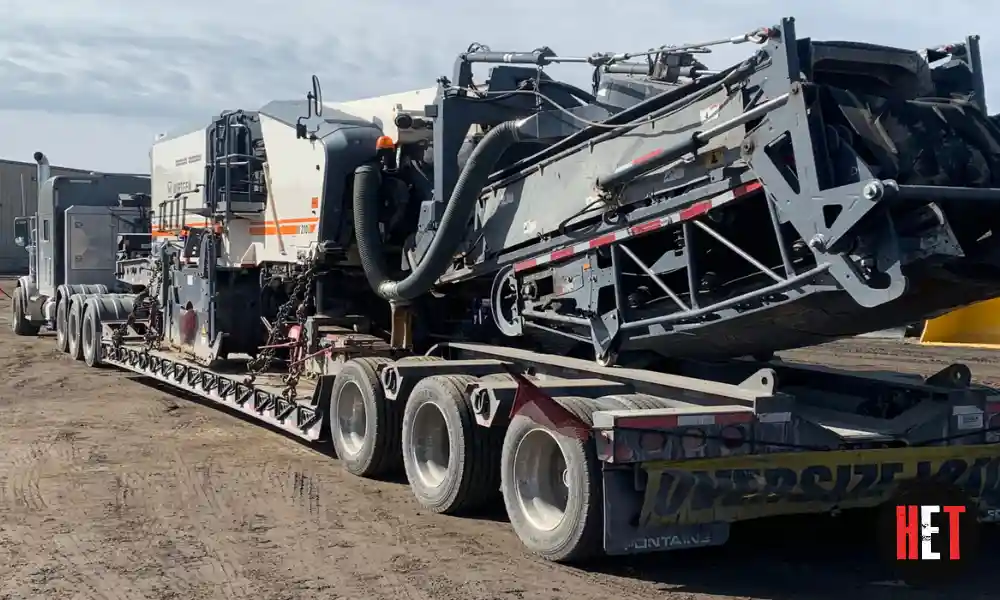
Choose The Right Trailer To Transport Construction Equipment Safely
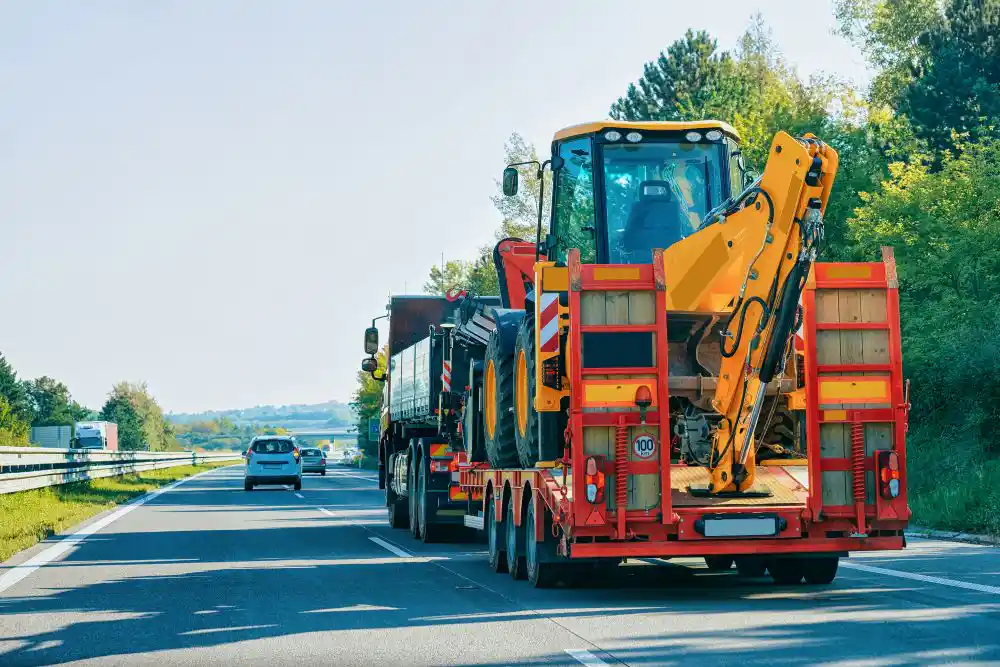
The right trailer choice is critical for safe and compliant construction equipment transport.
- Lowboy - Lowboy trailers have very low decks that stabilize heavy loads while accommodating taller equipment. Lowboys are popular for transporting excavators, bulldozers, backhoes, and other large construction equipment.
- RGN - A removable gooseneck (RGN) trailer offers decks as low as 1.5 feet from the ground. Weight capacities range from 42,000 to 150,000 pounds. Lengths typically range from 20 to 65 feet. The detachable gooseneck allows the front to be lowered to the ground. This creates a convenient ramp for unloading construction equipment.
- Flatbed - A flatbed trailer features an open deck with no roof or sides. Five feet is the typical deck height. Flatbeds are popular for transporting construction equipment up to 8.5 feet tall, with permitting required for taller loads.
- Step deck - A step deck (or drop deck) trailer comes with a front upper deck and a rear lower deck. This type of trailer may accommodate equipment that is too tall for a standard flatbed while avoiding the need for an oversize permit. Most are 48 or 53 feet long.
The right trailer choice is critical for safe and compliant construction equipment transport
- Overloading - risk of brake failure, instability, and accidents due to improper weight distribution.
- Compromised towing performance - harder to control the load safely or navigate sharp turns.
An expert quote delivers far more than a rate based on miles travelled. It includes matching the load to the right trailer. Selection is not a matter of guesswork. It is the result of a careful assessment of load specifications.

EXPERTISE YOU CAN TRUST
Need specialized heavy equipment shipping?
Our expert logistics agents have the solutions you need.
Loading And Weight Distribution Are Where Safety Is Won Or Lost
Compliant construction equipment shipping requires an advanced understanding of:
- Appropriate trailer options
- Load distribution and center of gravity
- Axle weights and spacing
- Loading direction and securement
Center of gravity considerations are very important. Construction equipment, by its very nature, is often uneven in weight. Loading equipment too far forward may stress the drive axles. At the same time, loading equipment too far back introduces instability. Balanced loads reduce parts wear and stabilize handling.
Properly spaced axles reduce stress on both the trailer and the pavement. Appropriate weight per axle delivers stability while reducing the risk of mechanical failure. Single axle weights are often capped at 20,000 pounds, and tandem axle weight limits are often 34,000 pounds. Again, there are differences from state to state. In Colorado, the tandem axle weight maximum is 36,000 pounds.
A comprehensive quote considers real load dynamics, not mere estimates. Carriers should address heavy equipment hauling safety by planning the loading process well before the truck arrives.
Securement Isn’t Optional — It’s A Compliance Requirement
The proper securement of construction equipment is subject to specific regulations. Federal Motor Carrier Safety Administration (FMCSA) tie-down requirements address weight and other factors. For example, loads over 10,000 pounds must be secured by a minimum of four tie-downs. The working load limit of each tie-down must be at least one-half of the weight of the load.
Length is also a factor. If the cargo is more than 10 feet long, you need two tie-downs for the first 10 feet. Then you need one more tie-down per additional 10 feet (or part thereof). Tying down accessories must also be addressed.
Logistics professionals know that the tie-down method must be matched to the load. Compliance is always a key consideration. For very heavy, rugged loads, chains deliver unmatched strength and durability. Straps also offer important advantages, however. They protect surfaces that chains might damage, and they excel at securing odd shapes.
It is also important to use the right tie-downs for the job: direct, indirect, or transverse:
- Direct tie-downs run straight to the load from the trailer.
- Indirect ones connect back to the trailer after passing over or through the load.
- Transverse tie-downs run from one side of the trailer to the other. They also run over or through the load.
Noncompliant securement risks both equipment and lives on the road. Make sure that any quote details proper securement. Any quote without detailed securement plans is incomplete.
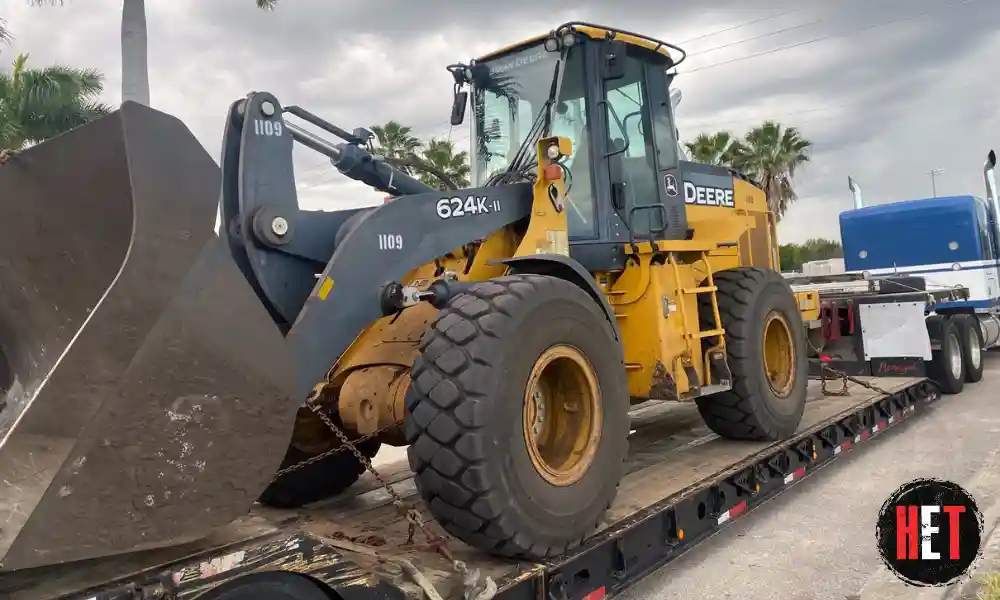
Permits, Routing, And Escorts Are Not DIY Decisions
There is no substitute for a thorough knowledge of permitting, routing, and escorts. Variations by route and state make DIY decisions a bad idea. Some jurisdictions require special permits for moves at night or on holidays and weekends.
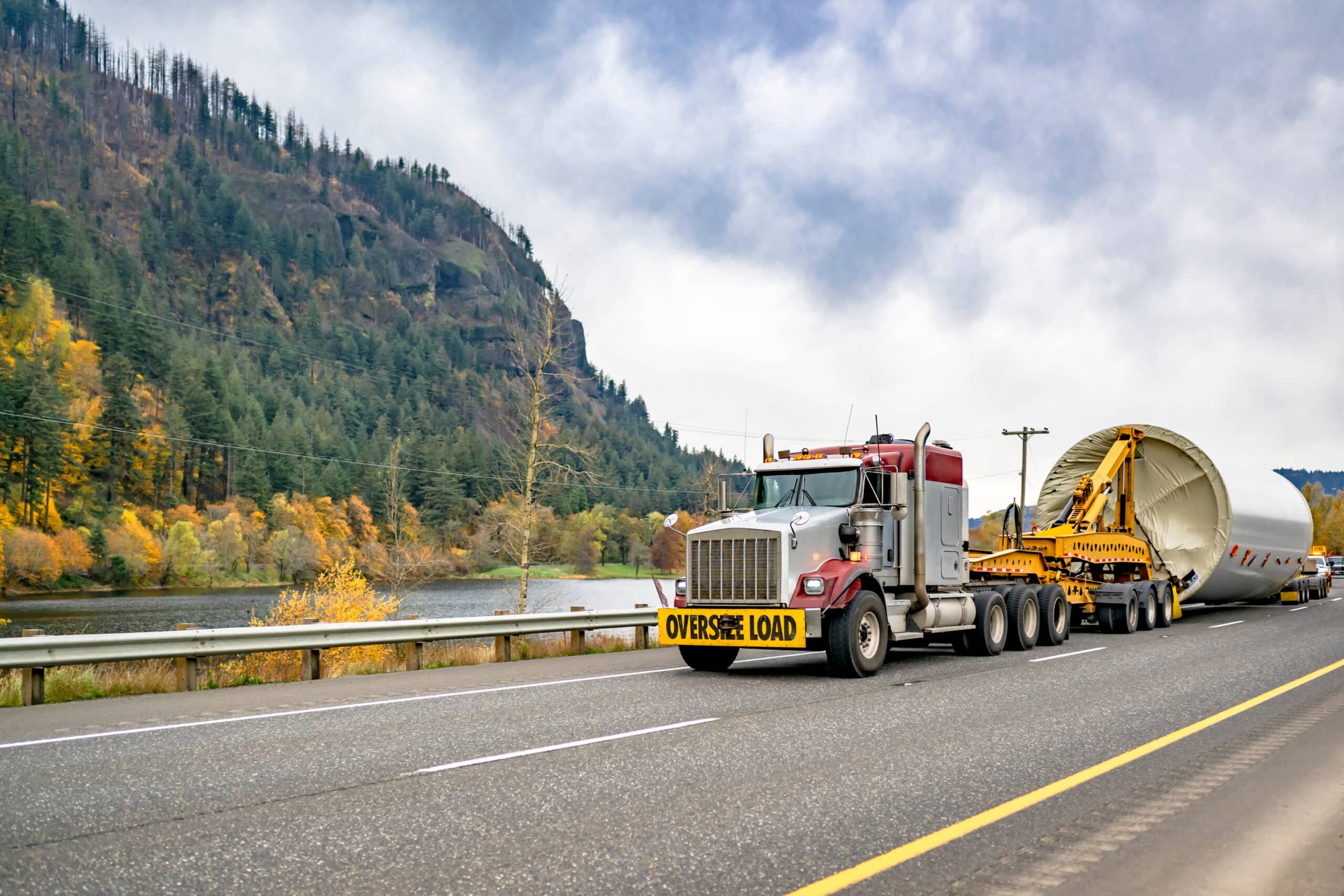
An oversize permit is typically required when:
- Width exceeds 8.5 feet
- Height exceeds 13.5 feet
- Length exceeds 65 feet
- Gross vehicle weight (GVW) exceeds 80,000 pounds.
Definitions of oversize thresholds do vary by state. In Colorado, the height limit is 14.5 feet, for example. In Minnesota, the length limit is 75 feet.
Escort teams coordinate movement along the route while managing intersections and turns. They also alert the driver to hazards and restrictions. Escort vehicles are often required when a load is more than 12 feet wide or 14 feet tall, but this varies by state. Escorts are also required for extra-long rigs of 90-120 feet or more.
Compliant, efficient routing should be a key component of any quote. Clearances, weight limits, and turning radii must be accounted for. Oversights are unacceptable.
Delivery Site Preparation Is Part of Transport Safety
Delivery site preparation is also an element of transport safety. Planners must determine the need for additional site preparation. It is vital to account for access width limitations, unstable ground conditions, and other challenges.
There is no substitute for expert planning and timely permitting. Delays from permitting failures almost always cost more than the fees themselves. A comprehensive quote accounts for permit timelines upfront. The quote process must also identify delivery site risks that lead to costly re-delivery or detention charges.
Always insist on a quote that breaks down different elements like base transport, loading/unloading costs, escorts, and permit fees.
When It’s Time To Request A Construction Equipment Transport Quote
How do you know when you need a professional hauling quote? Trigger points include:
- Oversize or overweight equipment.
- Tight job site deadlines
- Transport of multiple machines
- Cross-state moves
- High-value equipment
A construction equipment transport quote is about much more than the cost. A thorough, itemized quote delivers added value in important ways. It reduces risk via proper trailer selection, route planning, timeline assessment, and regulatory compliance.
Why Contractors Choose Heavy Equipment Transport
The team at Heavy Equipment Transport understands the unique demands of construction equipment hauling. We build trust with our valued clientele through detailed quotes that include:
- Proper trailer selection
- Compliant permitting and routing
- Rigging specifications
Our quotes account for state-by-state differences in permitting, escort, and other requirements.
Work with Heavy Equipment Transport, and you’ll enjoy the peace-of-mind that comes with:
- Permit-ready planning
- Dedicated point-of-contact service
- Repeat-job reliability
When you need to transport construction equipment, get your quote at (888) 730-2951
LET US HANDLE YOUR
HEAVY EQUIPMENT SHIPMENT
We've got the know-how and the haul power
to get it done right.
Call now to speak directly with a transport expert - no waiting, no guesswork.
FAQs
How do I safely transport large construction equipment?
Safe transport requires thorough knowledge of government regulations, trailer specs, and rigging requirements. Count on logistics professionals to move equipment in a safe, compliant, and efficient manner.
Do I need a permit to move my equipment?
You will need a permit when a load exceeds state-specific limits on height, width, length, and weight.
What trailer is best for excavator transport?
RGN trailers are often an option for hauling excavators. They offer easy loading and reliable transport across uneven terrain.
How is construction equipment secured during hauling?
Strap or chain tie-downs secure the equipment per state and federal regulations. Riggers may use direct, indirect, and/or transverse tie-downs for the best securement.
How far in advance should I request a quote?
As early as possible, to provide time to 1) plan routes, 2) secure permits, and 3) arrange for escorts if required.