How to Choose The Best Trailer for Shipping Equipment

How to Choose The Best Trailer for Shipping Equipment

Heavy Equipment Transport Logo
Facebook
Twitter
LinkedIn

William Thomas / January 2021

To properly transfer your equipment, one of the most crucial factors is picking the right trailer. The last thing you want is to risk choosing the wrong trailer, leading to damage to your expensive equipment. Read on to learn more about choosing the best trailer for shipping equipment.

Flatbed Trailers
The Best Trailers for Compact Equipment

Flatbed trailers can be found in lengths between 48 and 53 feet, with the former being the more common option. Towing capacities of standard flatbed trailer transports typically top out at 48,000 pounds. A flatbed can be no more than 8.5 feet in height or breadth. A flatbed trailer is usually sixty inches off the ground.

The transportation and shipping industries rely heavily on flatbed trucks because of their adaptability. They’re versatile enough to haul loads of varying sizes. Because of their open design, loading and unloading from and onto flatbed trucks is a breeze. A crane can raise the weight from above, or forklifts can access the load from the sides.

Flatbed trailers are the best trailers for oversize loads with irregular shapes and heights. Due to their open layout, tarps and tied own traps can be used to keep your shipment dry and secure throughout the transport.

Benefits of Flatbed Trailer Transport

A flatbed, being an open trailer, can transport anything. Its open design makes it practical for transporting irregularly shaped or oversized items. You don’t need to worry about banging into walls and breaking anything.
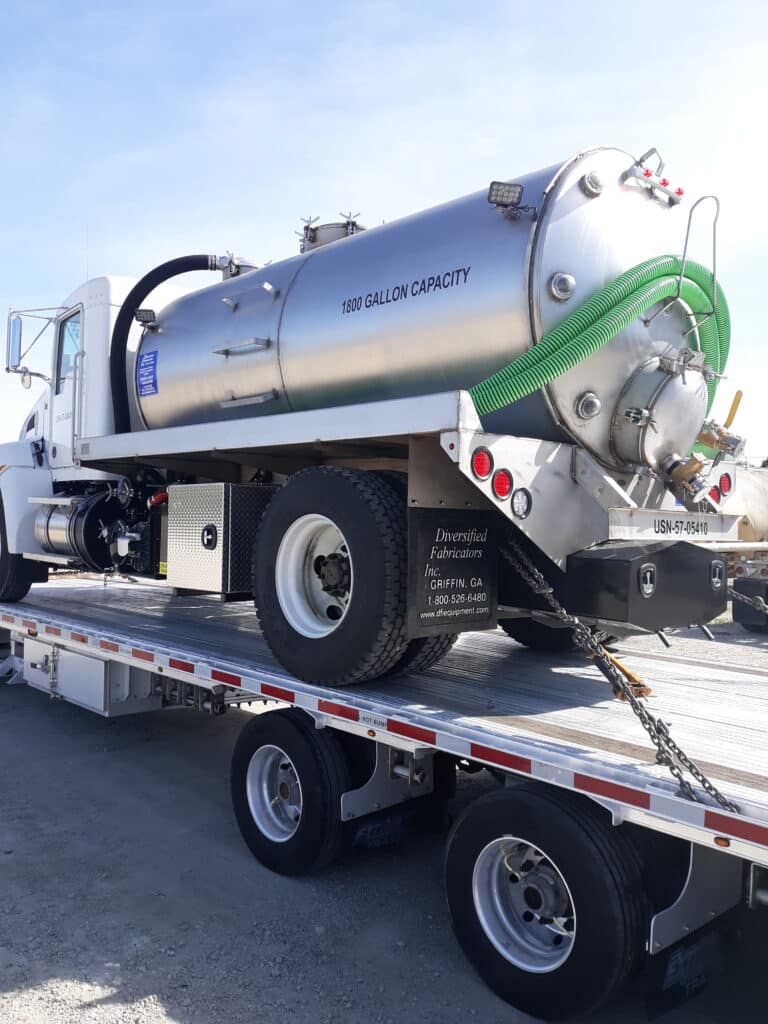
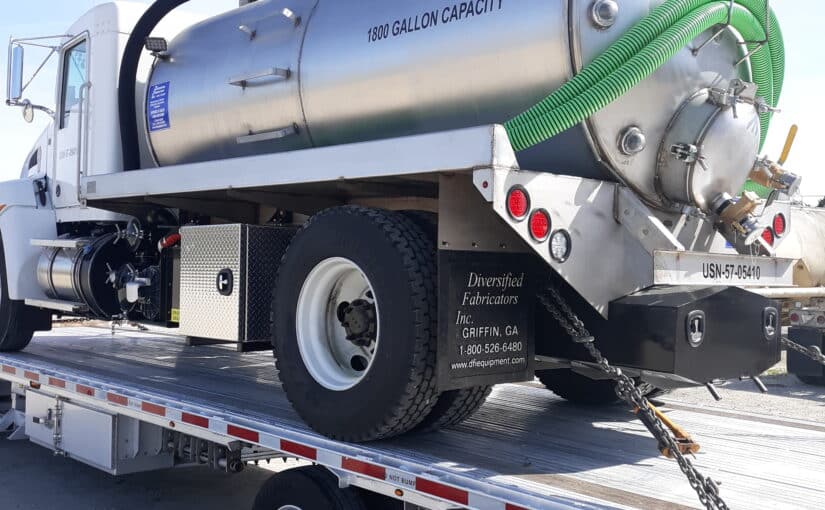
Transporting a vacuum truck on a flatbed trailer.

“Knowing the make, model, and dimensions of your heavy equipment helps determine the best trailer for transport.”

Step-Deck Trailers
The Best Trailers for Partial Loads

A step-deck trailer’s maximum payload capacity is 48,000 pounds. The maximum height for cargo is 10 feet, while the width is eight and a half feet. A standard length for a step-deck trailer is 48 feet. A step-deck trailer has a well that is 37 feet long and a deck that is 11 feet long.

Step deck trailer transports sit lower to the ground than flatbed trailers. Smaller pieces of self-propelled machinery may be driven up the ramps with a step-deck trailer. Step deck trailers have a well almost a foot lower than the deck of a flatbed trailer, allowing for the carriage of equipment that barely exceeds the height limitations on a flatbed. It is possible to utilize a step deck trailer as an alternative to a flatbed trailer if the intended cargo is too tall to fit on the latter. Equipment too tall to ship on flatbed trailers typically travels as a partial load on step-deck trailers.
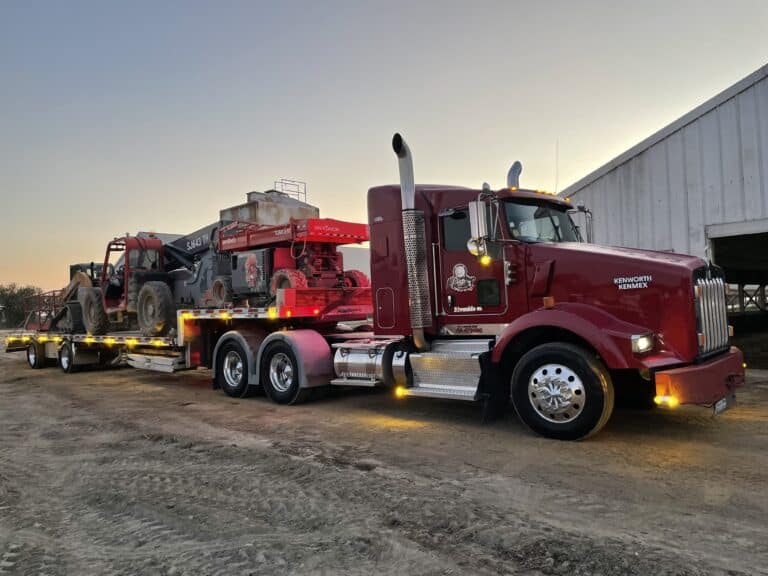
Transporting multiple heavy equipment on a step deck trailer

Transport Your Equipment Today

Heavy Equipment Transport is always available for a quote. Fill out the form or give us a call now! (888) 730-2951

Benefits of Step-Deck Trailer Transport

You can avoid the headache of obtaining height permits by stowing your cargo a few inches lower on the step deck.

Because of their low loading height, step deck trailers are ideal for transporting heavy or bulky items. They are the perfect trailers for oversize loads.

RGN Trailers
The Best Trailers for Oversize Loads

You may load up to 42,000 pounds into an RGN trailer. The RGN trailer’s low-sitting well allows it to transport items up to 11.5 feet in height. The typical width of an RGN trailer is eight and a half feet. In most instances, the length of the well is 29 feet.

For heavy, self-propelled equipment, RGN trailer transports are your best bet. This heavy equipment may weigh up to 80,000 pounds, so the RGN’s drive-on/drive-off capability is essential for safe transport. On top of that, RGN trailers have around 1.5 feet of additional headroom than step-deck trailers.

Choosing The Best Trailer for Shipping Equipment

Hauling Capacity

To calculate a vehicle’s towing capacity, you must first determine its empty weight and then add the weight of everything you plan to transport. Even though you may be able to fit more items inside the truck’s bed, you should never do so. This is because legal and structural safety restrictions dictate a trailer’s hauling capacity.

Type of Equipment Being Hauled

You must be familiar with the machinery you will be transporting. For example, an ATV deck over won’t look the same as one for a vehicle. Knowing what you’re hauling will give you a better idea of what you require.

Selecting the proper trailer is the first step in ensuring your machinery’s safe and effective transport. You need to find the most practical solution at the lowest possible cost.
Three Types of Trailers for Heavy Equipment Transport

Three Types of Trailers for Heavy Equipment Transport

Heavy Equipment Transport Logo
Facebook
Twitter
LinkedIn

William Thomas / January 2021

Flatbed Trailer Transport

A flatbed trailer comes in different sizes ranging from 48 feet to 53 feet—though the most common is 48 feet. Standard flatbeds are designed to can tow heavy equipment that weighs to 48000 pounds. The maximum height and width for a flatbed is 8.5 feet. It is usually 60 inches from the ground.

When to Use Flatbed Trailer Trucking For Heavy Equipment Transport

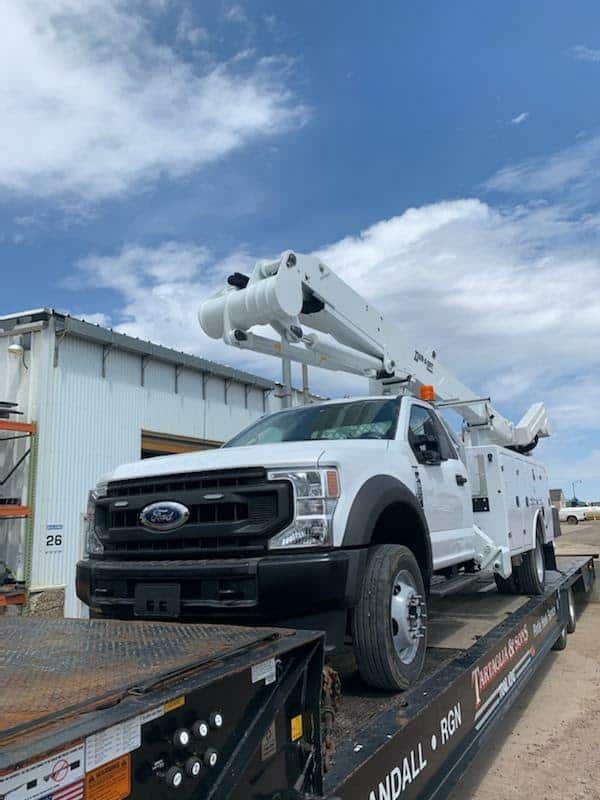
Ford utility truck on step deck trailer

Flatbed trailers are very versatile and, as such, are the most used types of trailers in the trucking and shipping industry. They can be used to transport different sizes of loads. Flatbed trailers are open from all sides, and this makes loading and offloading so easy. For instance, a crane can be used to pick the load from the top or a fork lifter from any of the sides. If you have an oversize cargo transport with an irregular shape and height, Heavy Equipment Transport has different flatbed trailers to seamlessly move your cargo from point A to point B. Since it is very open, we can secure your load with tarps, and tied own traps for safe delivery and protection against weather elements.

Advantages of Using a Flatbed Trailer for Delivery of Overweight Loads

  • • Since a flatbed trailer is open from all sides, it easy to work with when loading and offloading oversize loads or cargo with unique shapes. You don’t have to be scared of bumping into walls and causing damage. 
  •  
  • • Being an open-air trailer, a flatbed can be used to ship literally anything!
  •  
  • • Flatbeds tough and reliable for heavy trucking such as airplane parts and mobile homes.
  •  
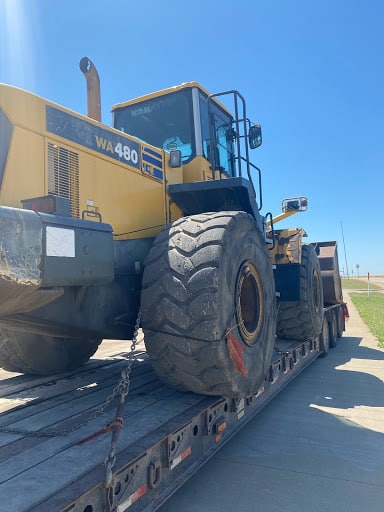
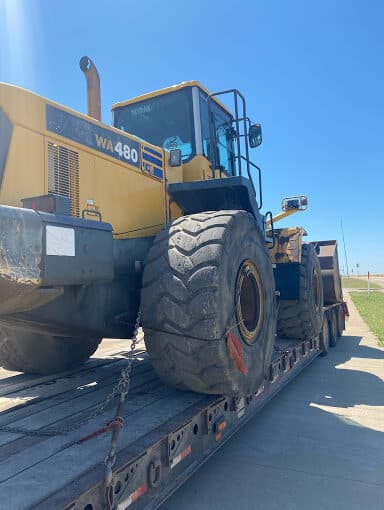
wheel loader on lowboy trailer

Transport Your Heavy Equipment Today

Heavy Equipment Transport is always available for a quote. Fill out the form or give us a call now! (888) 730-2951

Step Deck Trailer Transport

Step deck trailer carries up to 48000lbs. Its lower deck is 37 feet by 8.5 feet, while its upper deck is 11 feet by 8.5 feet. The lower deck’s maximum height is 10 feet, while that of the upper deck is 8.5 feet.

When to Move Your Cargo Using a Step Deck Trailer

Just as the name suggests, a step deck trailer has two deck levels: an upper deck and a lower deck. The main difference between step deck trailers and flatbed trailers is the maximum legal height it can carry. If the equipment you intend to move cannot fit on the flatbed trailer because of height, the step deck trailer is the next great option. A step deck trailer is closer to the ground, and as such, provides a few extra inches for taller loads.

Advantages of Step Deck Trailer Towing and Shipping

  • • You can place the cargo with a few extra inches lower down the step deck and save yourself the hassle of seeking height permits
  •  
  • • A step deck trailer is closer to the ground compared to a flatbed trailer, and forklifts can be used to quickly and safely load and offload them
  •  
  • • Step deck trailers can easily be loaded with large cargo because they are close to the ground. They are the perfect trailers for large loads.


When to Use a RGN for Heavy Equipment Towing

Moving large equipment is cumbersome. Additionally, you need height permits to truck tall loads. The RGN trailer has a dropped region in the middle known as the “well”. It is perfect for carrying taller objects. With this well, you save yourself the hassle of looking for height permits because they can fit there well without exceeding the legal maximum height that a standard trailer is permitted to haul. Besides, the front end of the Removable Gooseneck Trailer is detachable, which makes loading and offloading from either end fast and convenient—you can directly drive a massive piece of equipment such as a bulldozer into the trailer.

Benefits of Moving Tall and Oversize Cargo with RGN Trailers

  • • A Removable Gooseneck Trailer saves you time you could have otherwise spent when seeking for height permits to transport bigger equipment across interstates.
  •  
  • • With a RGN, you don’t need other large pieces of machinery to help load and unload the trailer since you can drive in the equipment you intend to tow.

Choosing The Best Trailer for Transport

When it comes to transporting heavy machinery, you need to work with the experts. Heavy Equipment Transport determines the best trailer to haul your equipment with ease. We are here any time you need to move heavy equipment, and our expert logistics agents will find the best shipping solutions to fit your needs. Let’s get started! (888) 730-2951