The Most Popular Equipment Transport Trailers + Their Dimensions

The Most Popular Equipment Transport Trailers + Their Dimensions

Heavy Equipment Transport Logo
Facebook
Twitter
LinkedIn

William Thomas / January 2021

The Most Popular Heavy Equipment Transport Trailer and Their Dimensions

Heavy Equipment Transport trailers come in different types and dimensions. That said, understanding their distinct specifications will help you determine the right trailer that needs the unique needs hauling and transporting your cargo. Each trailer type is specially tailored to meet different hauling needs. Sometimes, choosing the right one for your specific load can be quite challenging, especially if you are not an experienced shipper. Having a reputable shipping company by your side will guarantee you a safe and stress-free heavy equipment hauling and delivery experience. Besides being top-of-the-line logistics experts, such companies as Heavy Equipment Transport have invested in quality shipping trailers to cater to your shipping needs. Some of the most common trailer types used in the shipping industry includes:

List of Most Common Trailers Heavy Equipment Transport Uses to Haul Over-Dimensional Equipment

  • Flatbed Trailers
  • Removable Gooseneck (RGN) Trailers. (Both Standard and Expandable RGN)
  • Double Drop Trailers
  • Lowboy Trailers/ Double Drop Trailers
  • Refrigerated (Reefers) Trailers
  • Step-Deck Trailers/ Drop Deck Trailers
  • Tilt Trailers
  • Dry Van Trailers
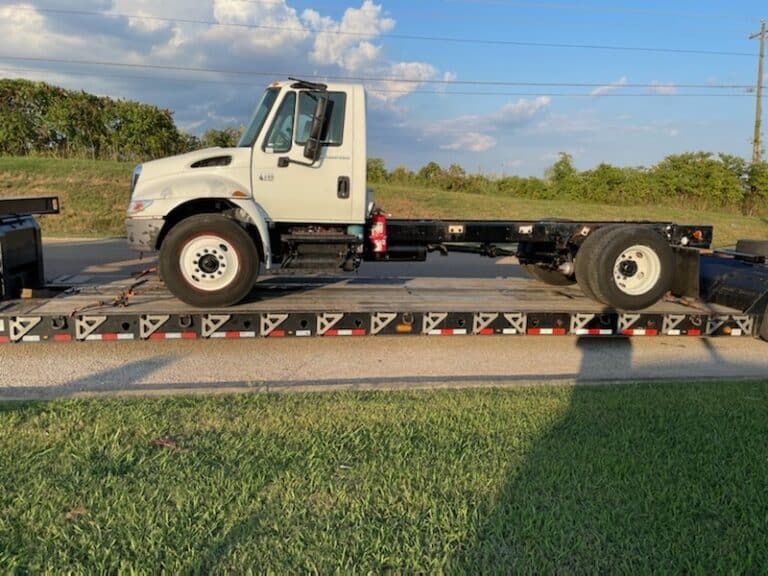
truck on a lowboy trailer

Transport Your Trailers Today

Heavy Equipment Transport is always available for a quote. Fill out the form or give us a call now! (888) 730-2951

Dimensions of Common Trailers Used in Trucking and Delivery Services

Flatbed Trailers

A flatbed trailer is quite common, mainly because of its versatility in hauling and delivery of large and heavy equipment such as agricultural, construction, and industrial commodities. It is highly versatile, with a flat, open deck, no roof or sides. This makes it one of the most valuable assets for shippers. Ideally, a flatbed trailer transports heavy cargo which is not delicate, perishable, or vulnerable to external elements such as extreme heat and precipitation as they are open and offer no protection to the shipment. The open deck makes a flatbed trailer quite flexible and especially when loading and offloading. However, loading cargo onto this trailer will require additional equipment such as cranes and forklifts. Flatbed trailers are 48-53 feet in length, with their standard dock height being 5 feet from the ground. Flatbeds transport cargo that does not exceed 48,000 pounds in weight and 8ft.6 inches in both height and length—but can be expanded to 11″. They are also other common sizes designed for various uses. They include 24, 40, 45, and 53 ft. flatbeds.

Step Deck Trailers

Also known as a drop deck trailer, a step-deck trailer is a piece of open deck hauling equipment designed with two deck levels- the upper (step) and the lower (main) deck. Ideally, the main deck will drop down after the tractor unit has been cleared. These trailers can haul taller shipments than flatbed trailers, as they are much closer to the ground. They also have ramps to facilitate safe and easy offloading and have proven safer for forklift pickup, given their short distance from the ground. You can use load levelers when you need to even out the main deck with the step deck. All the same, note that there are specific loads that cannot be loaded and shipped on a step-deck trailer even when load levelers are available. Unlike flatbed trailers, which can be loaded and unloaded from any side, step deck trailers can only be loaded or unloaded from the sides or the top. The main deck of a step-deck trailer is 3ft. 6 inches from the ground, while the step deck (top deck) is 4 feet from the ground. Step-deck trailers measure 53 feet in length—the step deck measure 10″ while the main deck measures 43″. This type of trailers is designed to transport cargo of height up to 10 feet, 2 inches before they are legally considered as over-dimensional.

Double Drop Trailer

If your load is too tall to ship on a step-deck trailer, a double-deck trailer can come in handy. A drop deck trailer will lower the center of gravity much more than a step-deck trailer facilitating easy transportation of extra tall cargo. It is, therefore, the best option if you plan on shipping an oversized shipment that is over 10 feet. Its main deck (the well) is in the middle. Like a step-deck trailer, a double-deck trailer can only be loaded and unloaded either from the top or side, but never from the rear. This trailer type measures 28-29 feet on the main (middle deck). If you are unsure of the best trailer type for your cargo, seeking the insights of heavy hauling experts would go a long way. A company such as Heavy Equipment Transport will guide you on how to customize your trailer with brilliant accessories and options that will make moving your shipment faster, fun, and trouble-free.
Three Types of Trailers for Heavy Equipment Transport

Three Types of Trailers for Heavy Equipment Transport

Heavy Equipment Transport Logo
Facebook
Twitter
LinkedIn

William Thomas / January 2021

Flatbed Trailer Transport

A flatbed trailer comes in different sizes ranging from 48 feet to 53 feet—though the most common is 48 feet. Standard flatbeds are designed to can tow heavy equipment that weighs to 48000 pounds. The maximum height and width for a flatbed is 8.5 feet. It is usually 60 inches from the ground.

When to Use Flatbed Trailer Trucking For Heavy Equipment Transport

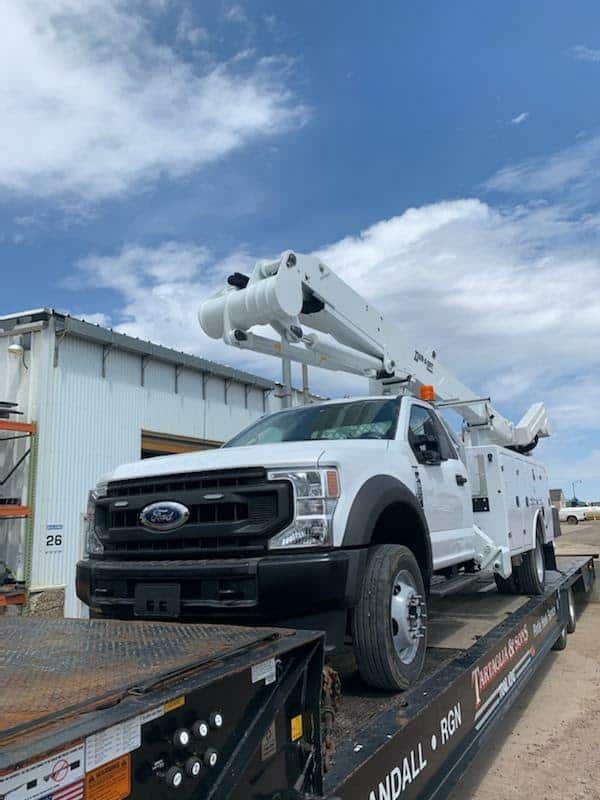
Ford utility truck on step deck trailer

Flatbed trailers are very versatile and, as such, are the most used types of trailers in the trucking and shipping industry. They can be used to transport different sizes of loads. Flatbed trailers are open from all sides, and this makes loading and offloading so easy. For instance, a crane can be used to pick the load from the top or a fork lifter from any of the sides. If you have an oversize cargo transport with an irregular shape and height, Heavy Equipment Transport has different flatbed trailers to seamlessly move your cargo from point A to point B. Since it is very open, we can secure your load with tarps, and tied own traps for safe delivery and protection against weather elements.

Advantages of Using a Flatbed Trailer for Delivery of Overweight Loads

  • • Since a flatbed trailer is open from all sides, it easy to work with when loading and offloading oversize loads or cargo with unique shapes. You don’t have to be scared of bumping into walls and causing damage. 
  •  
  • • Being an open-air trailer, a flatbed can be used to ship literally anything!
  •  
  • • Flatbeds tough and reliable for heavy trucking such as airplane parts and mobile homes.
  •  
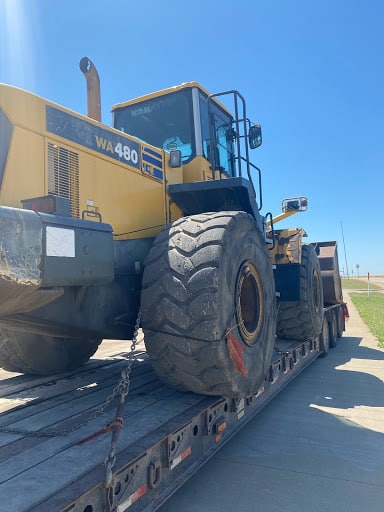
wheel loader on lowboy trailer

Transport Your Heavy Equipment Today

Heavy Equipment Transport is always available for a quote. Fill out the form or give us a call now! (888) 730-2951

Step Deck Trailer Transport

Step deck trailer carries up to 48000lbs. Its lower deck is 37 feet by 8.5 feet, while its upper deck is 11 feet by 8.5 feet. The lower deck’s maximum height is 10 feet, while that of the upper deck is 8.5 feet.

When to Move Your Cargo Using a Step Deck Trailer

Just as the name suggests, a step deck trailer has two deck levels: an upper deck and a lower deck. The main difference between step deck trailers and flatbed trailers is the maximum legal height it can carry. If the equipment you intend to move cannot fit on the flatbed trailer because of height, the step deck trailer is the next great option. A step deck trailer is closer to the ground, and as such, provides a few extra inches for taller loads.

Advantages of Step Deck Trailer Towing and Shipping

  • • You can place the cargo with a few extra inches lower down the step deck and save yourself the hassle of seeking height permits
  •  
  • • A step deck trailer is closer to the ground compared to a flatbed trailer, and forklifts can be used to quickly and safely load and offload them
  •  
  • • Step deck trailers can easily be loaded with large cargo because they are close to the ground. They are the perfect trailers for large loads.


When to Use a RGN for Heavy Equipment Towing

Moving large equipment is cumbersome. Additionally, you need height permits to truck tall loads. The RGN trailer has a dropped region in the middle known as the “well”. It is perfect for carrying taller objects. With this well, you save yourself the hassle of looking for height permits because they can fit there well without exceeding the legal maximum height that a standard trailer is permitted to haul. Besides, the front end of the Removable Gooseneck Trailer is detachable, which makes loading and offloading from either end fast and convenient—you can directly drive a massive piece of equipment such as a bulldozer into the trailer.

Benefits of Moving Tall and Oversize Cargo with RGN Trailers

  • • A Removable Gooseneck Trailer saves you time you could have otherwise spent when seeking for height permits to transport bigger equipment across interstates.
  •  
  • • With a RGN, you don’t need other large pieces of machinery to help load and unload the trailer since you can drive in the equipment you intend to tow.

Choosing The Best Trailer for Transport

When it comes to transporting heavy machinery, you need to work with the experts. Heavy Equipment Transport determines the best trailer to haul your equipment with ease. We are here any time you need to move heavy equipment, and our expert logistics agents will find the best shipping solutions to fit your needs. Let’s get started! (888) 730-2951