How to Choose the Right Equipment Trailer

How to Choose the Right Equipment Trailer

Heavy Equipment Transport Logo
Facebook
Twitter
LinkedIn

William Thomas / January 2021

Trailers are indispensable utility vehicles for hauling heavy and oversized loads. With many trailer types available, choosing the right one for your business operations or to ship your freight can be confusing. But what should you look for when looking for the best trailer? Read on to learn more about the details of determining the correct type of trailer for your equipment transport, the most common trailers for oversize load shipping, and the benefits of choosing the right trailer for equipment hauling.

Choosing The Right Trailer To Transport Your Heavy Equipment
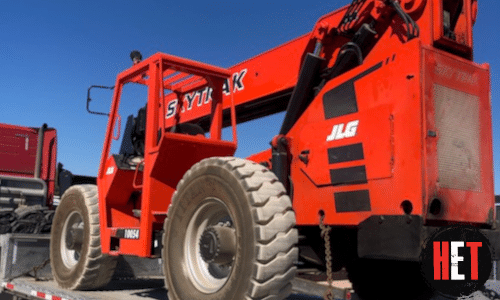
Transporting a 2016 JLG Sky Trak 10054 Telehandler

“The right trailer provides the required load capacity, stability, and safety features for seamless transportation of oversize loads.”

Trailers come in different types, each serving specific purposes. For instance, a trailer that ships liquefied loads differs from one that hauls heavy equipment like a combine. Here are key factors that determine the kind of trailer for equipment transport:

Load Capacity

Before choosing a trailer for your equipment:

  1. 1. Determine the maximum weight your trailer can carry.
  2. 2. Determine the weight of items you will be hauling and ensure the type of trailer you choose can transport them comfortably.
  3. 3. Check the weight restrictions on your towing equipment to avoid exceeding the maximum weight limit.

Trailer Size

Trailers come in different sizes. Before hauling your equipment, consider its dimensions and determine the best trailer.

Determine your Needs

Before purchasing a utility trailer, determine your needs to make more informed decisions. Start by identifying the primary purpose of your trailer and consider how often you will use it. For instance, a trailer used to ship construction materials differs from the one you can use to ship carnival equipment like amusement rides.

Deck Material

Equipment trailers come in different decks, including wooden and steel decks, and each has advantages. So, you choose one that aligns with your load capacity and durability needs.

Hitch Type

When choosing a trailer to haul your equipment, choose a hitch that matches your towing truck. For instance, if you are looking for a hitch type that offers stability for oversized and heavy loads, then RGN hitches are the best options. Bumper hitches are best suited for smaller equipment.

Quality

When buying a heavy equipment trailer, you should consider one of top quality to maximize efficiency. It would help if you researched more about different trailer manufacturers or providers to get the best quality trailer with heavy load-bearing capacity.

Transport Your Heavy Equipment Today

Heavy Equipment Transport is always available for a quote. Fill out the form or give us a call now! (888) 730-2951

What Are The Most Common Types Of Trailers for Oversize Load Shipping

Heavy-duty equipment trailers are used in industries, including manufacturing facilities, construction sites, and distribution centers. These trailers are categorized according to axle category, which includes 5, 6, 7, 8, 10, 13, and 19. Trailers with higher axle capacity can carry more load.

These trailers include:

Standard Flatbed Trailer

Standard flatbed trailers are common types of oversized load shipping trailers that carry heavy loads weighing up to 48,000 pounds and as long as 48 to 53 feet, depending on the length of the trailer. These trailers can be 48′ to 53′, depending on the trailer’s capacity, allowing them to carry equipment.

Step-Deck Trailer

Step-deck trailers are the same as flatbed trailers except that they have two deck heights. These are among the most popular trailers. The overall deck’s length is 43 to 53 feet, with the upper deck being 11 feet long and the lower deck measuring 37 to 41 feet.

Flatbed Spread Axle Trailer

A flatbed spread axle trailer is similar to a standard flatbed trailer, except they have different rear axles. These trailers have single axles spread apart at a more considerable distance than a standard flatbed with tandem axles.

Lowboy Trailer

Lowboy is a specially designed trailer to move overweight and over-height goods. These trailers are very close to the ground compared to other trailer types. They are mostly preferred for transporting tall machinery weighing between 40,000 and 80,000 pounds.

Other Types of Equipment Trailers

Other equipment trailers include:

  • • Drop Deck Trailer
  • • Landoll Trailer
  • • Conestoga Trailer
  • • Removable Goose Neck (RGN) Trailer
  • • Stretch Removable Gooseneck Trailer
  • • Extendable Drop-Deck Trailer
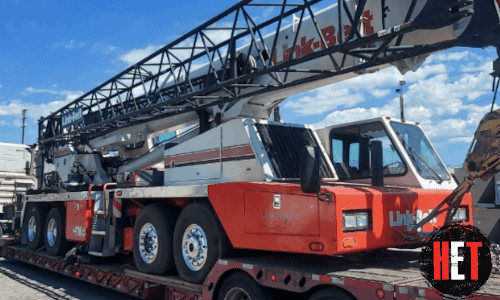
Transporting a crane on a lowboy trailer

Choosing the Right Trailer for Heavy Equipment Hauling Is Essential

Choosing the right trailer for equipment hauling is necessary to ensure a hitch-free hauling. The right trailer provides the required load capacity, stability, and safety features for seamless transportation of oversize loads. On the other hand, a wrong trailer can lead to equipment damage, legal issues, and safety hazards.

We understand the benefit of choosing the right equipment to haul heavy machinery at Heavy Equipment Transport. We also have various trailers with different axle capacities, ensuring your valuable equipment is shipped safely and efficiently.

William Thomas

William Thomas

Heavy Transport Specialist

Being able to lead a team of such talented logistics agents has been a wonderful experience over the past ten years. If you would like to know anything more about the heavy equipment transport services we offer, don't hesitate to give us a call!
4 Equipment Transport Trends for 2024

4 Equipment Transport Trends for 2024

Heavy Equipment Transport Logo
Facebook
Twitter
LinkedIn

William Thomas / January 2024

As we move into 2024, the transport industry is going through a period where it must be innovative and dependable! In 2023, the machinery and heavy equipment transportation sector experienced a change in speed never seen before.

This blog will focus on what major events occurred in the past and try to uncover visual clues about where heavy machinery transportation is headed over the coming months. It’s worth checking whether you’re at the top of this field or a novice.


A Recap of Heavy Equipment Shipping in 2023

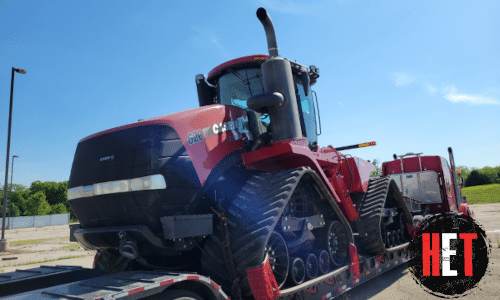
Case IH 620 Quadrac Tractor loaded for transport.

“The industry has seen increasing demand for transporting oversized loads such as heavy construction machines and other woods, but normal ones too.”

Before we set our sights on 2024, we must review what happened in the equipment hauling sector last year. In 2023, the industry has seen increasing demand for oversize loads such as heavy construction machines, other woods, and normal ones.

The growth of industrial sectors and rising demand for better equipment means a need to transport heavy machinery even further. This year, the hauling companies’ services brought more freight across America’s highways.

In addition to automobiles, they hauled all manner, from mobile homes that are 12 feet wide and 75 feet long, just above legal limits for width on highways, to a single, wingless fighter plane encompassed within four semi-trailers.

.

Key Highlights of 2023:

  • • Technology Integration: Using new tools like GPS and live watching changed; this made sending things faster and also kept costly items safe.
  • • Sustainability Initiatives: Today, many businesses are focusing more on the environment and using green practices. Many companies are changing their extensive equipment, moving fleets to electric or mixed models.
  • • Regulatory Challenges: Dealing with rules, especially for oversize loads, was still a significant problem. Businesses had to change fast with new regulations and standards so their supply chain didn’t get messed up.


Transport Your Equipment Today

Heavy Equipment Transport is always available for a quote. Fill out the form or give us a call now! (888) 730-2951

What To Expect From The Heavy Equipment Shipping Industry in 2024

Now, let’s discuss the future and what might change in 2024. Let’s examine what will happen in the area of moving equipment:

  • • AI and Automation Integration: Transporting equipment will soon become much easier due to the introduction of AI and automation technology. Predictive analytics can help improve route planning by minimizing delays and increasing fuel efficiency. Incorporating an automated loading and unloading system and autonomous vehicles will serve as an excellent basis for decreasing operational costs and increasing efficiency.
  • • Digitalization of Documentation: No more tedious paperwork for you. Digitalization will bring a massive change in the documentation field.
  • • Advanced Safety Measures: Advanced safety technologies are predicted to be more commonly implemented in 2024 to prioritize safety. These technologies provide cargo protection as well as improve overall safety during transportation.
  • • Sustainable Energy Adoption: The push for being environmentally friendly is growing stronger. By 2024, using other fuels and electric cars for transportation will become more popular.
  •  
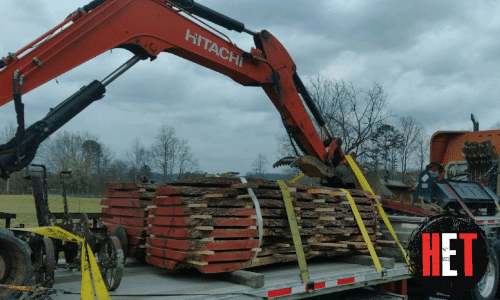
Hitachi excavator loaded for transport

Finding a Reliable Heavy Equipment Shipping Company

Selecting a proper equipment hauling company in the quick-moving industry is critical. As you prepare to navigate the intricacies of 2024, consider the following factors when choosing a partner:

  • • Experience and Expertise: Can you suggest a corporation with a history of shipping different types of goods? That experience is vital when dealing with large shipments and complex transportation.
  • • Technology Integration: Choose a business that is tech-friendly. Using technology in transportation ensures transparency and efficiency throughout the process, making it more convenient and efficient for all involved. This includes GPS tracking and digital documentation.
  • • Compliance and Safety: Ensure the company follows the rules and standards so everyone is safe.
  • • Environmental Initiatives: Inquire about their efforts to adopt eco-friendly practices and reduce carbon emissions.
  • • Customer Reviews and References: Exploring customer feedback and searching for recommendations is essential before agreeing. A business needs to have a good reputation and show its client base.
  • • Insurance: Verify the extent of insurance coverage for your equipment during transit, safeguarding against unforeseen events.
  •  

Reliable Heavy Machinery Transport

The truck-moving business is ready for change. The following year will be filled with surprises and considerable progress because of technology, dedication to saving the environment, and our ongoing work on fixing issues. When you ship equipment with a trustworthy partner, you can rest assured that everything will go smoothly. Therefore, here’s to a year of innovation and success in our field!


Heavy Equipment Transport provides transportation solutions for heavy machinery and machines. If you need a reliable equipment shipping company, call us.

William Thomas

William Thomas

Heavy Transport Specialist

Being able to lead a team of such talented logistics agents has been a wonderful experience over the past ten years. If you would like to know anything more about the heavy equipment transport services we offer, don't hesitate to give us a call!

When is Equipment Considered “Heavy”?

When is Equipment Considered “Heavy”?

Heavy Equipment Transport Logo
Facebook
Twitter
LinkedIn

William Thomas / January 2023

What does heavy equipment imply to you, and is its definition clear? Heavy equipment, according to the majority of today’s workforce, refers to heavy-duty vehicles intended primarily for construction and earthmoving jobs.

What makes things a bit ambiguous is that there are several terms used to characterize heavy equipment, including heavy machinery, heavy trucks, construction equipment, engineering equipment, heavy vehicles, and even heavy hydraulics. Regardless of the word you use, it comprises equipment such as:

● Wheel loaders
● Bulldozers
Excavators
Scrapers
Backhoes
Dump trucks
● Graders
Off-road forklifts

Nothing To Do With Weight or Size

Notably, the adjective “heavy” does not refer to the machine’s weight or size, but rather to the heavy-duty nature of the jobs it performs. For example, there is a vast difference in size and weight between a mining dump truck, a skid steer loader, and a small excavator, but they are all considered heavy equipment.

Crucially, the majority of today’s heavy equipment require at least some level of operating competence and training. In certain instances, certification is necessary for heavy equipment operators, which assists in reducing accidents.

Loading Heavy Equipment: Procedure and Tips

Heavy equipment haul

Safe equipment transportation begins with correct loading techniques for heavy equipment. Before transporting equipment, it is important to choose the right trailer or heavy-duty carrier for each machine. Conduct safety checks of the trailer, hauling vehicle, and equipment, and establish a securement system that is adequate.

You should follow the procedure below while loading heavy equipment to ensure the safety of your crew and equipment:

Determine Your Equipment’s Weight and Height

The first step in hauling heavy equipment is to determine the equipment’s dimensions and weight. Be sure to verify the actual height, width, and weight of your equipment to guide your other transportation decisions, since many DOT rules for cargo transportation are based on equipment size and weight.

Determine whether an Oversize or Overweight Permit is Needed

Some big or overweight equipment may require a transport permit. If you are moving a backhoe, dozer, dump truck, or other heavy pieces of equipment, check your state’s regulations to see whether or not a permit is required. The permit may also mandate that extra escort cars accompany the heavy carrier to inform other motorists of the load.

Heavy equipment transport

Transport Your Heavy Equipment Today

Heavy Equipment Transport is always available for a quote. Fill out the form or give us a call now! (888) 730-2951

Choose the Appropriate Trailer Size and Capacity

When selecting a trailer or heavy hauler to move your equipment, search for one with the appropriate carrying capacity. Remember to include the trailer’s weight when estimating the total weight your vehicle will be transporting. Determine the optimal location of the equipment on the trailer in order to equally spread the equipment’s weight.

Ensure that your trailer can handle the equipment’s height for safe passage under bridges and overpasses while transporting huge gear. On the majority of interstates, the FHWA mandates a minimum clearance height of 14 feet, but others need 16 feet. Choose a trailer that meets this height requirement, such as a lowboy or step-deck trailer.

Inspect Your Trailer

Before loading equipment onto your trailer, examine its anchor points to ensure that they are in excellent condition. Examine the machinery for any weak spots or evidence of deterioration that might undermine its security. Check the trailer for any debris that might get dislodged during transport and cause damage to other cars.

Load and Secure Your Equipment

Once you have picked your trailer, arranged for weight and height considerations, and inspected your transporter, it is time to load your equipment. The driver will load and secure your equipment in compliance with DOT rules if you are working with a heavy equipment transportation business. If you want to load your equipment into the trailer yourself, you must notify the heavy transport firm in advance and organize a time with the driver. After loading the equipment into the trailer, it must be fastened to the transport vehicle.

According to DOT requirements for transporting and securing heavy equipment, heavy equipment must be secured to prevent it from tipping, blowing, tumbling, sliding, or rolling off the transportation vehicle during travel. Equipment must also be incapable of shifting in a manner that compromises the trailer’s or heavy hauler’s mobility or stability. To adequately secure your equipment, you must select a securement system that meets DOT minimum force criteria.

Finding the Right Heavy Equipment Transport Company

Some businesses find it challenging to navigate the different rules and safety procedures required for shipping heavy equipment. Working with a proper heavy equipment transportation firm like Heavy Equipment Transport eliminates these risks and makes transportation of large equipment effortless. When hiring a hauler for your equipment, you should consider experience, flexibility, response time and insurance.

Conclusion

Whether you’re traveling a great distance or simply around the block, transporting heavy equipment is a challenging task. Proper loading and securement of equipment is necessary to safeguard expensive machinery, minimize penalties, and prevent accidents. Proper planning while transporting heavy machinery ensures compliance with regulations and reduces risks.

William Thomas

William Thomas

Heavy Transport Specialist

Being able to lead a team of such talented logistics agents has been a wonderful experience over the past ten years. If you would like to know anything more about the heavy equipment transport services we offer, don't hesitate to give us a call!