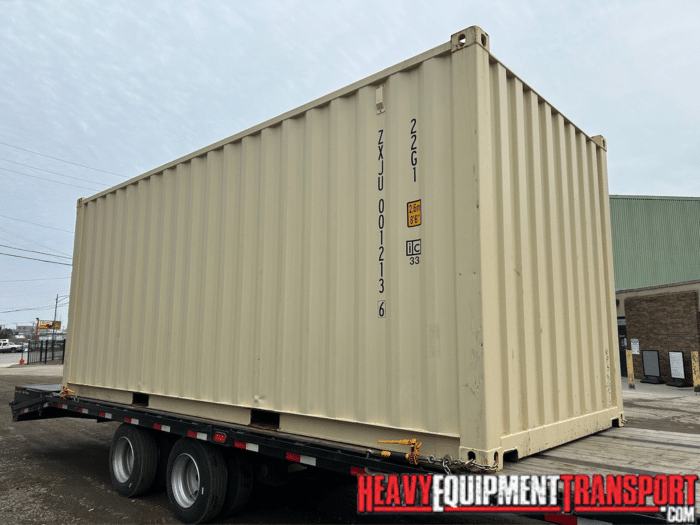
How to Move a Shipping Container

How to Move a Shipping Container

Heavy Equipment Transport Logo
Facebook
Twitter
LinkedIn

Francisca Olive / June 2023

Because of their longevity, adaptability, and low cost, shipping containers are becoming an increasingly attractive option for housing, transit, and storage purposes. Moving a shipping container can be challenging, especially if you do not have the appropriate equipment or skills. Several steps are involved in the moving process, from choosing the right equipment to preparing the container for transport. This article will provide a comprehensive guide on how to move a shipping container covering everything you need to know.

Moving a Shipping Container

Think about where you want to put your shipping container before you try to move it. Naturally, it needs to be in a location that is easily accessible for its use, whether that be in a public garden, on a construction site, or even in a nature preserve. You should also try to locate a spot that receives little to no direct sunlight and is shielded from the wind and rain as much as possible. Even though they were made to withstand the rough conditions at sea, the more protected they are, the longer they will last.

The land you plan to use must also be adequately prepared. If you’ve ever tried to use a chair and table on uneven ground, you’ll know why it’s essential that the area be leveled off first before the container is delivered. Also, ensure the land has a sturdy foundation by laying down cement, paving stones, or railway sleepers.

Methods of Moving Shipping Containers
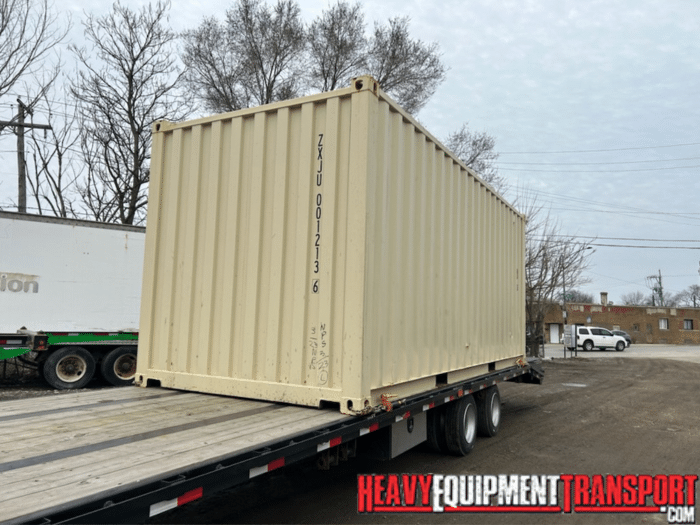
container haul

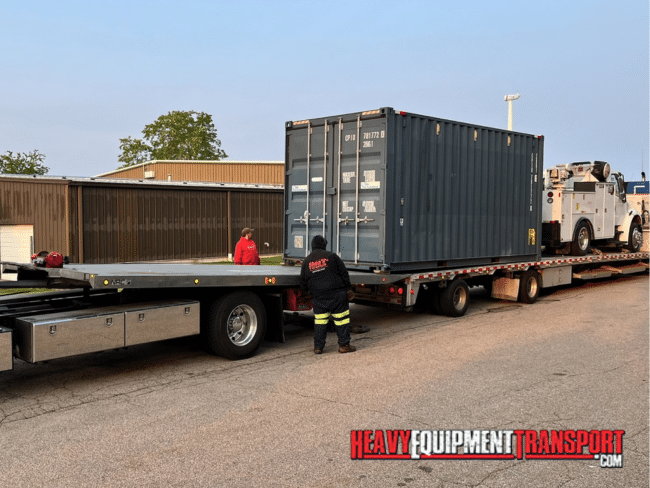
Trucks are the most popular method for transporting containers from one location to another. If you choose this option, think about the container’s size and how easy it will be to get it where it has to go. The secret is finding reliable shipping container movers who can advise you on the best mode of transport to ensure swift, secure, and timely delivery.

Tilt Bed Trailers

Tilt bed trailer transport is one of the most efficient and secure ways to move a shipping container, particularly when traveling less than 200 miles. Ensure the trailer has enough room to back up and the unloading area is clear so the container can side off during the unloading process. Furthermore, the soil must be dry, hard, and level. Tilt bed trailers have the advantage of allowing the driver to unload the container without the need for equipment like cranes or forklifts. Remember that your shipping container will be tipped at some point, and the contents may shift, so consider securing any items in the container before driving off.

Flatbed Trailers

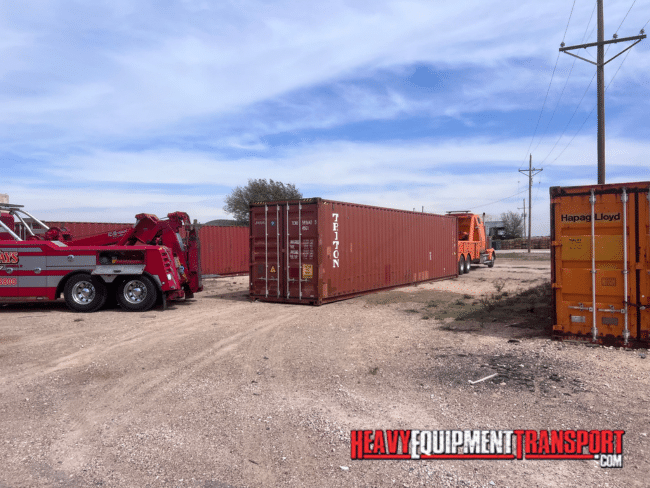
A flatbed trailer is your best bet if you need to transport your shipping container more than 200 miles. This is because the operating costs of a tilt bed trailer are higher than those of a flatbed trailer, especially when comparing the two on a per-mile basis. Thus, a flatbed trailer is the most economical choice for long-distance shipping of your containers. That being said, a flatbed trailer has no side walls. Therefore, a crane or forklift will be required to offload the shipping container from the trailer bed.
container haul

Transport Your Container Today

Heavy Equipment Transport is always available for a quote. Fill out the form or give us a call now! (888) 730-2951

Choosing Between a Crane or Forklift

Moving a Shipping Container Using a Forklift

Although your average forklift wouldn’t be able to handle the weight of a shipping container, there are special ones that can. Most compact forklifts aren’t wide enough to raise a shipping container without risking buckling or damaging the container, and they lack the lifting capacity to lift the container without assistance.

Because using a forklift involves putting all the weight or pressure of the shipping container on its center, it is quite easy to create an accident if you choose the wrong forklift. If you must use a forklift, ensure it can carry at least 15,000 pounds. This guarantees that the forklift’s arms are sufficiently large and sturdy to lift your container without causing any harm.

Cranes Are Better, but You’ll Need a License to Operate One

Although it is typically easier to load a shipping container onto the trailer or flatbed of a truck with the assistance of a crane, renting one can help you save time. Even if you transport the shipping container yourself, you will likely need to pay someone else to execute the crane lifting because cranes require special licenses or operators.

Think carefully about both options before making a decision.

Key Takeaway

Transporting a shipping container can seem daunting, but with proper planning and equipment, it can be done securely and swiftly. If you follow the guidelines provided above and consult an expert when necessary, you should be able to get your shipping container where it needs to go without incident.

William Thomas

William Thomas

Heavy Transport Specialist

Being able to lead a team of such talented logistics agents has been a wonderful experience over the past ten years. If you would like to know anything more about the heavy equipment transport services we offer, don't hesitate to give us a call!
How to Transport a Shipping Container Overseas

How to Transport a Shipping Container Overseas

Heavy Equipment Transport Logo
Facebook
Twitter
LinkedIn

Francisca Olive / May 2023

Transporting a container overseas requires specific logistics to get it done correctly. Working with a company that transports containers is your best bet, but it’s always good to know the details. Whether you need to ship your container from the U.S. to Mexico or haul it across the pond, we’ll provide you with the details to get it done right. 

Choosing The Right Shipping Container Size

20ft container haul

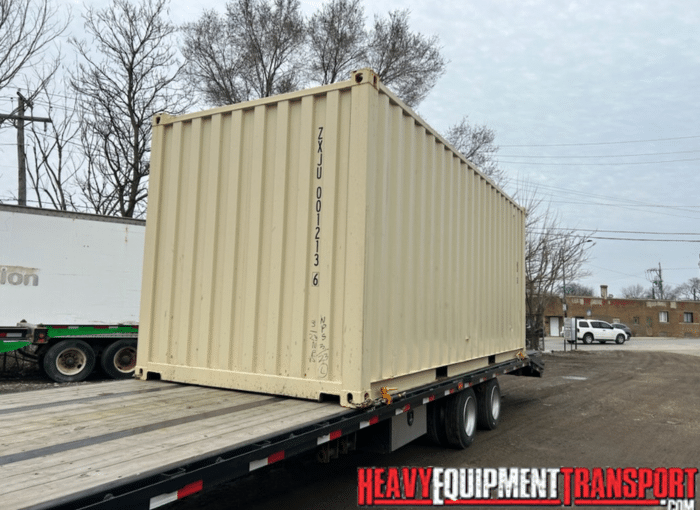
Like selecting a box size at the post office for domestic delivery, choosing the appropriate container size for your shipment is essential. These containers come in two main sizes (20-foot and 40-foot) and typically take up 20-50 feet of space. Although larger containers may cost more money, they also provide more space for packing your items securely. It’s also possible to ship an empty container if necessary.

Deciding Between FCL and LCL

In addition to container size, you should consider the load’s capacity relative to the chosen container. If you have a lot of things and can afford it, you should choose full container load (FCL). FCL means that your belongings will fill the entire container. Since the container contents belong to a single sender, this method is typically more convenient for you, the sender, and the shipping company.

If you want, however, you can go with less container load (LCL), which implies that your things will likely be sent together with the items of other senders within the same container. This is a fantastic alternative if you’re on a tighter budget or shipping a few things. Nevertheless, keep in mind that this method presents some logistical issues.

hauling a 20ft container

Transport Your Container Today

Heavy Equipment Transport is always available for a quote. Fill out the form or give us a call now! (888) 730-2951

Get an Estimate of How Much International Container Transport Will Cost

Moving a container overseas is still expensive, even if you take some measures to cut down on costs. Costs might go as high as $3,000, so prepare yourself.

Most shipping providers determine the exact cost for each client using the same criteria. To receive a rough price estimate, head to the shipping company’s website and fill out a quote form.

Below are some of the factors that generally affect the price:

➤ The size of the shipping container

➤ Weight of the shipment

➤ The volume, in addition to whether or not you have chosen LCL or FCL

➤ The distance to be traveled

➤ Month: When it comes to international shipping, peak seasons coincide with the summer months (August through September) and the time right after Chinese New Year

➤ The last port of call, which might include country-specific customs and service fees

➤ Loading and delivery method. You can choose between port-to-port, door-to-door, and drop-and-fill.

Loading The Container

Given the intricacies of transporting a shipping container overseas and how valuable your items are, it’s essential to know how to load a shipping container properly.

Shrink wrap is a great all-around packaging material for protecting fragile things like furniture during transport. You should also coat the inside of the container’s roof and walls with the moisture-absorbing paper if you want to store anything with high moisture content (for example, cocoa beans or unroasted coffee).

Also, all items containing liquids should be placed as low as possible in the container to lessen the risk of damage to other products from any potential leaks. In addition to ensuring everything is sealed correctly, you must ensure that the boxes and packaging materials you use are moisture-resistant.

Consider Custom Regulations

It’s crucial to be aware of customs laws in both the nation of origin, the United States, and the country where the product will be delivered.

For example, importing e-cigarettes into the United Kingdom may require further approval because of the country’s strict regulations on the sale and distribution of tobacco products.

You must have the proper customs forms for both countries to avoid delays. These forms ought to be stored with any other pertinent paperwork.

Weighing the Shipment

Next, check your shipment’s official weight. To get an accurate reading, you can either weigh everything packed within the container as a single unit using certified industrial scales or weigh each item individually and add the total weight to the weight of your container when empty.

Labelling The Container

Make sure to mark your packages correctly as instructed by the shipping company. The required labels, including port markings, gross and net weights, the customer identification code, and a few more, must be applied to the containers before transport. You should avoid revealing the contents of the container on the label to deter theft.

Check That All Shipping Documents Are In Order

Moving a container overseas requires a great deal of specialized paperwork, so the shipping company should work with you to complete this process. In addition to the bill of lading, the following documents are required for international container transport: (1) a certificate of origin, (2) an insurance certificate detailing the coverage you have selected for this shipment, and (3) a shipper’s export declaration form.

Key Takeaway

By understanding the different shipping methods, associated costs, necessary paperwork, and preparation tips, you can ensure that your container arrives at its destination safely and on time. Whether you are moving for personal or business reasons, following the steps outlined in this article will help make transporting a shipping container overseas much more manageable.

William Thomas

William Thomas

Heavy Transport Specialist

Being able to lead a team of such talented logistics agents has been a wonderful experience over the past ten years. If you would like to know anything more about the heavy equipment transport services we offer, don't hesitate to give us a call!