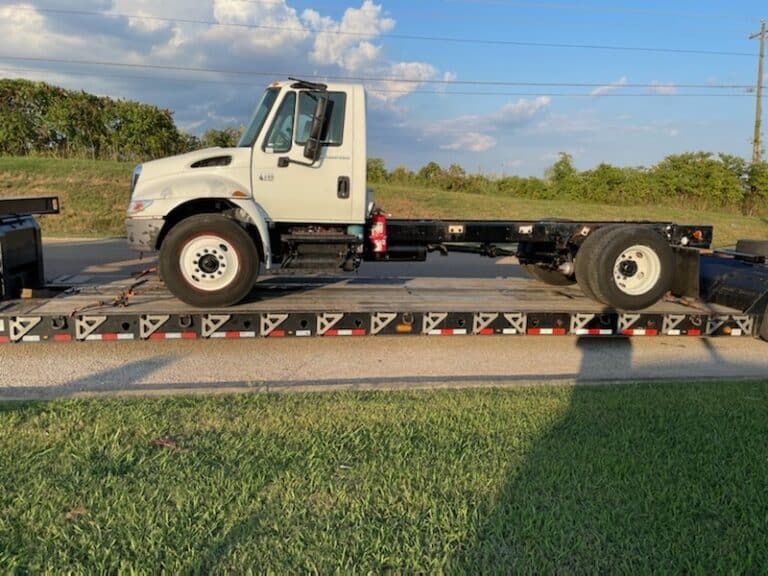
What is a Flatbed Trailer? Understanding Uses, Types, and Dimensions

William Thomas
Updated: October 31, 2025
The flatbed trailer is the workhorse of the freight world. It’s an open-deck platform built to haul the oversized, irregular, and awkward loads that standard enclosed trailers can’t handle.
It is the unsung hero of American industry. At Heavy Equipment Transport, we move everything from excavators to generators using a large fleet of flatbed trailers across the US and Canada.
We don’t simply move freight; we keep your business running on schedule and on budget with predictable delivery times, equipment-specific expertise, and clear communication built up over 13 years in the industry.
In this quick guide, we’ll walk through what a flatbed trailer is, the different types and dimensions, and how our team uses them to keep your business moving.
What Exactly Is a Flatbed Trailer?
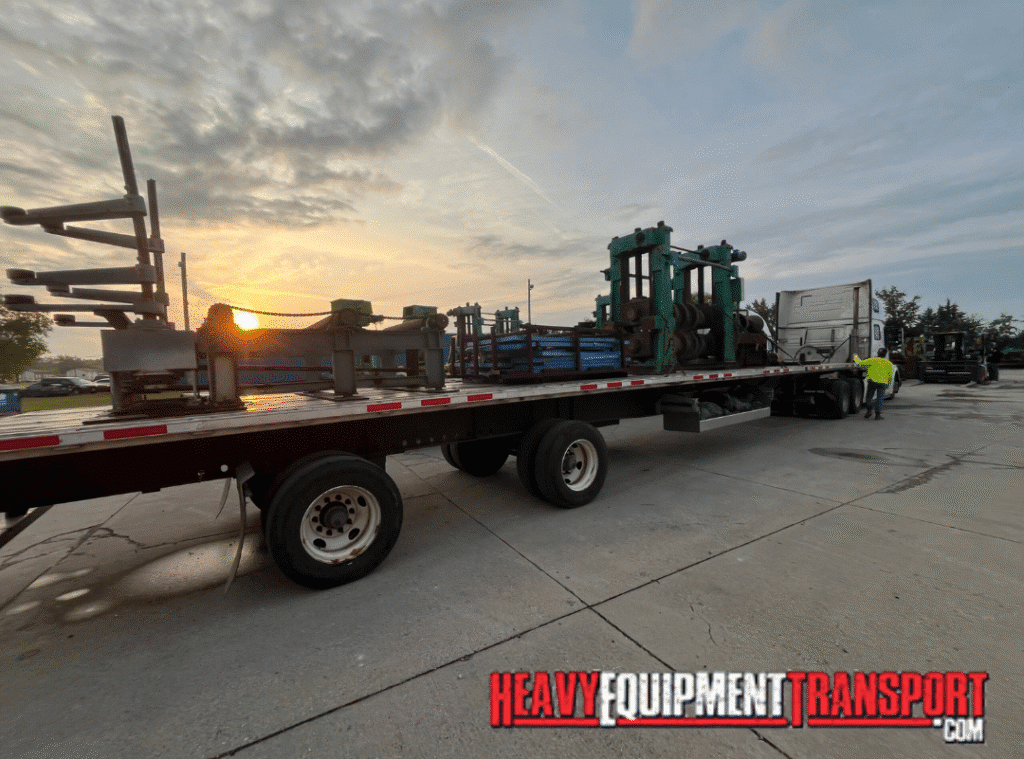
A flatbed trailer is a platform-style trailer without sides or a roof, designed to carry oversized or oddly shaped cargo. The open design makes it versatile, so it is ideal for machinery, building materials, and freight that wouldn’t fit in a standard dry van.
Typical flatbed cargo includes:
- • Construction materials like beams, lumber, and steel pipes.
- • Heavy machinery such as bulldozers, loaders, and tractors.
- • Large equipment that needs top, side, or rear loading and better access.
Advantages of flatbed trailers:
- • Open design allows loading from any side, which is faster, cheaper, and safer.
- • Handles non-standard shapes and equipment.
- • Enables faster loading/unloading with cranes or forklifts.
- • Perfect for industrial, construction, and agricultural freight.
At Heavy Equipment Transport, we use flatbeds daily because they simplify loading and cut turnaround time, letting crews focus on the job instead of struggling with the delivery.
Transport Your Equipment Today
Heavy Equipment Transport is always available for a quote. Fill out the form or give us a call now! (888) 730-2951
“Understanding flatbed trailer specs helps you match each job to the right piece of equipment.“
Key Benefits of Flatbed Trailer Transport
When your job depends on keeping operations moving, the benefits of flatbeds go far beyond their shape. They’re built for efficiency, accessibility, and reliability, which are crucial for everyone from regional logistics planners to the crews on the ground.
- • Accessibility: Flatbeds can be loaded from the top, side, or rear. So there’s no waiting for dock space.
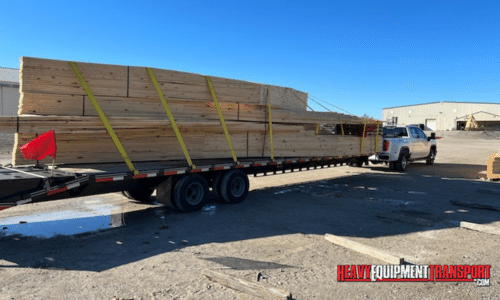
- • Flexibility: Ideal for everything from generators to girders. One trailer covers multiple job types, which saves time and money.
- • High Weight Capacity: Most flatbeds can handle up to 48,000 lbs, making them ideal for heavy machinery and substantial loads.
- • Reduced Loading Time: Less handling and repositioning mean faster turnarounds on-site.
- • Safety Options: Freight is secured using chains, straps, and binders rated for highway transport.
Whether you have to move a single bulldozer or a full mixed-load haul of construction equipment, Heavy Equipment Transport’s fleet is built for reliability, each and every time. Our drivers know exactly how to secure each load for safe transit, and we use the best equipment to take the best care of yours.
Flatbed Trailer Specifications and Dimensions
Understanding trailer specs helps you match each job to the right piece of equipment. Every inch and pound matters, for safety, regulatory compliance, and cost.
Specification
Standard Measurement
- • Length 48–53 feet
- • Width 8.5 feet (standard legal width)
- • Height Limit (freight) Up to 8.5 feet without permits
- • Maximum Freight Weight ~48,000 lbs
Choosing the right flatbed depends on:
- • Weight class of your equipment
- • Height clearance needs
- • Loading method (forklift, crane, ramp)
- • Fastening requirements
Heavy Equipment Transport handles the permits, route planning, and escort coordination for oversize dimensions. You tell us what you’re moving, we do the heavy lifting and take care of the rest.
Common Types of Flatbed Trailers
Standard Flatbed Trailer
This is the industry standard for construction materials, machinery, and almost everything that goes on almost all pallets. The flat and open deck makes it the go-to option for most heavy-duty loads.
Step Deck (Drop Deck) Trailer
Designed with two deck levels, giving extra clearance for taller freight while staying within legal height limits. Perfect for medium-sized excavators or agricultural equipment.
Double Drop Deck Trailer
This is designed for the heaviest, tallest and toughest machinery, from cranes through to transformers and industrial tanks. The lower center section provides crucial height clearance without special permits in some regions.
Extendable Flatbed Trailer
Ideal for long loads like steel beams, wind turbine components, or large machinery parts. Its adjustable frame keeps freight balanced, compliant, and safe on its journey.
Each type of trailer serves a specific purpose, and our dispatchers match the right one to your needs when they give you a personalized quote.
Types of Equipment Commonly Hauled on Flatbeds
Flatbeds serve virtually every heavy industry, from construction and energy to agriculture. Here’s a quick breakdown of the most common loads:
- • Construction Equipment: Dozers, excavators, loaders
- • Agricultural Equipment: Tractors, combines, sprayers
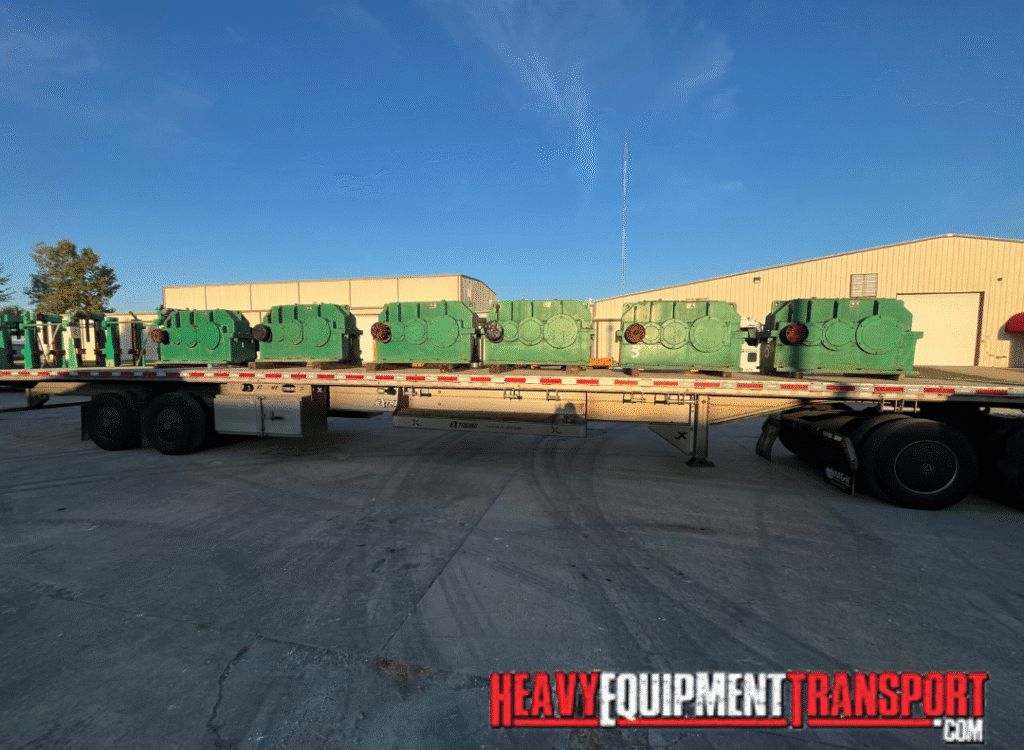
- • Energy Equipment: Generators, turbines, transformers
- • Industrial Machinery: Compressors, tanks, conveyors,
- • Forestry Equipment: Log loaders, skidders, feller bunchers
- • Building Materials: Steel beams, lumber, prefab concrete panels
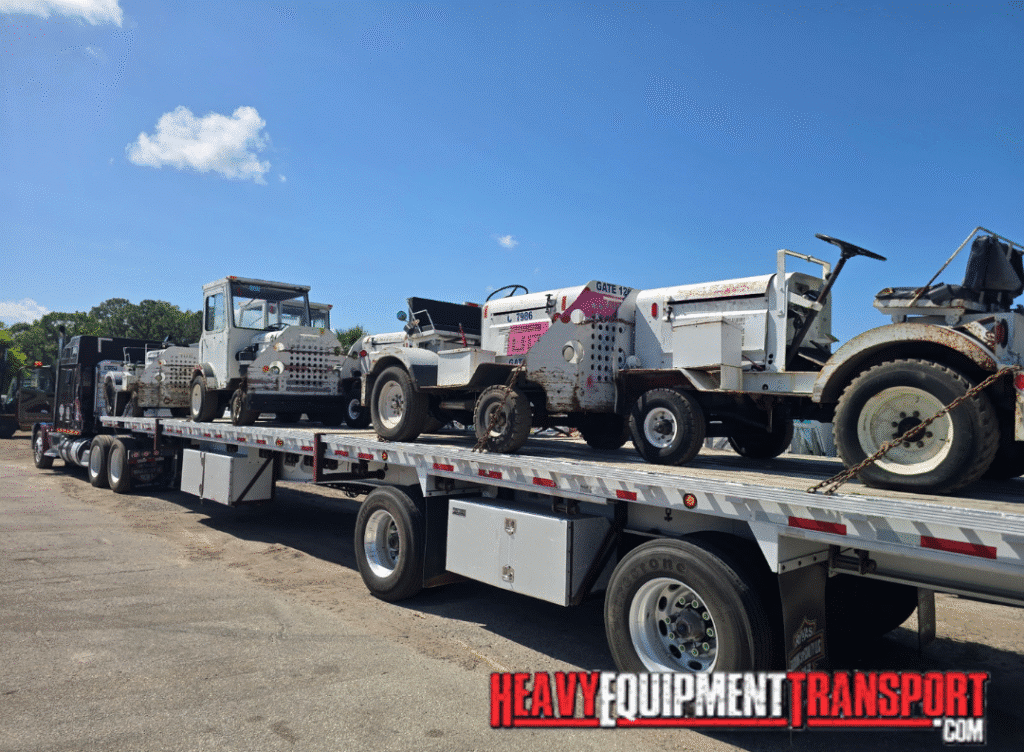
Every load is secured, protected, and insured. Our teams understand how each machine behaves under load, and how the types of load can affect that. You can rest assured that no load leaves without the proper tie-downs, blocking, and padding for transport.
Choosing the Right Flatbed for Your Equipment
Picking the right trailer prevents compliance headaches, delays, and damage, which all have an impact on the cost. Incorrect deck height or load configuration can result in hours of wasted time, rejected permits, and substantial financial costs.
Considerations when choosing a trailer:
- • Load dimensions and total weight
- • Loading method (crane, forklift, ramp)
- • Permit requirements for oversize loads
- • Route restrictions (bridges, height limits, state rules)
When you partner with Heavy Equipment Transport, our specialists run through the whole checklist with you, ensuring every move is legal, safe, and efficient. Our logistics experts put you on the right track, right from the start.
Why Choose Heavy Equipment Transport for Flatbed Hauling
Flatbed hauling isn’t just about trucks and trailers. It’s about planning, precision, reliability, and communication. Heavy Equipment Transport has spent more than a decade building a reputation for reliability in heavy logistics.
Here’s what sets us apart:
- • Permit-ready, route-cleared service across all 50 states and Canada
- • Dedicated logistics specialists who manage every move start to finish
- • Nationwide coverage with local expertise and support
- • Cross-border capability for US–Canada and US–Mexico freight
- • 24/7 customer updates and GPS-tracked shipments
When you need heavy equipment delivered safely and on time, our flatbed team is ready. Get a quote in minutes and speak with a real logistics expert — not a call center.
FAQ — Flatbed Trailer Transport with Heavy Equipment Transport
What are the standard dimensions of a flatbed trailer?
Most standard flatbeds measure 48 to 53 feet long, 8.5 feet wide, and can carry up to 48,000 lbs of freight.
What types of loads can be shipped on a flatbed?
Flatbeds are used for construction materials, machinery, agricultural, industrial, and energy equipment, or any cargo that can’t fit inside an enclosed trailer.
How is equipment secured during flatbed transport?
We use chains, straps, and edge protectors rated for heavy loads, along with load checks throughout the route by experienced drivers with years in the field.
When should I choose a step deck instead of a flatbed?
A step deck trailer is best when your load is taller than 8.5 feet and you want to avoid oversize permits.
Does Heavy Equipment Transport handle permits for oversize loads?
Yes. Our compliance team secures all permits and escorts for over-height, over-width, or overweight freight before dispatch.

William Thomas
Heavy Transport Specialist
Being able to lead a team of such talented logistics agents has been a wonderful experience over the past ten years. If you would like to know anything more about the heavy equipment transport services we offer, don't hesitate to give us a call!