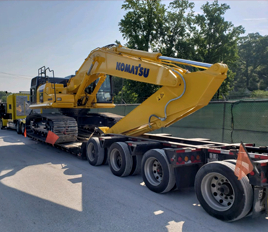
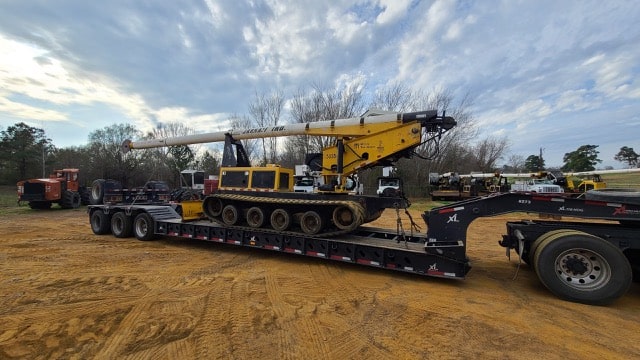
Understanding Legal Height and Weight Limits in Transport

Understanding Legal Height and Weight Limits in Transport

Heavy Equipment Transport Logo
Facebook
Twitter
LinkedIn


Moving heavy freight starts with the rules. When you know the legal height and weight limits in equipment transport, you can plan the right trailer, lane, and schedule. We build every move around those legal dimensions and axle limits, so your project stays on time and on budget.

Why Height and Weight Limits Matter in Freight Transport

“Noncompliance brings delays, fines, and damage risk you don’t need.”

Height and weight limits shape everything from the type of transport trailer choice to travel windows. They decide which roads are open, where turns are possible, and how bridges are crossed. Noncompliance brings delays, fines, and damage risk you don’t need. Our team confirms federal and state rules before pickup. We handle permits, escorts, and routing so your cargo moves safely and on schedule.
Transport Your Containers Today

Heavy Equipment Transport is always available for a quote. Fill out the form or give us a call now! (888) 730-2951

Why Height and Weight Limits Matter

These limits protect highways, bridges, and the public. They also protect your project plan. Staying compliant helps you avoid transport fines, impoundments, and denied routes. It keeps your insurance in play and reduces the chance of infrastructure damage. We bake compliance checks into every quote and dispatch plan.

Standard Legal Dimensions and Weight Limits (Without Permits)

Most states follow the same baseline for nonpermitted, open-deck moves. If your freight or equipment exceeds these legal dimensions or weights, you’re in oversize or overweight load territory and need permits.

  • Width: 8 ft 6 in, or 102 in.
  • Height: 13 ft 6 in.
  • Length: Ranges from 48 to 53 ft, depending on trailer type and state rules.
  • Single axle limit: 20,000 pounds.
  • Tandem axle limit: 34,000 pounds.
  • Gross vehicle weight limit: 80,000 pounds.

Any load over these marks needs approval from the state in the form of permits. We obtain these permits right away to prevent surprise violations.
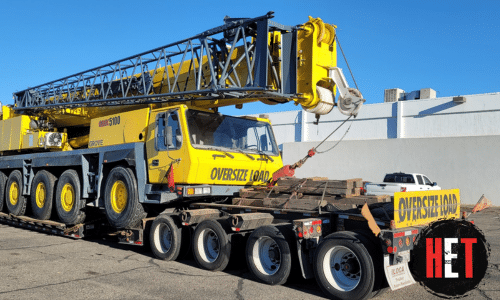
2015 Grove GMK 5100 Crane Truck loaded for transport

When a Load Becomes Oversize or Overweight

A shipment is oversize when it exceeds the legal dimensions above. A shipment is overweight when it exceeds 80,000 pounds gross or breaks axle group limits. Hitting either threshold changes how we plan the job.

Common examples of oversize or overweight loads include:

  • Construction cranes and bulldozers.
  • Industrial tanks, silos, and generators.
  • Wind turbine components.
  • Prefabricated bridge and steel sections.

We verify measurements and weight before dispatch. For multi-state routes, we apply for permits across all jurisdictions at the same time.

State-by-State Variations

Legal limits are similar, but state transport rules add layers. Time-of-day, holiday blocks, and escort thresholds change at each border. We maintain current rules for all 50 states and Canadian provinces.

Some variations include:

  • Texas permits allow heights up to 14 feet in many cases, with escorts once widths reach 17 feet or more.
  • California requires escorts for loads over 12 feet wide or 17 feet tall.
  • Michigan and Wisconsin frost laws reduce axle weights during spring thaw.
  • Florida restricts oversize movement on certain holidays and weekends.

Our routing accounts for these details so trucks don’t sit at state lines.
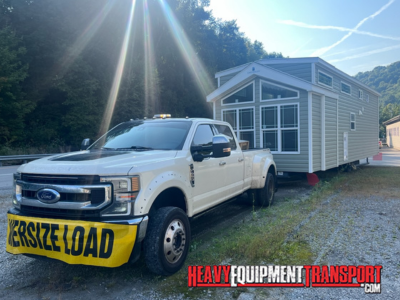
Tiny House transport

Consequences of Ignoring Legal Height and Weight Limits

Skipping the rules costs more than a fine. It risks your timeline and your equipment.

  • Texas permits allow heights up to 14 feet in many cases, with escorts once widths reach 17 feet or more.
  • Vehicle impoundment or forced offload on the shoulder.
  • Cargo damage and missed delivery windows.
  • Liability for roadway or bridge damage.
  • Project downtime and liquidated damages from contracts.

Why Choose Heavy Equipment Transport

We approach compliance like an engineering task. We verify dimensions, set up an axle plan, and design a route. We coordinate permits, escorts, and police when required. Our dispatch keeps you updated with clear ETAs and any restrictions ahead. You get a single point of contact who owns the move from quote to delivery.

FAQ — Legal Height and Weight Limits in Transport

1. What are the standard legal height and weight limits for freight transport?

Most open-deck moves without permits follow 8 ft 6 in width, 13 ft 6 in height, and up to 80,000 pounds gross, with 20,000 per single axle and 34,000 per tandem.

You need permits once you exceed legal dimensions or the gross and axle limits. That applies even if only one axle group is over.

We collect verified specs, then request all state permits together, aligned to a shared pickup date and lane plan to avoid timing gaps.

Yes. States set their own rules and thresholds, and trailer selection changes axle spacing and load distribution. We plan both at the same time.

We measure, weigh, and model the load. We pick the right trailer and axle configuration, secure permits and escorts, and map a route that meets legal limits and travel windows.

William Thomas

William Thomas

Heavy Transport Specialist

Being able to lead a team of such talented logistics agents has been a wonderful experience over the past ten years. If you would like to know anything more about the heavy equipment transport services we offer, don't hesitate to give us a call!

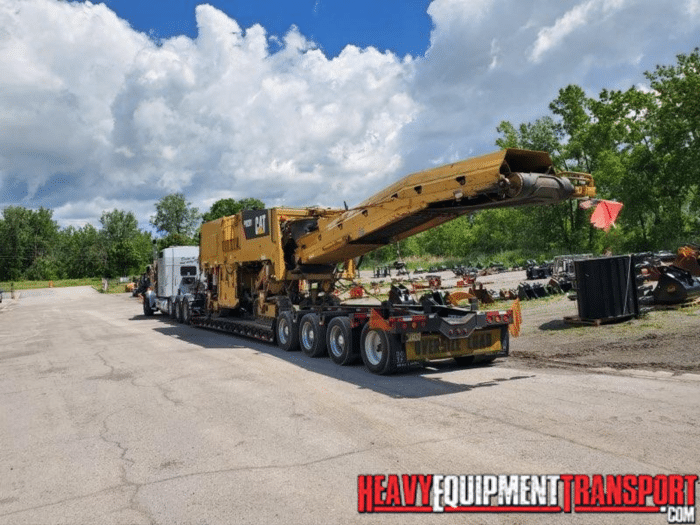
How to Transport an Oversize Load

How to Transport an Oversize Load

Heavy Equipment Transport Logo
Facebook
Twitter
LinkedIn


An oversize load is a shipment that exceeds legal limits for size and weight, requiring special planning, equipment and documentation. Because oversize loads often travel from one state to another, the paperwork is more involved and there are escort vehicles that handle the security of the shipment. The penalties for delivery delays, fines and damage incurred while transporting an oversize load does not come from poor driving; it comes from poor planning. This guide explains how to transport an oversize load and how professional carriers such as Heavy Equipment Transport measure, prepare and transport an oversize load safely and legally.

What is an Oversize Load?

Exceeding even one legal limit will require special oversize load transport permits.

Any freight that exceeds legal weight and dimensional parameters is considered an oversize load and requires special permits. Oversized load regulations protect public infrastructure, ensure the safety of drivers and eliminates risks of accidents caused by loads that are simply too wide, too tall or too heavy.

Legal parameters are usually defined as:

  • ● Width over 8 ft. 6 in. 
  • ● Height over 13 ft. 6 in. 
  • ● Length over 53 ft. (Trailer specific)
  • ● Weight more than 80,000 lbs. gross

Exceeding even one legal limit will require special oversize load transport permits. For example, weight limits may be specific to each state, but a shipment that exceeds weight limits but does not exceed width or height limits will still require a special oversize or overweight permit.

crane on trailer for transport

Transport Your Containers Today

Heavy Equipment Transport is always available for a quote. Fill out the form or give us a call now! (888) 730-2951

Step 1 - Measure the Load Accurately

Even slight errors in measuring height, width or weight will void a permit and delay your shipment. Every measurement must be taken multiple times, from the top of the equipment all the way down to when it is loaded onto the trailer.

Oversize Load Measurement Checklist:

  • ● Overall length of shipment including attachments
  • ● Overall width of the load (measured at its widest point)
  • ● Total height (once loaded on the trailer)
  • ● Gross weight and weight measurements specific to each axle
  • ● Take any special measurements for center of gravity if applicable

By measuring after the load has been placed on the trailer, Heavy Equipment Transport can verify that the permit dimensions are accurate for the load, escort and trailer, thus eliminating risk at every stage of transport.

Oversize load transported on a trailer.

Step 2 - Choose the Right Trailer Type

There are many different types of trailers on the market today. Some are only designed for loads that are moderately oversize while others are designed for extremely heavy loads with precise weight and size specifications. Using an incorrect trailer type can result in a load that won’t fit upon delivery or dimensions that don’t comply with permit requirements. 


1. Flatbed Trailers  – for moderately oversize loads that exceed width or height limits


2. Step Deck Trailers – for loads sensitive to height


3. RGN or Low Boy trailer – for heavy and tall equipment such as bulldozers or cranes
Specialized trailers – for irregularly shaped loads

4. Specialized trailers – for irregularly shaped loads

Trailer selection relates back to route selection because the height and width of bridges and roads may vary and impact delivery. Heavy Equipment Transport assigns every load to the correct trailer type, ensuring safe passage from pick-up to delivery.

Step 3 - Obtain Oversize Load Permits

Each state is different, and getting it wrong is costly. There are oversize load permits for dimensions, trailer types, and even the specific route and time of passage. Given the complexity and tight schedule, most shippers leave this up to the professionals.

Important considerations include:

  • ● State-specific permits – all states can issue you tickets
  • ● Multi-state load – permit must ‘travel’ with load
  • ● Processing times – the permits will take time to process
  • ● Time-sensitive – permits may not allow travel on certain days

Checklist: Permits Information That Must Be Consistent With Load

  • ● Exact dimensions
  • ● Trailer type
  • ● Valid Route
  • ● Timing
  • ● Escort requirements

Due to the complexities of permits, many shippers leave this up to the carrier. Heavy Equipment Transport does all permits in-house, ensuring process control and avoiding delays.

Step 4 - Route and Escort Car Planning

Oversize loads cannot use any route. They have to avoid low bridges, road construction, weight-restricted roads, and they may only travel at certain times of the day. Some loads will require pilot cars to control the flow of traffic while the load is on the road. Proper coordination will save time and avoid delays.

Important items to consider:

  • Bridge heights
  • Road construction
  • Weight restrictions on roads
  • Urban/Rural challenges
  • Time of day restrictions

Pilot cars may be required for wide load transport, and police escorts may be necessary. Heavy Equipment Transport plans all escort arrangements for our loads so that you are compliant with pilot car requirements.

oversize load haul

Step 5 - Prepare Load For Delivery

Unlike standard freight loads, oversized loads require a lot of staging. A missed detail can mean pick-up is impossible or cause significant delays. The shipper must ensure all equipment is available, all attachments are secured, and proper equipment is present before the truck arrives. The carrier must also communicate correctly to handle the load while in transit and provide updates.

Checklist: Prep Oversize Load for Pickup:

  • ● Equipment is staged and accessible
  • ● Attachments have been secured or removed
  • ● Loading equipment (if needed) is confirmed
  • ● Access to the site has been coordinated
  • ● Proper phone numbers have been exchanged

Heavy Equipment Transport keeps in contact with our clients while the load is in transit. We have real-time tracking so that you know where your shipment is at all times.

Step 6 - Delivery, Offloading, and Documentation

Deliveries are the final step in transporting an oversize load. Like pick-ups, they require planning. The shipper must ensure delivery access and offloading needs have been coordinated before the load arrives. The carrier also requires communication to inspect the load before being offloaded fully. Documentation ensures accountability in the delivery process.

Checklist: Prep For Delivery:

  • ● Checklist: Prep For Delivery
  • ● Offloading equipment has been staged before arrival
  • ● Final inspection of load (to note any damage) has occurred before offloading
  • ● Delivery Proof (BOL) is provided to the shipper

Heavy Equipment Transport meticulously handles this process, ensuring your load is documented and delivered legally.

Common Oversize Load Mistakes

Even the most experienced shippers make oversize load mistakes. The dimensions of the load can be guessed, permits can be ordered late, and escort requirements can be neglected. The wrong trailer can be selected and route difficulties can be underestimated.

Don’t make the following oversize load mistakes:

  • ● Guessing dimensions of the load
  • ● Late order of permits
  • ● Selection of the wrong trailer
  • ● Ignoring escort requirements
  • ● Underestimation of route challenges

All of these mistakes delay shipments and can be costly. These errors can be avoided altogether with Heavy Equipment Transport and professional handling of your load.

When Should I Hire a Professional Oversize Load Carrier?

When hauling oversize loads interstate becomes complex, timelines are tight, permits are difficult to manage, or escorts are required, a professional oversize load carrier is mandatory. Heavy Equipment Transport simplifies oversize load transport by handling:

  • ● Permits
  • ● Trailer selection
  • ● Escort coordination
  • ● Communication

Getting any of these steps wrong will mess up your delivery timelines and could led to downtime. Heavy Equipment Transport’s expert team takes all the guess work out of oversized haulage and gets those large loads where they need to be  with no fuss.

How Does Heavy Equipment Transport Make Oversize Load Shipping Easier?

Heavy Equipment Transport specializes in the business of oversized equipment hauling, avoiding errors by handling:

  • ● Permit and route plan services provided in-house
  • ● Load-matched trailers
  • ● Coordination of escorts
  • ● Dedicated transport specialist
  • Cross-country and cross-border transport capability

With all oversize load regulations expertly handled, Heavy Equipment Transport ensures your oversize load arrives punctually and legally. 

Ready to get started? Haul your oversize load today! Get your free, no-obligation quote now! 

FAQ

What makes a shipment an oversize load?

A shipment is classified as an oversize load when its dimensions exceed state limits for height, width, length or the weight of the vehicle. A bulldozer that is ten feet wide or a crane that is over 14 feet tall will be classified as an oversize load. Only one measurement is needed to make a shipment an oversize load.

Oversize permits are granted when loads exceed legal measurements for transport vehicles. Overweight permits are issued when a load exceeds a gross weight of 80,000 pounds. 

Yes. Oversize load regulations are managed state by state and permits must be issued to each and every jurisdiction you pass through. Multi-state shipments can become complex but Heavy Equipment Transport makes it simple for you.

Flatbed trailers can be used for modestly oversized loads but step decks are better for loads that are tall. Lowboys or RGNs are best for taller and heavier loads while specially fitted trailers are required for extremely oversized loads. 

Pilot cars are required when loads exceed certain width or length thresholds, which vary by state. Escorts help warn other drivers, guide the truck, and ensure compliance with regulations. Heavy Equipment Transport arranges all escort vehicles as part of its service.

William Thomas

William Thomas

Heavy Transport Specialist

Being able to lead a team of such talented logistics agents has been a wonderful experience over the past ten years. If you would like to know anything more about the heavy equipment transport services we offer, don't hesitate to give us a call!
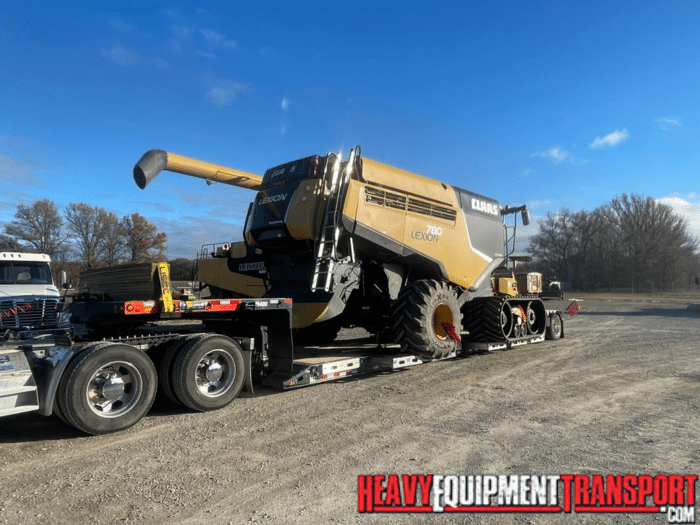
Wide Load vs. Oversize Load: What’s The Difference?

Wide Load vs. Oversize Load: What's The Difference?

Heavy Equipment Transport Logo
Facebook
Twitter
LinkedIn

Francisca Olive / May 2023

Standard shipping containers handle a wide range of items. However, some equipment and parts cannot fit into a shipping container, so they are considered wide loads and oversized loads. Federal and state regulations guide trucking guidelines; therefore, it’s important to understand what constitutes a wide and oversized load. The key differences between these loads ensure you can legally ship material and avoid penalties.

What is a Wide Load?

crane on trailer for transport

A wide load is typically any load that exceeds the maximum legal width limit for highway travel. Any load that exceeds 8.5 feet (2.6 meters) wide but fulfills the other legal limits of height and weight is considered a wide load. The specific maximum width limit varies in each state.

These loads require special permits and are only allowed on specific routes pre-approved by the relevant authorities. Each state sets guidelines and restrictions for shipping wide loads, so if you have to cross through multiple states, you need clearance or a permit for each. Due to their dimensions, wide loads are often transported using specialized equipment like a flatbed trailer.

Some examples of wide loads include mobile homes, construction equipment such as bulldozers and big dump trucks, trucks, boats, and agricultural equipment such as harvesters, threshers, and bailers.

oversize load haul

Transport Your Load Today

Heavy Equipment Transport is always available for a quote. Fill out the form or give us a call now! (888) 730-2951

What is an Oversized Load?

An oversized load is any load that exceeds the maximum legal height, weight, length, and width limit of 8.5 feet wide, 53 feet long, 13.5 feet tall, and 80,000 pounds. This criterion differs in every state, and you require a special permit adhering to safety regulations ensuring you aren’t posing a risk to other drivers on the road.

Examples of oversize loads include manufacturing equipment such as assembly lines and conveyors, construction materials such as steel beams and pipes, agricultural equipment such as tractors, prefabricated homes, and construction equipment such as storage tanks and cranes.

Differences between wide loads and oversize loads

Often, the terms wide load and oversize loads are used interchangeably. However, there are some key differences.

Size specifications: Wide loads specifically cater to loads that exceed the maximum legal width limit, while oversize loads refer to loads that exceed the maximum legal size limits, including width, length, and height.

Mode of transport: Wide loads are transported using specialized equipment such as flatbed trailers, while oversize loads can be shipped using standard trailers and trucks.

Routes: Oversize loads can be allowed on any route. They also require permits and sometimes escorts. Wide loads, on the other hand, are allowed only on specific routes that have been pre-approved by authorities.

Types of loads: Wide loads tend to be wider and flatter. They also require different handling techniques than oversize loads. Oversize loads vary in shape and size more than wide loads. These loads also require specialized handling techniques and equipment, such as cranes and trailers.

Safety regulations: Wide loads require specific safety regulations, including proper signage and lighting. They also have restrictions on load speed and the number of escort vehicles needed. Oversize loads, on the other hand, may include restrictions on time of travel and safety measures such as road closures and police escorts.

What to Consider When Shipping wide and Oversize Loads

Determining the legal hurdles and proper logistics when shipping your parts or materials is crucial. Here are some factors to consider:

Special permits

Use a permitting service or contact each state’s permitting agency to acquire the right permits for your route. Failure to comply with special permits, follow approved routes or travel during allocated times can cost thousands in fines.

Travel times

Travel times vary depending on the state and sometimes town or community. Some states have a time restriction for when oversize loads can travel, limiting road use to nights, weekends, and holidays.

Pilot Vehicles

In some states, escort vehicles are required to ensure the safety of other road users. The cars provide a barrier for protection and alert other drivers of the wide load. For some states, pilot cars are necessary for all wide loads, while for others, pilot cars are necessary only for loads wider than 12 feet wide.

Key Takeaway

Transporting wide and oversize loads can be complex. Understanding their differences is essential for logistics, safety, legal compliance, and cost management. It also helps minimize risks and costs associated with transporting these types of loads.

William Thomas

William Thomas

Heavy Transport Specialist

Being able to lead a team of such talented logistics agents has been a wonderful experience over the past ten years. If you would like to know anything more about the heavy equipment transport services we offer, don't hesitate to give us a call!
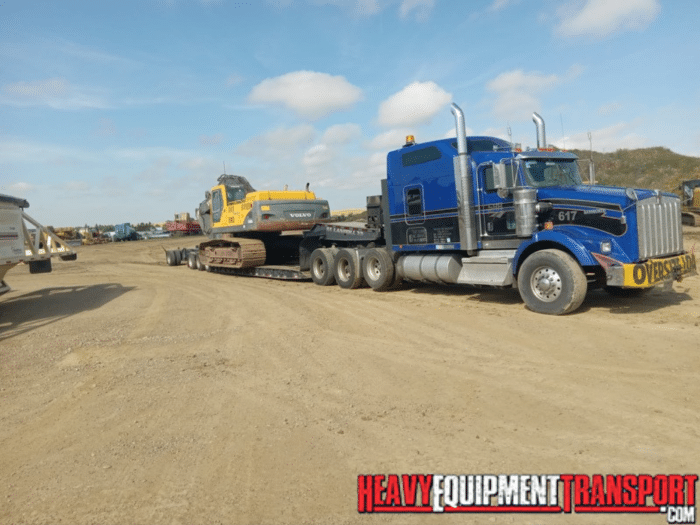
What is an Oversize Load in Trucking?

What is an Oversize Load in Trucking?

Heavy Equipment Transport Logo
Facebook
Twitter
LinkedIn

William Thomas / January 2021

What is an Oversize Load in Trucking?

An oversize load in transport is any load that exceeds the maximum legal dimensions and weight. Each state usually defines the weight and size limits in North America and Mexico, or province in Canada. Technically, each state has a varied definition of what an oversize load means. For trucking companies that deliver heavy equipment, oversize loads are a common occurrence as they haul loads through different highways. Since the term oversize is relative and the drivers are subjected to varying regulations as they pass across different states and provinces, it’s imperative for a trucking company to have accurate information about oversize load restrictions and the requirements to comply with before embarking on a towing and delivery process.

A trucking vehicle moving an oversize load is usually a semi truck with a specialty trailer, such as an RGN or lowboy. Even though oversize load dimensions may vary significantly across different states, legal width in most states is 8 ft. 6 in. and a height not taller than 14 ft. 6 in. Any loads exceeding these measurements are, by definition, oversize loads. Legal width and height have a small margin, as they are usually based on the standard width of major highways (typically 12 feet across all state highways). The length is the most variable dimension, and it is usually based on the type of trailer a trucking company is using. California trucking regulations, for example, any load exceeding 40 ft. for a single axle trailer, or 75 ft. for a multiple axle trailer is an oversize load and requires an oversize permit. See California Vehicle Code section 35250, section 35100 for dimension limits, and section 3550 for weight per axle limits.

Oversize Load Regulation for Heavy Equipment Trucking Services

When a transport vehicle carries a load that exceeds either the legal length, width, height, or all of the legal dimensions, then the driver will be required to have an oversize permit. This permit defines the natures of the load, it’s dimensions, its point of origin, and where it’s being delivered. Before the truck hits the road to deliver the heavy equipment, the towing company is required to secure separate permits for every state that the shipment will be traveling through.

Depending on the state, any heavy hauling truck carrying a load that exceeds 10 ft. may be required to have one or two escort (or pilot) cars. The primary purpose of pilot cars is to offer protection to both the overload truck and other road users. The escort car moving in front of a wide load vehicle alerts other motorists of an incoming wide load as well as informing the truck driver of incoming traffic, presence of turns, and when it’s safe to switch lanes. While moving across an area that may be dangerous to the oversize truck or other motorists, pilot cars are authorized to temporarily halt traffic and guide the truck driver to navigate to their destination safely.

Tree trimmer on RGN trailer for transport

Transport Your Oversize Load Today

Heavy Equipment Transport is always available for a quote. Fill out the form or give us a call now! (888) 730-2951

How to Prepare an Oversize Load for Trucking

Before hitting the road for a heavy equipment delivery within a state or across state borders, it’s advisable to ensure that your load meets all laws and regulations. In addition to acquiring necessary permits and pilot cars, most states require an oversize vehicle to have extra safety measures and equipment. For instance, most states require the front and the back of an oversize load to have a yellow banner with the words “OVERSIZE LOAD / WIDE LOAD” accompanied by other safety indicators such as rotating lights and flags attached on a specified location.

Moving an oversize load may be quite challenging. Still, more often than not, it’s the most efficient alternative to towing heavy equipment from the point of origin to the desired delivery location. As seen, there are many laws and restrictions that have to be met for smooth trucking of oversize loads. Since the restrictions are not uniform across all states and provinces, adequate planning from an informed point of view is essential. Luckily, Heavy Equipment Transport has a team of seasoned logistic experts who will help you ensure your oversize loads are legal and safe.

Common Examples of Heavy Equipment Termed as Oversize

  • Cargo Handling E.G. Cranes and Forklifts.
  • Mobile Homes
  • Aircraft,
  • Tankers,
  • Earthmoving Equipment Such as Excavators
  • Industrial Equipment Such as Generators, Mining Equipment, Piping, Turbines, Pressure Vessels, Compressors, and Many More.
  • Oilfield Equipment
  • Military Equipment, Etc.
  •