A DIVISION OF NATIONWIDE TRANSPORT SERVICES

(888) 730-2951

Blog

Tractor Trailer Axle Weights

Speak with a transport pro
Heavy Equipment Transport Logo

No Compromises. Full Results.

Speak with a logistics expert - we'll handle
your transport from A to Z.

Tractor Trailer Axle Weights

Renan 8 min read | Published July 12, 2022 | Updated July 21, 2026
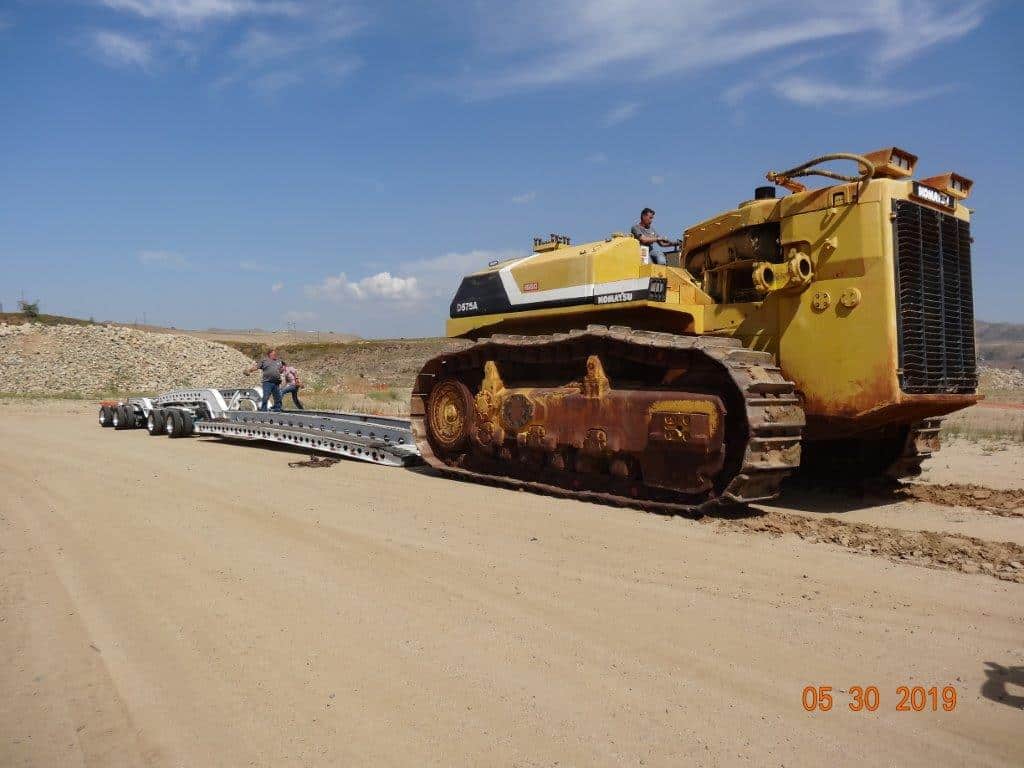
crawler dozer being loaded on trailer

Article Contents

When you’re moving something with a large trailer, there are rules that determine exactly how much weight per axle is allowed, both on a state and federal level. This is to help keep everyone safe and to protect the infrastructure that trucks and trailers drive on. To help you understand what the regulations are and how to better manage heavy shipping, this guide will walk you through the federal and state regulations for tractor trailer axle weights.

The Federal Formula Governing Tractor Trailer Axle Weights In Towing Industry

The Federal Highway Administration devised a formula called the bridge formula that defines the maximum load weight that a trailer with a given set of axles can carry when driving through interstate highways and major road routes in North America.  This formula was enacted to limit the weight to length ratio of a loaded trailer and truck towing a load across a bridge to reduce the toll on the infrastructure and ensure that the bridge can handle the truck’s load. The rule focuses on how closely spaced the axles are because the closer the axles are to each other, the higher the stress exerted on a road or bridge. By spreading the axles out, trucks can put less pressure on the national infrastructure. Another option is the trailer having additional axles.

The bridge formula uses these variables: The overall gross weight on a set of two pairs or more consecutive axles, the number of axles, and the length (in ft.) between a set of two axles and the outer axle. With the bridge formula, you can use the dimensions, and gross weight of your trailer, to determine the weight limit compliance of a single or multiple axle trailer. 

This is the formula:

W=500(LN/N-1 + 12N + 36)

W stands for the overall gross weight on two or more consecutive axles. L is the distance between the groups of axles. And N is the number of axles in the grouping. When you put all of these variables together, you can determine exactly how much weight is on each axle group in your truck or trailer. 

Here are the weight restrictions to compare against once you determine the W value:

• 20,000 lbs for a single axle trailer

• 34,000 lbs for trailers with tandem axles spaced between 40 to 90 in

• 80,000 lbs for the gross weight of a multiple axle trailer


However, the bridge formula isn’t the only tractor trailer axle weight restriction. There may also be state laws that adjust what’s allowed in that particular area, and it could differ from the federal bridge formula.

Heavy Equipment Transport Logo

Let Us Handle Your
Heavy Equipment Shipment

We've got the know-how and the haul power to get it done right.

Call now to speak directly with a transport expert — no waiting, no guesswork.

States Tractor Trailer Axle Weights Limits Regulations In Heavy Trucking

As mentioned above, all trucks towing heavy equipment on the interstate roadways must adhere to the federal bridge formula. Even though the federal government does not have the mandate to issue permits, any load that exceeds weight limits under the bridge formula must be issued with overweight permits. Since the federal government has allowed the states and provinces to enact their own set of regulations and restrictions, you need to find out the axle weight limits for each state so that you can plan well on distributing your load weight while trucking through each state’s highways.

For instance, for a single axle trailer, a weight limit of 25,000 lbs. is permitted when crossing Texas highways. Luckily, our logistics team at Heavy Equipment Transport knows each state and province laws and are ready to help you move your heavy equipment anywhere across North America, Mexico, and Canada.

Here’s a chart that breaks down the general rules for each of the 50 states.

StateSingle AxleDouble AxleGross Weight
Alabama20,000 lbs.34,000 lbs.80,000 lbs.
Alaska20,000 lbs.38,000 lbs.Per FBF
Arizona20,000 lbs.34,000 lbs.80,000 lbs.
Arkansas20,000 lbs.34,000 lbs.80,000 lbs.
California20,000 lbs.34,000 lbs.80,000 lbs.
Colorado20,000 lbs.36,000 lbs.80,000 lbs.
Connecticut22,000 lbs.36,000 lbs.80,000 lbs.
Delaware20,000 lbs.34,000 lbs.80,000 lbs.
District of Columbia21,000 lbs.37,000 lbs.79,000 lbs.
Florida20,000 lbs.40,000 lbs.80,000 lbs.
Georgia20,340 lbs.34,000 lbs.80,000 lbs.
Hawaii22,500 lbs.34,000 lbs.80,000 lbs.
Mississippi20,000 lbs.34,000 lbs.80,000 lbs.
Missouri20,000 lbs.34,000 lbs.80,000 lbs.
Idaho20,000 lbs.34,000 lbs.80,000 lbs.
Illinois20,000 lbs.34,000 lbs.80,000 lbs.
Indiana20,000 lbs.34,000 lbs.80,000 lbs.
Iowa20,000 lbs.35,000 lbs.80,000 lbs.
Kansas20,000 lbs.34,000 lbs.80,000 lbs.
Kentucky20,000 lbs.34,000 lbs.80,000 lbs.
Louisiana20,000 lbs.34,000 lbs.80,000 lbs.
Maine20,000 lbs.34,000 lbs.80,000 lbs.
Maryland20,000 lbs.34,000 lbs.80,000 lbs.
Massachusetts18,000 lbs.34,000 lbs.80,000 lbs.
Michigan20,000 lbs.34,000 lbs.80,000 lbs.
Minnesota10,000 lbs.34,000 lbs.80,000 lbs.
Montana20,000 lbs.34,000 lbs.80,000 lbs.
Nebraska20,000 lbs.34,000 lbs.80,000 lbs.
Nevada20,000 lbs.34,000 lbs.80,000 lbs.
New Hampshire20,000 lbs.34,000 lbs.80,000 lbs.
New Jersey20,000 lbs.34,000 lbs.80,000 lbs.
New Mexico21,600 lbs.34,200 lbs.80,000 lbs.
New York20,000 lbs.34,000 lbs.80,000 lbs.
North Carolina20,000 lbs.38,000 lbs.80,000 lbs.
North Dakota20,000 lbs.17,000 lbs.80,000 lbs.
Ohio20,000 lbs.34,000 lbs.80,000 lbs.
Oklahoma20,000 lbs.34,000 lbs.80,000 lbs.
Oregon20,000 lbs.34,000 lbs.80,000 lbs.
Pennsylvania20,000 lbs.34,000 lbs.80,000 lbs.
Rhode Island22,400 lbs.36,000 lbs.80,000 lbs.
South Carolina10,000 lbs.35,200 lbs.80,000 lbs.
South Dakota20,000 lbs.34,000 lbs.80,000 lbs.
Tennessee20,000 lbs.34,000 lbs.80,000 lbs.
Texas20,000 lbs.34,000 lbs.80,000 lbs.
Utah20,000 lbs.34,000 lbs.80,000 lbs.
Vermont20,000 lbs.34,000 lbs.80,000 lbs.
Virginia20,000 lbs.34,000 lbs.80,000 lbs.
Washington20,000 lbs.Per state weight table80,000 lbs.
West Virginia20,000 lbs.34,000 lbs.80,000 lbs.
Wisconsin20,000 lbs.34,000 lbs.80,000 lbs.
Wyoming20,000 lbs.34,000 lbs.80,000 lbs.

Understanding Tractor Trailer Axle Weights In Heavy Equipment Delivery

Understanding axle weights in the heavy machinery moving industry is the key to seamless trucking services. A standard trailer has steer axle, drive tandem, and trailer tandem axles. These help spread out the weight of the load. Other tractor trailer axle configurations include tri-axle (three axles), quad-axle (four axles), and single-axle (one axle). No matter the configuration, the way the weight is distributed depends on the axle weight, axle spacing, gross weight, tire width, and ratings from the manufacturer.

With a better understanding of the tractor-trailer axle weights, a towing company will always operate within the law as well as minimizing tear and wear caused by “poor” distribution of weight.

Factors Affecting Tractor Trailer Axle Weights When Trucking Heavy Loads

Although the gross weight does not depend on the weight transfer, the following factors will affect weight distribution across the axles of the trailer:

• Repositioning your trailer’s tandem axles.
• Sliding your trailer’s 5th wheel, either backward or forward
• Positions of the fuel tanks and the amount of fuel stored in the tanks
• The front-to-back lateral position of the load in the trailer
• The position of the center of gravity of the load in relation to the gross weight.

Heavy Equipment Transport Logo

EXPERTISE YOU CAN TRUST

Need specialized heavy equipment shipping?
Our expert logistics agents have the solutions you need.
16+ Years of Experience
23,000+ Carriers Nationwide

Why Do Tractor Trailer Axle Weight Limits Matter?

These limits exist to keep everyone safe and to protect the roads and bridges regularly used in routes. As a shipment weight approaches and exceeds the limit of 80,000 lbs, the overall risk of moving that load also increases. That’s why both national and state governments have put limits on these metrics. If you don’t follow the limits, that can lead to fines, delays, and even liability should your load cause any damage. 

It’s important to only move your heavy equipment using a hauler who follows these regulations to protect your machinery and stay within legal limits.

Heavy Equipment Transport Logo

Let Us Handle Your Heavy Equipment Shipment

We've got the know-how and the haul power to get it done right.

Speak with a transport pro