
The Top 10 Machines Used in Construction

The Top 10 Machines Used in Construction

Heavy Equipment Transport Logo
Facebook
Twitter
LinkedIn

In every construction project, heavy equipment is used to move objects, excavate, dig, demolish, move or push earth, and more. Transporting overweight and oversized construction equipment requires our expertise at Heavy Equipment Transport, which has over a decade of experience in heavy hauling services.

Understanding the most common machines used in construction sites is vital to ensure you get the right and excellent hauling services from our experts.

What Does The Construction Industry Do?

Moving oversized loads requires expertise and professional companies with a reputable track record in heavy machinery hauling.

The construction industry involves various activities, including creating and designing buildings, planning sites, developing projects, modifying structures, building infrastructure for individuals, businesses, governments, and communities, and making repairs, renovations, and maintenance.

In the construction industry, project managers oversee and ensure the smooth running of the processes. They manage resources, including heavy machinery, liaise with stakeholders, and coordinate activities to ensure the safe and timely completion of projects within a set budget

The Most Used Heavy Equipment for Construction

As we offer professional heavy hauling services for construction equipment at Heavy Equipment Transport, we also understand the most common machinery used in the industry. This helps our experts to provide and carry out efficient shipping solutions for oversized loads.

The most commonly used and transported construction equipment and heavy machinery include:

  1. Bulldozers

These oversized and powerful machines are mainly used in the construction industry to push rocks, soil, and other debris. They are also used for leveling the ground and grading. Bulldozers are designed with a straight or angled blade slightly raised by a hydraulic system. Generally, bulldozers work over a relatively smaller area in a construction site.

  1. Excavators

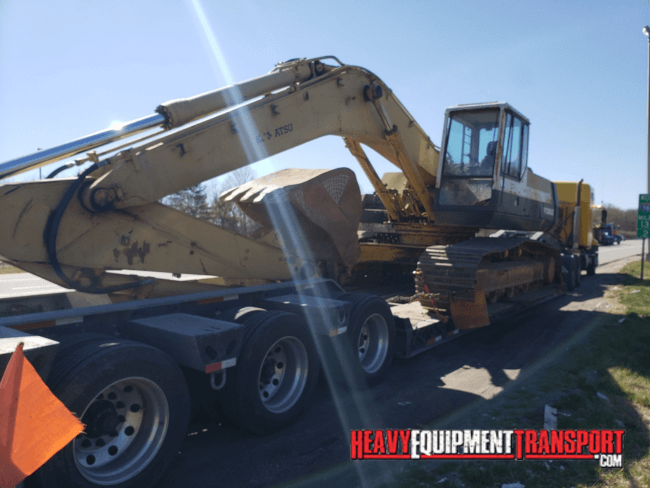
An excavator is another common equipment used for trenching, digging, and foundation projects in the construction industry. They use a bucket attached to a hydraulic arm to remove soil. Like the face shovel design, most excavators are unsuitable for below-ground or horizontal excavation works. Excavators are one of the top transports nationwide.

  1. Backhoe and backhoe loaders

These versatile pieces of equipment combine the functions of a loader and an excavator and are mainly used for lifting, loading, and digging materials. They are also used for below-ground-level excavation.

  1. Dumper

This equipment is usually smaller than most heavy-duty machinery, with a tipping hopper designed to carry material within a construction site. The machine can easily maneuver on irregular, uneven, or rutted ground.

  1. Dump Trucks

As the name suggests, these trucks are designed and used to transport and dump waste material like soil, gravel, and other construction waste.

Transport Your Construction Equipment Today

Heavy Equipment Transport is always available for a quote. Fill out the form or give us a call now! (888) 730-2951
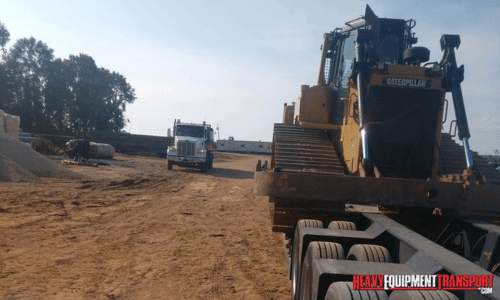
Shipping a bulldozer on a construction site.
  1. Concrete Mixers

A concrete mixer is commonly used in a building site to mix sand, gravel, cement, and water to form concrete. They are designed in various sizes, including portable models for on-site functions.

  1. Power Shovel or Drill

This heavy construction machinery has a pneumatically operated drill mounted on a tracked base. It’s mainly used for cutting large rocks and boulders. They are also usually convertible to a back actor with the bucket replaced by a drill.

  1. Cranes

In high-building construction sites, cranes lift and move heavy materials safely. Common cranes include tower, mobile, and crawler.

  1. Rollers

Commonly used rollers in construction sites include road or steamrollers. These machines are used by expert site workers to compact asphalt, soil, and concrete, especially in road construction.

  1. Grader

A grader is another commonly used heavy machinery in construction. It’s usually a self-contained power unit towed by a tractor. Graders do not excavate. It grades and levels fine loose materials in building sites. The equipment has a central blade but is narrower and flatter than the bulldozer’s model.

Why Safely Transporting Construction Equipment is Essential

Moving oversized loads requires expertise and professional companies with a reputable track record in heavy machinery hauling. Our experts at Heavy Equipment Transport have demonstrated their knowledge and excellence in providing safe transport for construction equipment for over a decade.

Safely transporting construction equipment is essential to prevent accidents and injuries that may lead to fatalities and other avoidable costs and damages. Safely hauling your heavy construction machinery protects it from damages that may be costly to repair or replace.

Heavy construction machinery is usually overweight and oversized loads beyond standard legal dimensions, requiring compliance with set over-dimensional local, state, and federal regulations. These include safety protocols that transporters must follow to avoid legal issues and safety hazards to the driver, equipment, and other road users.

Working with a reputable heavy construction equipment hauling company like Heavy Transport Equipment is essential for sustainability, safety, timely delivery, and efficiency.

William Thomas

William Thomas

Heavy Transport Specialist

Being able to lead a team of such talented logistics agents has been a wonderful experience over the past ten years. If you would like to know anything more about the heavy equipment transport services we offer, don't hesitate to give us a call!
Safety Tips for Transporting Construction Equipment

Safety Tips for Transporting Construction Equipment

Heavy Equipment Transport Logo
Facebook
Twitter
LinkedIn

Francisca Olive / June 2023

Safely shipping construction equipment is no easy feat. It always calls for meticulous preparation and recognizing potential obstacles that may cause an unforeseen mishap. Even a seemingly insignificant mistake can have catastrophic results, putting the lives of your employees and the functionality of their equipment at risk. Read on to learn more about safely transporting construction equipment.

Choosing The Right Method of Transportation

Construction equipment is heavy, so it is essential to choose the proper transport methods to get it to and from the site without damaging it.

Some ways to transport construction equipment include:

excavator haul

➤ Towing

Towing is the best choice for short-distance transport of construction equipment. Make sure your equipment is ready to be towed by inspecting the gearbox and tires. Be sure the vehicle you’re using to haul your gear can also do the job. Inspecting the tires, load capacity, and overall vehicle safety is important.

➤ Flatbeds

Flatbed trailers are semitrailers that sit on wide wheels. They are frequently used to transport construction equipment due to their reliability and capacity to carry heavy loads. Flatbeds provide a level surface, making loading and unloading heavy machinery easier.

➤ Special Trailers

Certain pieces of construction equipment are considerably bigger and heavier than others. Such massive machinery requires specially designed trailers like step decks or double drops.

Transport Your Construction Equipment Today

Heavy Equipment Transport is always available for a quote. Fill out the form or give us a call now! (888) 730-2951

Comply With Regulations

Always eliminate any extraneous attachments that might make your equipment too heavy or large to avoid getting the oversize designation status (and the added stress that comes with it). Shipping everything at once can seem smart, but sending items separately is often less expensive and more convenient.

Hire a Heavy Equipment Transport Company

Hiring a professional heavy equipment transport company is the most efficient method of moving heavy machinery to and from a building site. You can’t trust just any moving firm with transporting your machinery. The chosen transport company should be up to par and well-known in the field.

To choose the finest moving company, look at its insurance, the range of services it provides, its integrity, and its reputation. Using a moving firm means reduced risk of harm to your machinery since they have trained employees, the appropriate equipment, and safety standards to ensure your machines get to the site without incident.

Furthermore, the firm will pay for damage to your equipment if an incident occurs. Thus, it is crucial to verify that they have enough insurance coverage. Using a transport firm is economical since you won’t have to spend money on renting or purchasing trailers to move your machinery. Also, you won’t have to worry about spending money fixing anything that breaks while being transported.

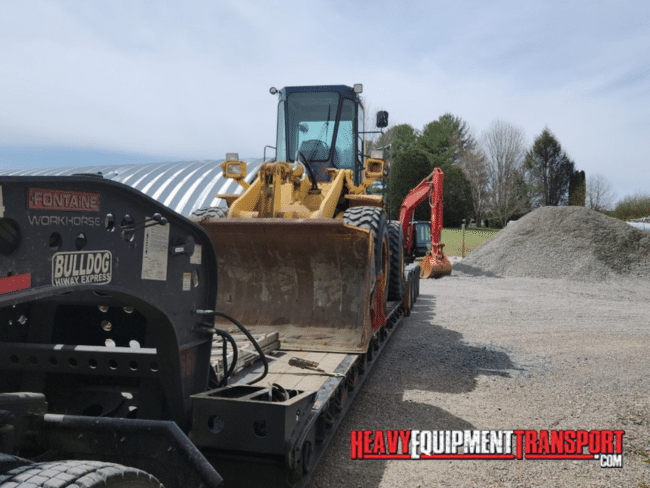
wheel loader haul

Prepare Equipment for Transport

Before loading the equipment onto the trailer, consider the many issues that may arise. Is there anything that might get damaged during transport? Then it’s best to get rid of it or cover it with bubble wrap if that’s the case.

● Remove the battery if you need the machine to start when it reaches its destination.
Close and latch all doors correctly, as they might open and flap during shipping if not secured.
● Inspect your equipment and clean it if necessary. This may be the last thing on your mind, but having clean construction equipment will make it easy to tell if something was damaged during transport.

Ensure The Equipment is Secured to the Trailer

This may seem like common sense, but it bears repeating in light of the shockingly high number of deaths in the construction industry. While loading equipment onto a trailer, it’s essential to double-check that everything is secure and in the right place.

The risks associated with the load, including the well-being of your employees and the driver, fall squarely on your shoulders. For instance, if you ship dangerous chemicals and some or all of the contents leak, you might put a whole ecosystem at risk.

You can consult the Federal Motor Carrier Safety Administration if you are unsure about safely transporting construction equipment. Check fmcsa.dot.gov often to ensure you comply with the requirements since they may differ from state to state.

Plan The Route

A well-planned route is essential for safely transporting construction equipment. Especially in more rural places, most of us have been told tales or seen videos of vehicles that are too heavy or too large to go under electricity lines or too tall to fit under bridges.

If you want to ensure your equipment gets where it has to go safely, you should steer clear of routes with small roads, bridges with overpasses, and weight limits. Choose a route that is easy to navigate, with a minimum number of turns, bridges starts, stops, and challenging terrain.

Key Takeaway

You should read this list several times to ensure you haven’t missed anything. Review all applicable safety standards before shipping any large pieces of construction equipment. Do not leave anything to chance; instead, carefully plan everything.

William Thomas

William Thomas

Heavy Transport Specialist

Being able to lead a team of such talented logistics agents has been a wonderful experience over the past ten years. If you would like to know anything more about the heavy equipment transport services we offer, don't hesitate to give us a call!