
How to Load Containers on a Trailer

Everything You Need to Know About Loading Containers on a Trailer
Loading a shipping container onto a transport trailer is a complex process demanding specialized knowledge and equipment. This complete guide breaks down the essential shipping container loading steps, from verifying the unit’s condition to proper securement.
You’ll learn how to load containers on a trailer safely, understand trailer requirements (like twist locks and corner castings), and see why professional help is necessary for complex container trailer loading scenarios. Heavy Equipment Transport ensures compliance and safety for every load.
Understanding Trailer Requirements for Safe Container Loading
“Heavy Equipment Transport ensures the correct chassis or trailer arrives based on weight, port rules, and container condition.”
Shipping containers require specific trailer and chassis configurations designed to secure them for road transport. Heavy containers use corner castings to focus their weight, so trailers must be strong and use twist locks that connect directly into these castings to prevent shifting and ensure compliance.
When considering container trailer loading, the type and condition of the container are also critical factors:
- Empty vs. Loaded: An empty unit is straightforward, but a loaded or sealed container must have its weight verified to ensure the chassis’ gross weight rating is not exceeded.
- Modified Containers: Units that have been modified (e.g., cut for windows or doors) may have non-standard weight distribution or require special permits due to altered dimensions.
Heavy Equipment Transport ensures the correct chassis or trailer arrives based on weight, port rules, and container condition.
Transport Your Containers Today
Heavy Equipment Transport is always available for a quote. Fill out the form or give us a call now! (888) 730-2951
Verifying Container Condition Before Trailer Placement
You must thoroughly check the container’s structural integrity before any lift occurs. Inspect all elements, especially the corner castings, rails, floors, and doors, for any dents, bowing, or compromised corners. Damage can severely affect safe lifting and securement.
For loaded units, confirm internal weight distribution to prevent imbalance during the lift and transit. Heavy Equipment Transport’s team reviews the container’s condition and confirms safe lift points before positioning the trailer.
Selecting the Proper Trailer or Chassis for Container Loading
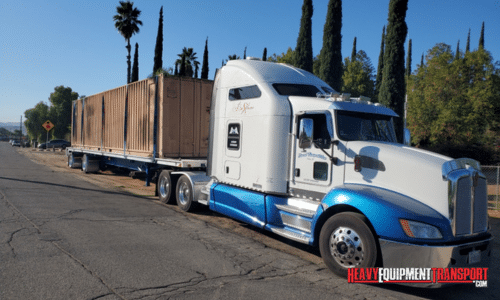
Choosing the right equipment depends on container size, weight, and condition. A standard chassis is suitable for typical port-to-door moves. However, heavier loads require a tri-axle chassis to distribute weight and comply with overweight regulations, often necessitating special permits.
For non-standard, modified, or oversized containers, a flatbed, step deck, or Landoll trailer is often preferred. These provide greater flexibility for securement, especially when corner castings are compromised or inaccessible. Heavy Equipment Transport dispatches the right trailer based on port access requirements, the load’s exact weight, and the client’s specific needs.
Preparing the Trailer and Loading Zone for Container Placement
The loading environment must be secured before the container is moved. First, the trailer must be positioned on a stable, level surface. Leveling is necessary for the twist locks to align properly with the container’s corner castings during placement. Next, the entire loading zone, whether a terminal, yard, or construction site, must be cleared of all personnel and obstructions to provide safe access for the crane, forklift, or top-loader.
Throughout the process, establishing clear communication between the equipment operators and ground spotters is mandatory for precise and safe placement. Heavy Equipment Transport coordinates with terminals, yards, and onsite teams to ensure a safe, organized container trailer loading area, managing all preliminary shipping container loading steps efficiently.
Executing the Container Lift and Trailer Positioning
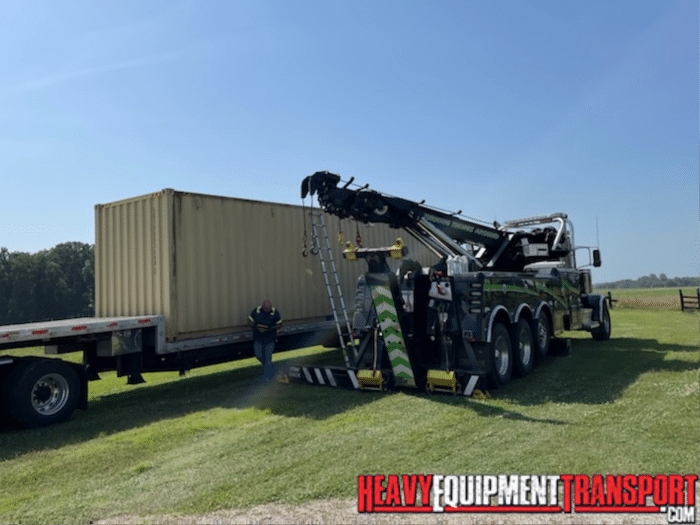
The lifting equipment must be perfectly aligned with all four top corner castings. Operators must maintain an even lift to prevent the container from swinging or twisting. The unit is then lowered slowly, matching the exact alignment of the chassis or trailer. This step ensures the container sits square, with all four bottom corner castings securely resting on the twist locks. Heavy Equipment Transport manages the complete lift plan and ensures all operators follow proper container-handling protocols.
Securing the Container to the Trailer for Transport
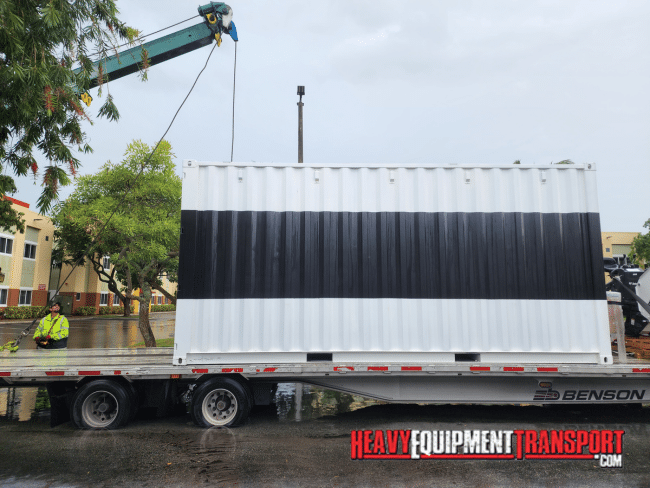
When using a standard container chassis, securing the container means fully and correctly engaging all twist locks on the bottom corner castings. For flatbeds or step decks, container trailer loading requires specialized methods, such as securing the container with heavy-duty chains, binders, and other corner securing attachments.
The goal is total immobilization regardless of the trailer type. The container must be fully secured with no movement possible before the trailer begins its journey. Heavy Equipment Transport only uses Department of Transportation (DOT) and Federal Motor Carrier Safety Administration (FMCSA)-compliant securement methods for all container types, assuring safe transit.
Conducting Final Trailer and Container Safety Checks
A final compliance review is essential before travel once you secure the container. This involves a detailed inspection of all twist locks, chains, and tie-down angles to confirm they are tight and correctly positioned.
Also, verify that the container doors are securely locked and sealed, and that appropriate signage and lighting are in place. Moreover, check the axle weight distribution to prevent overweight risks and ensure legal road operation. These final shipping container loading steps confirm readiness. Heavy Equipment Transport completes a full compliance checklist before leaving any port, yard, or customer location.
When Trailer Container Loading Requires a Professional Team
While small, empty containers may be manageable, complex container trailer loading scenarios demand professionals. This includes moving loaded or overweight units that require specialized lift equipment and permits, or handling high-value/modified containers that need expert handling.
Ports and railyards have strict appointment and access rules, and cross-border shipments need precise bilingual coordination and documentation accuracy. Heavy Equipment Transport handles these complexities with precision, using our port expertise to move loaded, modified, or sealed containers without costly delays.
Still have questions about container trailer loading? Below are quick answers to the most frequently asked questions about how to load containers on a trailer safely.
FAQs — Loading Containers on a Trailer
What’s the safest way to load a shipping container onto a trailer?
The safest way involves careful preparation, such as verifying the container’s condition, leveling the trailer, using appropriate lifting gear aligned with all four corner castings, and lowering the container slowly onto the locks.
Do I need a chassis or a flatbed for my container?
For standard containers (20ft or 40ft), a dedicated chassis is typically used, as it has built-in twist locks. Flatbeds, step decks, or Landolls are preferred for modified, oversized, or non-standard units that require flexible securement methods.
How are twist locks engaged during container loading?
The container is slowly lowered until its bottom corner castings sit directly on the twist locks mounted on the trailer. An operator then manually rotates the locks until they secure the container firmly in place.
What lifting equipment is required for putting a container on a trailer?
This depends on the location. Equipment includes cranes, reach stackers, top-loaders, or large forklifts. The equipment must have the necessary capacity and spreaders to engage all four top corner castings simultaneously for an even lift.
How does Heavy Equipment Transport ensure safe and compliant container loading?
We provide the correct trailer (chassis/flatbed/tri-axle) based on weight and port rules, confirm safe lift points through inspection, manage the lift plan, and use only DOT/FMCSA-compliant securement methods.

William Thomas
Heavy Transport Specialist
Being able to lead a team of such talented logistics agents has been a wonderful experience over the past ten years. If you would like to know anything more about the heavy equipment transport services we offer, don't hesitate to give us a call!